How to Remove Capital One Collections from Your Credit Report
Proven strategies to eliminate Capital One collections and restore your credit score.
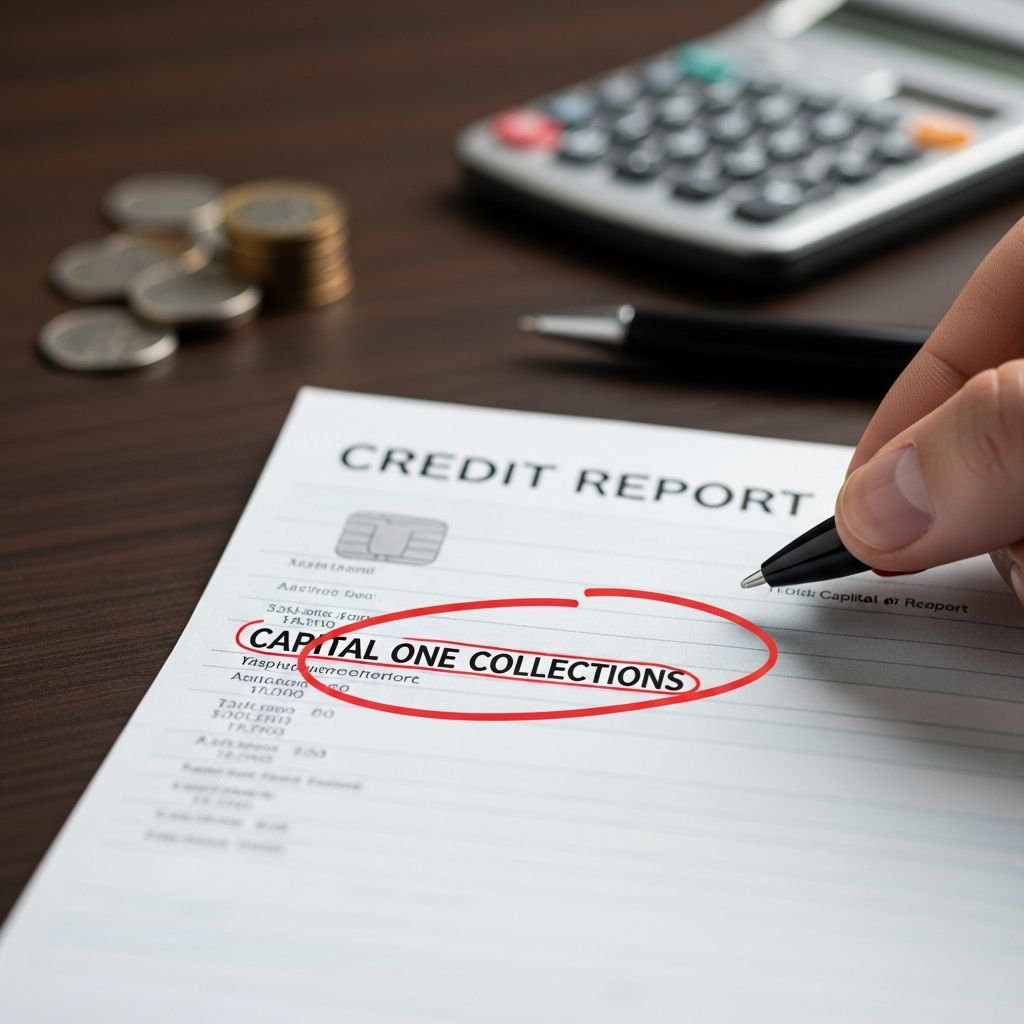
Having a collection account appear on your credit report can significantly damage your credit score and financial prospects. If you’re dealing with Capital One Collections, understanding the steps to remove it is essential. The first and most important step is determining who currently owns your debt. Capital One may still hold your account, or they may have sold it to a third-party collection agency. This distinction is crucial because it affects which strategies will be most effective for removal.
Understanding Your Capital One Collections Account
Before taking action to remove Capital One Collections from your credit report, you need to identify what type of account appears on your report. There are two primary scenarios: the account may appear as a charge-off or as an active collection.
Charge-off accounts indicate that Capital One has written off your debt as a loss and sold it to a third-party debt collector. In this situation, you no longer owe Capital One directly—instead, you owe the debt buyer or collection agency that purchased your account. Understanding this distinction is vital because attempting to work with Capital One when the debt has been sold will be ineffective.
Collection or delinquent accounts that still show Capital One as the creditor mean you likely need to work directly with Capital One to resolve the debt. These accounts represent unpaid obligations that Capital One is actively trying to collect.
Steps to Remove Capital One Collections from Your Credit Report
There are five primary strategies you can employ to remove Capital One Collections from your credit report. Each method has different success rates and requirements, so evaluating your specific situation will help you determine which approach is best.
1. Request a Goodwill Adjustment
A goodwill adjustment is one of the least aggressive but sometimes surprisingly effective methods for removing collections from your credit report. This approach works best if you have already paid off the debt and no outstanding balance remains.
To request a goodwill adjustment, you should write a professional letter to Capital One explaining why you were late on the account. Common reasons include job loss, medical emergencies, divorce, or other legitimate financial hardships. In your letter, ask Capital One representatives to remove the negative entry from your credit reports with all three credit bureaus (Equifax, Experian, and TransUnion) as a gesture of goodwill.
The success of this method depends on several factors, including your history with Capital One, how long ago the delinquency occurred, and the relationship you maintain with the company. While not guaranteed, some consumers have found success with this approach, particularly if they demonstrate a pattern of responsible behavior after resolving the account.
2. Pay to Delete the Capital One Collections
If you still owe a balance on your Capital One Collections account, a pay-for-delete agreement may be your most viable option. With this arrangement, you agree to pay a portion—or sometimes the full amount—of the balance due in exchange for Capital One or the collection agency agreeing to remove the negative entry from your credit report.
This method works particularly well when Capital One has sold your collection account to a third-party collection agency, as debt buyers are often more motivated to negotiate settlements. However, it’s worth attempting even if Capital One still owns your debt, as they may be willing to negotiate.
When pursuing a pay-for-delete agreement, always request the agreement in writing before making any payment. Your written agreement should clearly state that the company will request deletion from all three credit bureaus within a specific timeframe—typically 30 days—after payment is received. Never pay without this written confirmation, as verbal agreements provide no legal protection.
3. Dispute the Collection
If the Capital One Collections entry on your credit report contains inaccurate information, you have the right to dispute it. This method is particularly effective when the entry lists incorrect details such as the wrong account number, inaccurate balance, or incorrect payment history.
To pursue a dispute, start by obtaining copies of your credit reports from all three major bureaus: Equifax, Experian, and TransUnion. Review the Capital One Collections entry carefully and verify that all information is accurate. Check the account number, balance due, and payment history against your own records.
If you identify inaccuracies, you can file a dispute with all three credit bureaus. The bureaus are required by the Fair Credit Reporting Act to investigate your dispute and verify the accuracy of the information reported. If they cannot verify the correct information within 30 days, they must remove the entry from your credit report.
This method works because the Fair Credit Reporting Act, enforced by the Consumer Financial Protection Bureau (CFPB), requires credit bureaus and lenders to report only accurate information about your credit accounts. Inaccurate reporting is a violation of your consumer rights.
4. Hire a Professional Credit Repair Service
If navigating the removal process yourself seems overwhelming, professional credit repair services can handle the dispute and negotiation process on your behalf. These companies have experience dealing with collection agencies and understanding the nuances of credit law.
Credit repair professionals can dispute inaccurate entries, negotiate pay-for-delete agreements, and manage communication with Capital One Collections. However, it’s important to choose a reputable service and understand that legitimate credit repair takes time—there are no quick fixes for valid negative entries.
5. Know Your Debt Collection Rights
Understanding your rights as a consumer in debt collection is essential. The Fair Debt Collection Practices Act (FDCPA) provides you with significant protections when dealing with collection agencies. You have the right to request written verification of any debt within 30 days of first contact. During this 30-day period, the collection agency must cease collection efforts until they provide adequate verification.
When requesting debt verification, the collection agency must provide specific documentation including the original creditor name, original account number, original credit card agreement with your signature, an itemized statement showing principal, interest, and fees, proof of their legal right to collect, and chain of custody documentation if the debt was sold.
If the collection agency cannot provide adequate documentation within 30 days, the credit bureaus must remove the entry upon your dispute. This verification method has a historically high success rate because many debt buyers cannot produce complete original documentation.
Comparing Removal Methods
| Method | Success Rate | Cost | Timeline | Best For |
|---|---|---|---|---|
| Goodwill Adjustment | Low-Moderate | $0 | 30-90 days | Paid-off accounts |
| Pay-for-Delete | Moderate-High | 30-70% of balance | 60-120 days | Active debts with third-party buyers |
| Dispute Inaccuracies | High (if errors exist) | $0 | 30-60 days | Incorrect reporting |
| Debt Verification Dispute | 68% | $0 | 60-90 days | Sold debt with documentation gaps |
| Professional Service | Varies | $200-$500+ | 90-180 days | Complex situations |
The Debt Verification Process
The debt verification dispute is one of the most legally powerful methods available to consumers. Under the Fair Debt Collection Practices Act, when you request written verification of a debt within 30 days of first contact, the collection agency must prove you owe the debt by providing specific documentation.
If Capital One Collections or a third-party debt buyer cannot adequately verify the debt, they must stop collection efforts and the credit bureaus must remove the entry. This process has achieved a 68% success rate for complete removal, making it one of the most effective strategies.
To initiate this process, send a written request via certified mail asking the collection agency to verify the debt. Specify that you are requesting verification under the Fair Debt Collection Practices Act. Request that they provide the original credit card agreement with your signature, proof of assignment if the debt was sold, and itemized accounting of the claimed amount.
Important Considerations Before Taking Action
Before implementing any removal strategy, verify that you legitimately owe the debt or that the information reported is inaccurate. If you truly owe the debt to Capital One Collections, attempting to remove it through false means could result in legal consequences.
Additionally, understand that even after paying off a collection account, it will remain on your credit report for seven years from the original delinquency date. However, paid collections have less negative impact on your credit score than unpaid collections, so settling the debt is still worthwhile even if removal is not possible.
Frequently Asked Questions
Q: How long does Capital One Collections stay on my credit report?
A: Capital One Collections will remain on your credit report for seven years from the date of the original delinquency that led to the collection account, even after you pay it off.
Q: Can I negotiate a pay-for-delete with Capital One Collections?
A: Yes, many consumers successfully negotiate pay-for-delete agreements with Capital One Collections. However, you must get the agreement in writing before making any payment.
Q: What’s the difference between a charge-off and a collection?
A: A charge-off means Capital One has written off the debt and sold it to a collection agency. A collection means the account is still being actively collected by Capital One or another collector.
Q: How long does it take to remove Capital One Collections?
A: Timeline varies by method. Goodwill adjustments take 30-90 days, disputes take 30-60 days, and pay-for-delete negotiations typically take 60-120 days.
Q: What should I do if I can’t afford to pay the collection?
A: You can still request debt verification or dispute inaccuracies at no cost. You can also explore options like settlement for a reduced amount or setting up a payment plan.
Q: Is it better to pay the collection or let it fall off naturally?
A: Paying the collection is generally better as it stops collection efforts, prevents lawsuits, and reduces negative impact on your credit score.
References
- Fair Credit Reporting Act (FCRA) – 15 U.S.C. § 1681 et seq. — U.S. Government. Available at https://www.ftc.gov/
- Fair Debt Collection Practices Act (FDCPA) – 15 U.S.C. § 1692g — U.S. Government. Available at https://www.ftc.gov/legal-library/browse/statutes/fair-debt-collection-practices-act
- Debt Verification Rights and Requirements — Consumer Financial Protection Bureau (CFPB). 2024. https://www.consumerfinance.gov/
- Filing a Credit Bureau Dispute — Capital One Help Center. 2024. https://www.capitalone.com/help-center/credit-cards/disputing-items-on-your-credit-report/
- How to Remove Late Payments from Your Credit Report — Capital One Money Management Resources. 2024. https://www.capitalone.com/learn-grow/money-management/remove-late-payments-from-credit-report/
- Understanding Collection Accounts and Credit Reporting — Bankrate. 2024. https://www.bankrate.com/personal-finance/credit/
Similar Articles








Read full bio of Sneha Tete