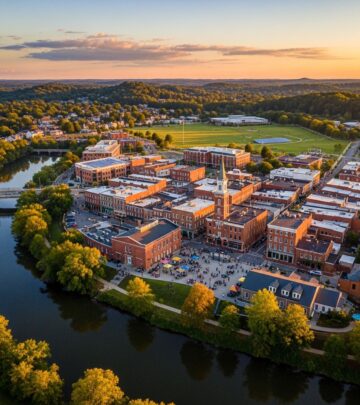
Relocating to Charlotte: Your 2026 Guide
Discover why Charlotte tops housing hot spots for 2026 with job growth, affordability gains, and vibrant neighborhoods for newcomers.

Charlotte, North Carolina, stands out as a premier destination for relocation in 2026, driven by robust job growth, improving housing affordability, and a dynamic urban-suburban blend. The National Association of Realtors (NAR) has named it one of the top 10 housing hot spots, citing factors like lower projected mortgage rates and aligning inventory with buyer budgets.
Charlotte’s Economic Surge and Job Opportunities
Charlotte’s economy thrives on finance, tech, healthcare, and manufacturing sectors, attracting high-skilled professionals. Job growth reached 2.5% over the past year, surpassing national averages, with income increases of 5.8% fueling demand for housing. Major employers like Bank of America and Wells Fargo anchor the uptown area, while emerging tech hubs draw millennials, who comprise 36.6% of households—above the U.S. average.
In-migration patterns bolster this momentum, as new residents seek career advancement and quality of life. For 2026, NAR highlights Charlotte’s appeal for young professionals, predicting over 52,000 additional households could qualify for median-priced homes if rates drop to 6%. This positions the city as a magnet for remote workers and families alike.
Housing Market Trends Shaping 2026 Decisions
The Charlotte housing market in 2026 promises balance after years of frenzy. Median home values hover around $390,457, with a slight 1.4% dip over the past year, signaling stabilization. Forecasts predict modest appreciation of 2-4%, pushing medians toward the mid-$400,000s by year-end.
Inventory is expanding, offering more choices and extending days on market to about 96 days regionally. This shift empowers buyers, especially in price segments under $350,000, where 6-8% appreciation is expected due to tight supply. Mid-range homes ($350,000-$500,000) may see 3-5% gains, while luxury over $500,000 could flatten as supply catches up.
| Price Segment | 2026 Forecast | Key Driver |
|---|---|---|
| Under $350,000 | 6-8% appreciation | Constrained supply |
| $350,000-$500,000 | 3-5% appreciation | Builder activity |
| Over $500,000 | Flat/declining | Increased luxury inventory |
Mortgage rates, projected at 6% on average, could unlock 5.5 million U.S. buyers nationwide, including significant local impact. This affordability boost, combined with new construction for mid-income buyers, makes 2026 ideal for entry.
Prime Neighborhoods for New Residents
Choosing the right neighborhood depends on lifestyle, budget, and family needs. Uptown offers skyscrapers, cultural venues, and walkability for young professionals. NoDa, a former mill district, buzzes with street art, breweries, and trendy lofts, ideal for creatives.
- South End: Revitalized industrial zone with light rail access, coffee shops, and parks; homes from $400,000+.
- Dilworth: Historic charm with bungalows, tree-lined streets, and proximity to uptown; family-friendly with prices $500,000+.
- Ballantyne: Suburban corporate hub with upscale homes, golf courses, and top schools; medians exceed $600,000.
- University City: Affordable growth area near UNC Charlotte, attracting young families and investors; values $300,000-$450,000.
- Plaza Midwood: Eclectic vibe with mid-century homes, diverse dining, and community events; entry around $450,000.
Suburban counties see inventory improvements, particularly for mid-income options. Light rail extensions enhance areas like South End, promising 6-8% growth.
Education and Family-Friendly Amenities
Charlotte boasts diverse schooling options. Charlotte-Mecklenburg Schools serve over 140,000 students, with standout public magnets like Myers Park Traditional. Private institutions such as Providence Day and Charlotte Country Day offer rigorous programs.
Higher education shines with UNC Charlotte (29,000+ students) in STEM and business, plus Central Piedmont Community College for workforce training. Families prioritize areas like Eastover and Myers Park for high-rated elementaries.
- Strong STEM focus at UNC Charlotte supports tech job pipelines.
- Charter schools provide alternatives with specialized curricula.
- Suburbs like Weddington excel in test scores and extracurriculars.
Lifestyle, Culture, and Recreation Highlights
Charlotte blends Southern hospitality with big-city energy. NASCAR Hall of Fame and Bank of America Stadium host sports fans, while the U.S. National Whitewater Center offers outdoor adventures. Breweries number over 60, from Sycamore in NoDa to Resident Culture in South End.
Greenways span 300+ miles for biking and trails. Dining ranges from Southern BBQ at Midwood Smokehouse to global fusion Uptown. Annual events like Taste of Charlotte and iHeartRadio Festival draw crowds.
Cost of living remains 5-10% below national averages outside housing, with groceries and utilities affordable. Traffic eases via light rail and 485 loop, though rush hours peak Uptown.
Cost of Living Breakdown
| Category | Charlotte Avg (Monthly) | National Avg |
|---|---|---|
| Housing (Median Mortgage) | $2,200 | $2,500 |
| Utilities | $150 | $170 |
| Groceries | $400/family | $450 |
| Transportation | $1,000 | $1,100 |
| Healthcare | $450 | $500 |
Housing dominates expenses, but job growth offsets this for many.
Relocation Logistics and Financing Tips
Moving to Charlotte requires planning. I-85 and I-77 converge here; Charlotte Douglas Airport ranks among top U.S. hubs with 50+ airlines. Utilities activate quickly via Duke Energy and Spectrum.
For financing, 6% rates enhance qualification. First-time buyers explore NC Housing Finance Agency programs for down payment aid. Pre-approval strengthens offers in competitive spots.
- Inspect for flood zones in older neighborhoods.
- Budget for 1-2% closing costs.
- Consider HOAs in master-planned communities like Blakeney.
Rental Market Insights for 2026
Rentals softened in 2025 with new supply, but 2026 sees stabilization. One-bedrooms average $1,600 Uptown, $1,300 suburbs. Multifamily developments and build-to-rent options cater to flexibility.
Frequently Asked Questions
Is 2026 a good time to buy in Charlotte?
Yes, with rising inventory, 6% rates, and 2-4% price growth, buyers gain leverage.
What are the best areas for families?
Dilworth, Ballantyne, and Myers Park offer top schools and safety.
How does Charlotte compare nationally?
NAR ranks it top 10 for affordability and demand.
Will home prices drop in 2026?
Unlikely overall; segments vary, with entry-level rising.
What’s the job market like?
Strong at 2.5% growth in finance/tech.
References
- Charlotte Lands On National List of Housing Hot Spots For 2026 — Iredell EDC. 2026-02-04. https://iredelledc.com/charlotte-lands-on-national-list-of-housing-hot-spots-for-2026/
- Charlotte Real Estate Outlook for 2026 — Pridemore Properties. 2025. https://pridemoreproperties.com/blog/charlotte-real-estate-outlook-for-2026
- The $100000 Mistake Most Charlotte Buyers Make in 2026 — YouTube (Real Estate Forecast). 2026. https://www.youtube.com/watch?v=53ORaaM5i6s
- Charlotte, NC Housing Market: 2026 Home Prices & Trends — Zillow. 2026-02-06. https://www.zillow.com/home-values/24043/charlotte-nc/
- It’s taking longer for homes to sell in Charlotte — WFAE 90.7. 2026-02-05. https://www.wfae.org/business/2026-02-05/its-taking-longer-for-homes-to-sell-in-charlotte
Similar Articles








Read full bio of Sneha Tete