Building Reliable Retirement Income Streams
Discover practical approaches to generate consistent returns on retirement savings.
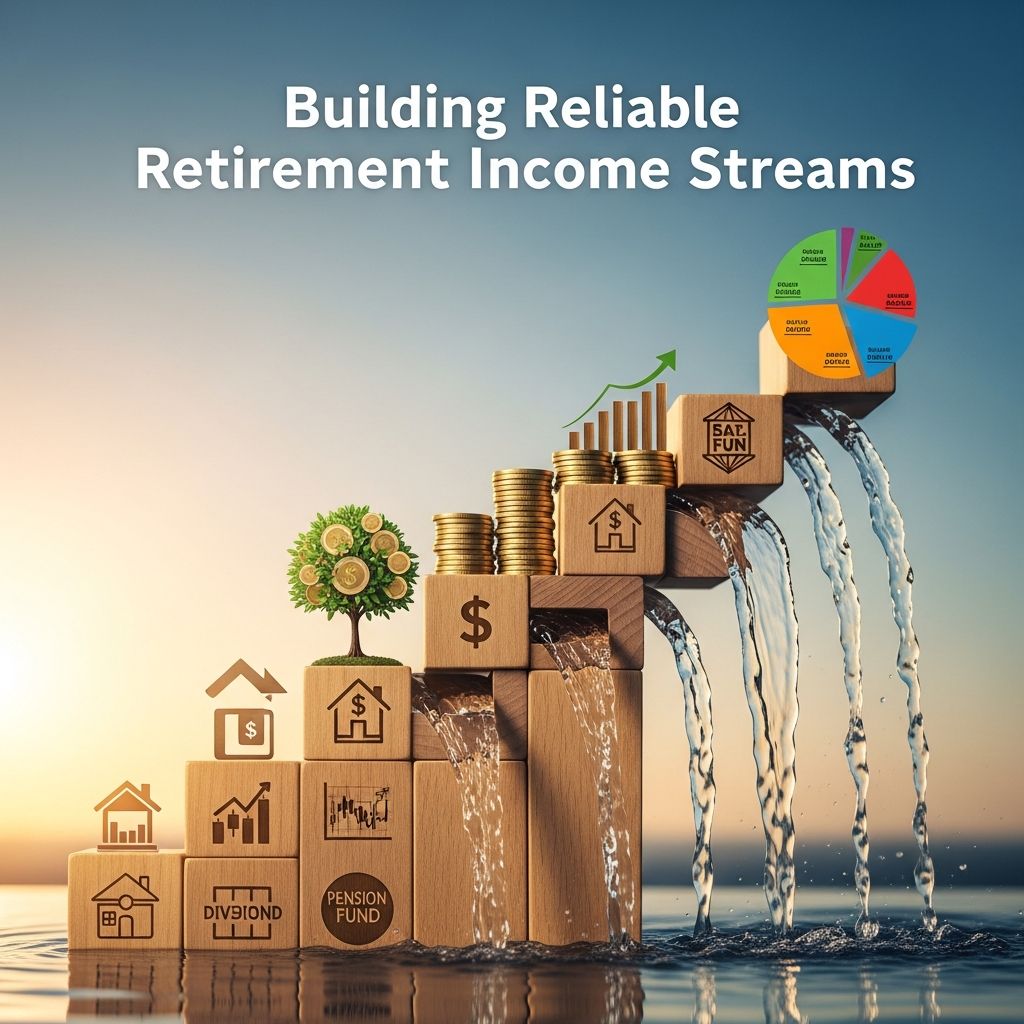
Planning for retirement involves more than simply accumulating savings—it requires developing a comprehensive strategy to transform those assets into dependable income throughout your retirement years. Many retirees face uncertainty about how to generate meaningful returns while preserving capital and maintaining stability. Understanding the various options available to you is the first step toward creating a retirement income plan that aligns with your goals and risk tolerance.
Understanding the Income Generation Challenge
Retirees face a unique financial challenge: they need to convert their accumulated assets into a steady income stream without depleting their principal too quickly. Traditional approaches to retirement income often involve a mix of Social Security, pensions (if available), and self-directed investment strategies. The current financial environment presents both opportunities and challenges, as interest rates fluctuate and market conditions evolve.
The fundamental goal is to achieve a balance between generating adequate income to support your lifestyle and preserving enough capital to maintain purchasing power over several decades. This requires careful consideration of multiple income sources and a willingness to adapt your strategy as circumstances change.
High-Yield Savings Accounts: Safety Meets Modest Returns
One of the most straightforward approaches to generating retirement income is leveraging high-yield savings accounts (HYSAs) and similar cash-equivalent products. These accounts offer several advantages that make them particularly suitable for retirees concerned about capital preservation.
High-yield savings accounts are FDIC-insured, meaning your deposits are protected up to $250,000 per account holder, per institution. This insurance guarantee provides peace of mind and eliminates worry about losing principal due to institutional failure. For retirees who prioritize capital safety above all else, this protection is invaluable.
Current market conditions have created an opportunity to earn competitive rates on cash holdings. While the returns from high-yield savings accounts won’t generate significant income on their own, they serve as a foundation for the stable portion of your retirement portfolio. When combined with other income-generating strategies, they form an important building block.
How to Maximize HYSA Benefits
- Shop for competitive rates: Different financial institutions offer varying rates on savings accounts. Compare offerings from multiple banks to ensure you’re earning the maximum available rate for your deposits.
- Use a ladder strategy: Divide your savings across multiple institutions to maximize FDIC insurance coverage while maintaining access to your funds.
- Consider timing: While rates fluctuate based on Federal Reserve policy, current conditions offer attractive opportunities that may not persist indefinitely.
- Maintain an emergency fund: Reserve a portion of your savings account funds for unexpected expenses, ensuring you don’t need to liquidate other investments prematurely.
Bond-Based Strategies: Generating Predictable Income
Bonds represent a more sophisticated approach to retirement income generation than simple savings accounts, offering the potential for higher yields while maintaining relative stability. Bonds are essentially loans you make to governments or corporations in exchange for periodic interest payments and return of principal at maturity.
Different types of bonds offer varying risk-return profiles. Investment-grade corporate bonds, municipal bonds, and Treasury securities each serve different purposes within a retirement portfolio. The key is understanding which bond types align with your specific circumstances and objectives.
Investment-Grade Corporate Bonds
These bonds, issued by financially stable companies with strong credit ratings, typically offer higher yields than government bonds. The trade-off is slightly more credit risk—the possibility that the issuing company could experience financial difficulty. However, investment-grade designation indicates the company maintains adequate financial strength to meet its obligations.
Corporate bonds can be held individually or purchased through mutual funds and exchange-traded funds (ETFs). Fund-based approaches provide automatic diversification across multiple issuers, reducing the risk associated with any single company’s financial struggles.
Municipal Bonds: Tax-Advantaged Income
Municipal bonds, issued by state and local governments to fund infrastructure projects, offer an important advantage for higher-income retirees: their interest income is typically exempt from federal income taxes and may be exempt from state and local taxes as well. This tax efficiency can meaningfully increase your after-tax return.
For retirees in higher tax brackets, the tax-equivalent yield of municipal bonds often exceeds that of comparable taxable bonds. This makes them particularly valuable for supplementing retirement income when held in taxable accounts.
Bond Ladder Strategy
A bond ladder involves purchasing bonds with different maturity dates, creating a predictable schedule of principal repayment. As each bond matures, you receive your principal back and can reinvest it according to current market conditions. This approach provides:
- Regular access to capital for reinvestment or spending
- Reduced interest rate risk through diversified maturities
- Simplified portfolio management with clear income timing
- Flexibility to adapt to changing financial conditions
Balanced Fund Approaches: Diversification and Distribution
Balanced funds and diversified portfolios offer a middle ground between the safety of savings accounts and the volatility of stock-heavy portfolios. These funds typically maintain a mix of stocks and bonds designed to generate income through dividends and interest while providing growth potential.
The specific allocation between stocks and bonds varies based on the fund’s objective and target investor profile. Conservative balanced funds might maintain a 30% stock and 70% bond allocation, while moderate balanced funds might reverse those proportions.
Dividend-Paying Equities
Established companies that generate substantial cash flows often share their profits with shareholders through regular dividend payments. While dividend yields vary based on company profitability and market conditions, quality dividend-paying stocks can provide meaningful income to retirees.
Dividend-focused equity funds and exchange-traded funds offer exposure to multiple dividend-paying companies, reducing concentration risk. These vehicles automatically rebalance holdings and typically have lower costs than actively managed funds.
Distribution Mechanics
Balanced funds generate returns through multiple channels: bond interest payments, stock dividends, and potential capital appreciation. Many retirees set their fund distributions to be paid monthly or quarterly, creating a predictable income stream. This approach simplifies budgeting and eliminates the need to manually sell holdings to generate spending money.
Tax Considerations for Retirement Income
Tax efficiency becomes increasingly important in retirement, as poorly structured withdrawals can trigger unnecessary tax liability and potentially affect eligibility for valuable programs like Medicare premium discounts. Understanding how different account types and investment types interact with the tax system allows you to optimize your after-tax returns.
Account Type Considerations
Different account types have different tax consequences:
- Traditional IRAs and 401(k)s: Withdrawals are taxed as ordinary income at your marginal tax rate
- Roth IRAs: Qualified withdrawals are completely tax-free
- Taxable brokerage accounts: Interest income is taxed as ordinary income, while dividends and long-term capital gains receive preferential tax treatment
A diversified retirement account structure, often called “tax diversification,” allows you to manage your annual tax liability by strategically choosing which account types to withdraw from in different years.
Social Security Coordination
The timing and amount of your retirement investment withdrawals can affect your Social Security taxation. Coordinating these withdrawals with your Social Security claiming strategy can reduce overall tax liability and extend your assets’ longevity.
Building Your Personal Income Strategy
No single approach works for everyone. Your optimal retirement income strategy depends on multiple factors:
| Factor | Consideration | Impact on Strategy |
|---|---|---|
| Risk Tolerance | How comfortable are you with portfolio fluctuations? | Conservative investors favor bonds and savings; others can accept more equity exposure |
| Time Horizon | How long do you expect to be in retirement? | Longer horizons may justify higher growth-oriented allocations |
| Income Needs | What percentage of your spending must come from investments? | High income needs might require higher-yielding strategies; lower needs allow conservative approaches |
| Tax Situation | What is your current and projected tax bracket? | Tax-efficient strategies become more valuable in higher brackets |
| Life Expectancy Outlook | Based on family history and health, how long might you live? | Longer expected lifespans justify lower withdrawal rates |
Practical Implementation Steps
Begin by calculating your total income requirements, accounting for Social Security and any pension income. Determine the gap that must be filled by your investment portfolio. Next, assess your current asset allocation and identify which accounts hold which types of investments. Finally, develop a withdrawal strategy that prioritizes tax efficiency while meeting your income needs.
Many retirees benefit from establishing an automated withdrawal system where needed funds are regularly transferred to a checking account, eliminating the need for manual intervention and ensuring consistent income availability.
Monitoring and Adjusting Your Approach
Retirement income planning isn’t a set-it-and-forget-it process. Market conditions change, interest rates fluctuate, and your personal circumstances evolve. Periodic review and adjustment of your strategy helps ensure your plan remains aligned with your objectives.
Annual portfolio rebalancing helps maintain your target asset allocation, preventing overweighting in either stocks or bonds. Quarterly or semi-annual reviews of your income situation allow you to make tactical adjustments before problems become significant.
Conclusion
Generating reliable retirement income requires understanding your options and strategically implementing an approach tailored to your unique situation. Whether you emphasize safety through high-yield savings and bonds or accept more market volatility in pursuit of higher returns, the key is developing a deliberate plan based on your specific needs and circumstances. By combining multiple income sources and remaining flexible as conditions change, you can create a retirement income stream capable of supporting your desired lifestyle throughout your retirement years.
References
- How Bank Accounts Work — Federal Deposit Insurance Corporation (FDIC). Accessed 2026. https://www.fdic.gov/
- Investing in Bonds — U.S. Securities and Exchange Commission (SEC). Accessed 2026. https://www.investor.gov/introduction-investing/investing-basics/investment-products/bonds-and-bond-funds
- Tax-Exempt Bonds — Internal Revenue Service (IRS). Accessed 2026. https://www.irs.gov/
- Advanced Strategies for Retirement Planning in 2026 — Commons LLC. Accessed 2026. https://www.commonsllc.com/insights/strategies-for-retirement-planning
- Retirement in 2026: 7 Smart Moves to Turn Savings Into a Paycheck — Empowering Retirement. Accessed 2026. https://empoweringretirement.com/weekly-newsletter/retirement-in-2026-7-smart-moves-to-turn-savings-into-a-paycheck-and-sleep-better-doing-it/
- How to Build Your 2026 Retirement Income Strategy — Centric Financial Group. Accessed 2026. https://www.centricfinancialgroup.com/blog/how-to-build-your-2026-retirement-income-strategy
Similar Articles








Read full bio of Sneha Tete