Relative Strength Index: Trading Strategy Guide
Master RSI trading: Learn how to use the Relative Strength Index for profitable trading decisions.

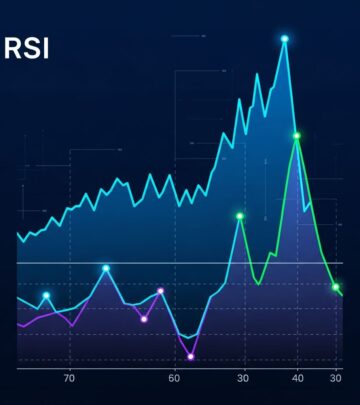
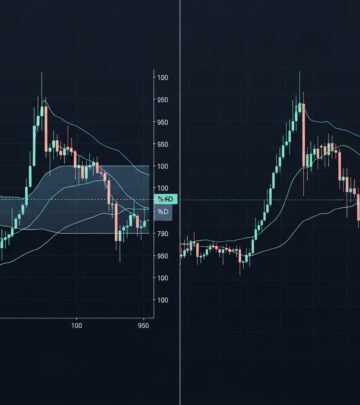
The Relative Strength Index (RSI) is one of the most widely used technical analysis indicators in the financial markets. Developed by J. Welles Wilder Jr. in 1978, the RSI measures the magnitude of recent price changes to evaluate overbought or oversold conditions in the price action of an asset. This momentum oscillator has become a fundamental tool for traders and investors seeking to identify potential entry and exit points in various market conditions.
What is the Relative Strength Index?
The Relative Strength Index is a momentum oscillator that measures the speed and magnitude of price changes. The RSI oscillates between zero and 100, providing traders with a quantitative measure of the strength of recent price momentum. Unlike trend-following indicators that focus on price direction, the RSI concentrates on the velocity and magnitude of directional price movements, making it particularly useful for identifying potential turning points in the market.
The primary purpose of the RSI is to help traders identify when an asset may be overbought (trading near the upper end of its range) or oversold (trading near the lower end of its range). These conditions often precede significant price reversals, making the RSI valuable for traders attempting to time their entries and exits more precisely.
How the RSI is Calculated
The RSI calculation involves a specific mathematical formula that compares the magnitude of recent gains to recent losses over a predetermined period, typically 14 trading periods. The formula consists of two main components: the average gain and the average loss. First, traders calculate the average of all gains during the period and the average of all losses during the same period. These values are then used to determine the Relative Strength (RS), which is the ratio of average gains to average losses.
The final RSI value is derived from this formula: RSI = 100 – (100 / (1 + RS)). This mathematical relationship ensures that the RSI always falls between 0 and 100, with readings above 70 typically considered overbought and readings below 30 considered oversold. The 14-period setting is the standard default, though traders can adjust this parameter based on their specific trading timeframes and preferences.
Interpreting RSI Signals
Overbought Conditions
When the RSI rises above 70, it indicates that an asset may be overbought. This suggests that the momentum has become extremely positive and that the asset’s price has risen significantly. However, it is crucial to understand that overbought conditions do not automatically signal a sell opportunity. Many strong trending markets can remain overbought for extended periods without immediately reversing. Nevertheless, overbought readings often serve as early warning signals that a potential pullback or correction may be approaching, making them valuable for traders looking to reduce positions or scale out of trades.
Oversold Conditions
Conversely, when the RSI falls below 30, it indicates that an asset may be oversold. This suggests that recent price declines have been substantial and that selling pressure may be reaching an extreme level. Like overbought conditions, oversold readings do not guarantee an immediate reversal but often signal that prices may be near a bottom where buying interest could reemerge. Traders frequently use oversold signals as potential buying opportunities, particularly when combined with other technical indicators or price action patterns.
Advanced RSI Trading Strategies
Divergence Trading
One of the most sophisticated and effective RSI trading techniques is divergence analysis. A divergence occurs when the price of an asset makes a new high or new low, but the RSI fails to confirm this move by making a corresponding new high or new low. Bullish divergence happens when price creates a lower low while the RSI creates a higher low, often signaling potential upside reversal. Bearish divergence occurs when price creates a higher high while the RSI creates a lower high, frequently indicating potential downside reversal. These divergences can be powerful predictive tools when properly identified and confirmed.
Center Line Crossovers
The 50 midpoint of the RSI serves as an important reference level. When the RSI crosses above 50, it suggests that average gains are exceeding average losses, indicating potential upward momentum. Conversely, when the RSI crosses below 50, it indicates that average losses are exceeding average gains, suggesting potential downward momentum. Many traders use these center line crossovers as confirmation signals to validate other technical patterns or as standalone momentum confirmation tools.
Trendline Analysis with RSI
While the RSI is primarily an oscillator, traders can apply trendline analysis to the indicator itself. By drawing trendlines on the RSI chart, traders can identify support and resistance levels within the oscillator. When the RSI breaks above a downtrend, it can signal strengthening momentum, while a break below an uptrend can indicate weakening momentum. This technique adds another layer of analysis to RSI trading strategies.
Key Features and Benefits of RSI
- Clear Signal Generation: The RSI provides definitive overbought and oversold levels at 70 and 30, respectively, making it easy for traders to identify potential trading opportunities.
- Momentum Confirmation: RSI effectively confirms the strength of recent price movements, helping traders validate their trading decisions with quantitative data.
- Early Warning System: Divergences and extreme readings often signal potential reversals before they occur, giving traders valuable advance notice.
- Flexibility: Traders can adjust the RSI period settings to match their specific trading timeframes, from day trading to swing trading to long-term investing.
- Multiple Timeframe Analysis: RSI can be analyzed across multiple timeframes simultaneously, helping traders identify both short-term and long-term trading opportunities.
- Easy to Understand: The RSI concept is straightforward to grasp, making it accessible to traders of all experience levels.
Limitations and Considerations
Despite its widespread use, the RSI does have certain limitations that traders should understand. The indicator can remain overbought or oversold for extended periods during strong trending markets, leading to false signals if used in isolation. In strongly trending markets, the RSI may stay above 70 or below 30 for prolonged periods without indicating an imminent reversal. Additionally, the RSI performs best in ranging markets and may be less reliable during extreme volatility or gap events.
Another consideration is that different assets and market conditions may require different RSI settings. While 14 periods is the standard, some traders find that 21-period or 7-period RSI settings work better for their specific strategies. Traders should backtest any RSI strategy before deploying real capital to ensure it performs adequately in their market of choice.
RSI Trading in Different Market Conditions
Trending Markets
In strong trending markets, the RSI can remain overbought or oversold for extended periods. Successful traders in trending markets often use RSI pullbacks as additional buying or selling opportunities rather than as reversal signals. For example, in a strong uptrend, oversold RSI readings can present lower-risk entry points for long positions, while in a downtrend, overbought readings can signal opportune moments to add to short positions.
Ranging Markets
The RSI performs exceptionally well in sideways or ranging markets where price oscillates between support and resistance levels. Traders can use RSI readings above 70 as sell signals and readings below 30 as buy signals with higher probability of success in these conditions. The mean-reversion nature of ranging markets aligns perfectly with RSI’s overbought/oversold signals.
Combining RSI with Other Indicators
While the RSI is powerful on its own, combining it with other technical indicators can enhance trading results. Popular combinations include:
- RSI and Moving Averages: Combine RSI signals with moving average crossovers to confirm trend direction and momentum strength.
- RSI and MACD: Use both momentum indicators together to increase signal reliability and reduce false signals.
- RSI and Stochastic Oscillator: These two momentum indicators often confirm each other, creating stronger trading signals when aligned.
- RSI and Volume: Confirm RSI signals by analyzing volume patterns to ensure strong institutional participation in the move.
- RSI and Support/Resistance: Use price levels combined with RSI readings to identify high-probability trading zones.
Practical RSI Trading Rules
Successful RSI traders typically follow these guidelines:
- Never trade RSI signals in isolation; always confirm with price action or other indicators.
- Use RSI as a secondary confirmation tool rather than your primary trading signal.
- Adjust your RSI period settings to match your trading timeframe and market volatility.
- Pay attention to divergences as they often precede significant price moves.
- Remember that extreme readings do not guarantee immediate reversals; context matters significantly.
- Always implement proper risk management, including stop-loss orders, when trading RSI signals.
- Backtest any RSI strategy thoroughly before risking real capital.
RSI Settings and Customization
| RSI Period | Best For | Characteristics |
|---|---|---|
| 7 | Very short-term trading | More sensitive, faster signals, more false signals |
| 14 | Standard/intermediate trading | Balanced sensitivity, industry standard |
| 21 | Swing trading | Less sensitive, fewer false signals |
| 25+ | Long-term investing | Smoother, less noise, more lagging |
Frequently Asked Questions
Q: What is the best RSI setting for day trading?
A: Most day traders use a 14-period RSI, but some prefer shorter periods like 7 to capture faster momentum shifts. The optimal setting depends on your specific trading style and the volatility of your trading vehicle.
Q: Can RSI be used as a standalone indicator?
A: While RSI provides valuable signals, it’s generally recommended to confirm RSI signals with additional technical analysis or price action. Using RSI in isolation may result in more false signals.
Q: What does RSI divergence mean?
A: RSI divergence occurs when price makes a new high or low but RSI fails to confirm it. This often signals weakening momentum and potential reversal, making it one of the most reliable RSI trading signals.
Q: How do I trade RSI in a trending market?
A: In trending markets, use RSI pullbacks to oversold/overbought levels as additional entry opportunities rather than reversal signals. Trade in the direction of the trend rather than against it.
Q: Is RSI better for stocks, forex, or cryptocurrencies?
A: The RSI works effectively across all markets. However, adjusting the period settings based on market volatility and liquidity can improve performance. Cryptocurrencies may benefit from shorter period settings due to higher volatility.
References
- Relative Strength Index (RSI) – Definition and Application — Investopedia. Accessed November 2025. https://www.investopedia.com/terms/r/rsi.asp
- Technical Analysis from A to Z — Steven B. Achelis. Second Edition. McGraw-Hill Education. 2001. https://www.mhprofessional.com
- New Concepts in Technical Trading Systems — J. Welles Wilder Jr. Trend Research. 1978. https://www.wilder.com
- A Beginner’s Guide to Technical Analysis — CME Education. Accessed November 2025. https://www.cmegroup.com/education
- Momentum Indicators in Technical Analysis — CFTesearch. American Association of Professional Technical Analysts. 2023. https://www.aapta.org
Similar Articles








Read full bio of Sneha Tete