Rejected Personal Loans: 6 Reasons And How To Get Approved
Discover why personal loan applications get rejected and learn proven strategies to improve approval odds in 2026.

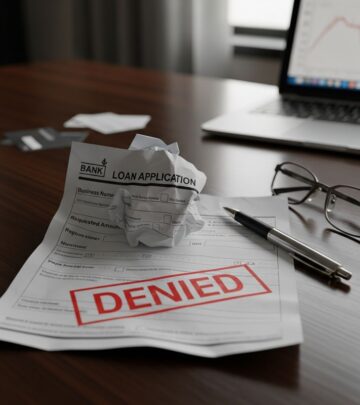
Applying for a personal loan can be a lifeline for covering unexpected expenses, consolidating debt, or funding major life events. However, receiving a rejection letter can be disheartening and disrupt your financial plans. In recent years, loan denials have surged, with a Bankrate survey revealing that half of all Americans who applied for loans or financial products since the Federal Reserve’s rate hikes in March 2022 were denied. Personal loans account for 10% of these rejections, often due to tightened lending standards amid economic uncertainty.
Understanding why personal loans get rejected is crucial for turning a ‘no’ into a ‘yes’ on your next application. This comprehensive guide breaks down the most common reasons for rejection, backed by data from credible sources like the Federal Reserve and major financial surveys. We’ll explore each factor in depth, provide real-world statistics, and offer practical steps to improve your profile. Whether it’s a low credit score, high debt burden, or unstable employment, you’ll find targeted solutions here.
Why Was My Personal Loan Application Rejected?
Lenders evaluate hundreds of data points when reviewing personal loan applications. A rejection doesn’t mean you’re unqualified forever—it often signals a specific issue that can be addressed. According to industry experts, the top culprits include credit history, income stability, and debt levels. In 2025, delinquency rates for personal loans hovered at 3.52%, a slight uptick that has made banks more cautious. Let’s dive into the primary reasons.
1. Low Credit Score
A low credit score is the number one reason for personal loan rejections. Lenders use your FICO or VantageScore to gauge repayment risk. Scores below 670 (fair range) trigger automatic flags, with ‘poor’ scores (300-579) facing denial rates up to 50%. Negative marks like late payments, defaults, or collections further hurt your chances.
For instance, even a decent score can falter if recent hard inquiries pile up from multiple applications. Banks view this as desperation, dropping your score by 5-10 points per inquiry. Fix it by obtaining your free credit report from AnnualCreditReport.com, disputing errors, and paying down balances to lower utilization below 30%.
2. High Debt-to-Income (DTI) Ratio
Your
debt-to-income (DTI) ratio
measures monthly debt payments against gross income. Lenders prefer DTI under 36%; anything above 43-50% often leads to rejection. If EMIs, credit cards, or other loans consume too much of your salary, you’re seen as overextended.Post-2022 rate hikes, DTI scrutiny intensified as borrowers sought credit to combat inflation. Calculate yours: (Total monthly debts / Gross monthly income) x 100. Reduce it by paying off high-interest debts first or increasing income via side gigs.
3. Insufficient or Unstable Income
Lenders require proof of steady income to ensure repayment. Insufficient earnings—below lender minimums (often $25,000-$40,000 annually)—or irregular freelance/self-employment income spells trouble. Recent job changes or employment gaps raise red flags, as banks seek at least 2 years of stability.
Self-employed applicants must provide tax returns, bank statements, and GST filings showing consistent deposits. In 2026, with economic volatility, document everything thoroughly to demonstrate reliability.
4. Incomplete or Inaccurate Documentation
Simple errors like mismatched PAN details, blurry income proofs, or missing signatures can doom applications. Lenders flag inconsistencies as fraud risks. Always double-check forms, use recent documents (e.g., last 3 months’ salary slips), and ensure addresses match your credit report.
5. Too Many Recent Credit Inquiries
Applying to multiple lenders in a short span creates ‘hard inquiries,’ signaling risk and temporarily lowering your score. Space applications 3-6 months apart and use pre-qualification tools for soft checks.
6. Employment Instability
Frequent job switches or gaps make lenders question income continuity. Provide appointment letters or salary hikes to prove upward mobility.
Statistics on Personal Loan Rejections
Data paints a stark picture. Since 2022, 50% of loan applicants faced denial, with 17% rejected multiple times. Personal loans and credit cards lead at 10% and 14% denial shares. Among those denied, 82% reported financial harm, and 23% turned to predatory payday loans at up to 650% APR.
Poor credit holders (scores 300-579) see 50% reporting harder access, versus 21% overall. Average personal loan balances grew 6.3% in 2023 despite hikes, straining borrowers. Delinquency hit 3.52% in Q3 2025. These trends underscore the need for proactive credit health.
| Metric | Value | Source |
|---|---|---|
| Overall Denial Rate (Post-2022) | 50% | Bankrate Survey |
| Personal Loan Denial Share | 10% | Bankrate |
| Impact on Poor Credit Holders | 50% Harder Access | Bankrate |
| Personal Loan Delinquency (Q3 2025) | 3.52% | LendingTree |
How to Overcome Personal Loan Rejection
Rejection is fixable. Here’s a step-by-step plan:
- Review Your Credit Report: Fix errors and build history with secured cards.
- Lower DTI: Pay down debts; avoid new credit.
- Boost Income Proof: Add co-signer or side income docs.
- Improve Employment Stability: Wait 6 months post-change.
- Use Prequalification: Shop rates without hard pulls.
- Consider Alternatives: Credit unions or peer-to-peer lending for better odds.
After fixes, reapply strategically. A single rejection rarely hurts scores long-term, but multiples do.
What to Do After a Personal Loan Rejection
First, request the lender’s reason (adverse action notice required by law). Then, act swiftly: dispute inaccuracies, reduce debts, and monitor progress. Track via free tools from Experian or Credit Karma. Patience pays—many see approvals within 3-6 months of improvements.
Avoid desperation moves like payday loans, which exacerbate cycles. Instead, build emergency funds and explore balance transfers (6% denial rate).
Personal Loan Alternatives for Rejected Applicants
- Credit Builder Loans: Improve scores while borrowing small.
- Secured Personal Loans: Collateral lowers risk.
- Credit Union Loans: Often more lenient.
- 0% Intro APR Cards: For short-term needs.
- Family Loans: Interest-free, but formalize agreements.
Frequently Asked Questions (FAQs)
What is the most common reason for personal loan rejection?
A low credit score tops the list, followed by high DTI and unstable income.
How long does a loan rejection stay on my credit report?
Rejections themselves don’t appear, but hard inquiries linger 2 years (impact fades after 12 months).
Can I reapply immediately after rejection?
No—wait 3-6 months after fixes to avoid further score damage.
Will adding a co-signer help?
Yes, their strong credit can secure approval.
Are credit unions easier for rejected applicants?
Often yes, with member-focused lending.
Key Takeaways
- Address low credit, high DTI, and income issues head-on.
- Use data-driven fixes for 2026 approvals.
- Avoid multiple apps; prequalify first.
References
- Half Of All Loan Applicants Denied Since 2022 Rate Hikes — National Mortgage Professional / Bankrate Survey. 2024. https://nationalmortgageprofessional.com/news/half-all-loan-applicants-denied-2022-rate-hikes
- 6 Common Reasons for the Rejection of a Personal Loan — MyMudra. 2025-11-29. https://www.mymudra.com/blog/6-common-reasons-for-the-rejection-of-a-personal-loan
- How to Avoid Common Loan Denial Reasons — OneAZ Credit Union. 2025. https://www.oneazcu.com/about/financial-resources/home-lending/how-to-avoid-common-loan-denial-reasons-and-get-approved/
- Personal Loan Statistics: 2025 — LendingTree. 2025. https://www.lendingtree.com/personal/personal-loans-statistics/
- Average Personal Loan Balance Grows 6.3% in 2023 — Experian. 2024. https://www.experian.com/blogs/ask-experian/research/personal-loan-study/
Similar Articles








Read full bio of Sneha Tete