Regulation D: A Practical Guide For Savers
Discover how Federal Reserve's Regulation D shapes savings account rules, reserve mandates, and modern banking flexibility post-2020 changes.
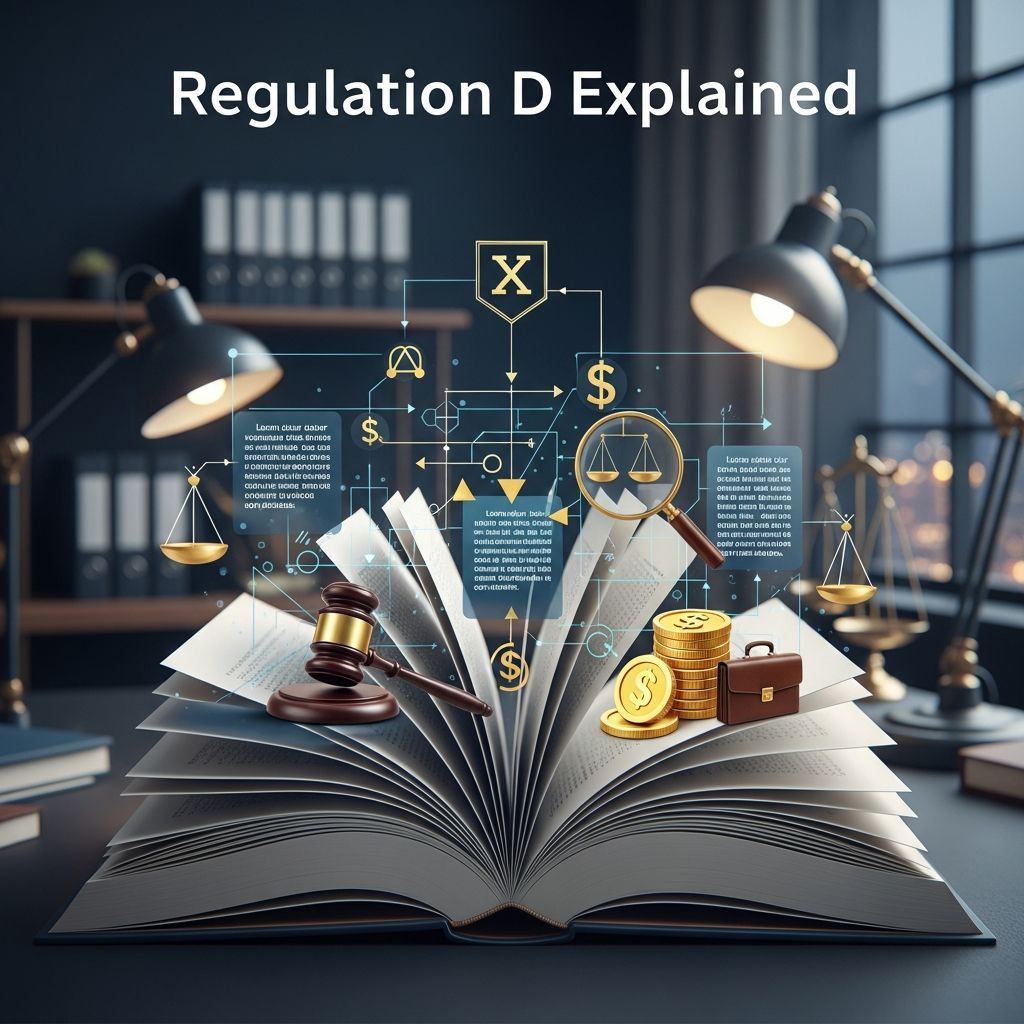
Regulation D stands as a cornerstone of U.S. banking oversight, crafted by the Federal Reserve to ensure financial stability through reserve requirements and transaction controls on certain deposit accounts. Originally designed to safeguard banks during economic turbulence, it has evolved significantly, especially with amendments in 2020 that reshaped its application. This article delves into its foundations, transformations, practical implications for consumers, and strategic advice for navigating today’s banking environment.
The Foundations of Regulation D
Enacted under the Federal Reserve Act, Regulation D—formally known as Reserve Requirements of Depository Institutions (12 CFR Part 204)—mandates that banks, credit unions, and similar institutions maintain specific cash reserves either on-site or at Federal Reserve Banks. These reserves act as a buffer against customer withdrawals, promoting liquidity and preventing systemic risks.
Historically rooted in the Great Depression era, the regulation aimed to distinguish between everyday spending accounts and those meant for saving. Transaction accounts, like checking accounts, allow unlimited transfers, while savings accounts were positioned as less accessible to encourage long-term holding. This separation helps institutions manage cash flow without unexpected drains.
Core Components: Reserves and Transaction Caps
Regulation D categorizes liabilities into reservable types: transaction accounts, nonpersonal time deposits, and Eurocurrency liabilities. Transaction accounts include demand deposits, NOW accounts, and share drafts—vehicles for frequent payments via checks, wires, or electronic means.
Prior to recent shifts, reserve ratios scaled with institution size: smaller banks faced 0% requirements, while larger ones held up to 10% of transaction deposits in reserves, satisfied via vault cash or Fed deposits. This system balanced operational needs with stability.
The consumer-facing element was the six-per-statement-cycle limit on ‘convenient’ withdrawals from savings or money market accounts. Convenient methods encompassed:
- Preauthorized or automatic transfers (ACH)
- Telephone or online banking transfers
- Checks or debit card transactions
- Bill payments to third parties
In-person withdrawals, ATM uses, or intra-institution transfers often didn’t count toward this limit, preserving some flexibility. Exceeding it triggered monitoring, fees, account reclassification, or closure.
Pivotal Shift in 2020: From Rigidity to Flexibility
The COVID-19 crisis prompted the Federal Reserve’s March 2020 interim final rule, slashing reserve requirements to 0% across all net transaction accounts—a policy enduring as of 2026. This move supported ample reserves amid interest-paying mechanisms introduced post-2008, aligning with Basel III liquidity standards.
Simultaneously, the six-transaction cap was suspended. Banks must still report deposit balances but face no enforcement mandate. Many institutions, however, retain voluntary limits to discourage savings-as-checking behavior, charging fees or restricting access for excess activity.
| Era | Reserve Requirement | Savings Transaction Limit | Key Driver |
|---|---|---|---|
| Pre-2020 | 0-10% based on size | Strict 6/month | Financial stability |
| Post-2020 | 0% | Suspended (voluntary) | COVID-19 response |
This table illustrates the stark evolution, freeing institutions while empowering consumer choice.
Distinguishing Account Types Under Regulation D
Understanding account classifications is crucial:
- Transaction Accounts: Unlimited access for payments—with checks, cards, transfers. Subject to past reserves (now zero).
- Savings Deposits: Interest-bearing; historically limited transfers to maintain ‘non-transactional’ status.
- Time Deposits: Fixed-term CDs; early withdrawals penalized, exempt from transfer limits.
Money market accounts blend features but often mirrored savings restrictions. Post-suspension, hybrid high-yield options proliferate, blending liquidity with earnings.
What Happens When Limits Are Breached?
Even sans federal mandate, banks monitor patterns. First offenses might incur fees ($5-$15 typical). Repeated violations prompt:
- Notifications and temporary blocks
- Conversion to checking accounts
- Account closure with fund transfers
Institutions like The Bank of Salem explicitly note suspension but reserve enforcement rights. Always review your bank’s policy—disclosures outline exact triggers.
Consumer Impacts: Opportunities and Pitfalls
2020’s liberalization boosted digital banking adoption. Savers enjoy fewer hurdles shifting funds amid volatile markets. High-yield savings rates surged, rewarding parking cash digitally.
Yet pitfalls persist: over-reliance on savings for transactions erodes discipline, invites fees, and risks FDIC limits if accounts multiply. Automation amplifies violations—recurring transfers tally quickly.
For businesses, zero reserves eased lending during downturns, indirectly benefiting borrowers. Consumers gained breathing room, but vigilance remains key.
Strategic Tips for Savers in the Regulation D Era
Maximize benefits with these practices:
- Hybridize Accounts: Pair checking for daily use with high-yield savings for overflow.
- Track Transfers: Use apps to monitor cycles; batch non-urgent moves.
- Select Flexible Banks: Online banks often waive limits entirely.
- Understand Variations: Credit unions may differ from banks.
- Plan for Fees: Budget for potential charges; negotiate waivers.
Proactive management preserves access and earnings.
Future Outlook: Will Reserves Return?
The Fed retains authority to reinstate requirements, potentially under Basel III’s liquidity coverage ratios. Ample-reserve regimes, paying interest on excess, reduce necessity. Monitor economic signals—inflation or crises could revive mandates. For now, voluntary policies dominate.
Frequently Asked Questions
Is the six-transaction limit still enforced?
No federally, but many banks impose it voluntarily with fees for excess.
Do ATMs count toward savings limits?
Typically no, as in-person; confirm with your institution.
Are credit unions affected?
Yes, as depository institutions under Regulation D.
What changed reserves to zero?
2020 interim rule amid pandemic monetary easing.
Can I exceed limits occasionally?
Often yes, but repeated breaches risk penalties or closure.
Regulation D’s legacy underscores banking’s balance of innovation and prudence. Stay informed via Fed updates to adapt seamlessly.
References
- What Is Regulation D? — Experian. 2023-approx. https://www.experian.com/blogs/ask-experian/what-is-regulation-d/
- Regulation D (FRB) — Wikipedia (informed by primary sources). 2024-01-15. https://en.wikipedia.org/wiki/Regulation_D_(FRB)
- Regulation D Requirements — The Bank of Salem. 2023-approx. https://thebankofsalem.bank/regulation-d-requirements.html
- Supervision and Regulation: Regulation D — Federal Reserve Board. 2024-06-01. https://www.federalreserve.gov/supervisionreg/regdcg.htm
- Regulation D And Savings Account Withdrawal Limits — Bankrate. 2024-02-20. https://www.bankrate.com/banking/savings/regulation-d/
Similar Articles








Read full bio of Sneha Tete