Regressive Tax: Definition, History, and Effective Rate
Understanding regressive taxes: How they impact income distribution and who bears the burden.
Understanding Regressive Taxes
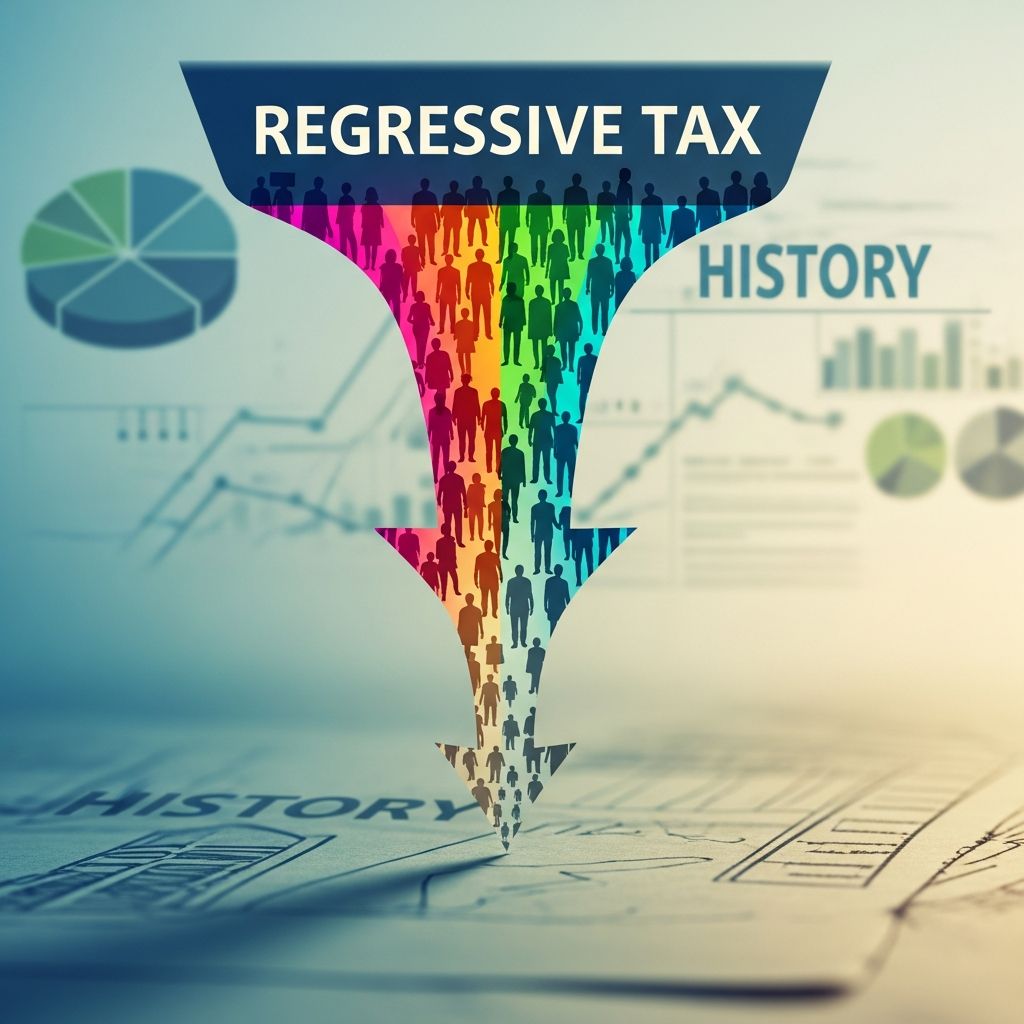
A regressive tax is a form of taxation where the tax rate decreases as the amount subject to taxation increases. Unlike progressive tax systems that demand higher percentages from wealthier individuals, regressive taxes take a disproportionately larger share from those with lower incomes. This fundamental characteristic of regressive taxation has become increasingly relevant in modern discussions about tax fairness and income inequality.
The core principle behind regressive taxation appears equitable on the surface—everyone pays the same fixed amount regardless of income level. In practice, however, this structure places a substantially heavier burden on lower-income earners. A person earning $20,000 annually will feel a $1,000 tax far more acutely than someone earning $200,000 annually, despite both paying the identical amount.
Definition and Core Characteristics
Regressive taxation operates through a mechanism where the average tax rate, expressed as a percentage of total income, decreases as income increases. This contrasts sharply with progressive taxation, where higher earners pay an increasingly larger percentage of their income in taxes.
The defining feature of regressive taxes involves indirect taxation mechanisms that are collected through intermediaries rather than directly from the taxpayer. Sales taxes, excise duties, and other consumption-based taxes typically function as regressive instruments because they apply uniformly to all consumers regardless of wealth.
Key Characteristics of Regressive Tax Systems
Regressive tax systems share several important characteristics that distinguish them from other tax structures:
- Uniform tax rates applied to goods or services regardless of purchaser income
- Higher effective burden on lower-income individuals
- Usually implemented as indirect taxes collected through intermediaries
- Often applied to specific goods or activities rather than comprehensive income
- Create situations where marginally lower tax rates apply to progressively higher incomes
Historical Development of Regressive Taxation
The history of regressive taxation extends back centuries, with poll taxes representing one of the earliest and most straightforward examples. A poll tax imposed a fixed monetary amount on every individual citizen regardless of economic circumstances. These taxes were common in various forms throughout European and American history until public resistance and legal challenges led to their elimination.
The twenty-fourth amendment to the United States Constitution, ratified in 1964, effectively abolished poll taxes in federal elections, recognizing their inherent unfairness. By the late twentieth century, most major economies had abandoned poll taxes as primary revenue sources, though they occasionally resurface in modified forms.
As economies modernized and consumer cultures expanded, regressive taxation evolved to focus on consumption taxes, excise duties, and fees. These mechanisms allowed governments to generate revenue while targeting specific behaviors or goods they wished to discourage. Sin taxes on tobacco, alcohol, and gambling emerged as deliberate policy tools combining revenue generation with public health and social objectives.
Common Examples of Regressive Taxes
Sales Taxes
Sales taxes represent the most widespread form of regressive taxation in the United States today. Imposed by state and local governments on goods and services, sales taxes affect lower-income individuals disproportionately because they spend a substantially larger portion of their total income on taxable necessities like food, clothing, and household goods. While wealthy individuals also pay sales taxes, their purchases constitute a smaller percentage of their total income, making the tax rate effectively lower for high earners.
Excise Taxes
Excise taxes represent targeted consumption taxes on specific goods and services. Common examples include taxes on gasoline, tobacco, and alcohol. These taxes tend to affect lower-income households disproportionately because they consume a higher percentage of their income on these taxed items.
Tobacco excise taxes demonstrate particularly high regressivity levels. Research shows that the bottom income quintile pays an effective tax rate 583 percent higher than the top quintile on tobacco products, making tobacco taxes among the most regressive forms of taxation currently in use.
Sin Taxes on Alcohol and Tobacco
Sin taxes deliberately target goods with negative externalities or social costs. While these taxes may serve public health objectives by discouraging consumption of harmful products, they simultaneously function as highly regressive revenue mechanisms. Studies demonstrate that people in the bottom income quintile spend a 78 percent larger share of their income on alcohol taxes compared to those in the top quintile.
Gambling Taxes
Gambling taxes exemplify regressive taxation through behavioral patterns. Those on lower incomes demonstrate higher propensity to spend money on gambling activities and therefore pay a higher percentage of their income in gambling taxes compared to high-income individuals.
User Fees and Licensing
User fees represent a form of excise tax that includes licenses or supplemental charges for specific services and activities. Despite charging identical amounts to all income groups, these fees constitute a larger portion of lower-income earners’ income. Examples include hunting and fishing licenses, road tolls, parking fees, and entrance fees to museums and parks.
Tariffs and Trade Taxes
Trade tariffs function as regressive taxes because they disproportionately burden lower-income individuals who typically spend a higher percentage of their earnings on goods affected by tariffs. Recent examples include tariffs imposed on steel imports in April 2018 and comprehensive tariffs on imported goods from January through April 2025, when average applied US tariff rates rose from 2.5 percent to approximately 27 percent—the highest level in over a century.
Measuring Effective Tax Rates
Effective tax rate measurement remains crucial for understanding regressive taxation’s true impact. The effective tax rate represents the percentage of income paid in taxes, calculated by dividing total taxes paid by total income earned.
Calculating Effective Rates: A Practical Example
Consider a poll tax of $3,000 applied uniformly to all citizens:
- A person earning $10,000 pays an effective rate of 30 percent ($3,000 ÷ $10,000)
- A person earning $30,000 pays an effective rate of 10 percent ($3,000 ÷ $30,000)
- A person earning $100,000 pays an effective rate of 3.33 percent ($3,000 ÷ $100,000)
This illustration clearly demonstrates how identical tax amounts create dramatically different effective rates across income levels, with lower earners bearing substantially higher percentage burdens.
Comparing Regressive and Progressive Taxation
Understanding the distinction between regressive and progressive taxation frameworks is essential for tax policy analysis. Progressive taxation operates on the opposite principle, where tax rates increase as taxable income or amounts increase, meaning individuals and entities with higher incomes pay a higher percentage of their income in taxes.
| Tax Characteristic | Regressive Tax | Progressive Tax |
|---|---|---|
| Tax Rate Direction | Decreases as amount increases | Increases as amount increases |
| Burden Distribution | Higher percentage on lower incomes | Higher percentage on higher incomes |
| Tax Type | Usually indirect taxes | Usually direct taxes |
| Collection Method | Through intermediaries | Directly from taxpayer |
| Examples | Sales tax, excise duties, gambling tax | Income tax, inheritance tax, property tax |
Progressive tax systems typically include all forms of direct taxes paid directly to government by individuals or entities subject to taxation. Regressive tax systems usually encompass indirect taxes collected by intermediaries like retailers from consumers who ultimately bear the economic burden.
Impact on Income Distribution
Regressive taxation significantly affects income inequality and wealth distribution. While individual regressive taxes may not create extreme inequality when counterbalanced by progressive taxes in comprehensive tax systems, their cumulative effect on lower-income households remains substantial.
Recent analysis shows that just 10 percent of American households account for 80 percent of sin tax revenue, demonstrating the concentrated burden on lower and middle-income populations. This concentration highlights how regressive taxation mechanisms disproportionately affect those with fewer resources to absorb tax burdens.
Policy Rationales for Regressive Taxation
Governments implement regressive taxes for several strategic reasons beyond simple revenue generation. Sin taxes deliberately discourage consumption of goods with negative externalities by making them more expensive. Tobacco taxes, alcohol taxes, and gambling taxes all serve dual purposes: generating government revenue while attempting to reduce harmful consumption patterns.
User fees represent another policy rationale, designed to fund specific public services while ensuring direct users contribute to their costs. This approach aligns costs with benefits for particular government services and amenities.
Criticisms and Fairness Concerns
The regressivity of certain taxes often becomes a focal point in political debates about tax fairness. Critics argue that regressive taxation violates principles of horizontal equity (equal treatment of equals) and vertical equity (appropriate treatment of unequals). While regressive taxes may appear equitable on their surface—treating everyone identically—they actually create unequal real-world impacts by taking larger income percentages from those least able to afford it.
Frequently Asked Questions
Q: What makes a tax regressive?
A: A tax becomes regressive when it takes a larger percentage of income from lower-income earners than from higher-income earners. This occurs because the tax applies uniformly while income differences are substantial.
Q: Are regressive taxes intentionally unfair?
A: Not necessarily. While some regressive taxes result from deliberate policy choices (like sin taxes on tobacco), regressivity is sometimes an unintended consequence of tax design. Policymakers often weigh regressivity against other objectives like revenue generation or behavior modification.
Q: How do progressive taxes differ from regressive taxes?
A: Progressive taxes increase in rate as income increases, placing higher percentage burdens on wealthy individuals. Regressive taxes operate inversely, placing higher percentage burdens on lower-income individuals.
Q: Can a tax system include both regressive and progressive elements?
A: Yes. Most modern tax systems combine regressive elements (sales taxes, excise taxes) with progressive elements (income taxes, inheritance taxes), attempting to balance revenue needs with fairness considerations.
Q: Why do governments use regressive taxes if they’re considered unfair?
A: Governments use regressive taxes for multiple reasons: they generate substantial revenue, they can discourage consumption of harmful goods, they’re relatively simple to administer, and they can align costs with direct service users.
References
- Regressive tax — Wikipedia. Accessed 2025-11-29. https://en.wikipedia.org/wiki/Regressive_tax
- Regressive tax — Economics Help. Accessed 2025-11-29. https://www.economicshelp.org/macroeconomics/fiscal-policy/regressive-tax/
- Theme 3: Fairness in Taxes – Lesson 2: Regressive Taxes — Internal Revenue Service. Accessed 2025-11-29. https://apps.irs.gov/app/understandingTaxes/teacher/whys_thm03_les02.jsp
- Regressive tax — Britannica Money. Accessed 2025-11-29. https://www.britannica.com/money/regressive-tax
- What is regressive tax? — Raisin UK. Accessed 2025-11-29. https://www.raisin.com/en-gb/taxes/regressive-tax/
Similar Articles








Read full bio of medha deb