Regions Bank Review: Accounts, Rates and Fees
In-depth review of Regions Bank accounts, APYs, fees, tools, and customer experience for everyday banking customers.
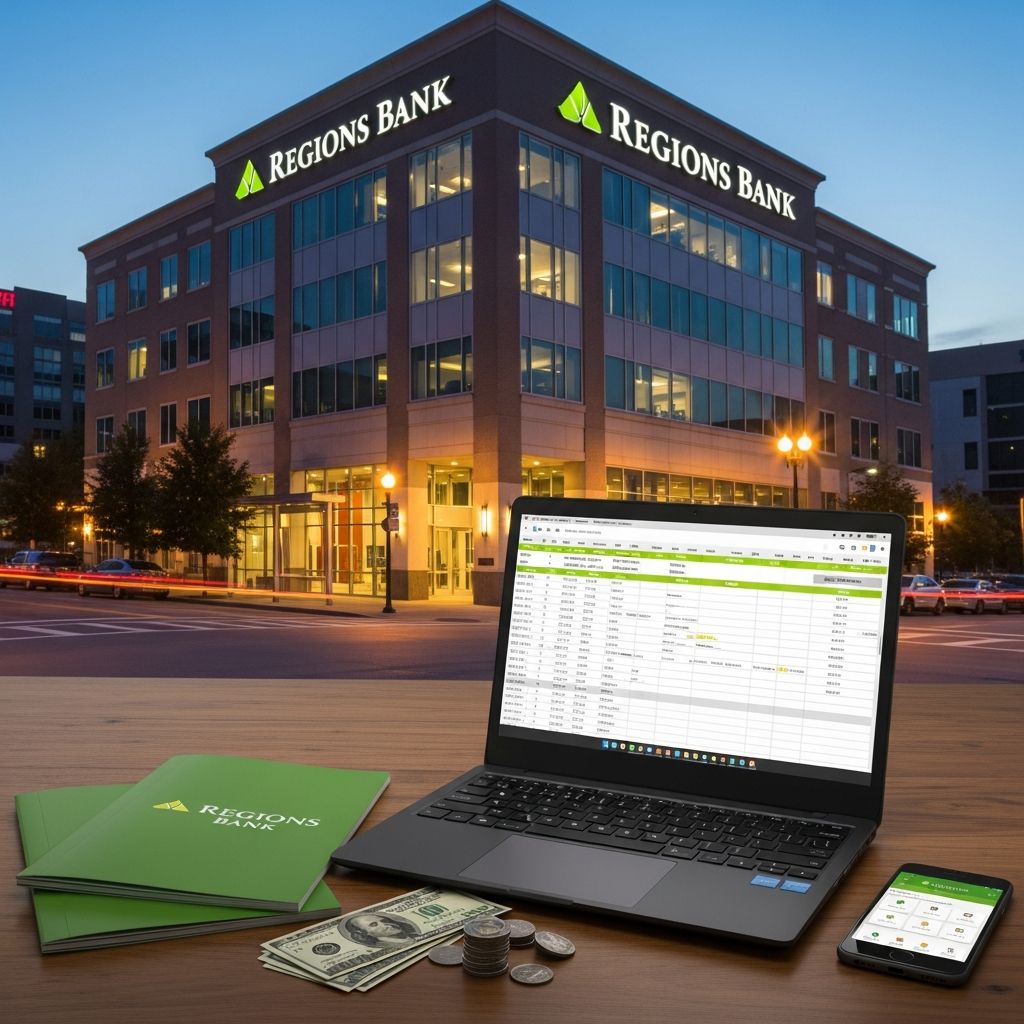
Regions Bank is a large regional institution offering a full suite of consumer and business banking services, including checking, savings, certificates of deposit (CDs), credit cards, mortgages and wealth management solutions. This review walks through its main accounts, interest rates, fees, digital tools and overall pros and cons to help you decide if it fits your banking needs.
About Regions Bank
Regions Bank is the primary banking subsidiary of Regions Financial Corporation, a member of the S&P 500 Index and one of the largest full-service banking providers in the United States. The bank focuses on serving customers across the South, Midwest and Texas, combining traditional branch banking with a growing suite of digital services.
- Headquarters: Birmingham, Alabama
- Parent company: Regions Financial Corporation (NYSE: RF)
- Assets: Around $160 billion in total assets as recently reported by the company
- Footprint: Approximately 1,250 banking offices and more than 2,000 ATMs across its service areas
- Services: Consumer and commercial banking, wealth management, and mortgage products.
The bank positions itself around a mission of creating “shared value” by helping customers meet financial goals, supporting communities, and delivering long-term value to shareholders.
Where Regions Bank Operates
Regions primarily serves customers in the South, Midwest and Texas through its branch and ATM network. While online and mobile banking allow customers to manage accounts from anywhere, full-service access—including in-person cash deposits and some specialty services—is concentrated in states within these regions.
If you live outside the bank’s geographic footprint, you can still open certain accounts online, but the lack of local branches and ATMs may make other banks more practical, especially for customers who frequently use cash services.
Regions Bank Account Options
Regions offers a broad range of deposit accounts designed to meet different needs, from basic everyday checking to interest-bearing savings and fixed-rate CDs. The exact names of products can change over time, but the core categories remain similar.
Checking Accounts
Regions typically offers several tiers of checking accounts that vary by monthly fee, features and balance requirements. Common features include:
- Debit card access for in-store and online purchases
- Online and mobile banking with bill pay
- Mobile check deposit (limits and eligibility may apply)
- Access to Regions ATMs for withdrawals and balance checks
- Optional overdraft services, subject to fees and eligibility
Higher-tier checking accounts may offer benefits such as interest on balances, fee discounts on other products, or preferred rates on savings and CDs.
Savings Accounts
Regions’ savings accounts are designed for short- and medium-term goals, emergency funds, or general savings. Typical features include:
- Interest-bearing balances (APY depends on account type and market conditions)
- Low or moderate minimum opening deposit
- Monthly maintenance fees that may be waived by maintaining a minimum balance or linked checking relationship
- Automatic transfers from checking to encourage regular saving
Interest rates on brick-and-mortar savings accounts at large banks are usually modest compared with those offered by online-only banks, which operate with lower operating costs.
Money Market and Premium Accounts
Some customers may qualify for money market or premium savings accounts, which can offer higher interest rates in exchange for higher minimum balance requirements. These accounts can be useful for holding larger cash balances while keeping funds relatively accessible.
Certificates of Deposit (CDs)
Regions offers CDs with fixed terms and interest rates, making them attractive for customers who want predictable returns and are comfortable locking funds for a set period. Typical characteristics include:
- Fixed terms ranging from several months to several years
- Guaranteed interest rate for the term (subject to bank’s current rate sheet)
- Early withdrawal penalties if funds are taken out before maturity
- Potential for promotional CD rates on select maturities
Because CD rates vary by term and can adjust frequently, customers should compare Regions’ current CD rates with those from online banks and credit unions to ensure they are getting a competitive yield.
Interest Rates at Regions Bank
As with most banks, interest rates at Regions depend on the type of account, local competition and broader monetary policy. In general, large full-service banks tend to pay lower rates on deposits than online-only banks or local credit unions, particularly for savings and standard CDs.
Key considerations when evaluating Regions’ rates include:
- Checking APY: Many standard checking accounts pay little or no interest; premium tiers might offer modest yields with higher balance requirements.
- Savings APY: Rates are often competitive with other regional banks but may lag the top high-yield online savings accounts.
- CD APY: Rates vary by term; promotional CDs may be more competitive and worth monitoring when you have a specific time horizon.
Ultimately, customers choosing Regions often value branch access and relationship banking more than squeezing out the absolute highest APY on savings.
Regions Bank Fees and How to Avoid Them
Like many traditional banks, Regions charges a range of fees, from monthly maintenance charges on some accounts to overdraft and out-of-network ATM fees. Understanding these costs is essential to keeping your banking affordable.
Common Fee Types
- Monthly maintenance fees: Applied to certain checking and savings accounts if minimum balance or activity requirements are not met.
- ATM fees: Charged when using non-Regions ATMs; the ATM owner may also charge a separate fee.
- Overdraft and NSF fees: Assessed when transactions exceed the available balance, subject to the bank’s overdraft policy and any available protections.
- Wire transfer fees: For domestic and international outgoing wires.
- Paper statement fees: Some accounts charge extra if you opt for mailed paper statements instead of e-statements.
Strategies to Minimize Fees
- Choose an account whose balance and activity requirements match your typical usage.
- Set up direct deposit if it helps qualify for fee waivers.
- Use Regions ATMs or partner networks where possible to avoid out-of-network fees.
- Enable low-balance alerts to reduce the risk of overdrafts.
- Opt for electronic statements if they help avoid paper statement fees.
Digital Banking and Tools
Regions has invested in online and mobile banking to complement its branch network and improve convenience for customers who prefer digital account management, consistent with broader industry trends highlighted in regional banking disclosures.
Online Banking Features
- Account balance and transaction history access
- Internal transfers between Regions accounts
- External transfers to linked accounts at other banks
- Online bill pay with scheduling and tracking
- Secure messaging for customer support
Mobile App Features
- Mobile check deposit (subject to eligibility and limits)
- Fingerprint or facial recognition login on supported devices
- Real-time transaction alerts and push notifications
- In-app ATM and branch locator
- Card controls, such as temporarily locking a misplaced debit card
The bank also publishes educational and security-related content—such as guidance on payment network rule changes and fraud reduction—to help businesses and consumers navigate digital payments more safely.
Customer Experience and Support
Regions Bank emphasizes community engagement and customer-centric service in its public communications. The overall customer experience is shaped by branch availability, digital tool quality, and access to human support.
Branch and ATM Access
- Approximately 1,250 branches across the South, Midwest and Texas.
- More than 2,000 ATMs for cash withdrawals and other services.
- In-person services for account opening, cash handling, safe deposit boxes (where available), and financial consultations.
Customer Support Channels
- Phone support via general customer service lines
- In-branch assistance during business hours
- Secure messaging through online and mobile banking
- Dedicated assistance for media and investor relations questions through separate contacts.
For many customers, the combination of regional familiarity, in-person banking and digital tools is a central reason for choosing a bank like Regions over online-only competitors.
Safety, Stability and Regulation
Regions Bank operates in a highly regulated environment and is subject to oversight from federal banking regulators. Deposit accounts at Regions are expected to be insured by the Federal Deposit Insurance Corporation (FDIC), which generally covers up to $250,000 per depositor, per insured bank, per ownership category.
As a large publicly traded institution, Regions Financial Corporation regularly reports financial results, capital ratios and risk information to investors, which are made available through its investor relations website and regulatory filings.
Pros and Cons of Banking with Regions
| Pros | Cons |
|---|---|
| Wide branch and ATM network across the South, Midwest and Texas. | Limited physical presence outside its regional footprint. |
| Full-service bank with checking, savings, CDs, loans and wealth management. | Deposit interest rates may be lower than top online banks. |
| Robust online and mobile banking tools for everyday account management. | Fees on some accounts if balance or activity requirements are not met. |
| Established, publicly traded institution with transparent financial reporting. | Overdraft and out-of-network ATM fees can add up without careful management. |
Is Regions Bank Right for You?
Regions Bank may be a good fit if:
- You live in a state where Regions has a strong branch and ATM presence.
- You value in-person service and relationship banking.
- You want a single institution for checking, savings, loans and potentially wealth management.
On the other hand, you might prefer a different bank if:
- Maximizing savings and CD rates is your top priority.
- You rarely visit branches and are comfortable with online-only banking.
- You need specialized products or features best offered by niche or fintech institutions.
How to Open a Regions Bank Account
If you decide Regions is a good match, opening an account generally involves the following steps:
- Choose an account type: Select from checking, savings or CDs based on your goals.
- Gather identification: Have government-issued ID and other required documents ready.
- Apply online or in-branch: Many accounts can be opened online, but you may prefer visiting a branch for in-person assistance.
- Fund your account: Make an opening deposit via transfer, check, or cash at a branch.
- Set up digital access: Enroll in online and mobile banking and configure alerts, bill pay, and other tools.
Frequently Asked Questions (FAQs)
Q: Is Regions Bank FDIC insured?
A: Yes. Regions Bank is part of Regions Financial Corporation, a regulated U.S. banking organization, and customer deposits are expected to be insured by the FDIC up to applicable limits.
Q: Where does Regions Bank operate?
A: Regions primarily serves customers across the South, Midwest and Texas, with about 1,250 branches and more than 2,000 ATMs in its footprint.
Q: What kinds of accounts does Regions offer?
A: Regions offers a full range of consumer and commercial accounts, including checking, savings, CDs and money market accounts, alongside credit products and wealth management services.
Q: Are Regions Bank’s interest rates competitive?
A: Regions’ rates are generally comparable to many other traditional regional banks. However, online-only banks often offer higher APYs on savings and CDs because they have lower operating costs, so it is wise to compare current rates before opening an account.
Q: How strong is Regions Bank financially?
A: Regions Financial Corporation is a large, publicly traded institution with around $160 billion in assets and regular public reporting of its financial condition, including quarterly earnings and capital measures.
References
- Company Profile — Regions Financial Corporation. 2025-10-01. https://ir.regions.com/company/company-profile/
- About Regions — Regions Bank. 2024-06-30. https://www.regions.com/about-regions
- Regions Financial Corp. Announces Quarterly Earnings Release Dates for 2026 — Regions Financial Corporation (Business Wire). 2025-11-18. https://ir.regions.com/news-events/press-releases/news-details/2025/Regions-Financial-Corp–Announces-Quarterly-Earnings-Release-Dates-for-2026/default.aspx
- Investor Relations Home — Regions Financial Corporation. 2025-09-30. https://ir.regions.com/home/default.aspx
- Financial Information – Quarterly Investor Info — Regions Financial Corporation. 2025-10-17. https://ir.regions.com/financial-information/quarterly-investor-info/default.aspx
- Explore 2026 Nacha Rule Changes — Regions Bank. 2024-08-12. https://www.regions.com/commercial-banking/treasury-management/managing-payments/nacha-rule-changes
Similar Articles








Read full bio of medha deb