Refinancing Your HELOC: Options and Strategies
Discover smart ways to refinance your home equity line of credit, lower rates, and manage payments effectively for long-term financial relief.

Refinancing a home equity line of credit (HELOC) allows homeowners to replace their existing variable-rate line with more favorable terms, such as lower interest rates, extended draw periods, or fixed payments. This process can be particularly beneficial as the draw period ends, transitioning to higher repayment phases.
Understanding HELOC Phases and Refinance Timing
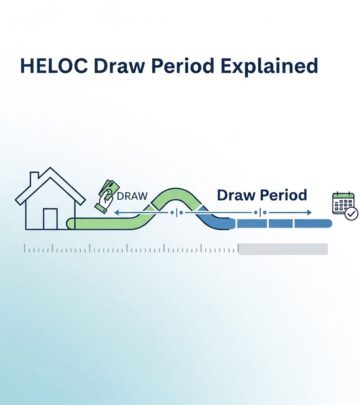
A HELOC typically features a draw period of 5-10 years where borrowers access funds with interest-only payments, followed by a 10-20 year repayment period with principal and interest due. Refinancing becomes crucial near the draw period’s end to avoid balloon payments or steep increases in monthly obligations[10]. Home value appreciation or improved credit can unlock better terms during this transition.
Key Reasons to Consider HELOC Refinancing
- Secure Lower Rates: If market rates drop or your credit improves, refinancing can reduce variable rates tied to the prime rate.
- Extend Access to Funds: A new HELOC resets the draw period, providing continued borrowing capacity for projects or emergencies.
- Lock in Fixed Payments: Switching to a home equity loan offers predictable payments, shielding against rate fluctuations.
- Consolidate Debt: Use proceeds to pay off high-interest debts, potentially saving thousands over time.
- Access Additional Equity: Rising home values may allow borrowing more against newfound equity.
Qualification Criteria for HELOC Refinancing
Lenders evaluate several factors to approve a refinance. Most require at least 15-20% home equity, calculated as current market value minus all outstanding mortgages and HELOC balances, aiming for a combined loan-to-value (CLTV) ratio of 80-85%.
| Requirement | Typical Threshold | Why It Matters |
|---|---|---|
| Credit Score | 620-680+ (best rates 700+) | Higher scores secure lower rates and approval odds. |
| Debt-to-Income (DTI) Ratio | Under 43% | Ensures ability to handle new payments alongside existing debts. |
| Home Equity | 15-20% minimum | Protects lender against value drops. |
| Payment History | Strong, on-time record | Demonstrates reliability. |
Improvements in these areas since originating the original HELOC can significantly boost approval chances.
Primary Refinancing Pathways
Option 1: New HELOC
Opening a fresh HELOC pays off the old one, often with a new 10-year draw period. Pros include flexible access and potentially lower intro rates; cons involve ongoing variable rates and possible higher long-term interest. Some lenders offer no closing costs for refinances.
Option 2: Fixed-Rate Home Equity Loan
Convert to a lump-sum loan with stable payments. Ideal for those preferring predictability over flexibility. Rates are often lower than variable HELOCs, but funds are not reusable.
Option 3: Cash-Out Mortgage Refinance
Roll the HELOC balance into your primary mortgage for a single payment. This suits homeowners with excellent credit seeking the lowest rates, though it extends the lien on the home.
Option 4: Loan Modification with Current Lender
Negotiate adjusted terms without a new loan. Best for strong payment histories, as portfolio lenders may extend draw periods or lower rates internally.
Other Alternatives
Personal loans or balance transfers work for smaller balances but carry higher rates and shorter terms, unsuitable for large HELOCs.
Step-by-Step Guide to Refinancing
- Assess Your Finances: Review credit score, DTI, and equity via recent appraisal or online estimators.
- Shop Lenders: Compare rates from banks, credit unions, and online lenders; start with your current provider.
- Gather Documents: Prepare ID, income proof, mortgage statements, tax records, and explanations for credit issues.
- Apply: Submit application; expect credit pull and initial rate quote within days.
- Underwriting and Appraisal: Lender verifies home value; process takes 2-6 weeks.
- Review and Lock Rate: Sign conditional offer, locking in terms.
- Close: Pay fees, sign docs; 3-day rescission period applies by law. Funds payoff old HELOC.
Costs and Financial Implications
Expect 2-5% of loan amount in fees: appraisal ($300-500), origination (0.5-1%), title search, and recording. Some HELOC refinances waive these. Calculate break-even: divide fees by monthly savings. Tax deductibility applies only if funds improve the home; consult a professional.
| Cost Type | Estimated Range |
|---|---|
| Appraisal | $300-$500 |
| Origination Fee | 0.5%-1% of loan |
| Closing Costs Total | 2%-5% |
| Potential Waivers | Many for new HELOCs |
Pros and Cons of Each Approach
| Option | Pros | Cons |
|---|---|---|
| New HELOC | Extended draw, flexibility, low/no fees | Variable rates, interest-only risk |
| Home Equity Loan | Fixed rates/payments | No redraw, higher initial rates |
| Mortgage Refi | Lowest rates, single payment | Longer process, full mortgage reset |
| Modification | Simple, no new app | Limited availability |
Risks and Mitigation Strategies
Variable rates can rise, eroding savings; fixed options mitigate this. Equity shortfalls from market dips may block approval—monitor values. Overborrowing risks foreclosure; limit to needs[10]. Right of rescission protects against regrets.
Current Market Considerations
As of 2026, with stabilizing rates, refinancing favors those ending draw periods. Improved home values post-pandemic boost equity for many. Compare multiple quotes for optimal terms.
Frequently Asked Questions (FAQs)
Can I refinance if my credit score dropped?
Possible with scores above 620, but expect higher rates. Focus on rebuilding first.
How long does the process take?
2-6 weeks from application to closing.
Is refinancing tax-deductible?
Interest may be if used for home improvements; verify with advisor.
What if I have low equity?
Wait for appreciation or pay down principal; alternatives like personal loans exist but cost more.
Does refinancing reset my draw period?
Yes, with a new HELOC.
Making the Right Choice for Your Situation
Evaluate goals: flexibility (new HELOC), stability (fixed loan), or simplification (mortgage refi). Run scenarios with online calculators, consult advisors, and prioritize lenders with low fees. Strategic refinancing can save significantly while aligning with financial plans.
References
- You Can Refinance a HELOC – Here’s How — Chase Bank. 2025. https://www.chase.com/personal/mortgage/education/financing-a-home/refinancing-a-heloc
- Can You Refinance a Home Equity Loan? — Axos Bank. 2025. https://www.axosbank.com/personal/insights/loans/home/can-you-refinance-a-home-equity-loan
- How to refinance a HELOC — First Federal Bank of Kansas City. 2025. https://www.ffbkc.com/blogs/borrowing/how-to-refinance-heloc/
- Refinance a HELOC: How To Restructure a Home Equity — Bankrate. 2025. https://www.bankrate.com/home-equity/ways-to-refinance-heloc/
- Can You Refinance a HELOC? — Credit Union of Southern California. 2025. https://www.cusocal.org/faqs/can-you-refinance-a-heloc/
- Your guide to refinancing a HELOC — Rocket Mortgage. 2025. https://www.rocketmortgage.com/learn/can-you-refinance-a-heloc
- Refinance Your Home Equity Line or Transfer Balances — Bank of America. 2025. https://www.bankofamerica.com/home-equity/servicing-your-home-equity-line-of-credit/
Similar Articles








Read full bio of Sneha Tete