Should You Refinance Student Loans With a Balance Transfer Card?
Explore the risks and benefits of using balance transfer cards to pay off student loan debt.

Managing student loan debt can feel overwhelming, especially when you’re looking for ways to reduce the burden of interest payments. One strategy that some borrowers consider is transferring their student loan balance to a credit card with a 0% introductory annual percentage rate (APR). While this approach might seem appealing on the surface, it comes with significant risks and limitations that make it an unattractive option for most borrowers. Understanding the mechanics of this strategy, along with its advantages and disadvantages, can help you make an informed decision about your student loan repayment options.
Understanding Your Student Loan Repayment Options
Before considering a balance transfer strategy, it’s important to recognize that you have several legitimate alternatives for managing your student loan debt. The most straightforward approach is to stick with your current repayment plan and make regular monthly payments until your loans are completely paid off. If your monthly obligations feel burdensome, you have the flexibility to explore income-driven repayment plans, which allow you to pay a percentage of your discretionary income over a period of 20 to 25 years before any remaining balance is forgiven.
Additionally, if you work in certain fields, you may qualify for employment-related forgiveness programs. Teacher Loan Forgiveness and Public Service Loan Forgiveness (PSLF) are two prominent examples that can substantially reduce or eliminate your student loan obligations if you meet specific service requirements.
Another option many borrowers consider is refinancing their student loans, typically to secure a lower interest rate or reduce their monthly payment obligations. However, refinancing comes with notable disadvantages that you should carefully evaluate before proceeding.
The Case Against Refinancing Federal Student Loans
When you refinance federal student loans with a private lender, you lose access to critical federal protections. These protections include income-driven repayment programs, deferment options, forbearance provisions, and subsidized loan benefits. For subsidized federal loans, the government pays the interest while you’re in school on at least a half-time basis—a benefit you’ll forfeit upon refinancing with a private lender.
Another significant consideration is the difference between fixed and variable interest rates. Federal loans typically offer fixed interest rates, providing predictable monthly payments. Private loans, conversely, tend to feature variable interest rates, which can be problematic in a rising interest rate environment. As rates increase, your monthly payment obligations could increase substantially over the life of your loan.
If you want to stick with federal loans, you can refinance your federal student loans into a Direct Consolidation Loan. However, this option won’t save you money. The new loan uses the weighted average of your previous student loans’ interest rates as its new rate, meaning you gain no financial benefit from the consolidation.
The Balance Transfer Card Strategy: A Risky Proposition
According to Michael Lux, an attorney who has spent five years advocating for student loan borrowers at The Student Loan Sherpa, using a balance transfer card to pay off student loans is rarely a good idea, even though he acknowledges it could work in “very limited circumstances.”
The concept behind this strategy is straightforward: transfer your student loan balance to a credit card offering a 0% introductory APR, then pay down the balance before the promotional period expires. In theory, this eliminates interest charges during the introductory period. However, in practice, this approach creates more problems than it solves.
Key Disadvantages of Balance Transfer Cards for Student Loans
Limited Transferability
Your student loan lender may not allow you to transfer a balance to a credit card. While several banks do permit transfers from student loan accounts, you’ll need to check with your specific lender to determine if this option is available. Additionally, the amount you can transfer is limited to your credit card’s credit limit. Since most borrowers won’t have a credit limit matching their total student loan debt, this method might only work for a portion of your loans.
Loss of Federal Protections
When you transfer federal student loans to a balance transfer card, you lose crucial federal protections, including deferment, forbearance, and access to income-driven repayment plans. These safeguards exist to help you during financial hardship. Once you’ve transferred your balance to a credit card, you lose these critical safety nets, leaving you vulnerable if your financial situation changes unexpectedly.
Balance Transfer Fees
Most credit card issuers charge a balance transfer fee ranging from 3% to 5% of your transferred balance. For a $10,000 transfer, this translates to $300 to $500 in upfront fees. For larger balances, such as $15,000, you could pay anywhere from $450 to $750 in fees. These substantial charges eat into any interest savings you might achieve during the 0% introductory period.
Higher Long-Term Interest Rates
While balance transfer cards offer 0% introductory rates, these offers don’t last forever. Once the promotional period ends, you’ll face the card’s regular interest rate. The average interest rate on all credit cards exceeds 17%, which is substantially higher than the ongoing fixed rates on federal loans. If you haven’t paid off your balance by the time the introductory period expires, your interest charges can skyrocket dramatically.
Significant Risk of Financial Hardship
Student loan expert Ben Luthi of Student Loan Hero warns that pursuing a balance transfer offer to save money on interest could leave you worse off if you don’t pay down your balance before the offer ends. “The chance of using a 0% APR promotion is enticing, but if something goes wrong, you could end up in a bad situation financially,” he explained. Missing even a single payment during your card’s 0% introductory period could mean losing your promotional rate entirely, immediately subjecting your remaining balance to the regular credit card interest rate.
Shortened Repayment Timeline
Balance transfer cards typically offer introductory 0% APR periods lasting anywhere from a few months to around a year. This compressed timeline creates intense pressure to pay off your balance quickly. Unlike traditional student loan repayment, which can extend over years, you need to eliminate your credit card balance within months to avoid substantial interest charges.
When a Balance Transfer Card Might Make Sense
Despite the numerous drawbacks, there are specific, limited circumstances where transferring student loans to a balance transfer card could make financial sense.
Small Remaining Balance
If you’re down to your final $10,000 or less in student loan debt and you’re fully committed to aggressive repayment, a balance transfer card could work. For example, if you can commit to paying $555 monthly, you could eliminate a $10,000 balance within 18 months while enjoying a 0% APR promotional period. In this scenario, you’d avoid substantial interest charges while accelerating your debt payoff timeline.
Expected Windfall Income
Another scenario where this strategy might make sense is if you’re expecting a significant financial windfall and want to save on interest in the meantime. For instance, if you’re anticipating a substantial work bonus in nine months, a balance transfer card could help you avoid interest charges while you wait for the funds to arrive. Similarly, if you have a certificate of deposit (CD) or bond maturing at a set date, a balance transfer card could serve as a bridge, allowing you to pay off your student loan while awaiting your investment’s maturity.
The Math Must Work in Your Favor
Before considering a balance transfer, you must run detailed calculations to ensure it actually saves you money. If your balance is small, such as just a few thousand dollars, the interest savings from the 0% APR offer may not even offset the balance transfer fee. Additionally, if you’re paying a balance transfer fee, the math becomes even less favorable. Only proceed if your specific numbers demonstrate clear financial benefits.
The Better Alternative: Private Loan Refinancing
If you’re determined to refinance your student loans, you’re better off working with a private lender who can offer competitive interest rates and favorable loan terms. Private lenders compete on rates and terms, and if you have good credit and stable income, you may qualify for rates significantly lower than your current loans offer. This approach avoids the risky timeline pressure of balance transfer cards while potentially providing substantial savings.
Why Balance Transfer Cards Are Usually a Losing Proposition
The fundamental reality is that balance transfer cards typically represent a losing financial strategy for student loan repayment. These cards offer 0% APR for a limited time, but once that period expires, you’ll pay regular credit card interest rates. Since federal student loans offer low fixed rates—typically much lower than the 17% average credit card rate—paying student loans at a card’s regular interest rate will cost you significantly more over time, even after accounting for money saved during the initial 0% period.
The combination of balance transfer fees, the risk of missing the payment deadline, loss of federal loan protections, and compressed repayment timelines creates a scenario where the potential downside far outweighs any modest interest savings you might achieve.
Comparing Your Refinancing Options
| Refinancing Option | Key Advantages | Key Disadvantages | Best For |
|---|---|---|---|
| Keep Federal Loans | Access to income-driven repayment, forbearance, PSLF eligibility | Higher interest rates, longer payoff timeline | Borrowers who may face hardship; public service employees |
| Private Refinancing | Potentially lower rates, competitive terms, single servicer | Loss of federal protections, variable rate risk | Stable income earners with good credit seeking lower rates |
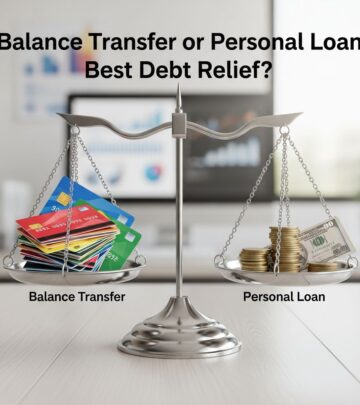
| Balance Transfer Card | Temporary 0% APR, motivation to pay quickly | High risk, fees, strict deadline, credit limit restrictions | Only small final balances with guaranteed payment ability |
| Direct Consolidation Loan | Streamlined federal loan management | No interest rate savings, weighted average rate used | Borrowers wanting simpler loan administration |
Frequently Asked Questions
Q: Can I transfer any amount of student loans to a balance transfer card?
A: No. You’re limited to your credit card’s credit limit. Most borrowers can’t transfer their entire student loan balance, making this option impractical for significant debt amounts.
Q: What happens if I miss a payment during the 0% introductory period?
A: Missing a payment could cause you to lose your 0% APR promotional rate immediately. Your remaining balance would then be subject to the card’s regular interest rate, which often exceeds 17%, creating a serious financial problem.
Q: Are balance transfer fees always charged?
A: Most credit card issuers charge a balance transfer fee of 3% to 5%, though some cards may occasionally offer promotional periods without fees. Always check the card’s terms before transferring.
Q: Will my student loan servicer allow me to make a balance transfer?
A: Many servicers don’t permit balance transfers to credit cards. You’ll need to contact your specific lender to determine if this option is available for your loans.
Q: Is refinancing with a private lender safer than using a balance transfer card?
A: Yes, private refinancing is generally safer because you avoid strict promotional deadlines and credit limit restrictions. However, you’ll still lose federal loan protections, so it’s important to carefully evaluate your circumstances.
Q: What should I do if I can’t pay off my balance transfer card before the promotional period ends?
A: Consider taking out a personal loan to avoid paying substantial interest charges. A personal loan will likely offer better terms than credit card interest rates.
References
- Should You Refinance Student Loans With a Balance Transfer Card? — Wise Bread. Accessed January 12, 2026. https://www.wisebread.com/should-you-refinance-student-loans-with-a-balance-transfer-card
- Using a Balance Transfer Credit Card to Repay Student Loans — Student Loan Planner. Accessed January 12, 2026. https://www.studentloanplanner.com/balance-transfer-credit-card-to-pay-student-debt/
- What Are the Pros and Cons of Balance Transfers? — myFICO. Accessed January 12, 2026. https://www.myfico.com/credit-education/blog/balance-transfer-pros-cons
- Is it Possible to Transfer Student Loans to a Zero-Interest Credit Card? — Juno. Accessed January 12, 2026. https://joinjuno.com/financial-literacy/student-loans/transfer-student-loans-zero-interest-credit-card
- Can you pay off student loans with a credit card? — Chase Bank. Accessed January 12, 2026. https://www.chase.com/personal/credit-cards/education/basics/can-you-pay-off-student-loans-with-credit-card
Similar Articles








Read full bio of medha deb