Should You Refinance State or Private Student Loans?
Learn when it makes sense to refinance state or private student loans, and how to compare your options wisely.

Refinancing student loans can be a powerful way to trim your interest costs, simplify repayment, and adjust monthly payments to better match your budget. However, deciding whether to refinance a state-based loan or a private student loan is not always straightforward, especially if you also hold federal loans or rely on special protections such as income-driven repayment.
This guide explains the key differences between state and private student loan refinancing, when it may make sense to refinance, and how to compare offers so you do not give up valuable benefits unnecessarily. It mirrors the topics typically covered in expert student loan refinancing overviews while providing deeper context and practical examples.
Understanding State, Federal, and Private Student Loans
Before you decide what to refinance, you need a clear picture of the types of loans you hold and what you might lose or gain by changing them.
Federal Student Loans
Federal student loans are funded by the U.S. Department of Education and come with standardized interest rates and borrower protections set by law. These protections can be very valuable over the life of the loan.
- Common types: Direct Subsidized Loans, Direct Unsubsidized Loans, Direct PLUS Loans (for parents and graduate students), and Direct Consolidation Loans.
- Key benefits:
- Access to multiple income-driven repayment (IDR) plans that cap payments as a share of income.
- Eligibility for loan forgiveness programs such as Public Service Loan Forgiveness (PSLF) when qualifying criteria are met.
- Deferment and forbearance options during unemployment, economic hardship, or certain other situations.
- Interest rates: Fixed and set annually for new loans, not based on your individual credit.
Because federal loans provide benefits that private lenders do not have to match, experts generally recommend exhausting federal options and understanding all federal protections before refinancing federal debt into a private loan.
State-Based Student Loans
State-based loans are typically offered by state agencies, authorities, or nonprofit organizations, often with the goal of making college more affordable for residents. These loans may behave like a hybrid between federal and private loans.
- Who offers them: State higher-education agencies and student loan authorities (for example, a state student loan authority that lends nationwide).
- Features may include:
- Fixed interest rates that can be competitive with, or sometimes lower than, typical private loan rates.
- Limited borrower protections such as forbearance or interest-only periods, sometimes more generous than fully private lenders but less flexible than federal programs.
- Resident benefits, such as lower rates for in-state borrowers or those attending in-state schools.
- Repayment terms: Often structured like private loans, with set terms (for example, 5–15 years) and credit-based underwriting.
Some state lenders also refinance loans, including for borrowers who have not completed a degree, which can make them attractive compared with traditional private lenders.
Private Student Loans
Private student loans are issued by banks, credit unions, and specialized finance companies. Unlike federal loans, private loans are based on credit and income, often requiring a cosigner.
- Rates and terms: Variable or fixed interest rates based on your credit profile, loan term, and market conditions.
- Fewer protections: Private lenders are not required to offer income-driven repayment or forgiveness programs, and forbearance policies vary widely.
- Customization: You may be able to choose from multiple term lengths and rate structures to tailor your monthly payment and total interest costs.
Because private loans lack federal protections, there is usually less downside to refinancing private debt when you can qualify for a better rate or more suitable term.
What Does It Mean to Refinance Student Loans?
Refinancing means taking out a new loan with a private or state-based lender to pay off one or more existing student loans. The new loan replaces your old ones and comes with its own rate, term, and repayment conditions.
- Potential benefits:
- Lower interest rate, which can reduce total interest paid.
- Changing loan term to lower monthly payments or pay off debt faster.
- Simplifying multiple loans into a single monthly payment.
- Releasing a cosigner, if the new lender allows it.
- Key trade-offs:
- Refinancing federal loans into a private loan permanently forfeits federal protections and forgiveness eligibility.
- State loans may offer unique benefits that could be lost after refinancing with a private lender.
There is generally no application fee to refinance, and many lenders allow you to pre-qualify with a soft credit check to estimate rates without affecting your credit score.
Refinancing State vs. Private Student Loans
The choice between refinancing state-based or private loans first depends on the interest rates you currently pay, any borrower protections you rely on, and how competitive new offers are.
Why You Might Refinance State-Based Loans
State loans can sometimes carry higher rates than current private refinance offers, especially if market rates have fallen or your credit has improved since you borrowed.
- Good reasons to consider refinancing state loans:
- Your state loan interest rate is significantly higher than rates you can now qualify for.
- You no longer need any special benefits (like interest rate reductions or localized forgiveness) that your state program provides.
- You want to consolidate state and private loans into one payment with a single lender.
- Reasons to pause before refinancing:
- Your state program offers extended forbearance or income-based options that a new lender will not match.
- You qualify for state-specific incentives, discounts, or forgiveness tied to working in certain professions or locations.
Why You Might Refinance Private Loans
Most guidance from reputable financial sources emphasizes that refinancing private loans is often lower risk than refinancing federal loans, because you are not giving up federal statutory protections.
- Compelling reasons to refinance private loans:
- You qualify for a lower interest rate with your improved credit profile or higher income.
- You want to extend your term to lower monthly payments, or shorten it to reduce total interest.
- You want to move from a variable rate to a fixed rate for more predictable payments.
- When to be cautious:
- Your current private lender offers unusually flexible forbearance or hardship programs that a new lender may not match.
- You expect your income or credit to improve soon and may qualify for even better rates if you wait.
Comparison Table: Should You Refinance?
| Loan Type | Key Benefits You Might Lose | When Refinancing Often Makes Sense | When to Think Twice |
|---|---|---|---|
| Federal loans | Income-driven repayment, PSLF, government forbearance and discharge options. | When you have high income, strong emergency savings, and do not need federal benefits. | If you may use IDR, forgiveness, or need built-in safety nets. |
| State-based loans | State-specific borrower protections, in-state discounts, targeted forgiveness or incentives. | When the new rate is clearly lower and state-specific benefits are not relevant to you. | If you rely on state hardship programs or special incentives. |
| Private loans | Any lender-specific forbearance or loyalty perks. | When you can lock in a lower rate, better term, or more predictable payments. | If your credit is weak or your current lender offers unusually strong protections. |
Key Factors to Consider Before Refinancing
Whether you are refinancing state-based or private loans, use the following list to guide your decision.
- Interest rate comparison
- Compare the weighted average rate of your existing loans against new offers.
- Remember that a longer term can lower your monthly payment but increase total interest paid.
- Loan term and total cost
- Shorter terms typically mean higher monthly payments but lower total interest.
- Use refinance calculators from reputable financial sites to model different scenarios.
- Borrower protections
- List any protections you currently have: forbearance, deferment, income-based options, or forgiveness paths.
- Check the new lender’s policies carefully; protections vary widely between refinance companies.
- Credit requirements
- Most refinance lenders expect good to excellent credit and steady income, or a strong co-signer.
- If your credit is still developing, you may benefit from waiting until your profile improves.
- Co-signer considerations
- Some borrowers refinance to remove a co-signer from existing loans.
- Check whether the new lender allows co-signer release and under what conditions.
Practical Steps to Refinance Your Loans
If you decide refinancing is worth exploring, follow a structured process so you can compare offers for both state and private loans side by side.
Step 1: Inventory Every Loan
Gather complete details for each loan you hold, including:
- Loan type (federal, state-based, private)
- Current balance
- Interest rate (fixed or variable)
- Remaining term and monthly payment
- Any special benefits (forgiveness, rate discounts, hardship options)
This inventory helps you decide which loans to target for refinancing and which to leave as-is.
Step 2: Clarify Your Goals
Be specific about what you want from refinancing:
- Lower monthly payment to ease cash flow
- Lower total interest cost and faster payoff
- Fixed rather than variable rates for stability
- Consolidation into one monthly bill
- Co-signer release or change of responsibility between parent and student
Your priorities will guide which offers are truly attractive and which are less helpful.
Step 3: Shop Multiple Lenders
Use reputable lender marketplaces and comparison tools to get prequalified quotes from multiple refinance lenders.
- Check both national private lenders and state-based refinance programs.
- Pay attention not only to the lowest advertised rate but also to typical ranges and eligibility criteria.
Pre-qualification tools often use soft credit checks, allowing you to explore options without affecting your credit score.
Step 4: Compare Offers Holistically
Compare offers using more than just the interest rate:
- APR and whether the rate is fixed or variable
- Loan term and flexibility to change it later
- Hardship options, forbearance length, and any built-in insurance or protections
- Customer support, online tools, and loan servicing reputation
Look for a combination of lower cost and adequate protection relative to your risk tolerance and career stability.
Step 5: Decide Which Loans to Include
You do not have to refinance every loan you have. In many cases, it is best to:
- Refinance high-rate private loans into a lower-rate private or state-based refinance loan.
- Carefully evaluate whether refinancing state-based loans will cause you to lose benefits you value.
- Think very carefully before refinancing federal loans if you might need federal protections.
When Not to Refinance
Refinancing is not universally beneficial. There are circumstances where keeping your existing loans is safer or more economical.
- You rely on federal benefits: If you use or expect to use income-driven repayment, PSLF, or other federal protections, refinancing those loans into a private loan is usually not advisable.
- Your financial situation is unstable: If your income is volatile, you lack emergency savings, or your credit has taken a recent hit, waiting may allow you to qualify for better terms later.
- Your loan rate is already competitive: If your current state or private loan interest rate is already low, potential savings from refinancing may be minimal.
- You are close to payoff: If you are within a year or two of paying off a loan, fees, administrative effort, and potential risks may not be worth the small remaining interest savings.
Frequently Asked Questions (FAQs)
Q: Is refinancing the same as consolidating student loans?
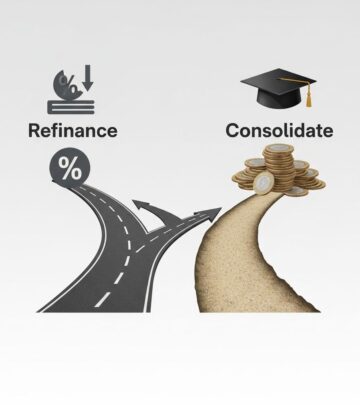
A: No. Refinancing means taking out a new private (or state-based) loan to replace existing loans and potentially get a lower rate or different term. Consolidation, in the federal system, combines multiple federal loans into a Direct Consolidation Loan without lowering the interest rate, and it preserves federal protections.
Q: Should I refinance my federal loans into a private refinance loan?
A: Only if you are confident you will not need federal benefits such as income-driven repayment or PSLF, and you have strong, stable finances. Most independent experts caution against refinancing federal loans for borrowers who may rely on those protections.
Q: Is it safer to refinance private or state loans instead of federal loans?
A: Generally, refinancing private loans carries less risk because you are not giving up federal statutory protections. For state loans, assess whether you would lose any state-specific benefits or hardship programs before refinancing.
Q: Will refinancing affect my credit score?
A: Lenders usually perform a hard credit inquiry when you formally apply, which can cause a small, temporary dip in your credit score. Over time, on-time payments and responsible use of credit can help your score recover and potentially improve.
Q: Can I refinance more than once?
A: Yes. You can refinance multiple times if you continue to qualify for better terms. However, weigh closing any old accounts against potential benefits, and ensure that each refinance meaningfully improves your rate, term, or protections.
References
- Federal Versus Private Loans — U.S. Department of Education, Federal Student Aid. 2024-03-01. https://studentaid.gov/understand-aid/types/loans/federal-vs-private
- Refinance Student Loans: Compare Top 8 Lenders Now — NerdWallet. 2025-01-10. https://www.nerdwallet.com/student-loans/refinancing
- Best Student Loan Refinance Companies of 2026 — Money. 2025-12-15. https://money.com/best-student-loan-refinance/
- Best Student Loan Refinance Rates and Lenders — Credible. 2026-01-05. https://www.credible.com/refinance-student-loans
- Best Refinance Student Loans — Bankrate. 2025-11-20. https://www.bankrate.com/loans/student-loans/refinance-rates/
- Federal Student Loans vs. Private Student Loans — Edvisors. 2024-06-01. https://www.edvisors.com/compare-lenders/
- Student Loan Refinance Lender Marketplaces: 2026 Comparison — EducationData.org. 2025-12-01. https://educationdata.org/student-loan-refinance-lender-marketplaces
Similar Articles








Read full bio of Sneha Tete