Recurring vs Non-Recurring Closing Costs
Complete guide to understanding one-time and ongoing closing costs in home purchases.
Understanding Closing Costs: Recurring vs. Non-Recurring
When purchasing a home, the total cost extends far beyond the property’s purchase price. Buyers must account for numerous fees and expenses associated with securing a mortgage and completing the real estate transaction. These costs, collectively known as closing costs, typically range from 2% to 5% of the home’s purchase price and are paid at the closing when the loan is officially completed. Understanding the distinction between recurring and non-recurring closing costs is essential for accurate budgeting and financial planning throughout the home-buying process.
What Are Closing Costs?
Closing costs represent the collection of fees and expenses paid by both buyers and sellers during the conclusion of a real estate transaction. These costs are entirely separate from your down payment and cover various services and processes necessary to transfer ownership and secure mortgage financing. The Real Estate Settlement Practices Act (RESPA) requires lenders to provide borrowers with a Good Faith Estimate that discloses all anticipated closing costs upfront, allowing potential homeowners to make informed decisions and verify they’re selecting the best mortgage deal available.
The specific amount you’ll pay depends on several factors, including your loan amount, property location, loan type, property type, and the rates charged by third-party service providers. Because these variables differ significantly from one transaction to another, there is no standard closing cost figure that applies universally to all home purchases.
The Two Main Categories of Closing Costs
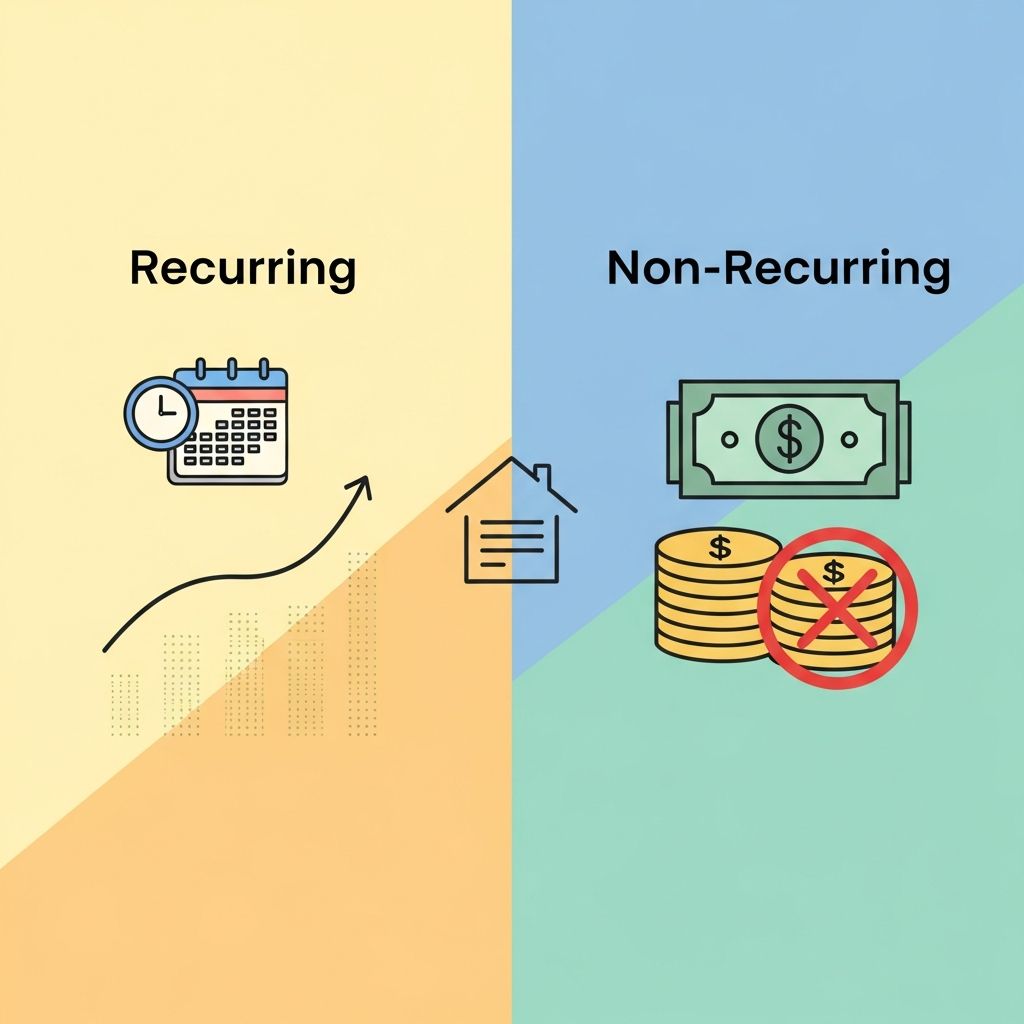
Closing costs fall into two distinct categories based on when and how often they’re paid. Understanding this distinction helps you plan your finances effectively and recognize which expenses are one-time occurrences versus ongoing obligations.
Non-Recurring Closing Costs Explained
Non-recurring closing costs are one-time fees that buyers pay exclusively at the time of closing. These transaction costs represent expenses incurred specifically to complete the purchase and transfer ownership of the property. They typically range from $4,000 to $20,000 or more, depending on the purchase price, location, and specific transaction requirements.
These costs cover essential services and legal requirements necessary to finalize the home purchase. Common non-recurring closing costs include:
- Escrow fees and escrow company expenses
- Title insurance premiums and title company fees
- Home appraisal fees
- Home inspection costs
- Lender loan origination fees and processing fees
- Underwriting fees
- Notary fees
- Recording fees charged by local government
- Transfer taxes and documentary transfer taxes
- Credit report fees
- Real estate broker commissions
- Home warranty premiums
- Property disclosure fees
- Attorney fees (if applicable)
Non-recurring costs also include fees associated with refinancing, such as appraisals and credit reports. These expenses are charged only once as an expense of closing the transaction, making them predictable and easier to budget for during the home-buying process.
Recurring Closing Costs Explained
Recurring closing costs, also known as pre-paid items, represent ongoing charges that continue beyond the closing date. These are monthly or annual expenses that homeowners pay throughout their ownership of the property. At closing, buyers typically prepay several months of these recurring costs to establish escrow accounts and ensure funds are available for these ongoing obligations.
Recurring closing costs typically include:
- Prepaid interest on the mortgage loan
- Property taxes
- Hazard insurance and homeowner’s insurance premiums
- Private mortgage insurance (PMI) if applicable
- Homeowners association (HOA) fees
- Fire and certain other insurance premiums
- Mortgage insurance premiums
- Flood insurance (when applicable)
When an impound account is established, lenders typically collect four to ten months of property taxes and up to fourteen months of hazard insurance upfront to fund the account. This can significantly increase the total recurring costs paid at closing.
Comparing Recurring and Non-Recurring Closing Costs
| Cost Type | Non-Recurring | Recurring |
|---|---|---|
| Payment Frequency | One-time at closing | Monthly, annually, or prepaid at closing |
| Examples | Title fees, appraisals, inspections, recording fees | Interest, taxes, insurance, HOA fees |
| Typical Range | $4,000 to $20,000+ | Varies; significantly higher with impound accounts |
| Budgeting Impact | Predictable, upfront expense | Ongoing monthly/annual obligations |
| Can be credited by seller | Yes, commonly offered | Rarely; may affect buyer qualification |
Factors That Influence Total Closing Costs
The amount you’ll pay in closing costs depends on multiple variables specific to your situation and location. Understanding these factors helps you anticipate expenses more accurately.
Loan Amount
Many fees are calculated as a percentage of your loan amount. A larger loan typically results in higher closing costs, though the percentage may decrease with bigger loans.
Property Location
Local tax rates, recording fees, and transfer taxes vary significantly by jurisdiction. Some states and municipalities have substantial transfer taxes, while others have minimal or no such taxes. For example, a $600,000 purchase in a city like Oakland with significant transfer taxes could result in closing costs as high as $20,000, compared to just $8,000 in an area with no transfer taxes and no impound account.
Loan Type and Property Type
Different mortgage programs and property types carry different cost structures. Single-family homes, condos, and investment properties may have varying closing costs. Additionally, whether you’re purchasing or refinancing affects the fees you’ll encounter.
Impound Account Establishment
If your lender requires an impound account, recurring costs increase substantially because the lender collects months of property taxes and insurance upfront.
Third-Party Service Rates
Appraisal, title, and attorney fees vary by service provider and region, allowing for some negotiation and comparison shopping.
Managing Closing Costs
Strategic planning and understanding can help you manage and potentially reduce your closing costs.
The Good Faith Estimate
Under RESPA requirements, lenders must provide a Good Faith Estimate with detailed disclosures allowing borrowers to verify they’re selecting the best deal. If the estimate is significantly lower than actual closing costs, borrowers can obtain refunds.
Seller Concessions
In some cases, sellers may agree to absorb certain closing costs, typically non-recurring costs like title fees or appraisals. However, seller concessions for recurring closing costs can add up over time, and a buyer requiring the seller to absorb recurring costs may not be considered a qualified buyer.
Loan Rate Tradeoffs
In some cases, closing costs are absorbed into a higher rate on the loan. If you get a low rate, the closing costs will be higher, and vice versa. This tradeoff allows flexibility in how you structure your financing.
Shopping Around
Different lenders and service providers charge varying fees. Comparing estimates from multiple lenders helps ensure you’re receiving competitive pricing for your mortgage and related services.
Typical Closing Cost Examples
Understanding typical costs helps you anticipate what to expect in your situation. For a $600,000 purchase without discount points or origination fees:
- No impound account or transfer taxes: Total closing costs could be as low as $8,000
- With impound account and significant transfer taxes: Total closing costs could reach $20,000
These variations highlight the importance of knowing your specific circumstances and getting accurate estimates from your lender before committing to a purchase.
Frequently Asked Questions
Q: What percentage of the home price should closing costs be?
A: Closing costs typically range from 2% to 5% of the home’s purchase price, depending on your location, loan type, and whether an impound account is required.
Q: Can I negotiate closing costs?
A: Yes, you can negotiate some closing costs. You can shop around for better rates on appraisals, title insurance, and attorney fees. Sellers may also agree to cover certain non-recurring closing costs.
Q: Are closing costs separate from the down payment?
A: Yes, closing costs are entirely separate from your down payment. You must pay both to complete your home purchase.
Q: What happens if the Good Faith Estimate is too low?
A: If the lender’s estimate is significantly lower than the actual closing costs, borrowers can obtain refunds according to RESPA regulations.
Q: Can I pay recurring closing costs after closing?
A: Recurring costs like prepaid interest, insurance, and taxes are typically collected at closing to establish escrow accounts. However, you’ll continue making these payments monthly or annually after closing.
Q: Do refinancing costs differ from purchase closing costs?
A: Refinancing involves some different fees, such as new appraisals and credit reports, but many non-recurring costs are similar. However, you won’t pay property taxes or insurance prepayments in a refinance as you would in a purchase.
Q: How important is it to understand closing costs before applying for a mortgage?
A: Understanding closing costs is vital. It’s one of the key steps to take before applying for a mortgage and helps you plan your budget not just for buying the home, but for living in it too.
References
- Recurring and Non-Recurring Closing Costs — Pulgini & Norton, LLP. 2024. https://www.pulgininorton.com/recurring-and-non-recurring-closing-costs.html
- Recurring and Nonrecurring Costs; Estimating the Total for Credits — JVM Lending. 2024. https://www.jvmlending.com/blog/recurring-nonrecurring-costs-estimating-total-credits/
- Home Buying 101: Closing Costs — Inspira Group. 2024. https://www.inspiragroup.com/blog/home-buying-101-closing-costs
- Simplifying and Understanding Closing Costs — First Tech Federal Credit Union. 2024. https://www.firsttechfed.com/articles/mortgage/closing-costs
- Understanding Closing Costs: What to Expect When Buying a Home — Liberty Bank. 2024. https://www.libertybank.com/understanding-closing-costs-what-to-expect-when-buying-a-home/
Similar Articles








Read full bio of medha deb