Recovering Lost Time In Investing: Strategies For Late Starters
Practical strategies to accelerate wealth building and secure retirement even if you started investing later than planned.

Recovering Lost Time in Investing
Starting to invest later in life does not doom your financial future. With focused strategies, individuals can significantly boost their retirement savings through higher contributions, optimized investments, and disciplined planning. This guide outlines comprehensive approaches to bridge the gap.
Evaluating Your Financial Starting Point
The foundation of any recovery plan begins with a thorough review of your current finances. Calculate your total assets, including savings, existing investments, and retirement accounts, alongside liabilities like mortgages or credit card balances. Track monthly income against expenses to identify surplus funds available for investing.
- Net worth assessment: Subtract debts from assets to gauge your position.
- Cash flow analysis: Review bank statements for the past six months to pinpoint spending patterns.
- Retirement gap projection: Use online calculators to estimate required savings based on desired lifestyle.
This step reveals opportunities, such as trimming discretionary spending on entertainment or unused subscriptions, potentially freeing up thousands annually for investments.
Boosting Savings Through Targeted Contributions
For those over 50, catch-up contributions offer a powerful tool to accelerate savings. In 2026, individuals aged 50+ can contribute an extra $7,500 to 401(k) plans beyond the standard $23,500 limit, and $1,000 more to IRAs on top of $7,000. Automating these transfers ensures consistency, harnessing compound interest despite shorter time horizons.
| Account Type | Standard Limit (2026) | Catch-Up (50+) | Total Possible |
|---|---|---|---|
| 401(k) | $23,500 | $7,500 | $31,000 |
| IRA | $7,000 | $1,000 | $8,000 |
| Health Savings Account (HSA) | $4,150 (individual) | $1,000 | $5,150 |
Beyond retirement accounts, redirect windfalls like bonuses or tax refunds directly into investments. Downsizing housing or vehicles can also unlock substantial capital.
Eliminating Debt to Free Up Capital
High-interest debt acts as a barrier to investing. Prioritize paying off credit cards or personal loans, where rates often exceed 20%, before aggressive market exposure. For mortgages, compare the interest rate to expected investment returns; if below 5%, investing may yield more, but eliminating it provides psychological security and improves pension eligibility in many programs.
- Focus on debts with rates above 7% first for optimal returns.
- Consider balance transfers to 0% APR cards for short-term relief.
- A debt-free home enhances retirement flexibility, as it excludes housing from means-tested benefits.
Building a Resilient Investment Portfolio
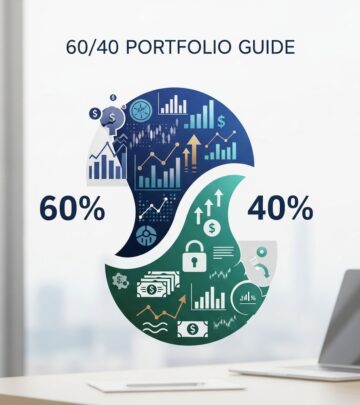
Late starters benefit from diversified, low-cost index funds or ETFs tracking broad markets. A balanced allocation—60% stocks, 40% bonds—reduces volatility while pursuing growth. Avoid stock picking; simple portfolios historically outperform active management over time.
During accumulation, maintain equity exposure despite shorter horizons. Market dips allow buying more shares at lower prices, amplifying recovery gains. For example, investing steadily through downturns positions you to own more assets when markets rebound.
Navigating Market Volatility Effectively
Recessions test resolve, but they present opportunities. Build a cash reserve covering 6-12 months of expenses in high-yield savings or money market funds to avoid selling investments at lows. During downturns, prioritize withdrawals from cash and bonds, letting stocks recover.
- Cash buffer: 3-6 months for workers, 1-2 years for near-retirees.
- Tactical adjustments: Rebalance without deviating more than 5% from target allocation.
- Tax strategies: Harvest losses to offset gains, or convert traditional IRAs to Roth at depressed values for future tax savings.
Tax-loss harvesting involves selling underperforming assets to claim deductions, a tactic best discussed with a tax advisor to avoid wash-sale rules.
Extending Your Working Years Strategically
Delaying retirement by 3-5 years can double savings via continued contributions and growth. Part-time or phased retirement maintains income while reducing expenses. This approach also aligns Social Security claiming for maximum benefits, potentially increasing monthly payouts by 8% per year delayed past full retirement age.
Alternative Income Streams and Housing Solutions
Explore HSAs for triple tax advantages if eligible, or real estate for rental income. Homeownership trumps renting for long-term security; if short on equity, consider downsizing. Reverse mortgages convert home equity to income without monthly repayments, suitable for homeowners with limited liquid assets.
In superannuation or similar plans, maximize tax-advantaged contributions, as lower rates amplify net growth compared to taxable accounts.
Withdrawal Strategies for Sustainable Retirement
Once retired, adopt a flexible 4% rule adjusted for markets. In down years, draw from cash or reduce spending; in up years, replenish. This preserves principal longer than rigid withdrawals.
| Market Condition | Preferred Withdrawal Sources | Rationale |
|---|---|---|
| Bull Market | Stocks/Dividends | Capture growth |
| Bear Market | Cash/Bonds | Protect equities |
| Normal | Mix per allocation | Maintain balance |
Frequently Asked Questions
Is it too late to start investing at 50?
No, consistent high contributions and growth can build substantial nests. Catch-up limits enable rapid progress.
What if markets crash right before retirement?
Cash reserves and strategic withdrawals prevent forced sales; view dips as buying opportunities during accumulation.
Should I pay off my mortgage or invest?
If mortgage rate < expected returns, invest; otherwise, pay down for guaranteed ‘return’ and peace of mind.
How much should I save monthly?
Aim for 20-50% of income, prioritizing retirement accounts fully before taxable ones.
Do I need a financial advisor?
Beneficial for complex situations, but low-cost robo-advisors suffice for simple portfolios.
Key Takeaways for Late Investors
Success hinges on urgency: maximize savings, invest broadly, manage debt, and plan flexibly. With discipline, a comfortable retirement remains achievable.
References
- Retirement Topics – 401(k) and 401(k) Plans — U.S. Department of Labor. 2025-11-01. https://www.dol.gov/agencies/ebsa/about-ebsa/our-activities/resource-center/fact-sheets/401k-employee
- IRS Announces 2026 Contribution and Benefit Limits — Internal Revenue Service. 2025-10-15. https://www.irs.gov/newsroom/irs-announces-2026-contribution-and-benefit-limits
- 5 Tips for Weathering a Recession — Charles Schwab. 2024-03-12. https://www.schwab.com/learn/story/5-tips-weathering-recession
- Retiring in a Down Market — Ameriprise Financial. 2025-01-20. https://www.ameriprise.com/financial-goals-priorities/investing/retiring-during-challenging-market
- How to Form an Investing Strategy as a Late Starter — Pearler. 2023-08-10. https://pearler.com/learn/read/investing-strategy-late-starter
- How To Build Retirement Savings Later in Life — Mercer Advisors. 2024-06-05. https://www.merceradvisors.com/insights/retirement/how-to-build-retirement-savings-later-in-life/
Similar Articles







Read full bio of medha deb