Reconciliation in Accounting: Definition and Process
Master accounting reconciliation: comparing records, detecting errors, and ensuring financial accuracy.
What Is Reconciliation in Accounting?
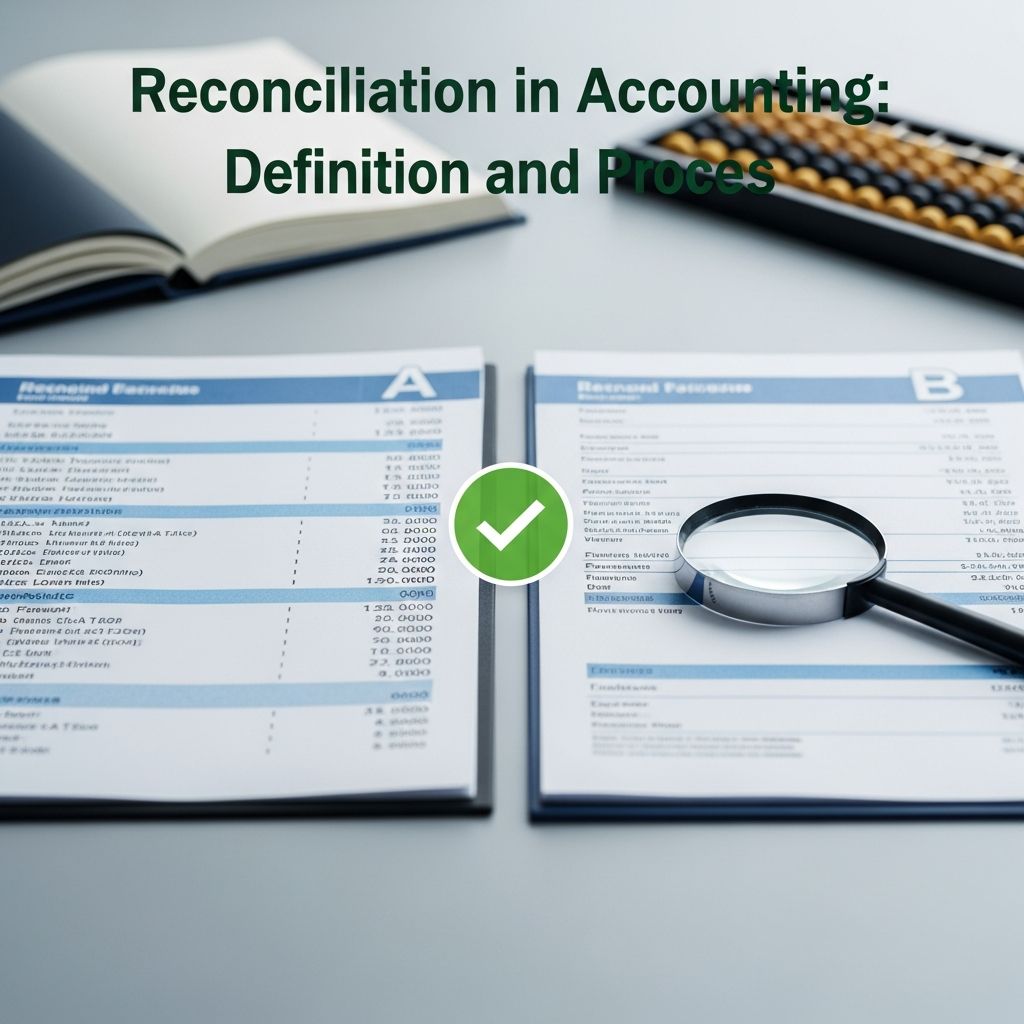
Reconciliation is an accounting process that compares two sets of records to ensure that the figures are correct and in agreement. In essence, reconciliation is a method used to verify that the money leaving an account matches the amount actually spent, and that all transactions have been properly recorded. This fundamental accounting practice involves comparing internal accounting records with external sources such as bank statements, supplier invoices, and payment receipts to identify and resolve any discrepancies.
The process of reconciliation serves as a critical control mechanism within any organization. Most businesses record transactions internally using accounting software, but these internal records must be verified against external documentation to ensure accuracy. When transactions are compared between internal registers and bank accounts, discrepancies may reveal timing differences, errors, or potentially fraudulent activities that require investigation and correction.
Purpose and Importance of Reconciliation
The primary purpose of reconciliation is to ensure the accuracy, completeness, and validity of financial information. By regularly comparing transactions and activity to supporting documentation, organizations can confirm that their financial records are reliable and trustworthy. This process is essential for several reasons:
Detecting Errors and Discrepancies
Reconciliation helps uncover bookkeeping errors, omissions, and duplicate entries that may have occurred during data entry or transaction processing. These errors can range from simple typos to significant mathematical mistakes that could distort financial statements. By systematically comparing records, accountants can identify these issues before they compound into larger problems.
Fraud Prevention and Detection
One of the most critical functions of reconciliation is its role in fraud detection. Reconciliation serves as an internal control mechanism to identify fraudulent activities by comparing records such as bank statements, invoices, and payment receipts. Discrepancies or irregularities that emerge during reconciliation may indicate unauthorized transactions, theft, or misuse of funds. By conducting regular reconciliations, businesses can protect their assets and financial interests while demonstrating vigilance to external auditors and stakeholders.
Ensuring Regulatory Compliance
Reconciliation is often required for regulatory compliance and financial reporting purposes. Organizations must maintain accurate financial records to satisfy legal requirements, tax obligations, and audit standards. Regular reconciliation ensures that financial statements presented to regulators, auditors, and stakeholders are based on verified and accurate data.
Supporting Informed Decision-Making
Reconciliation ensures that the data used for decision-making is reliable and complete. When business leaders and managers rely on financial information for strategic planning, they need confidence in the accuracy of that data. By reconciling different accounts and financial records, businesses gain assurance that their financial insights are sound and trustworthy.
Types of Reconciliation in Accounting
Different types of reconciliation address various aspects of financial record-keeping and account management. Organizations typically employ multiple reconciliation methods depending on their operational needs and the accounts involved.
Bank Reconciliation
Bank reconciliation is one of the most common types of reconciliation in accounting. This process involves comparing the internal record of cash receipts and disbursements with the bank statement to verify that the records agree with each other. Any differences must be investigated to determine whether they result from timing issues, such as checks in transit or deposits not yet processed, or from actual discrepancies that require correction.
Accounts Receivable Reconciliation
This process involves verifying the accuracy and completeness of accounts receivable balances by comparing them with supporting documentation such as customer invoices and payment receipts. This reconciliation helps ensure that all customer transactions have been properly recorded and that payment status is accurately reflected in the accounting system.
Accounts Payable Reconciliation
Accounts payable reconciliation verifies the accuracy and completeness of amounts owed to suppliers by comparing them with supplier invoices and payment records. This process ensures that all vendor transactions are accurately recorded and that payment obligations are properly tracked.
General Ledger Reconciliation
General ledger reconciliation involves reconciling various general ledger accounts to ensure that recorded transactions and balances are complete and accurate. This comprehensive review helps verify the overall integrity of the financial records and identifies any imbalances that require investigation.
Inventory Reconciliation
Inventory reconciliation compares physical inventory counts with recorded inventory balances to identify discrepancies and address issues such as theft or recording errors. This process is essential for maintaining accurate inventory records and identifying shrinkage or other operational issues.
Fixed Assets Reconciliation
Fixed assets reconciliation verifies fixed asset records by comparing them with purchase invoices, depreciation schedules, and disposal records. This process ensures that all capital assets are properly accounted for and that depreciation is being calculated correctly.
Intercompany Reconciliation
For organizations with multiple subsidiaries or divisions, intercompany reconciliation involves reconciling transactions and balances between different entities to protect accuracy and eliminate errors in consolidated financial statements.
Reconciliation Methods
There are two primary methods used to reconcile financial records, each with distinct characteristics and applications.
Document Review Method
The document review method involves examining existing transactions or documents to verify that the amount recorded matches the amount that was actually spent. This method typically involves reviewing accounting software records and comparing them to supporting documentation such as receipts, invoices, and bank statements. The accountant carefully scrutinizes each transaction to identify any discrepancies. For example, if an accountant discovers that an accounting error omitted a zero when recording entries, the error can be identified and corrected immediately. After rectifying such errors, the financial records become accurate and reliable for decision-making purposes.
Matching Method
The matching method involves comparing transactions in the internal register and the bank account to see if payment and deposit transactions match in both records. This systematic approach helps identify transactions that appear in one record but not the other, allowing accountants to trace the source of discrepancies and make necessary corrections.
Steps in the Reconciliation Process
A systematic approach to reconciliation ensures thoroughness and accuracy. The basic steps involved in reconciling transactions include the following:
Compare Internal Records with External Sources
The first step is to compare transactions in the internal register and the bank account to see if payment and deposit transactions match in both records. This initial comparison establishes a baseline for identifying discrepancies that require further investigation.
Identify Unexplained Transactions
Identify any transactions in the bank statement that are not backed up by any evidence in the internal accounting system. These unexplained transactions must be investigated to determine whether they represent legitimate business activity that was not properly recorded or potentially fraudulent activity.
Conduct Thorough Comparison and Investigation
Conduct a comprehensive comparison of financial records, identifying any discrepancies. Investigate and resolve these discrepancies by tracing root causes, correcting errors, and adjusting financial records accordingly. Proper investigation helps prevent recurring errors and ensures that financial information remains accurate.
Foster Open Communication
Foster open communication among relevant departments and individuals involved in the reconciliation process. Regular communication helps resolve issues, clarify doubts, and share information effectively. A comprehensive and accurate reconciliation process depends on collaboration and coordination among different stakeholders within the organization.
Implement Review and Approval
Implement a review and approval process to ensure an independent examination of reconciled records. This process should include reviewing the accuracy and appropriateness of reconciled balances and investigating any significant discrepancies. Approval by a designated authority adds an extra layer of assurance to the reconciliation process and strengthens internal controls.
Pursue Continuous Improvement
Evaluate and enhance the reconciliation process regularly by identifying areas for improvement. Analyze patterns of discrepancies, identify potential weaknesses in the current process, and implement appropriate measures to prevent future errors. By refining the reconciliation process on an ongoing basis, businesses can maximize accuracy, efficiency, and overall financial control.
Key Benefits of Regular Reconciliation
Organizations that implement regular reconciliation processes experience numerous advantages that extend beyond basic record-keeping.
Financial Accuracy
Reconciliation ensures that accounting records are accurate by detecting bookkeeping errors and fraudulent transactions. This accuracy forms the foundation for reliable financial statements and trustworthy financial reporting.
Risk Management
Reconciliation helps manage financial risks by identifying errors, discrepancies, or irregularities promptly. By reconciling accounts regularly, businesses can detect potential risks such as cash flow issues, inventory discrepancies, and incorrect tax calculations. Identifying risks early allows organizations to take appropriate action and safeguard their financial stability.
Enhanced Stakeholder Trust
Reconciliation means that financial statements are prepared with integrity and transparency, which builds trust and credibility among stakeholders such as investors, lenders, and shareholders. This trust strengthens the business’s reputation and increases confidence in its financial health.
Operational Control
Reconciliation must be performed on a regular and continuous basis on all balance sheet accounts as a way of ensuring the integrity of financial records. This ongoing process helps uncover omissions, duplication, theft, and fraudulent transactions that might otherwise go undetected.
Understanding Timing Differences in Reconciliation
When conducting reconciliations, accountants often encounter differences between internal records and external statements that are not indicative of errors or fraud. Some differences may be acceptable due to the timing of payments and deposits, such as checks that have been written but not yet cleared by the bank, or deposits that have been recorded internally but not yet processed by the bank. These timing differences are normal and expected in accounting cycles.
However, any unexplained differences that cannot be attributed to timing issues should be investigated thoroughly. Such discrepancies may point to potential theft, misuse of funds, data entry errors, or system malfunctions that require immediate attention and correction.
Special Reconciliation Processes
Three-Way Reconciliation
A three-way reconciliation is a specific accounting process used by law firms and other organizations to ensure the accuracy of trust accounts. This process involves reconciling three sets of records: bank statements, internal accounting records, and individual client records. By comparing these three sources of information, discrepancies can be identified and resolved, ensuring that trust account balances are accurate and compliant with legal and regulatory requirements. This reconciliation method provides an additional layer of transparency and accountability, particularly important in legal and fiduciary contexts where client funds must be handled with the highest degree of care and accuracy.
Frequently Asked Questions (FAQs)
Q: How frequently should reconciliation be performed?
A: Reconciliation should typically be performed at regular intervals such as monthly, quarterly, or annually, depending on the organization’s needs and the accounts involved. Monthly reconciliation is most common for critical accounts like bank accounts, while quarterly or annual reconciliation may be appropriate for other accounts.
Q: What should I do if I find a discrepancy during reconciliation?
A: When a discrepancy is discovered, investigate its root cause by tracing the transaction, checking for data entry errors, and verifying supporting documentation. Once the cause is identified, make appropriate corrections to the financial records. Document the discrepancy and the resolution for audit purposes.
Q: Can reconciliation be fully automated?
A: While most organizations use accounting software to automate much of the reconciliation process, complete automation is not always possible. Some transactions may not be captured in the system, so human involvement is required to identify unexplained differences and investigate their causes.
Q: Why is reconciliation important for small businesses?
A: Reconciliation is critical for small businesses because it helps prevent fraud, detect errors early, and maintain accurate financial records for tax and regulatory purposes. For small businesses operating with limited resources, reconciliation provides an essential internal control mechanism.
Q: What is the difference between reconciliation and auditing?
A: Reconciliation is an ongoing internal accounting process performed by the organization to ensure record accuracy, while auditing is an independent examination of financial records conducted by external auditors to verify that statements are fairly presented and comply with accounting standards.
References
- Reconciliation – Finance, Definition, Process, Methods — Corporate Finance Institute. 2024. https://corporatefinanceinstitute.com/resources/accounting/reconciliation/
- Reconciliation — University of Washington Financial Reporting. 2024. https://finance.uw.edu/fr/internal-controls/reconciliation
- What is Account Reconciliation? — FloQast. 2024. https://www.floqast.com/blog/what-is-reconciliation-accounting
- Accounting Reconciliation: What It Is and How It’s Done — Stripe. 2024. https://stripe.com/resources/more/accounting-reconciliation-101
- Reconciliation in Accounting: Everything You Need to Know — Clio. 2024. https://www.clio.com/blog/reconciliation-accounting/
Similar Articles








Read full bio of Sneha Tete