How to Write Recommendation Letters for a Promotion
Master the art of writing compelling recommendation letters that support employee promotions and career advancement.

A well-crafted recommendation letter can be instrumental in helping a deserving employee secure a promotion within your organization. Whether you’re a manager, supervisor, or colleague, writing a persuasive letter of recommendation requires careful attention to detail, specific examples, and a clear understanding of what makes the candidate qualified for advancement. This comprehensive guide will walk you through the process of creating an effective recommendation letter that strengthens a team member’s promotion candidacy and demonstrates their readiness for greater responsibility.
Understanding the Purpose of a Recommendation Letter
A recommendation letter for promotion serves as an objective endorsement from someone in a position to speak credibly about the employee’s performance, skills, and potential. Unlike generic reference letters, promotion recommendation letters specifically address why an individual deserves advancement to a higher position within the organization. These letters carry significant weight in promotion decisions because they provide hiring managers and HR professionals with insights that extend beyond what appears in personnel files or performance reviews.
The most effective recommendation letters combine honest praise with concrete evidence, demonstrating not only that the employee has performed well in their current role but that they possess the qualities and capabilities needed to excel in the next level position. Decision-makers rely on these letters to understand the full scope of a candidate’s contributions and to assess their readiness for increased responsibility and leadership opportunities.
Key Components of an Effective Recommendation Letter
Regardless of the specific promotion opportunity, every strong recommendation letter should include certain essential elements that provide context and build a compelling case for advancement.
Your Contact Information and Professional Details
Begin your letter by clearly stating your name, job position, phone number, and email address. This information allows the letter recipient to verify your credentials and contact you for clarification if needed. Follow this with the date of the letter, the recipient’s name, title, and company contact information. Taking time to research and correctly identify the decision-maker demonstrates professionalism and attention to detail.
Clear Purpose Statement
Open your letter with a direct statement of purpose. Introduce yourself, specify which employee you’re recommending, and clearly identify the promotion position they’re seeking. For example: “I am writing to enthusiastically recommend Sarah Martinez for promotion to Senior Project Manager in our organization’s Product Development division.” This clarity helps the reader immediately understand the letter’s intent and context.
Employee Background and Tenure
Provide relevant information about the employee’s history with the organization, including their current job title, department, and length of employment. Mention any direct supervisory relationship or working collaboration you’ve had with this person. This context helps the decision-maker understand your perspective and the basis for your recommendation. If you’ve worked closely with the employee across multiple projects or through significant organizational changes, highlight this extended exposure to their work.
Specific Accomplishments and Achievements
Rather than making vague statements about competence, provide concrete examples of what the employee has accomplished. Whenever possible, use quantifiable data to demonstrate the impact of their contributions. Instead of writing “John improved our sales process,” write “John redesigned our sales process, which increased conversion rates by 18% over six months and generated an additional $250,000 in revenue.” Numbers provide context, credibility, and memorability that help decision-makers understand the true value of the candidate’s contributions.
Step-by-Step Guide to Writing Your Letter
Step 1: Gather Information and Create a Reference List
Before writing, take time to brainstorm and compile a comprehensive list of the employee’s qualifications, achievements, soft skills, hard skills, and significant projects you’ve worked on together. Consider their growth trajectory, professional development, and contributions to team success. Ask yourself what specifically makes this person stand out as promotion-ready. What have they accomplished that demonstrates they can handle greater responsibility? What leadership qualities have they displayed? How have they contributed to team building, productivity, or innovation? This preparation ensures your letter is substantive and well-supported with specific examples.
Step 2: Research and Address Your Recipient
Determine who makes the final decision about promotions in your organization. Often this is the HR director, department head, or hiring manager. Address your letter specifically to this person by name and title. Personalizing your letter for the actual decision-maker shows professionalism and suggests your recommendation has been carefully considered. Avoid generic greetings like “To Whom It May Concern” whenever possible.
Step 3: Draft the Opening Paragraph
Your opening should immediately establish your credibility and the purpose of your recommendation. State your name, your position at the company, and your relationship to the employee. Then clearly state which position the employee is eligible for and express your support for their promotion. This paragraph sets the tone for the entire letter and should be direct and professional.
Step 4: Develop Supporting Paragraphs with Specific Examples
The body of your letter should elaborate on why the employee deserves promotion. Organize this section thematically around key qualifications such as leadership ability, technical expertise, problem-solving skills, or interpersonal effectiveness. For each theme, provide a specific example that demonstrates this quality in action. Include relevant details about projects, outcomes, and positive results. Use numbers, percentages, and measurable outcomes whenever possible. If appropriate and with permission, mention names of colleagues who can attest to the employee’s contributions.
Step 5: Address the Employee’s Readiness for the New Role
Specifically discuss how the employee’s current skills, experience, and demonstrated qualities prepare them for the promotion position. If the promotion involves moving into leadership, discuss any evidence that they’ve already begun taking on leadership responsibilities informally. Explain how their work style, interpersonal skills, and professional judgment make them well-suited to the new position. This paragraph directly addresses the concern decision-makers have: whether the employee can actually succeed at the next level.
Step 6: Create a Strong Closing
Your closing paragraph should reiterate your confidence in the employee’s ability to succeed in the promoted position. Invite the recipient to contact you with questions or for additional information. Provide your phone number and email address again for easy reference. Close professionally with “Sincerely,” followed by your name and title. A strong closing reinforces your full endorsement and makes it clear you’re available to support the promotion decision.
Recommendation Letter Template
Use this template as a starting point for your own recommendation letter:
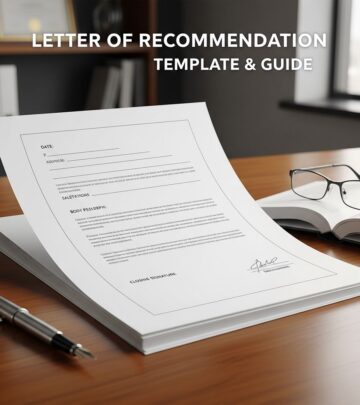
[Your Name][Your Job Position][Your Phone Number][Your Email Address][Date][Recipient Name][Recipient Title][Company Name][Company Address]Dear [Recipient Name],I am writing to enthusiastically recommend [Employee Name] for promotion to [Position Title] within [Department/Company]. I have had the privilege of working with [Employee Name] for [length of time] in my capacity as [Your Title], and I can confidently attest to their readiness and merit for this advancement.[Paragraph 2: Describe the employee's current role, key responsibilities, and specific accomplishments with measurable results.][Paragraph 3: Highlight professional qualities, leadership potential, and skills that prepare them for the new position.][Paragraph 4: Provide additional achievements or contributions that strengthen the case for promotion.]Based on [Employee Name]'s demonstrated excellence, professional growth, and consistent contributions to our organization, I strongly believe they will bring significant value to the [Position Title] role. I am confident they will exceed expectations in this position and continue to drive positive results for our team.I welcome the opportunity to discuss [Employee Name]'s qualifications further. Please contact me at [phone number] or [email address] if you have any questions.Sincerely,[Your Name][Your Title]Common Best Practices for Promotion Letters
Use Concrete Data and Numbers
When describing accomplishments, always quantify whenever possible. Rather than saying an employee “significantly improved efficiency,” explain that they “reduced processing time by 25%, enabling the team to handle 40% more client requests without additional staffing.” Numbers help readers understand scale and impact, making your claims more compelling and memorable.
Focus on the Future Role
While you should definitely discuss past accomplishments, frame them in relation to the promoted position. Show how their current skills translate directly to success in the new role. If recommending someone for a management position, emphasize leadership qualities and examples of handling responsibility. If recommending for a technical advancement, highlight relevant expertise and continuous learning.
Maintain Professional Tone
Write in a formal, professional tone appropriate for business communication. Avoid excessive enthusiasm or emotional language. Instead, let specific achievements and evidence carry the weight of your endorsement. Phrases like “I am confident,” “I strongly recommend,” and “Based on my direct observation” convey conviction without hyperbole.
Keep It Concise and Focused
An effective promotion letter typically runs between one-half to one full page. Avoid rambling or including information that doesn’t directly support your recommendation. Each sentence should contribute meaningfully to making the case for promotion. Review your draft and remove any vague statements, unnecessary details, or information that could be summarized more efficiently.
Provide Specific Examples Rather Than General Praise
Decision-makers receive many recommendation letters that praise candidates generically as “hard-working,” “reliable,” or “a team player.” Your letter stands out when it provides specific, vivid examples of these qualities in action. Instead of writing “She demonstrates strong leadership,” write “She led the cross-functional product launch team, coordinating efforts across five departments and bringing the project in two weeks ahead of schedule while staying 8% under budget.”
Dos and Don’ts for Recommendation Letters
| Do | Don’t |
|---|---|
| Be honest and objective in your assessment | Exaggerate qualifications or fabricate achievements |
| Use specific examples and measurable outcomes | Use vague or flowery language |
| Focus on the employee’s fitness for the new position | Dwell excessively on past mistakes or weaknesses |
| Address the recipient by name and title | Use generic greetings or send mass-produced letters |
| Keep the letter concise and to the point | Write unnecessarily long letters with padding |
| Include your contact information for follow-up | Make it difficult for readers to reach you |
| Proofread carefully for errors | Submit letters with typos or grammatical mistakes |
| Highlight unique qualities or achievements | Make generic statements about competence |
Frequently Asked Questions
Q: How long should a recommendation letter for promotion be?
A: Aim for one-half to one full page, typically 250-400 words. Your letter should be substantial enough to provide meaningful support for the promotion while remaining concise enough that busy decision-makers will read it completely.
Q: Should I mention the employee’s weaknesses in a promotion letter?
A: A promotion recommendation letter is not the place to highlight weaknesses. However, you can acknowledge areas where the employee has grown or improved, which demonstrates their commitment to professional development and ability to learn from feedback.
Q: Can I write a promotion letter for someone I haven’t worked with directly?
A: It’s better to recommend someone you have direct knowledge of. If you must recommend someone with limited direct experience, be transparent about your relationship and limit your comments to observations you can personally verify or that others have shared with your knowledge.
Q: Should I compare the employee to other candidates?
A: Avoid making comparisons to other employees or candidates. Instead, focus on why this individual is qualified for the promotion based on their own merits, accomplishments, and demonstrated abilities.
Q: How should I handle a situation where the employee asking me to write a letter is not truly ready for promotion?
A: Be honest. If you don’t believe the employee is ready for promotion, you can respectfully decline to write the letter or suggest waiting and discussing areas for development. Writing a letter you don’t believe in undermines your credibility and serves no one well.
Q: What should I do after submitting a promotion letter?
A: After submitting, follow the organization’s normal processes and timelines. Avoid repeatedly following up unless specifically asked by the decision-maker. Trust that your letter has been received and will be considered appropriately in the promotion decision.
References
- How To Write a Recommendation Letter for Promotion (With Example) — Indeed. 2024. https://www.indeed.com/career-advice/career-development/recommendation-letter-for-promotion
- 4 Free Letter of Recommendation for Employee Templates — AIHR. 2024. https://www.aihr.com/blog/letter-of-recommendation-for-employee/
- Recommendation Letter for Promotion – Format & Free Sample — Infig Content Hub. 2024. https://infigcontenthub.com/recommendation-letter-for-promotion/
- Sample Letter of Recommendation for an Internal Promotion — PrepScholar. 2024. https://blog.prepscholar.com/letter-of-recommendation-promotion
- 3 Letter of Recommendation Templates for People Managers — TalentHR. 2024. https://www.talenthr.io/blog/letter-of-recommendation-template/
Similar Articles








Read full bio of Sneha Tete