Recession: Definition, Causes, and Economic Impact
Understanding recessions: Economic downturns, causes, indicators, and their broader impact.
What Is a Recession?
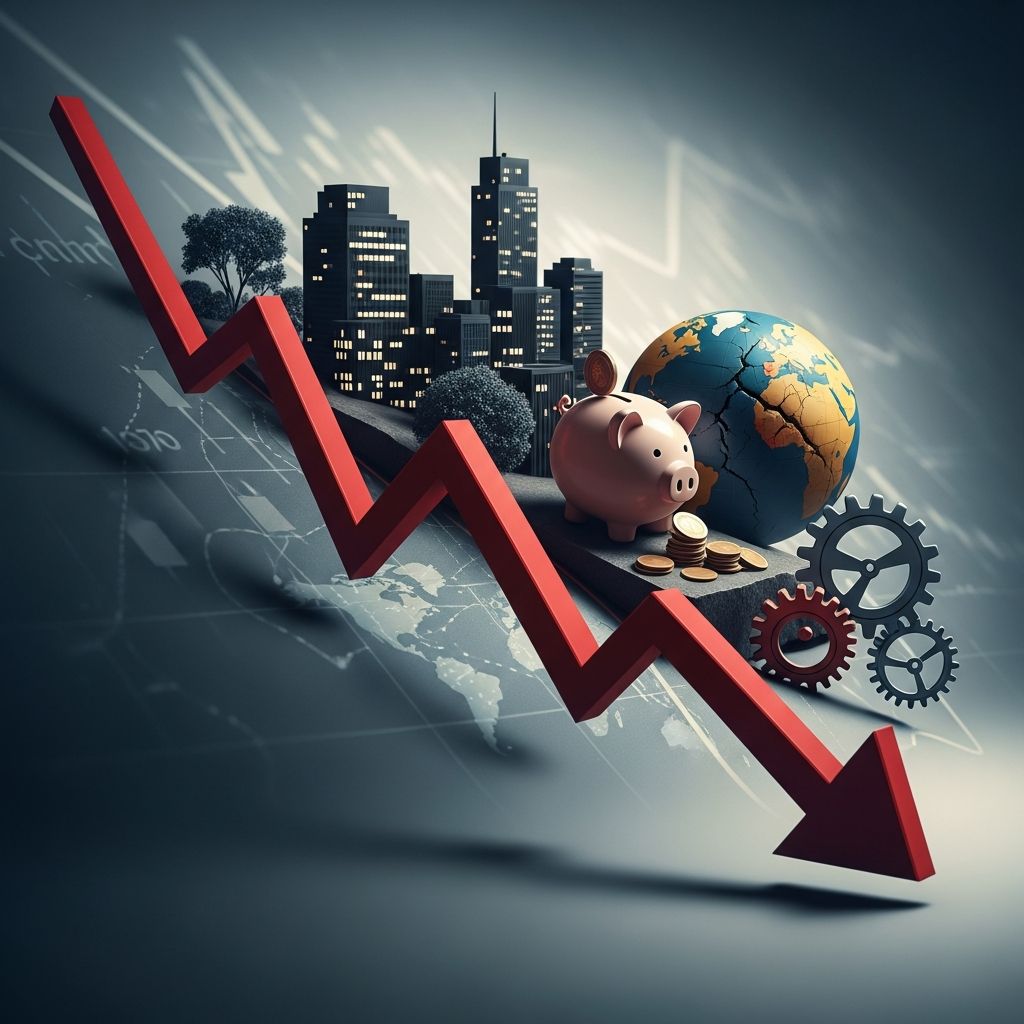
A recession is a significant decline in economic activity that lasts for months or even years. It is characterized by a sustained period of reduced gross domestic product (GDP), lower incomes, and higher unemployment across an economy. Unlike a brief slowdown in economic growth, a recession represents a more severe contraction where multiple sectors of the economy experience simultaneous decline.
The technical definition of a recession, as determined by the National Bureau of Economic Research (NBER) in the United States, is a significant decline in economic activity spread across the economy, lasting more than a few months, and typically visible in real GDP, real income, employment, industrial production, and wholesale-retail sales. This comprehensive framework helps economists and policymakers identify when an economy has truly entered recession territory.
Recessions are a natural part of the business cycle, which moves through periods of expansion and contraction. While expansion periods generate job growth and rising consumer confidence, recessions bring reduced spending, business failures, and widespread financial hardship. Understanding recessions is essential for investors, businesses, and individuals planning for their financial futures.
Key Characteristics of a Recession
Several defining features distinguish a recession from normal economic slowdowns:
- Declining GDP: A recession typically involves two consecutive quarters of negative GDP growth, though this is not universally applied across all countries.
- Rising Unemployment: As businesses reduce output, they lay off workers, causing unemployment rates to climb significantly.
- Reduced Consumer Spending: Uncertainty and job losses cause households to cut back on discretionary purchases and save more.
- Falling Business Investment: Companies postpone expansion plans and capital investments due to declining revenues and uncertain future demand.
- Credit Contraction: Banks become more cautious about lending, making it harder for businesses and consumers to access credit.
- Declining Asset Prices: Stock markets typically fall during recessions as investor confidence weakens and corporate profits decline.
- Increased Business Failures: Weaker firms struggle to survive during economic downturns and may file for bankruptcy.
Causes of Recessions
Recessions can be triggered by various factors, often working in combination to create economic stress. Understanding these causes helps explain why recessions occur and how they might be prevented or mitigated.
Monetary Policy Tightening
Central banks raise interest rates to combat inflation, making borrowing more expensive. While this helps control rising prices, excessively high rates can dampen economic activity. Businesses become reluctant to invest, and consumers reduce borrowing for homes and vehicles, slowing economic growth.
Supply Shocks
Unexpected disruptions to the supply of essential goods or services can trigger recessions. Examples include oil price spikes, natural disasters that disrupt production, or pandemic-related supply chain interruptions. These shocks increase costs for businesses and reduce availability of products, creating inflationary pressures and economic uncertainty.
Financial Crises
Banking system failures, stock market crashes, or asset bubble collapses can destroy wealth and credit availability. The 2008 financial crisis, triggered by subprime mortgage defaults and subsequent bank failures, caused a severe recession that required massive government intervention to prevent economic collapse.
Loss of Consumer and Business Confidence
When consumers and businesses become pessimistic about the future, they reduce spending and investment. This self-reinforcing cycle of declining demand and reduced economic activity can push an already fragile economy into recession.
Trade Disruptions
Trade wars, tariffs, or disruptions to international commerce can reduce export demand and increase input costs, damaging both exporters and import-competing industries. These disruptions reverberate throughout the economy, affecting employment and growth.
Warning Signs and Indicators of a Recession
Economists monitor numerous indicators to anticipate recessions before they officially arrive. These warning signs help policymakers and investors prepare for economic downturns.
Leading Economic Indicators
These indicators typically turn downward before a recession officially begins:
- Stock market declines
- Yield curve inversion (short-term interest rates exceeding long-term rates)
- Consumer confidence indices showing declining expectations
- Initial jobless claims rising
- Manufacturing orders declining
- Building permits falling
Real-Time Indicators
These metrics reflect current economic conditions:
- Unemployment rate increases
- Industrial production declining
- Retail sales falling
- Housing starts slowing
- Corporate earnings declining
The Yield Curve as a Recession Predictor
When the yield curve inverts—meaning shorter-term Treasury bonds offer higher interest rates than longer-term bonds—it has historically preceded recessions. This unusual market signal reflects investor expectations of slower economic growth and falling interest rates ahead. Yield curve inversions preceded most recessions since the 1960s, making it one of the most reliable recession indicators.
Historical Examples of Recessions
Understanding past recessions helps illustrate their causes, severity, and impacts:
The Great Recession (2007-2009)
The most severe recession since the Great Depression was caused by excessive subprime mortgage lending, overleveraging in the financial system, and a subsequent housing market collapse. The crisis wiped out trillions in household wealth, pushed unemployment above 10 percent, and required massive government and Federal Reserve intervention including bank bailouts and stimulus spending.
The COVID-19 Recession (2020)
When pandemic lockdowns shut down much of the economy, the United States experienced the shortest but severe recession on record. Unemployment spiked to nearly 15 percent in April 2020 before massive fiscal stimulus programs helped fuel a rapid recovery. This recession demonstrated how external shocks unrelated to traditional financial imbalances can trigger economic downturns.
The Dot-Com Recession (2001)
Following the collapse of overvalued internet stocks in 2000, the economy entered a mild recession in 2001. This downturn highlighted the dangers of speculative bubbles and asset overvaluation, as inflated stock prices proved unsustainable.
The 1980s Recessions
Back-to-back recessions in 1980 and 1981-1982 were caused by aggressive monetary tightening to fight double-digit inflation. While painful, these recessions succeeded in breaking the inflationary cycle that had plagued the 1970s.
Economic Impact of Recessions
Recessions create widespread economic hardship affecting different groups in various ways:
Employment and Income
Joblessness rises significantly during recessions, causing household income to decline. Workers may face wage cuts even if they retain employment. Long-term unemployment leaves lasting scars, as workers struggle to find jobs matching their previous positions and earnings. Young workers entering the job market during recessions experience permanently reduced lifetime earnings.
Consumer Spending and Household Wealth
Falling stock and home prices reduce household wealth, causing consumers to spend less. This decline in consumer demand further weakens businesses and employment, creating a negative feedback loop. Households increase savings rates and reduce purchases of durable goods like vehicles and appliances.
Business Investment and Growth
Companies postpone expansion plans and reduce capital spending during recessions. This reduced investment slows productivity growth and can reduce the economy’s long-term growth potential. Small businesses particularly struggle, as reduced sales and tighter credit make survival difficult.
Government Finances
Tax revenues fall as incomes and corporate profits decline, while government spending on unemployment benefits and social programs rises. This combination creates budget deficits and increases government debt, potentially constraining future fiscal policy.
Recession vs. Depression
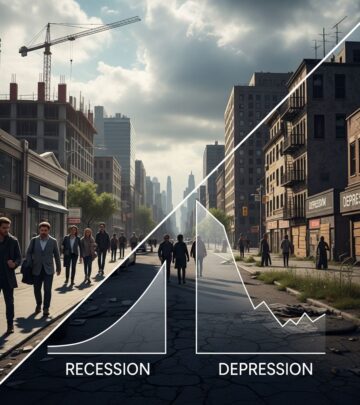
While often used interchangeably, recessions and depressions have distinct meanings. A recession is a moderate contraction lasting several quarters to a few years. A depression is a severe, prolonged economic contraction lasting several years, involving massive unemployment, widespread business failures, and significant declines in living standards. The Great Depression of the 1930s remains the only depression in modern U.S. history, making it fundamentally different from recessions.
Policy Responses to Recessions
Governments and central banks employ various tools to combat recessions and shorten their duration:
Monetary Policy
Central banks typically lower interest rates to encourage borrowing and spending. In severe recessions, they may employ quantitative easing, purchasing longer-term securities to inject liquidity and stimulate economic activity.
Fiscal Stimulus
Governments increase spending or cut taxes to boost demand during recessions. Stimulus packages may fund infrastructure projects, provide direct payments to households, or expand unemployment benefits.
Financial System Support
Policymakers may inject capital into banks, guarantee deposits, or provide emergency lending facilities to prevent financial system collapse and ensure credit availability.
Frequently Asked Questions
Q: How long do recessions typically last?
A: Most recessions last between 6 and 18 months. The average post-World War II recession lasted about 11 months. However, severity varies considerably, and some recessions, like the 2008 financial crisis, had longer-lasting effects on employment and housing markets.
Q: Can recessions be prevented?
A: While complete prevention is difficult, well-designed monetary and fiscal policies can reduce recession frequency and severity. Prudent financial regulation, counter-cyclical policies, and early intervention can help mitigate economic downturns, though business cycles remain inherent to market economies.
Q: How do recessions affect different industries?
A: Cyclical industries like construction, automotive, and retail suffer more during recessions. Defensive sectors like healthcare, utilities, and consumer staples prove more resilient. Companies with strong balance sheets and pricing power typically weather recessions better than highly leveraged or competitive firms.
Q: What investments are safest during a recession?
A: Government bonds, particularly Treasury securities, are traditionally considered safe havens during recessions. Dividend-paying stocks from stable companies, utility stocks, and precious metals like gold also tend to provide protection. However, individual circumstances vary, and diversification remains important.
Q: How do I protect my income during a recession?
A: Building an emergency fund covering 3-6 months of expenses helps weather job loss. Developing marketable skills, maintaining professional networks, and diversifying income sources provide additional security. Avoiding excessive debt before a recession also improves financial resilience.
References
- Business Cycle Dating Committee — National Bureau of Economic Research (NBER). 2025. https://www.nber.org/cycles.html
- Monetary Policy and Interest Rates — Board of Governors of the Federal Reserve System. 2024. https://www.federalreserve.gov/monetarypolicy.htm
- Employment Situation Summary — U.S. Bureau of Labor Statistics. November 2025. https://www.bls.gov/news.release/empsit.nr0.htm
- U.S. Gross Domestic Product Report — U.S. Bureau of Economic Analysis. 2024. https://www.bea.gov/sites/default/files/2024-06/nipa-20240531.pdf
- Economic Policy Responses to the Coronavirus Pandemic — International Monetary Fund (IMF). 2024. https://www.imf.org/en/Topics/imf-and-covid19/Policy-Responses-to-COVID-19
- The Yield Curve and Recession Prediction — Federal Reserve Bank of New York. 2024. https://www.newyorkfed.org/research/staff_reports/
Similar Articles








Read full bio of Sneha Tete