Rebuilt vs. Salvage Title: Key Differences & Insurance
Understand rebuilt and salvage titles: definitions, differences, insurance implications, and what you need to know before buying.
What Is a Rebuilt Title vs. a Salvage Title?
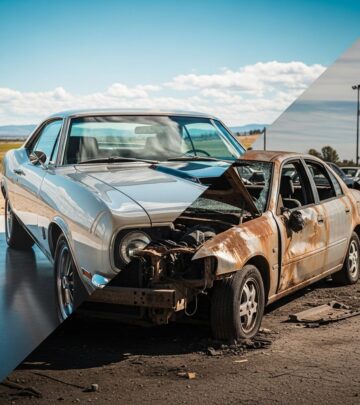
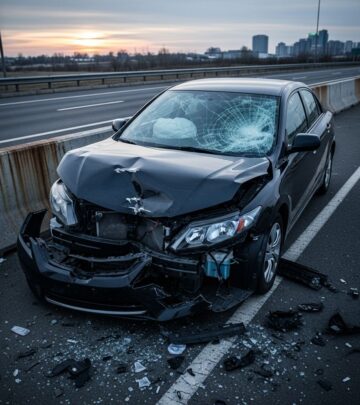
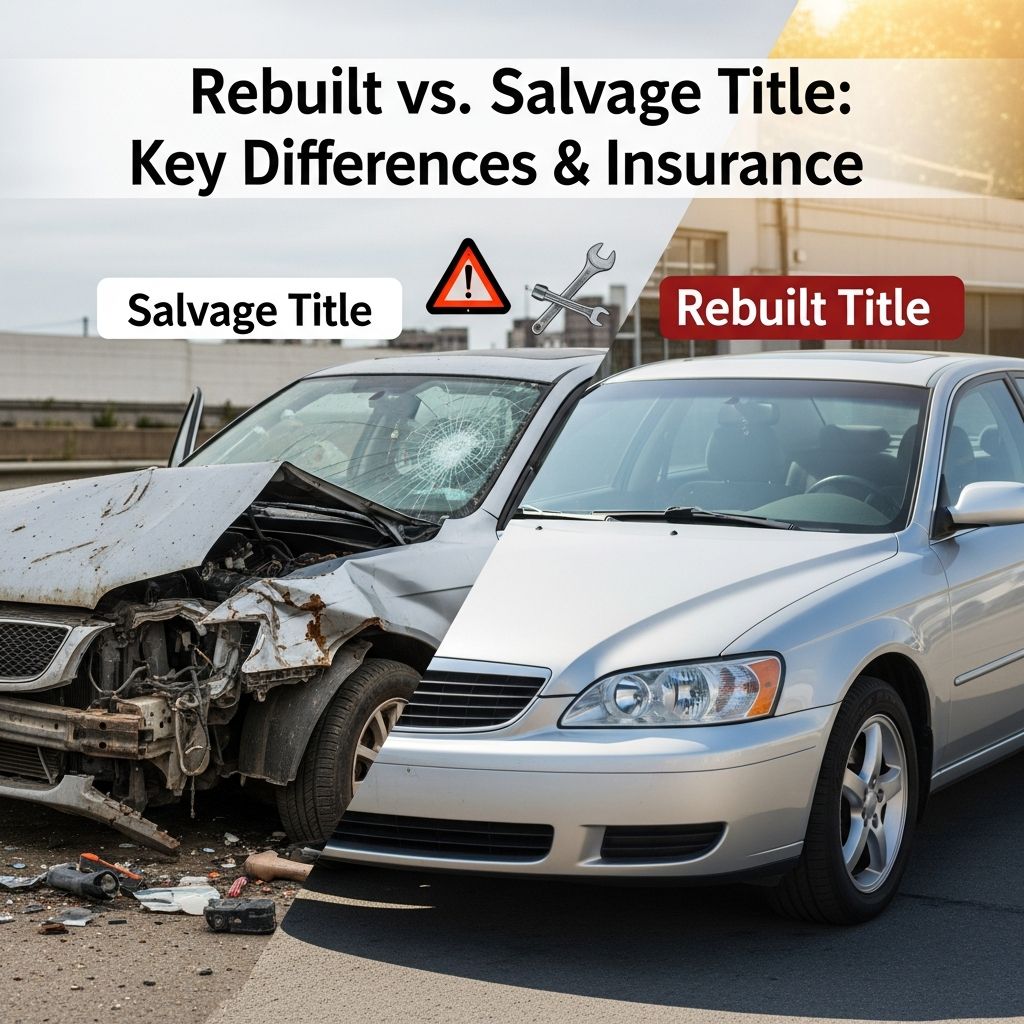
When a vehicle is declared a total loss by an insurance company, it doesn’t automatically mean the car ends up in a scrapyard. Instead, the vehicle receives a salvage title, marking it as damaged beyond typical repair consideration. However, this salvage title can potentially be converted into a rebuilt title if the vehicle is properly repaired and deemed roadworthy by state authorities. Understanding the distinction between these two title types is essential for anyone considering purchasing a used vehicle, as both carry significant implications for insurance, resale value, and legal drivability.
A salvage title indicates that a vehicle has been declared a total loss by an insurance company due to extensive damage. Conversely, a rebuilt title signifies that a previously salvaged vehicle has undergone substantial repairs and passed state safety inspections to restore its roadworthiness. While both titles originate from the same situation—a vehicle deemed too damaged to be worth repairing under normal circumstances—their trajectories diverge significantly once repairs are undertaken.
Understanding Salvage Titles
What Does a Salvage Title Mean?
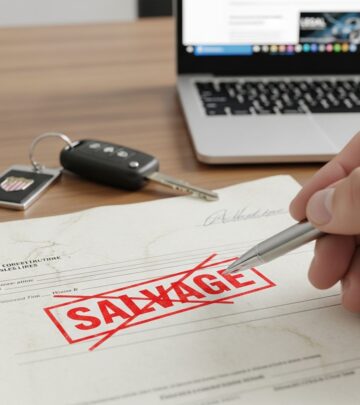
A salvage title is issued when an insurance company determines that a vehicle has sustained damage exceeding a certain threshold of its fair market value, typically between 70 and 90 percent. Once a car receives a salvage title, it is legally prohibited from being driven on public roads or registered for normal use. The vehicle cannot be insured through standard insurance policies, and ownership transfers become complicated until the salvage status is resolved through either scrapping or repair and rebuild.
The specific threshold for declaring a vehicle a total loss varies by state. Some states use a 75 percent damage threshold, while others may apply different percentages. State motor vehicle agencies are responsible for issuing salvage titles, which become part of the vehicle’s permanent record. Once branded with a salvage title, the vehicle history becomes transparent to potential future buyers, affecting its marketability and value indefinitely.
What Happens to Salvage Vehicles
After receiving a salvage title, the vehicle is typically sold by the insurance company to a third party, such as a salvage auction house or rebuilder. At this point, the new owner has two primary options: repair the vehicle to roadworthy standards or dismantle it for parts. If the owner chooses to repair the vehicle, they must meet state-specific requirements and pass safety inspections before the vehicle can be titled as a rebuilt vehicle and legally operated.
Understanding Rebuilt Titles
What Does a Rebuilt Title Mean?
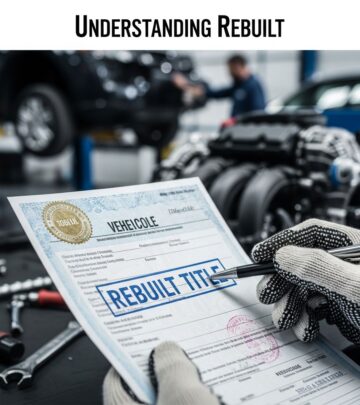
A rebuilt title indicates that a vehicle previously declared a total loss has been repaired and certified as roadworthy by state authorities. Unlike salvage-titled vehicles, rebuilt-titled cars can be legally registered, insured, and driven on public roads. This title brand reflects that the vehicle has passed state safety inspections and meets all requirements for road operation. The rebuilt title provides transparency to future buyers about the vehicle’s history while confirming that it meets minimum safety standards.
Requirements for Obtaining a Rebuilt Title
The process of converting a salvage title to a rebuilt title involves several mandatory steps that vary by state. Most states require substantial repairs, detailed documentation of all work performed, before-and-after photographs, receipts for parts and labor, and successful passage of state safety inspections. Some states, like Florida, are notably stringent in their requirements, demanding multiple inspections and comprehensive documentation. Other states may only require repair documentation without as rigorous an inspection process. Regardless of the state’s specific requirements, the owner must demonstrate that the vehicle is safe and roadworthy before the rebuilt title can be issued.
It’s important to note that once a vehicle receives a rebuilt title, it can never be issued a clean title again, regardless of how well it’s maintained or repaired in the future. This permanent branding affects the vehicle’s market value and insurance considerations for the duration of its life.
Key Differences Between Rebuilt and Salvage Titles
| Aspect | Salvage Title | Rebuilt Title |
|---|---|---|
| Legal Drivability | Cannot be legally driven on public roads | Can be legally registered and driven |
| Insurance Eligibility | Cannot be insured; cannot be registered | Can be insured, typically liability only |
| Status | Vehicle declared total loss by insurer | Previously salvaged, now repaired and certified |
| State Inspection | No inspection required for salvage status | Must pass state safety inspection |
| Repair Requirements | Repairs not yet completed | Substantial repairs completed and documented |
| Market Value | Vehicle cannot be sold for driving purposes | 20-40% less than identical clean title vehicle |
| Title Restoration | Can become rebuilt if properly repaired | Permanent designation; cannot become clean title |
State Variations in Title Requirements
Each state maintains its own regulations regarding when a vehicle must be declared a total loss and issued a salvage title. Similarly, states establish their own criteria for determining when a salvaged vehicle can be converted to a rebuilt title. Variables that states consider include the vehicle’s age, the percentage of fair market value required for repairs to trigger salvage status, and the specific inspection and documentation requirements for rebuilt certification.
For example, California issues a salvage certificate rather than a salvage title in some cases, and vehicles must be registered as a Revived Salvage Vehicle. South Carolina has multiple title brand definitions, including distinctions for Salvage Flood and Salvage Fire damage. These state-specific variations mean that the process of buying, repairing, and titling a salvage or rebuilt vehicle can differ significantly depending on location. It’s essential to consult your state’s Department of Motor Vehicles for specific regulations in your jurisdiction.
How Rebuilt and Salvage Titles Affect Vehicle Value
Impact on Resale Value
A rebuilt title significantly diminishes a vehicle’s market value compared to an identical model with a clean title. Vehicles with rebuilt titles typically sell for 20 to 40 percent less than their clean-title counterparts, regardless of the quality of repairs performed. This devaluation reflects buyer concerns about the vehicle’s history, potential hidden damage, and the uncertainty surrounding repair quality. Even when a vehicle has been restored to the highest standards with meticulous craftsmanship, the stigma of its salvage history persists.
Salvage-titled vehicles experience even more dramatic value reduction, as they cannot be legally sold or purchased for driving purposes. Their primary value lies in their components and parts, making them suitable only for rebuilders or dismantlers. The permanent branding of a rebuilt title on a vehicle’s history report means that any future resale will be affected by this disclosure, making rebuilt vehicles less attractive to conventional buyers despite their lower initial purchase price.
Lower Purchase Prices
The primary financial advantage of purchasing a rebuilt-titled vehicle is the substantially lower purchase price. Because of the diminished market value and buyer hesitation, rebuilt-titled cars often present significant savings opportunities. This lower entry price may make previously unaffordable vehicle models accessible to budget-conscious buyers, potentially allowing someone to purchase a higher-end vehicle at a significantly reduced cost.
Insurance Considerations for Rebuilt and Salvage Titles
Insurance Coverage for Salvage Titles
Salvage-titled vehicles cannot be insured through standard insurance policies because they are not legally permitted to be driven on public roads. Insurance companies will not issue policies for vehicles that cannot be legally operated. This prohibition makes salvage-titled vehicles impractical for regular driving purposes, though they remain valuable to rebuilders, dismantlers, and parts dealers.
Insurance Coverage for Rebuilt Titles
Rebuilt-titled vehicles can be insured, but insurance options are typically limited compared to clean-titled vehicles. Most insurance companies view rebuilt vehicles as higher-risk due to the possibility of hidden damage, underlying structural issues, or questionable repair quality. This elevated risk perception translates into more restrictive coverage offerings and higher premium rates.
Many insurers will only offer liability coverage for rebuilt-titled vehicles, which protects against damages you cause to other people and their property but does not cover physical damage to your own vehicle. Comprehensive and collision coverage—which would protect your vehicle in accidents, theft, or other incidents—are often unavailable or substantially more expensive. Additionally, insurance premiums for rebuilt vehicles tend to be higher than the vehicle’s lower market value might suggest, as insurers factor in the increased risk profile rather than simply the reduced vehicle value.
Premium Increases and Rate Impacts
Drivers with rebuilt-titled vehicles should expect insurance premiums to be roughly 20 to 40 percent higher than comparable clean-titled vehicles. This elevated cost reflects insurer concerns about potential long-term mechanical issues and the unpredictability of repairs performed by third parties. The premium increase may seem counterintuitive given the vehicle’s reduced market value, but insurers price based on risk assessment rather than vehicle value alone. A rebuilt vehicle’s damage history and uncertain repair quality present ongoing risk that justifies higher rates in the insurer’s calculation.
Pros and Cons of Rebuilt and Salvage Titles
Advantages of Rebuilt and Salvage Titles
- Significantly lower purchase price: Rebuilt-titled vehicles offer substantial savings compared to clean-titled equivalents, potentially allowing buyers to afford higher-end models at budget prices
- Budget-friendly repair potential: Some buyers view rebuilt vehicles as project cars with opportunity for affordable customization or improvement
- Accessible high-end models: The price reduction may make luxury or premium vehicles financially accessible to buyers with limited budgets
- Certified roadworthiness: Rebuilt-titled vehicles have passed state safety inspections, confirming they meet minimum operational standards
Disadvantages of Rebuilt and Salvage Titles
- Potential ongoing mechanical issues: Hidden damage or underlying structural problems may emerge months or years after purchase, leading to unexpected repair costs
- Possibility of undisclosed damage: Despite inspections, some damage may not be immediately apparent or may have been inadequately repaired
- Higher insurance rates: Premiums may be 20-40% higher than clean-titled vehicles, and coverage options are severely limited
- Reduced market value: Rebuilt-titled vehicles are permanently devalued and less attractive to future buyers
- Limited insurance coverage: Most insurers offer only liability coverage, leaving you responsible for physical damage repairs
- Financing difficulties: Many lenders are reluctant to finance rebuilt-titled vehicles, limiting purchasing options
- Voided warranties: Any remaining manufacturer’s warranty is typically voided, eliminating warranty protection
- Title-washing fraud risk: Buyers must be vigilant about potential fraud where salvage titles are illegally altered or hidden
Financing and Warranty Considerations
Difficulty Securing Financing
Purchasing a rebuilt-titled vehicle with financing can be significantly more challenging than buying a clean-titled car. Many traditional lenders and banks are reluctant to finance rebuilt-titled vehicles due to their reduced value and higher risk profile. Interest rates may be substantially higher when financing is available, or lenders may require a larger down payment to offset the perceived risk. Buyers interested in financing a rebuilt vehicle should contact lenders beforehand to determine whether they offer such financing and what terms they provide.
Warranty Implications
Any remaining manufacturer’s warranty on a rebuilt-titled vehicle is typically voided once the vehicle receives its salvage or rebuilt title branding. This means buyers cannot rely on manufacturer support for defects or failures, and any warranty protection must come from the seller or third-party warranty providers, if available. The absence of warranty protection increases the financial risk of ownership and underscores the importance of thorough pre-purchase inspection and careful consideration before buying.
Important Considerations Before Buying a Rebuilt or Salvage Title Vehicle
Conduct Thorough Inspections
Purchasing a rebuilt or salvage-titled vehicle requires significantly more due diligence than buying a clean-titled car. A comprehensive pre-purchase inspection by a qualified, independent mechanic is absolutely essential. This inspection should specifically examine areas that may have been damaged and repaired, looking for signs of poor workmanship, misaligned body panels, inconsistent paint, frame damage, or structural concerns. Professional inspection can reveal hidden issues that might not be immediately obvious and can validate that repairs were performed to acceptable standards.
Obtain Complete History Reports
Obtain detailed vehicle history reports from multiple sources to understand the vehicle’s complete background. These reports should document the original damage, insurance claim details, repair records, and any subsequent accidents or issues. Understanding the nature and extent of the original damage helps you assess the reliability of repairs and anticipate potential future problems.
Evaluate Your Needs and Risk Tolerance
Consider whether a rebuilt-titled vehicle aligns with your specific needs and financial situation. If you require reliable transportation and cannot absorb unexpected repair costs, a rebuilt vehicle may present unacceptable risk. However, if you’re mechanically inclined, have emergency funds available for repairs, or are seeking a project vehicle, the financial savings may justify the inherent risks.
Frequently Asked Questions
Q: Can a rebuilt title ever become a clean title?
A: No. Once a vehicle receives a rebuilt title, it retains that designation permanently, regardless of how well it’s maintained or repaired in the future. The rebuilt status becomes a permanent part of the vehicle’s history record.
Q: What percentage damage triggers a salvage title?
A: Most states declare a vehicle a total loss when repair costs exceed 70 to 90 percent of the vehicle’s fair market value, though the specific threshold varies by state. Each state’s Department of Motor Vehicles sets its own percentage requirements.
Q: Can I get comprehensive and collision insurance for a rebuilt title vehicle?
A: Most insurance companies do not offer comprehensive or collision coverage for rebuilt-titled vehicles. Typically, only liability coverage is available, though some insurers may offer limited full-coverage options depending on state regulations and specific circumstances.
Q: How much less is a rebuilt title vehicle worth?
A: Rebuilt-titled vehicles typically sell for 20 to 40 percent less than identical models with clean titles. The exact percentage depends on the vehicle’s age, make, model, and the nature of the original damage.
Q: What states have different salvage title requirements?
A: Each state maintains unique regulations regarding salvage and rebuilt titles. California issues salvage certificates rather than titles in some cases, and South Carolina has multiple title brand definitions. Consult your state’s Department of Motor Vehicles for specific requirements.
Q: Is it legal to drive a car with a salvage title?
A: No. Vehicles with salvage titles cannot be legally driven on public roads or registered for normal use until they are repaired and issued a rebuilt title by state authorities.
Q: What should I look for when inspecting a rebuilt title vehicle?
A: Look for signs of poor repairs, including misaligned body panels, inconsistent paint, welding marks, frame damage, fluid leaks, and unusual noises. Have an independent mechanic conduct a thorough inspection, specifically examining previously damaged areas.
Making Your Decision
The choice between purchasing a rebuilt-titled vehicle and waiting for a clean-titled option depends on your specific circumstances, financial situation, and risk tolerance. Rebuilt-titled vehicles offer significant purchase price advantages and may provide access to vehicle models otherwise outside your budget. However, these savings come with trade-offs including higher insurance costs, limited coverage options, reduced market value, and potential hidden mechanical issues.
If you’re considering a rebuilt-titled vehicle, ensure you’ve conducted thorough inspections, obtained complete history reports, consulted with insurance providers about coverage and costs, and evaluated your ability to handle unexpected repairs. For some buyers, the financial benefits clearly justify the risks. For others, the peace of mind associated with a clean-titled vehicle justifies the higher purchase price.
References
- Rebuilt Title vs. Salvage Title: What’s the Difference? — Autotrader. Accessed 2025. https://www.autotrader.com/car-shopping/rebuilt-title-vs-salvage-title-whats-difference-281474979846034
- What Is a Rebuilt Title vs. a Salvage Title? — Bankrate. Accessed 2025. https://www.bankrate.com/insurance/car/rebuilt-vs-salvage-title/
- Does a Rebuilt Title Affect Insurance — LA Insurance. Accessed 2025. https://lainsurance.com/blog/does-a-rebuilt-title-affect-insurance
- Rebuilt vs. Salvage Title: Know the Difference — Consumer Coverage. Accessed 2025. https://www.consumercoverage.com/blog/auto-insurance/rebuilt-title-vs-salvage
- Rebuilt Title Vs. Salvage Title: What’s The Difference? — Jalopnik. Accessed 2025. https://www.jalopnik.com/1971012/rebuilt-vs-salvage-title-difference-explained/
Similar Articles








Read full bio of Sneha Tete