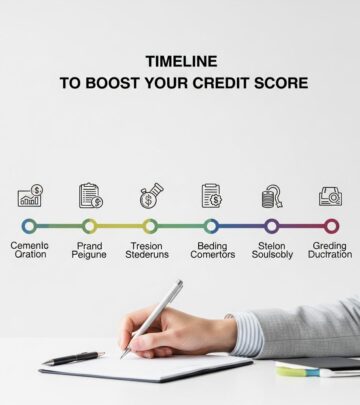
Rebuild Your Credit Score: 6 Steps To Financial Recovery
Master proven strategies to restore your credit health and unlock better financial opportunities in just months.

Your credit score influences everything from loan approvals to rental applications. When setbacks like missed payments or high debt drag it down, recovery feels daunting—but it’s achievable with a structured approach. This guide outlines practical steps grounded in expert recommendations to elevate your score systematically.
Understanding the Foundations of Your Credit Score
Credit scores, such as FICO or VantageScore, range from 300 to 850 and reflect your creditworthiness. Payment history (35%), amounts owed (30%), length of credit history (15%), new credit (10%), and credit mix (10%) form the core factors. Negative marks like late payments linger for up to seven years, but positive actions can outweigh them over time.
Regularly review your reports from Equifax, Experian, and TransUnion—available weekly for free at AnnualCreditReport.com—to spot inaccuracies early. Errors in balances or accounts can unfairly lower scores, so verification is step one.
Step 1: Correct Errors on Your Credit Reports
Begin by obtaining your free credit reports. Scrutinize every detail: personal info, account statuses, payment records, and inquiries. Dispute inaccuracies online, by mail, or phone with supporting documents like payment receipts.
- Identify outdated negative items past their reporting period (e.g., bankruptcies drop off after 10 years).
- Challenge fraudulent accounts from identity theft via identitytheft.gov.
- Track disputes; bureaus must investigate within 30 days.
Resolving errors alone can boost scores by 20-100 points, depending on severity. Persistence pays off—follow up if resolutions drag.
Step 2: Prioritize Timely Payments Across All Accounts
Payment history dominates scoring models. Even one 30-day late mark can drop scores by 60-110 points initially, with effects fading over time.
Establish habits for success:
- Enroll in autopay for at least the minimum due.
- Calendar alerts two days before deadlines.
- Pay bills mid-cycle to reflect lower balances to bureaus.
If behind, catch up swiftly. Contact lenders proactively for hardship options like deferred payments—many accommodate responsible borrowers.
Step 3: Lower Your Credit Utilization Ratio Strategically
Utilization—balances versus limits—impacts 30% of your score. Ideal levels under 30%; optimal under 10% for rapid gains. High ratios signal risk to lenders.
| Strategy | Impact | Timeline |
|---|---|---|
| Pay down balances aggressively | Quick score lift | 1-2 months |
| Request limit increases | Lowers ratio instantly | Immediate if approved |
| Multiple monthly payments | Shows low statement balances | Ongoing |
| Avoid new charges | Prevents ratio spikes | Immediate |
Use debt snowball (smallest balances first for momentum) or avalanche (highest interest first for savings). Balance transfers to 0% APR cards offer temporary relief if managed well.
Step 4: Negotiate with Lenders for Relief
Open communication builds goodwill. If previously reliable, request removal of isolated late payments as a courtesy adjustment. Explain circumstances factually without excuses.
Explore options:
- Payment holidays or reduced minimums during hardship.
- Workout agreements to cure delinquencies.
- Re-aging accounts to reset status dates (rare but possible).
Document all interactions. Creditors report to bureaus monthly, so adjustments appear quickly.
Step 5: Add Positive Credit History Thoughtfully
If thin on credit, build responsibly. Secured cards require deposits as limits—use lightly and pay off monthly. Credit-builder loans report payments as you save.
- Keep old accounts open to preserve history length.
- Aim for mix: cards, installment loans.
- Limit applications; inquiries ding scores temporarily.
Authorized user status on a trusted family member’s strong account transfers positive history (confirm reporting).
Step 6: Bolster Financial Stability with Savings
Emergencies derail progress. Start an emergency fund: $1,000 goal, then 3-6 months’ expenses. Automate $20-50 weekly transfers.
This buffer prevents reliance on high-interest credit, stabilizing utilization and payments long-term.
Advanced Tactics for Accelerated Recovery
Leverage professional help from NFCC-accredited counselors for debt management plans (DMPs). They negotiate lower rates; you make one payment.
Monitor progress monthly via free tools like Credit Karma or official FICO apps. Scores update variably—patience yields compounding gains.
Common Pitfalls to Avoid During Rebuilding
- Closing paid-off cards (shortens history, raises utilization).
- Maxing new limits post-increase.
- Ignoring collections—settle or negotiate pay-for-delete.
- Falling for credit repair scams promising miracles.
Expected Timelines for Improvement
| Action | Score Impact | Visible Change |
|---|---|---|
| Error disputes | 20-100+ points | 30-45 days |
| Utilization drop | 30-100 points | 1 month |
| On-time payments | Steady rise | 3-6 months |
| New positive accounts | 20-50 points | 6-12 months |
Average recovery: fair (580-669) to good (670-739) in 6-12 months with consistency.
FAQs: Rebuilding Credit Essentials
How long does it take to rebuild credit after bankruptcy?
Chapter 7 stays 10 years; Chapter 13, 7 years. Rebuild via secured cards and on-time payments—scores often recover to 700+ in 2-4 years.
Does paying off collections help my score?
Yes, but the negative mark remains. Prioritize recent delinquencies; scores rise as age dilutes impact.
Can I rebuild without a credit card?
Absolutely—use rent-reporting services, utility payments via Experian Boost, or credit-builder loans.
What’s the fastest way to boost my score 100 points?
Correct errors, slash utilization below 10%, and sustain perfect payments. Combine for biggest jumps.
Should I freeze my credit during rebuilding?
Yes, prevents fraud. Free at each bureau; thaw for legit applications.
Long-Term Habits for Sustained Credit Health
Beyond recovery, review reports annually, utilization quarterly. Diversify credit sparingly. Scores above 740 unlock prime rates—worth the discipline.
Rebuilding transforms finances: lower rates save thousands on mortgages ($100K loan at 7% vs. 4% = $150K+ over 30 years). Commit today for tomorrow’s gains.
References
- How to repair your credit and improve your FICO Score — myFICO. 2025. https://www.myfico.com/credit-education/improve-your-credit-score
- Tips to rebuild your credit — Consumer Financial Protection Bureau (via Bank of America reference). 2024. https://files.consumerfinance.gov/f/documents/cfpb_how-to-rebuild-your-credit.pdf
- How to Improve Your Credit Score Fast — Experian. 2025-02-01. https://www.experian.com/blogs/ask-experian/credit-education/improving-credit/improve-credit-score/
- The Ultimate Guide for Fixing Bad Credit in 2025 — PFCU (citing NFCC). 2025-02. https://www.pfcu.com/resources/education/moneyline-blog/february-2025/the-ultimate-guide-fixing-bad-credit-2025
- How to rebuild your credit — Consumer Financial Protection Bureau. 2023 (authoritative standard). https://files.consumerfinance.gov/f/documents/cfpb_how-to-rebuild-your-credit.pdf
- Rebuild Your Credit — Wells Fargo. 2025. https://www.wellsfargo.com/goals-credit/smarter-credit/improve-credit/rebuild-credit/
Similar Articles








Read full bio of Sneha Tete