Real-Time Payments Explained
Discover how instant payment systems are revolutionizing money transfers for businesses and consumers with speed, security, and efficiency.
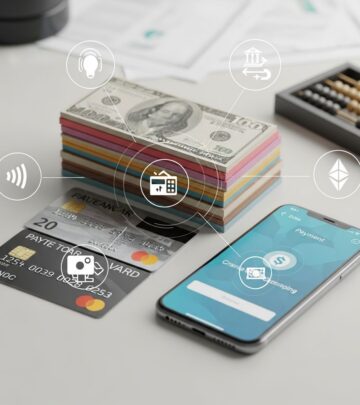
Real-time payments represent a major shift in how money moves between accounts, enabling transactions to complete in seconds around the clock. These systems process payments instantly, making funds available immediately to recipients without the delays common in legacy banking processes.
The Fundamentals of Instant Transaction Systems
At their core, real-time payments facilitate the immediate transfer of funds from one bank account to another, operating continuously without regard to banking hours. Unlike conventional methods that might take days to clear, these payments settle within seconds, providing both sender and receiver with instant confirmation. This immediacy stems from dedicated networks designed for high-speed processing, ensuring that transactions are not just initiated but fully cleared and settled in real time.
Key characteristics include 24/7 availability, irrevocable fund transfers once processed, and the inclusion of rich data payloads with each transaction. This data enhances reconciliation efforts and supports automated bookkeeping, reducing manual intervention significantly.
How Real-Time Payment Networks Operate
Real-time payment infrastructures rely on specialized rails that connect participating financial institutions. When a payment is initiated, it travels through a secure network where validation, clearing, and settlement occur almost simultaneously. The sender’s account is debited, and the recipient’s is credited within moments, often under 10 seconds.
- Initiation: User submits payment details via app, website, or bank portal.
- Validation: Network checks account balances, fraud risks, and compliance.
- Clearing and Settlement: Funds move irrevocably; both parties receive notifications.
- Confirmation: Rich data accompanies the payment for seamless integration into accounting systems.
This streamlined flow eliminates batch processing, which batches transactions for end-of-day settlement in traditional systems.
Key Advantages for Businesses and Consumers
The shift to real-time payments offers transformative benefits, extending far beyond mere speed. Businesses gain precise visibility into cash positions, enabling proactive financial decisions.
| Benefit | Description | Impact |
|---|---|---|
| Cash Flow Optimization | Funds arrive instantly, reducing uncertainty in receivables. | Lower liquidity risks; better forecasting. |
| Operational Efficiency | Automated reconciliation with embedded data. | Cuts manual processing costs by up to $50-60 per error. |
| Transparency | Real-time status updates and confirmations. | Eliminates payment disputes and delays. |
| Customer Experience | Seamless, 24/7 transactions. | Higher satisfaction for payers and payees. |
For consumers, this means quicker reimbursements, bill payments, and peer-to-peer transfers, fostering greater financial agility.
Practical Applications Across Industries
Real-time payments are versatile, supporting diverse use cases that leverage their speed and data capabilities.
- B2B Transactions: Suppliers receive payments instantly upon invoice approval, accelerating supply chains and reducing working capital needs.
- P2P Transfers: Individuals send money via apps with immediate availability, popular for splitting bills or family support.
- Gig Economy Payouts: Freelancers access earnings right after job completion, improving income stability.
- Emergency Disbursements: Governments and insurers deliver aid or claims swiftly during crises.
- E-commerce Refunds: Instant returns build trust and encourage repeat business.
In treasury management, these payments enable just-in-time funding, optimizing foreign exchange opportunities and minimizing idle capital.
Comparing Real-Time Payments to Traditional Methods
Traditional systems like ACH or wire transfers process in batches, leading to delays of 1-3 days. Real-time alternatives provide certainty and immediacy, though they may incur slightly higher fees in some cases.
| Feature | Real-Time Payments | Traditional (ACH/Wire) |
|---|---|---|
| Processing Time | Seconds | Hours to Days |
| Availability | 24/7/365 | Business Hours |
| Settlement Finality | Irrevocable | Reversible in some cases |
| Data Capacity | Rich, structured | Limited |
| Cost per Transaction | Low to moderate | Varies, often flat fees |
While adoption varies by region, real-time systems are gaining traction due to their superior performance.
Challenges and Considerations in Adoption
Despite advantages, hurdles remain. Not all banks participate in real-time networks, limiting reach. Integration with legacy systems requires investment, and higher transaction volumes demand robust fraud detection. Regulatory compliance adds complexity, though standardized messaging helps mitigate risks.
Businesses must evaluate costs against benefits; for high-volume operations, savings in time and errors often outweigh fees.
Security and Fraud Mitigation Features
Real-time payments incorporate advanced safeguards. Embedded data enables real-time monitoring, while network-level authentication verifies transactions. Failed attempts are flagged instantly, preventing losses. Industry standards ensure interoperability and security, making these systems resilient against cyber threats.
The Global Landscape of Real-Time Payments
Countries like the UK (Faster Payments) and India (UPI) lead with widespread adoption. In the US, networks like RTP from The Clearing House are expanding rapidly. Future growth will depend on regulatory support and tech infrastructure.
Future Trends Shaping Instant Payments
Emerging integrations with AI for predictive cash flow, blockchain for cross-border speed, and IoT for micropayments signal explosive potential. As adoption matures, real-time payments could dominate, reshaping global finance.
Frequently Asked Questions (FAQs)
What exactly are real-time payments?
They are digital transfers that clear and settle in seconds, available anytime.
Are real-time payments safe?
Yes, with built-in fraud detection and secure networks.
How do they improve business cash flow?
Instant receipt of funds allows precise liquidity management.
Can consumers use real-time payments?
Absolutely, for P2P, bills, and more via apps.
What is the cost of RTP transactions?
Typically low, competitive with ACH for volume users.
Which countries support RTP widely?
UK, India, Brazil; US expanding.
Real-time payments are poised to become the standard, driving efficiency and innovation across the financial ecosystem.
References
- Real-time payments explained — Stripe. 2023. https://stripe.com/resources/more/real-time-payments-explained
- Understanding the role of real-time payments (RTP) — J.P. Morgan. 2023. https://developer.payments.jpmorgan.com/blog/guides/role-of-real-time-payments
- Real-Time Payment Methods: Benefits, Differences, and Drawbacks — Unit21. 2023. https://www.unit21.ai/blog/real-time-payment-methods
- The Pros and Cons of Real-Time Payment — GoCardless. 2023. https://gocardless.com/en-us/guides/posts/real-time-payments-pros-cons/
- Benefits of Real Time Payments (RTP) – Looking Beyond Speed — Bank of America. 2023. https://business.bofa.com/en-us/content/benefits-of-real-time-payments.html
- Real time payments: What is RTP and why do we need instant payments — Mastercard. 2025-01-01. https://www.mastercard.com/us/en/news-and-trends/stories/2025/real-time-payments-what-is-rtp-and-why-do-we-need-instant-payments.html
- Real Time Payments — The Clearing House. 2023. https://www.theclearinghouse.org/payment-systems/rtp
- What are real-time payments? 7 useful FAQs for treasury & AP — Kyriba. 2023. https://www.kyriba.com/resource/what-are-real-time-payments/
Similar Articles








Read full bio of medha deb