Real GDP vs Nominal GDP: When and Why Economists Use Each
Understanding the critical differences between real and nominal GDP in economic analysis.
Real GDP vs. Nominal GDP: When Do Economists Use Real GDP Instead of GDP?
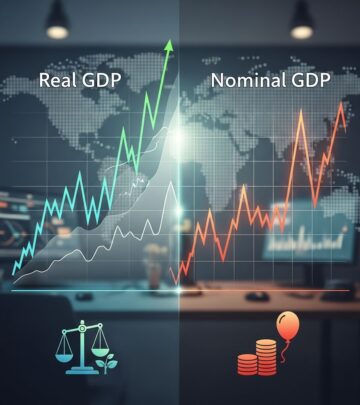
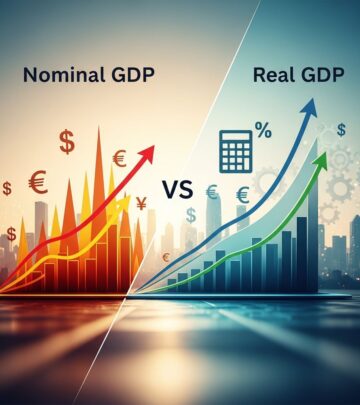
Gross Domestic Product (GDP) is one of the most fundamental measures of a nation’s economic health and activity. However, not all GDP figures tell the same story. When analyzing economic performance, economists face a critical choice: should they examine nominal GDP or real GDP? This distinction is far more than a technical nuance—it fundamentally shapes how we understand economic growth, inflation, and overall economic performance. Understanding when and why economists prefer one measurement over the other is essential for anyone seeking to grasp modern economic analysis.
Understanding Nominal GDP and Its Limitations
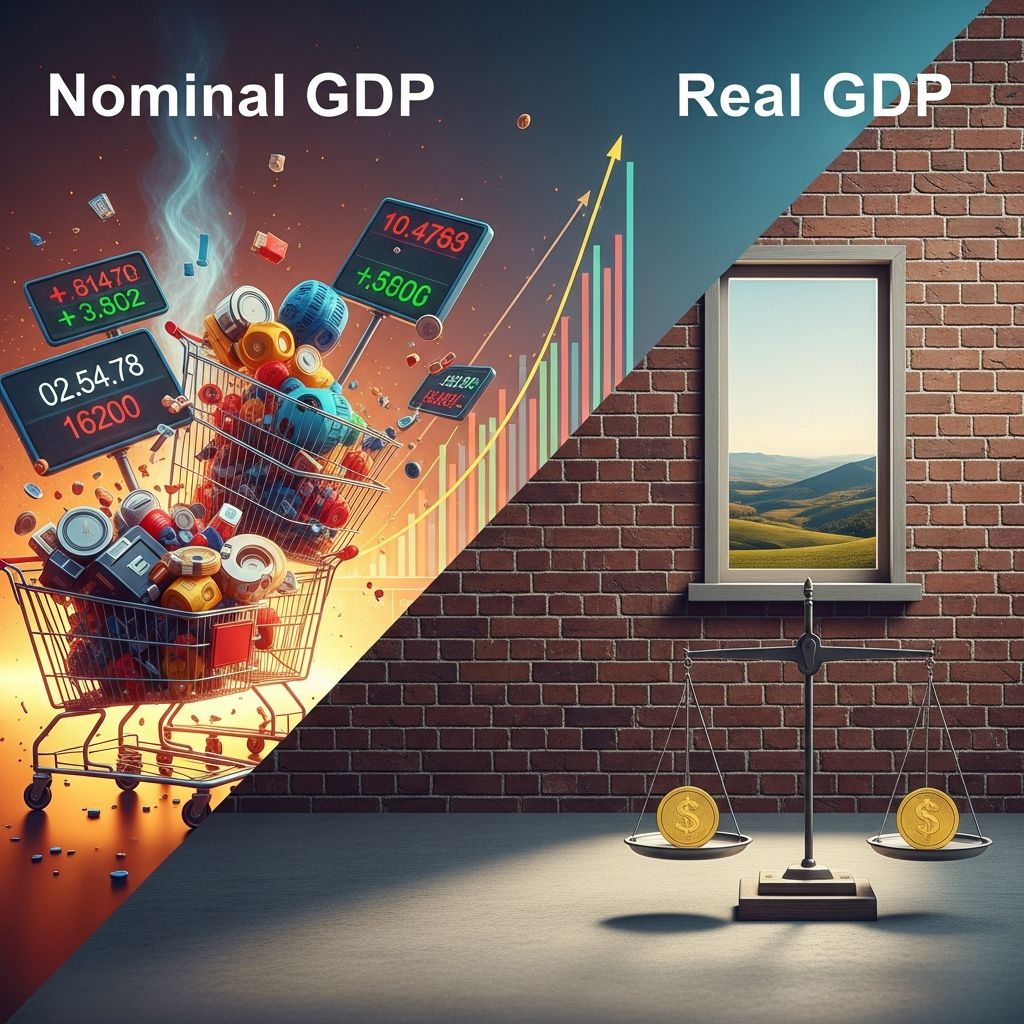
Nominal GDP represents the total market value of all final goods and services produced by a nation during a specific period, calculated using current prices. In other words, it measures economic output at face value, using the actual prices at which goods and services are sold in the marketplace during that particular year or quarter.
While nominal GDP provides a straightforward snapshot of economic activity, it suffers from a significant flaw: it conflates two distinct phenomena—actual economic growth and price increases. Consider a simple example: if an economy produces the exact same quantity of goods and services but prices rise by 5% due to inflation, nominal GDP will increase by 5% despite zero real economic expansion. This inflation-driven increase can mask the true underlying economic condition.
Key limitations of nominal GDP include:
- Inflation distortion: Rising prices inflate the GDP figure regardless of whether actual production increased
- Deflation effects: Falling prices can mask genuine economic growth
- Period comparison challenges: Difficult to compare economic performance across different time periods
- International comparison issues: Varying inflation rates between countries complicate global comparisons
- Misleading policy decisions: Policymakers might misinterpret economic signals and implement inappropriate interventions
The Solution: Real GDP and Price Adjustment
Real GDP addresses the inflation problem by adjusting nominal GDP to account for price level changes. Also called GDP at constant prices or inflation-adjusted GDP, real GDP measures the total market value of goods and services using prices from a reference year (known as the base year). This adjustment strips away the distortionary effects of inflation or deflation, revealing the true underlying economic growth.
To calculate real GDP, economists use a deflator—typically the GDP Deflator or Consumer Price Index (CPI)—to convert nominal GDP into constant dollars. This process allows for apples-to-apples comparisons across different time periods, free from the confounding effects of price changes.
Advantages of using real GDP:
- Inflation neutrality: Removes the distortionary effects of changing price levels
- True growth measurement: Reveals actual changes in the quantity of goods and services produced
- Historical comparison: Enables valid comparisons of economic performance across decades
- International analysis: Facilitates meaningful comparisons between countries with different inflation rates
- Accurate policy analysis: Helps policymakers understand genuine economic conditions and make informed decisions
When Economists Prefer Real GDP
Economists typically rely on real GDP for most analytical purposes, particularly when assessing long-term economic trends, making policy decisions, or conducting historical comparisons. Several key scenarios demonstrate why real GDP is the economist’s preferred measurement:
1. Long-Term Economic Analysis
When examining how an economy has performed over extended periods—such as comparing today’s economy with that of a decade or century ago—real GDP is essential. Nominal GDP comparisons would be meaningless because inflation has continuously eroded the purchasing power of money. By using real GDP, economists can meaningfully assess whether the economy has genuinely expanded or contracted over time, independent of price level changes.
2. Business Cycle Identification
Identifying whether an economy is expanding or contracting requires real GDP analysis. A recession or expansion cannot be accurately determined using nominal GDP alone. During periods of high inflation, nominal GDP might rise even as real GDP falls—a situation called “stagflation,” where stagnant or declining real growth accompanies rising prices. Only real GDP can correctly identify these critical turning points.
3. Inflation-Adjusted Policy Evaluation
Central banks, treasuries, and other government agencies must understand true economic conditions to implement appropriate monetary and fiscal policies. Real GDP provides the factual foundation for these critical decisions. If policymakers mistakenly believed nominal GDP growth represented real expansion, they might implement contractionary policies when stimulus is needed, or vice versa—potentially destabilizing the economy.
4. International Economic Comparisons
When comparing economic performance across countries with different inflation rates or at different times, real GDP adjusted for purchasing power is essential. This inflation adjustment ensures that comparisons reflect genuine differences in productive capacity rather than inflation differentials between nations.
5. Productivity and Living Standards Assessment
Real GDP growth is directly linked to improvements in average living standards. When analyzing whether citizens are materially better or worse off, real GDP provides the accurate measure. Rising nominal GDP accompanied by similar inflation means no improvement in real living standards—a distinction that profoundly matters for social well-being and policy evaluation.
When Nominal GDP Retains Value
While real GDP dominates economic analysis for good reason, nominal GDP isn’t without utility. Certain situations and analyses benefit from or require nominal GDP figures:
- Recent period assessment: When analyzing very recent economic data where inflation has been minimal, nominal and real GDP differences may be negligible
- Debt and deficit analysis: Government debt-to-GDP ratios often use nominal GDP since debts are denominated in current dollars
- Market capitalization context: Nominal GDP provides context for asset valuations and market comparisons in current terms
- Employment and wage analysis: Labor markets are often analyzed using nominal figures that workers directly experience
- Asset pricing: Financial analysts may use nominal GDP for certain valuation models and market assessments
The Mathematical Relationship: Real GDP Formula
The relationship between nominal and real GDP can be expressed through a simple mathematical formula:
Real GDP = (Nominal GDP / GDP Deflator) × 100
Where the GDP Deflator represents the ratio of nominal to real GDP from the base year. This calculation illustrates why the two measures can diverge significantly. In periods of high inflation, the deflator rises substantially, causing real GDP to be considerably lower than nominal GDP. Conversely, in deflationary periods, real GDP would exceed nominal GDP.
Practical Examples of Real vs. Nominal GDP Differences
Consider a hypothetical nation whose nominal GDP grew from $500 billion to $600 billion over a five-year period. While this represents a 20% nominal increase, the true economic story depends on inflation. If prices rose by 20% during this period, real GDP remained flat—no genuine economic growth occurred. Conversely, if inflation was only 5%, real GDP actually grew by approximately 14.3% in real terms. These vastly different growth rates would lead to entirely different policy conclusions and assessments of economic health.
In the United States, for example, the nominal GDP in 2023 was substantially higher than it was in 2000, but the real GDP growth tells a more measured story of actual economic expansion when inflation is properly accounted for. This distinction becomes increasingly important during high-inflation periods, as experienced in the 1970s and early 1980s, or more recently in 2021-2023.
The GDP Deflator and Inflation Adjustment
The GDP Deflator, the tool used to convert nominal to real GDP, measures the change in prices of all goods and services produced within an economy. Unlike the Consumer Price Index, which measures prices of goods and services purchased by households, the GDP Deflator encompasses all economic output. This comprehensive approach makes it particularly useful for adjusting GDP figures.
Statistical agencies calculate the GDP Deflator regularly, allowing economists to adjust historical GDP data and create consistent real GDP series. This ongoing adjustment process ensures that long-term economic comparisons remain valid even as inflation or deflation impacts different periods.
Why This Distinction Matters for Economic Policy
The distinction between real and nominal GDP has profound implications for economic policymaking. Central banks monitoring inflation must separate genuine economic growth from price-level increases to calibrate interest rates appropriately. Governments evaluating fiscal stimulus effectiveness cannot rely on nominal GDP growth alone—they must assess real growth to determine whether their policies are genuinely stimulating productive activity or merely inflating prices.
For businesses, this distinction determines investment decisions, expansion planning, and market analysis. A corporation might observe nominal GDP growth and consider expansion, only to discover that real growth was minimal and the market hasn’t genuinely expanded. Conversely, real GDP growth figures might justify expansion even if nominal figures appear modest.
Frequently Asked Questions
Q: What is the key difference between real GDP and nominal GDP?
A: The primary difference lies in inflation adjustment. Nominal GDP uses current prices and includes the effects of inflation or deflation, while real GDP removes these price-level changes by using constant base-year prices. This makes real GDP the more accurate measure of genuine economic growth.
Q: Why do economists prefer real GDP for most analyses?
A: Economists prefer real GDP because it isolates actual economic growth from price-level changes, enabling valid historical comparisons, accurate business cycle identification, and sound policy decisions. Nominal GDP can be misleading during periods of significant inflation or deflation.
Q: How is real GDP calculated from nominal GDP?
A: Real GDP is calculated by dividing nominal GDP by the GDP Deflator and multiplying by 100. This formula adjusts nominal figures to constant base-year prices, removing the distortionary effects of inflation.
Q: Can real GDP ever exceed nominal GDP?
A: Yes, real GDP can exceed nominal GDP during deflationary periods when prices are falling. In such cases, the GDP Deflator is less than 100, causing real GDP to be higher than nominal GDP when adjusted.
Q: Is nominal GDP ever more useful than real GDP?
A: While real GDP is superior for most economic analysis, nominal GDP has specific applications, such as calculating government debt-to-GDP ratios, recent short-term market assessments, and current-dollar valuations. However, for assessing true economic health and growth, real GDP is definitively more appropriate.
Q: How does inflation affect the difference between real and nominal GDP?
A: High inflation causes nominal GDP to grow faster than real GDP, sometimes obscuring economic stagnation or contraction. During inflationary periods, the gap between nominal and real GDP widens significantly. Conversely, during low-inflation periods, the two measures converge.
References
- Measuring the Economy: A Primer on GDP and the National Income and Product Accounts — U.S. Bureau of Economic Analysis. 2024. https://www.bea.gov/resources/learning-center
- Real Gross Domestic Product (Real GDP) — Federal Reserve Economic Data (FRED), Federal Reserve Bank of St. Louis. 2024. https://fred.stlouisfed.org/series/A191RL1Q225SBEA
- GDP: The American Scorecard — Council of Economic Advisers, The White House. 2024. https://www.whitehouse.gov/cea/
- National Accounts Statistics: Main Aggregates and Tables — United Nations Statistics Division. 2024. https://unstats.un.org/unsd/nationalaccount/
- The Economics of Inflation and Deflation — International Monetary Fund (IMF). 2023. https://www.imf.org/en/Research
Similar Articles








Read full bio of Sneha Tete