Real GDP vs Nominal GDP: Which Measures Economic Performance Better?
Understanding the critical differences between real and nominal GDP for accurate economic analysis.
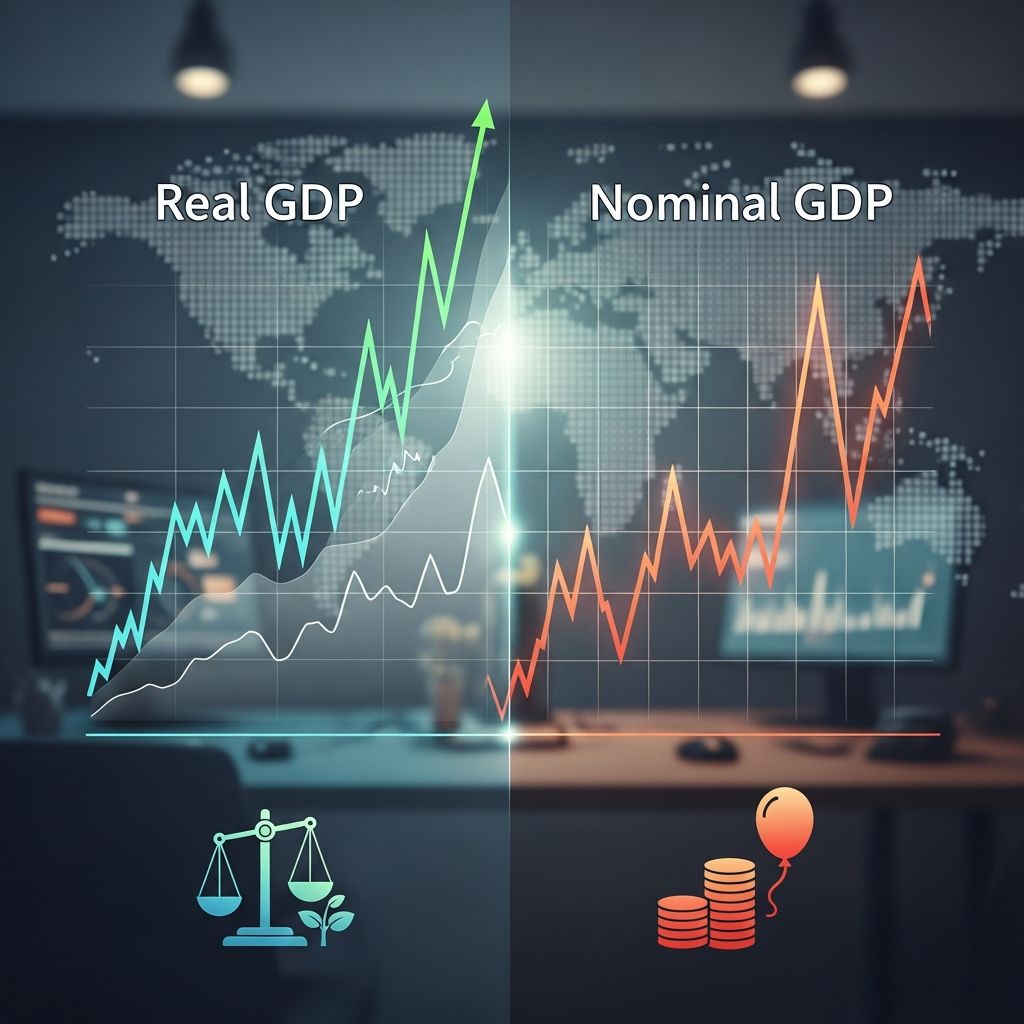
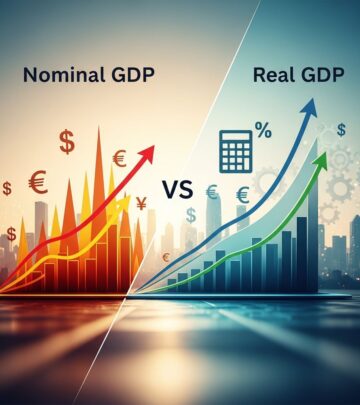
When evaluating a nation’s economic performance, policymakers, economists, and investors often rely on gross domestic product (GDP) as a primary indicator. However, not all GDP figures are created equal. Two distinct measures—nominal GDP and real GDP—tell vastly different stories about an economy’s true growth trajectory. Understanding the critical distinction between these two metrics is essential for making informed economic decisions and accurately assessing economic health.
What is Nominal GDP?
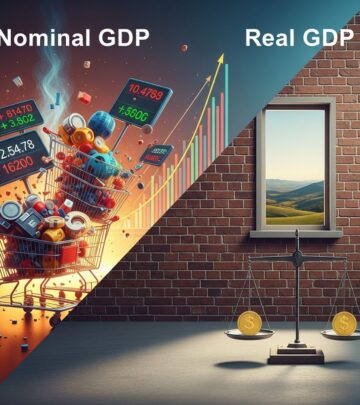
Nominal GDP represents the total monetary value of all goods and services produced by a country within a specific period, calculated using current market prices. This straightforward measurement includes the effect of inflation or deflation in its raw numbers. When nominal GDP increases, it could reflect either genuine economic growth, rising prices, or a combination of both. This ambiguity makes nominal GDP less useful for comparing economic performance across different time periods.
For example, if a country’s nominal GDP grows from $5 trillion to $5.5 trillion in a single year, that represents a 10% increase. However, this growth figure doesn’t clarify whether the economy actually produced more goods and services or whether prices simply inflated throughout the year. This uncertainty is precisely why economists and policymakers prefer more refined measures when conducting serious economic analysis.
What is Real GDP?
Real GDP adjusts nominal GDP for inflation or deflation, using constant prices from a base year as the reference point. By removing the price effects, real GDP reveals the actual increase or decrease in the volume of goods and services an economy produces. Real GDP provides a clearer picture of whether an economy is genuinely expanding or contracting, independent of price fluctuations in the marketplace.
When economists say an economy grew by 3%, they typically refer to real GDP growth. This metric answers the critical question: “Did the economy actually produce more stuff, or did prices just go up?” By holding prices constant, real GDP isolates the actual physical or quantitative changes in economic output, making it far more meaningful for long-term economic assessment.
The Impact of Inflation on Economic Measurement
Inflation is the primary reason why distinguishing between nominal and real GDP is so crucial. During periods of high inflation, nominal GDP can appear impressively strong while real GDP might tell a less encouraging story. Conversely, during deflationary periods, nominal GDP might decline while real economic activity remains stable or grows.
Consider a practical scenario: Suppose a country experiences 8% inflation in a given year, and its nominal GDP grows by 8%. In this case, the real GDP growth would be approximately 0%, indicating that despite the impressive nominal figures, the economy produced virtually no additional goods or services. All the nominal growth resulted from price increases rather than genuine economic expansion. This distinction is critical for policymakers determining whether economic stimulus is needed or whether monetary tightening is appropriate.
Why Real GDP is a Better Index of Economic Performance
1. Eliminates Inflation Distortions
Real GDP removes the inflationary noise that obscures true economic performance. By using constant prices, economists can directly compare output levels across different years without worrying about whether price changes are inflating the growth numbers. This capability makes real GDP significantly more reliable for identifying genuine economic trends.
2. Enables Accurate Historical Comparisons
Real GDP allows meaningful comparisons between different time periods, sometimes spanning decades. By standardizing prices to a single base year, economists can determine whether an economy in 2024 produced more than it did in 2004, controlling for the cumulative inflation that occurred during those two decades. Nominal GDP would make such comparisons nearly impossible without extensive additional calculations.
3. Reveals True Productivity Growth
Real GDP growth reflects actual productivity improvements and increases in living standards. When real GDP rises, it indicates that workers are producing more, businesses are becoming more efficient, or technological innovations are expanding economic capacity. This genuine growth translates to improved prosperity for citizens, better living standards, and increased economic resilience.
4. Supports Better Policy Decisions
Central banks and government policymakers rely on real GDP data to craft appropriate monetary and fiscal policies. If policymakers mistakenly believe nominal GDP growth represents genuine economic expansion when it actually reflects inflation, they might implement stimulative policies that further fuel inflation without generating real economic growth. Real GDP prevents such costly policy errors.
5. Facilitates International Comparisons
When comparing economic performance across countries, real GDP provides a more level playing field. Different countries experience different inflation rates, so nominal comparisons can be misleading. Real GDP, when adjusted for purchasing power parity, allows more accurate assessments of relative economic sizes and growth rates globally.
Key Differences Summary
| Characteristic | Nominal GDP | Real GDP |
|---|---|---|
| Price Adjustment | Uses current market prices | Uses constant base-year prices |
| Inflation Effect | Includes inflation in calculations | Removes inflation effects |
| Accuracy for Comparison | Less reliable for time-series comparisons | Highly reliable for comparing periods |
| Growth Representation | May overstate growth during inflation | Accurately reflects actual growth |
| Policy Application | Limited use for policy decisions | Primary metric for policy formulation |
| Living Standards Indicator | Does not indicate standard of living changes | Directly reflects living standard improvements |
Practical Examples of Nominal vs. Real GDP
Example 1: Inflation Scenario
Consider an economy that produces 100 apples and 50 oranges in Year 1. Apples cost $2 each and oranges cost $3 each, resulting in a nominal GDP of $350. In Year 2, the same quantities are produced (100 apples and 50 oranges), but prices have risen to $2.20 per apple and $3.30 per orange due to inflation. The nominal GDP rises to $385, representing a 10% increase. However, the real GDP remains constant because the physical output hasn’t changed. The nominal growth is entirely attributable to inflation, revealing that living standards haven’t improved.
Example 2: Economic Contraction Disguised by Inflation
Imagine Year 1 shows nominal GDP of $10 trillion with actual production of 1 million units. In Year 2, nominal GDP grows to $10.8 trillion (an 8% nominal increase), but actual production falls to 950,000 units due to economic slowdown. If inflation was 12% during this period, real GDP would actually decline by approximately 4%, despite the healthy-looking nominal growth figure. Real GDP reveals the true economic contraction that nominal figures obscure.
How Real GDP is Calculated
Real GDP calculation involves deflating nominal GDP using a price index, typically the Implicit Price Deflator for GDP. The formula is straightforward:
Real GDP = Nominal GDP / Price Index × 100
For instance, if nominal GDP is $20 trillion and the price index is 120 (meaning prices are 20% higher than the base year), real GDP would be calculated as: $20 trillion / 1.20 = approximately $16.67 trillion. This calculation shows that the $20 trillion in nominal output actually represents $16.67 trillion in base-year-adjusted economic production.
The Importance of Base Year Selection
When calculating real GDP, economists must select a base year against which all other years are measured. This choice matters because it affects how growth rates appear. Most developed nations update their base year periodically (typically every 5 to 10 years) to ensure that the prices used reflect contemporary economic structures. The U.S. currently uses 2012 as its base year for calculating real GDP, meaning all real GDP figures are expressed in 2012 dollars.
Real GDP and Standard of Living
Real GDP is the most reliable indicator of whether a nation’s standard of living is improving. When real GDP per capita (real GDP divided by population) increases consistently, it typically indicates rising incomes, better employment opportunities, and improved access to goods and services. This connection between real GDP growth and living standards makes real GDP critical for assessing whether economic policies are genuinely benefiting citizens or merely creating inflationary growth that benefits no one.
Limitations of Real GDP Measurements
While real GDP is superior to nominal GDP for most analytical purposes, it still has limitations. Real GDP does not account for:
- Non-market activities and volunteer work
- Leisure time and quality of life improvements not reflected in production
- Environmental costs and sustainability considerations
- Income distribution and inequality
- Underground or informal economy activities
- Changes in health, education, and happiness indices
Despite these limitations, real GDP remains the most widely used and respected measure of economic performance globally. Economists often supplement real GDP with other indicators like the Human Development Index to obtain a more comprehensive economic picture.
Frequently Asked Questions
Q: Why don’t economists just always use nominal GDP?
A: Nominal GDP can be misleading because it includes inflation effects. An economy could report strong nominal growth while producing fewer actual goods and services. Real GDP provides clarity by removing inflation, making it essential for accurate economic assessment and policy formulation.
Q: How often is the base year changed for real GDP calculations?
A: Most countries update their base year every 5 to 10 years. The United States currently uses 2012, and updates occur periodically to reflect contemporary economic structures and pricing relationships in the economy.
Q: Can real GDP ever be negative?
A: Yes, real GDP can decline and become negative year-over-year during recessions or economic contractions. Negative real GDP growth indicates that an economy is producing fewer goods and services, representing an economic contraction.
Q: Which GDP measure do central banks use for policy decisions?
A: Central banks primarily focus on real GDP growth when making monetary policy decisions. They use real GDP to determine whether the economy needs stimulus or restraint, as nominal figures could lead to inappropriate policy responses.
Q: Is purchasing power parity related to real GDP?
A: Yes, purchasing power parity (PPP) is often combined with real GDP for international comparisons. PPP-adjusted real GDP allows for more accurate comparisons between countries by accounting for different price levels and currency values.
Q: What is the relationship between real GDP growth and employment?
A: Generally, real GDP growth is associated with job creation and employment increases. However, this relationship isn’t perfectly linear—technological improvements can lead to real GDP growth with minimal employment gains or even employment declines.
References
- Gross Domestic Product (GDP) — U.S. Bureau of Economic Analysis. 2025. https://www.bea.gov/resources/learning-center/what-is-gdp
- Real and Nominal GDP — U.S. Federal Reserve. 2025. https://www.federalreserve.gov
- Understanding GDP: From Theory to Practice — World Bank Group. 2024. https://www.worldbank.org/en/topic/macroeconomics
- Measuring Economic Growth: Real vs. Nominal GDP — International Monetary Fund. 2024. https://www.imf.org
- GDP Deflator and Price Indices — OECD Statistics. 2024. https://www.oecd.org
Similar Articles








Read full bio of Sneha Tete