Real Estate Taxes vs Personal Property Tax: Key Differences
Understand the critical differences between real estate and personal property taxes to optimize your tax strategy.
Understanding Real Estate Taxes vs Personal Property Tax
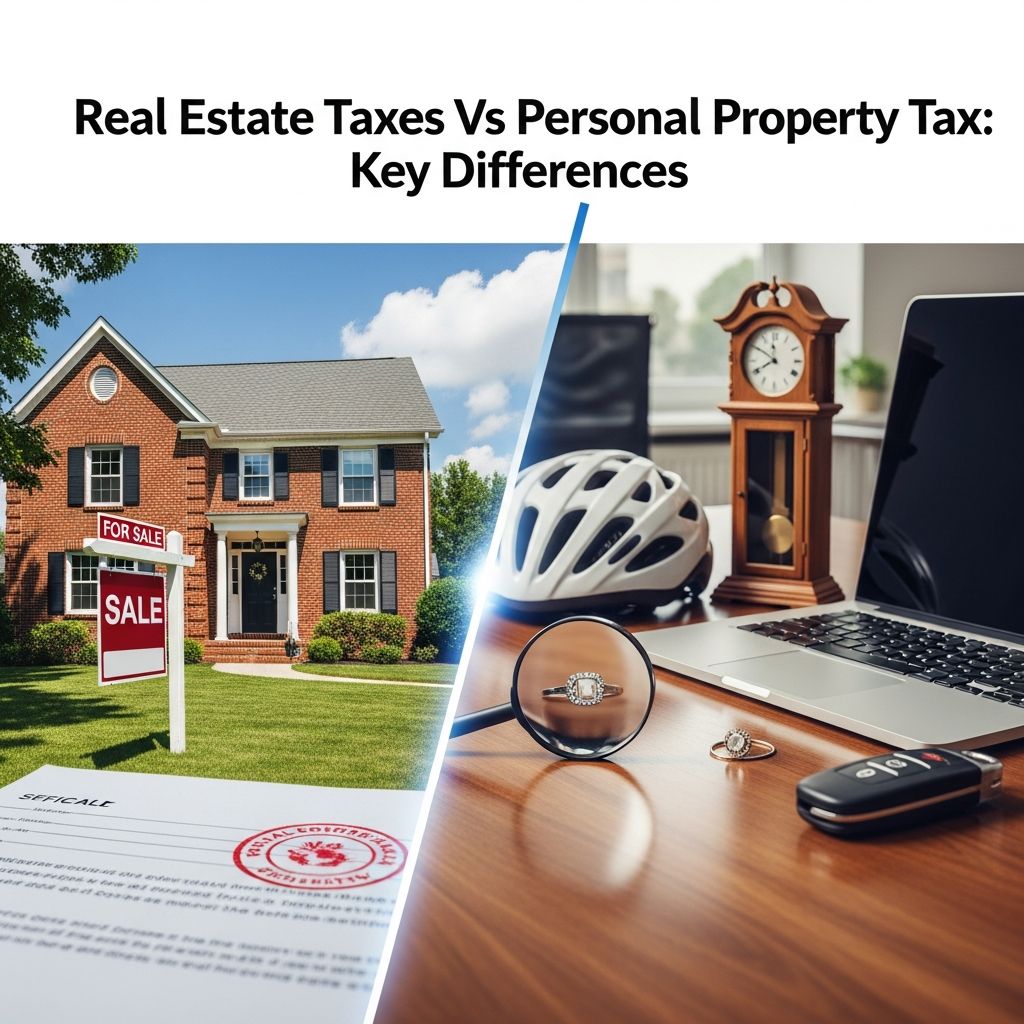
When it comes to taxes on property, the terms “real estate tax” and “property tax” are often used interchangeably, creating confusion for homeowners and property owners. While these terms may seem synonymous, they actually have distinct meanings and applications in the taxation system. Understanding the differences between real estate taxes and personal property taxes is essential for anyone who owns property or assets that might be subject to taxation. This comprehensive guide will help you navigate these distinctions and better understand your tax obligations.
What Are Real Estate Taxes?
Real estate taxes, also known as real property taxes, are annual or semi-annual taxes levied on immovable property. This category includes land, buildings, homes, and any structures permanently affixed to the ground. Real estate taxes are assessed based on the fair market value of the property, with rates varying significantly depending on your location. Local governments typically determine the tax rate and collect these taxes from property owners.
The amount of real estate tax you owe depends on two primary factors: the assessed value of your property and the tax rate established by your municipality. To calculate real estate taxes, assessors multiply the fair market value of your property by a specified percentage in each municipality to determine the tax-assessment value. This calculated value is then used to determine your actual real estate tax obligation.
Real estate tax rates can vary dramatically from one location to another. For example, Hawaii has one of the lowest property tax rates at just 0.26 percent, while New Jersey has one of the highest rates at 2.08 percent. Generally, costs tend to be higher in urban and suburban areas compared to rural regions.
What Is Personal Property Tax?
Personal property taxes are distinct from real estate taxes, as they apply to movable assets rather than fixed real property. Personal property includes tangible, movable items such as vehicles, boats, aircraft, RVs, and mobile homes. These are assets that are not permanently affixed to land and can be relocated or transported.
Unlike real estate taxes, which apply uniformly to all homeowners in a given jurisdiction, personal property taxes are only charged on certain items and vary by jurisdiction. Some states and municipalities may tax specific types of personal property while exempting others entirely. Additionally, personal property tax rates are typically much lower than real estate tax rates. For instance, vehicle registration fees—a common form of personal property tax—might only be $50 annually, substantially less than property taxes on even the most affordable homes.
It’s important to note that intangible personal property, such as stocks, bonds, and intellectual property, is generally not subject to personal property taxation. Business personal property may be subject to taxation in some jurisdictions, while equivalent personal use items may not be.
Key Differences Between Real Estate and Personal Property Taxes
While both real estate taxes and personal property taxes fall under the broader category of property taxes, they differ in several fundamental ways. Understanding these differences is crucial for managing your overall tax burden effectively.
| Factor | Real Estate Taxes | Personal Property Taxes |
|---|---|---|
| What Is Taxed | Land and permanent structures affixed to it (homes, buildings, improvements) | Movable assets (vehicles, boats, RVs, machinery, equipment) |
| Who Levies the Tax | Local governments (city, county assessor offices) | State governments typically, with variations by jurisdiction |
| Circumstances | Mandatory for all homeowners and property owners | Only charged on specific items; varies by jurisdiction |
| Tax Rates | Generally higher rates; varies by location | Typically much lower rates than real estate taxes |
| Assessment Frequency | Usually assessed annually or semi-annually | Varies by item and jurisdiction |
| Permanent Affixture | Property must be permanently attached to land | Property must be movable and not permanently attached |
How Are Real Estate Taxes Calculated?
The calculation of real estate taxes follows a standardized formula in most jurisdictions. First, assessors determine the fair market value of your property through professional appraisals or comparable sales analysis. Next, this fair market value is multiplied by the assessment rate (the percentage of value that is taxable) to determine the assessed value. Finally, the assessed value is multiplied by the millage rate (the tax rate per $1,000 of assessed value) to calculate your final tax bill.
For example, if your home has a fair market value of $300,000 and your local assessment rate is 40 percent (meaning 40 percent of the property value is taxable), your assessed value would be $120,000. If the millage rate in your area is 15 mills (or 1.5 percent), your annual real estate tax would be approximately $1,800.
Many jurisdictions offer exemptions or deductions that can reduce your real estate tax burden. These might include homestead exemptions, senior citizen exemptions, veteran exemptions, or exemptions for properties used for agricultural purposes. Understanding what exemptions you may qualify for can significantly reduce your tax liability.
How Are Personal Property Taxes Assessed?
Personal property taxes are assessed differently depending on the type of property and local regulations. For vehicles, the most common form of personal property tax is vehicle registration, which often includes a value-based component. Some states calculate vehicle registration fees based on the vehicle’s age and original value, while others use a flat fee structure.
For other types of personal property, such as business equipment or machinery, taxation varies by jurisdiction. Some states have largely eliminated personal property taxes to attract business investment and manufacturing, while others continue to assess them. The depreciation schedules for personal property are often more favorable than those for real estate, allowing property owners to reduce the taxable value more quickly.
One important consideration is that classification of property as real or personal can have significant tax implications. For instance, determining whether a mobile home qualifies as personal property or real property can substantially affect the tax treatment, as real property taxes are typically higher. Consulting with a tax professional can help you understand the specific classifications that apply to your situation.
Understanding Property Tax Terminology
Several important terms are used in property taxation that you should understand. “Real property” refers to land and structures permanently attached to it, such as houses, buildings, and improvements. “Personal property” encompasses movable possessions not permanently affixed to land. “Ad valorem” taxation, which means “according to value,” refers to taxes assessed based on the fair market value of property.
The term “fixture” refers to items that were originally personal property but have become affixed to real property and are now considered part of it. However, because there are no universal rules defining what constitutes a fixture, ambiguity can arise, potentially leading to taxation disputes or unintended overlaps in taxation.
Regional Variations in Property Taxation
Property tax rates and regulations vary considerably across different states and municipalities. Some states are moving toward eliminating or reducing personal property taxes to encourage economic development and retain manufacturing operations. This shift may benefit taxpayers by decreasing their overall tax burden.
Additionally, some states provide differential taxation treatment for personal property compared to real property. For instance, personal property might not be subject to value limitation laws that apply to real estate, or special assessment rules may not apply to personal property in certain jurisdictions.
Understanding the specific tax rules in your area is essential for proper tax planning. What applies in one state may not apply in another, and local municipalities within the same state may have different regulations. Researching your local tax assessor’s office or consulting with a tax professional can provide clarity on your specific situation.
Tax Implications for Homeowners
For homeowners, real estate taxes are typically mandatory and unavoidable. These taxes fund essential local services such as schools, fire departments, police services, and road maintenance. Real estate taxes are usually paid directly to your local tax assessor or indirectly through escrow accounts with your mortgage lender.
Personal property taxes may apply to homeowners if they own vehicles, boats, recreational vehicles, or other movable assets. The tax obligations for personal property depend on what items you own and the regulations in your jurisdiction. Some items may be completely exempt from taxation, while others are subject to periodic registration or assessment fees.
Understanding both your real estate and personal property tax obligations can help you budget more effectively and potentially identify opportunities for tax savings through exemptions or deductions you may qualify for.
Business Owners and Personal Property Taxes
Business owners face unique considerations regarding personal property taxes. Personal property used in conducting business—such as equipment, machinery, tools, computers, and inventory—may be subject to taxation. However, the same items used for personal purposes may not be taxable in certain jurisdictions.
Some states have chosen to eliminate or significantly reduce personal property taxes on business assets to encourage business development and investment. This trend reflects an effort to make states more competitive and attractive to businesses. If you own a business, understanding how personal property taxes apply to your business assets is crucial for accurate tax planning.
Depreciation and Asset Classification
One significant tax consideration involves how assets are classified and how they can be depreciated for tax purposes. Personal property generally depreciates more quickly than real estate, allowing property owners to reduce the taxable value of personal property assets more rapidly. This faster depreciation schedule can provide substantial tax benefits over time.
However, how an asset is categorized—whether as real or personal property—can have major implications for these depreciation benefits. Proper classification requires understanding local case laws and historical evaluation practices, which can be complex. For example, improvements to real property that might otherwise be classified as personal property could be treated as fixtures and therefore part of the real estate.
Frequently Asked Questions
Q: Are real estate taxes and property taxes the same thing?
A: While often used interchangeably, real estate taxes and property taxes are not exactly the same. Real estate taxes specifically refer to taxes on real property (land and buildings), while property taxes can include taxes on both real property and personal property such as vehicles and boats.
Q: What determines the amount of real estate tax I pay?
A: Real estate taxes are based on two main factors: the assessed value of your property (calculated from its fair market value) and the tax rate set by your local municipality. The location of your property significantly affects the rate, with urban areas typically having higher taxes than rural areas.
Q: Are all personal property items subject to taxation?
A: No. Personal property tax applies only to specific items and varies by jurisdiction. Some items may not be taxed at all, while others—such as vehicles and boats—are commonly subject to taxation. Intangible property like stocks and bonds is generally not subject to personal property tax.
Q: Can I reduce my real estate tax burden?
A: Yes. Many jurisdictions offer exemptions and deductions such as homestead exemptions, senior citizen exemptions, veteran exemptions, and agricultural exemptions. Investigating what exemptions you qualify for can significantly reduce your tax liability.
Q: How often are real estate taxes paid?
A: Real estate taxes are typically levied annually or semi-annually, depending on your municipality. Some areas bill taxes in two installments, while others collect annually. If you have a mortgage, taxes are often collected through an escrow account with your lender.
Q: Is a mobile home considered real or personal property for tax purposes?
A: This depends on your jurisdiction. In some cases, a mobile home is considered personal property, while in others it may be classified as real property. This classification has significant tax implications, so it’s important to verify the treatment in your area.
Q: Why do property tax rates vary so much between states?
A: Property tax rates vary due to differences in state laws, local funding needs, and economic policies. States with high property tax rates typically rely heavily on property taxes to fund local services, while states with lower rates may fund services through other revenue sources or have implemented tax limitation laws.
Q: Should I consult a tax professional about my property taxes?
A: Yes, especially if you have significant property holdings, own a business, or have complex tax situations. A tax professional can help you understand your obligations, identify potential exemptions or deductions, and ensure proper asset classification for tax purposes.
References
- Real Estate Taxes Vs. Property Taxes — Bankrate. 2024. https://www.bankrate.com/real-estate/real-estate-taxes-property-taxes/
- What is the difference between Real and Personal Property Taxes? — City of Grayling Assessor’s Office. https://www.cityofgrayling.org/faqcard.asp?sid=67
- Are real estate taxes the same as property taxes? — H&R Block Tax Center. 2024. https://www.hrblock.com/tax-center/income/real-estate/real-estate-taxes-vs-property-taxes/
- What’s the difference between real estate tax, property tax, and personal property tax? — TurboTax Support. 2024. https://ttlc.intuit.com/turbotax-support/en-us/help-article/homeowner-tax-credits-deductions/difference-real-estate-tax-property-tax-personal/L51mz3bdi_US_en_US
- Real Property vs. Personal Property — SmartAsset Financial Advisor. https://smartasset.com/financial-advisor/real-property-vs-personal-property
- California Property Tax: An Overview — California Board of Equalization. https://boe.ca.gov/proptaxes/pdf/pub29.pdf
Similar Articles








Read full bio of medha deb