Reagan National Airport Guide: 5 Practical Travel Tips
Comprehensive guide to navigating Ronald Reagan Washington National Airport, from history and terminals to transportation and tips for a seamless trip.
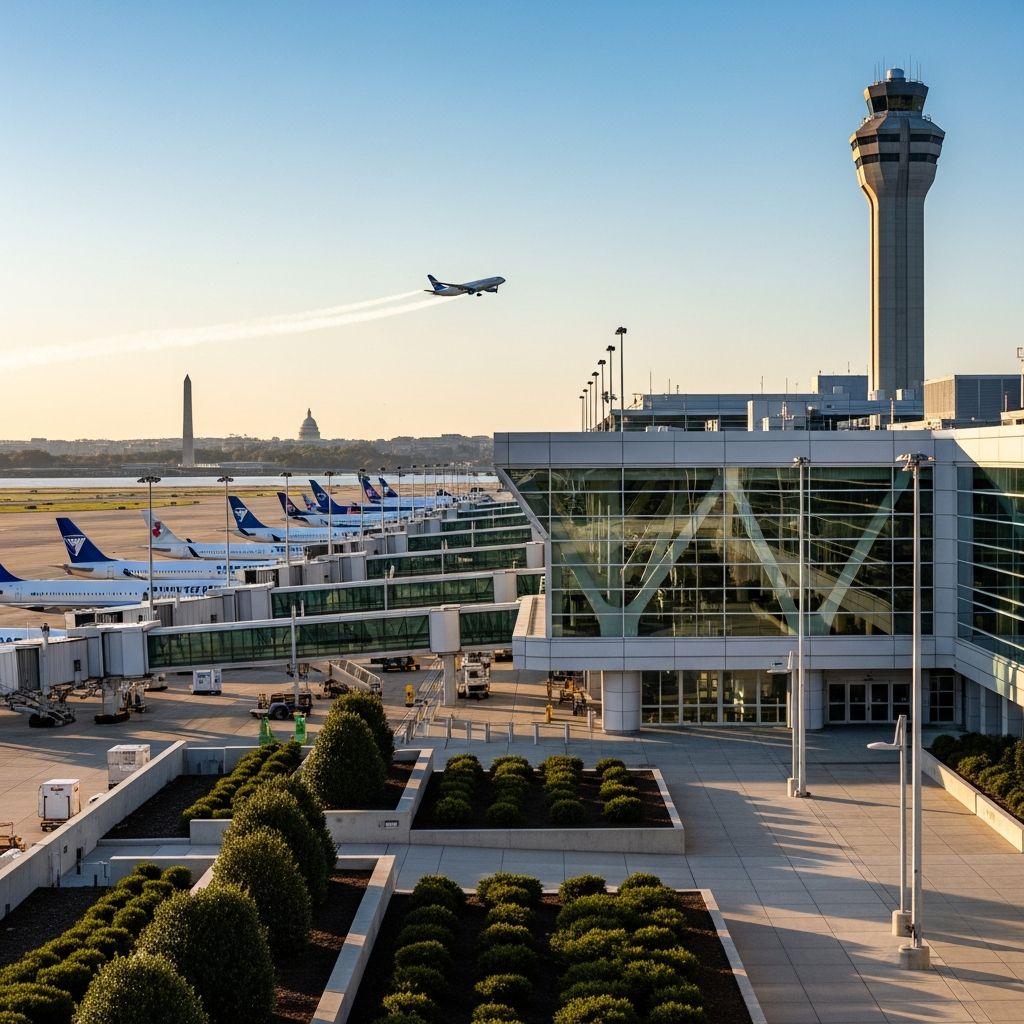
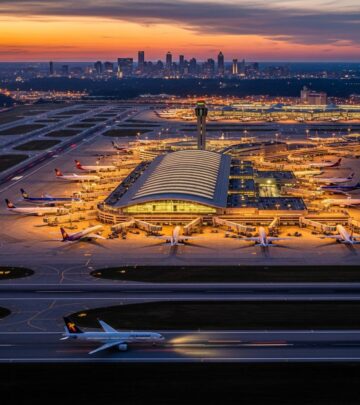
Ronald Reagan Washington National Airport (DCA) stands as the most convenient gateway for travelers heading to the nation’s capital, located just five miles south of downtown Washington, D.C., in Arlington, Virginia. Primarily serving domestic short-haul flights due to federal perimeter rules, it connects passengers to 111 nonstop destinations efficiently.
Historical Evolution of DCA
The airport’s origins trace back to 1941 when it opened as Washington National Airport, with its initial terminal spanning 115,000 square feet. Early expansions included a 1950 south extension adding over 25,000 square feet and a 1955 ‘south finger’ pier for more gates. By 1958, a North Terminal boosted capacity further, and a connecting passageway enclosed in 1961 linked the structures.
Jet service commenced in 1966, marking a pivotal shift, though larger aircraft like the 727-200 faced restrictions until 1970. The 1990s brought major modernization: an interim terminal in Hangar 11 paved the way for the expansive Terminal 2, designed by César Pelli, which debuted in 1997 with 1 million square feet across three levels. In 1998, Congress renamed it after President Ronald Reagan.
Recent upgrades under Project Journey, completed in 2021, integrated National Hall into the secure area, added high-capacity security checkpoints, and introduced a new 14-gate concourse for regional flights in April 2021, eliminating outdated busing operations.
Airport Layout and Infrastructure
Spanning 860 acres—733 on land and 127 underwater—DCA features two main terminals: the historic Terminal 1 (formerly A) with 9 gates and the larger Terminal 2 (formerly B/C) with 49 gates, totaling 58. Terminal 2 connects directly to Metrorail via pedestrian bridges and includes a two-level roadway for smoother traffic.
The airfield boasts three runways: the primary 01/19 at 7,169 feet for north-south operations; 15/33 at 5,204 feet, mainly for smaller aircraft; and 04/22 at 5,000 feet. Runway 01/19 handles most traffic, with 57% arrivals during north operations and 38% on 19 during south operations.
| Runway | Length (feet) | Primary Use |
|---|---|---|
| 01/19 | 7,169 | Main north-south; majority of arrivals/departures |
| 15/33 | 5,204 | Smaller aircraft; intermittent use |
| 04/22 | 5,000 | Crosswind operations |
Major Airlines and Flight Operations
As a key hub for American Airlines, DCA supports extensive domestic routes within a 1,250-mile perimeter, with exceptions for select longer flights. Limited international service operates to precleared destinations like Canada and the Caribbean, lacking on-site customs.
- American Airlines: Dominant presence with ticket counters in Terminal 2 (Priority: 3 a.m.–9 p.m.; Main: 3 a.m.–10:30 p.m.) and Metro check-in.
- Other carriers include United, Delta, and regionals, serving 111 destinations as of 2025.
- Passenger traffic hit record highs in 2024, up 3.3%, supported by 11,000 workers.
Ground Transportation Options
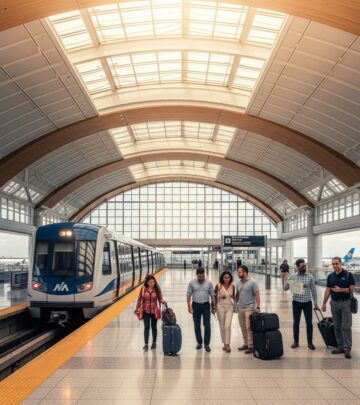
DCA excels in accessibility. The Metrorail Blue/Yellow lines connect directly via enclosed bridges to Terminal 2, with service starting in 1977.
- Metro: Station adjacent to terminals; frequent service to D.C. and beyond.
- Taxis/Rideshares: Designated pick-up zones; Uber/Lyft hubs streamline waits.
- Buses/Shuttles: Local options like ART and Fairfax Connector.
- Driving: Proximity to GW Parkway and I-395.
Parking accommodates nearly 7,900 vehicles across hourly, daily, and economy lots.
| Option | Details | Cost Estimate |
|---|---|---|
| Hourly Garage | Terminal-adjacent | $7/hour |
| Daily Garage | Pedestrian bridge access | $31/day |
| Economy Lot | Shuttle service | $17/day |
Navigating Security and Checkpoints
Post-2021 upgrades feature centralized, high-capacity checkpoints west of National Hall, allowing seamless concourse access without reclearing. Biometric screening and advanced systems enhance efficiency. Expect TSA PreCheck and CLEAR lanes for faster processing.
- Terminal 1: Dedicated checkpoint.
- Terminal 2: Two main checkpoints serving all concourses.
Dining, Shopping, and Amenities
DCA offers diverse options across terminals. Terminal 2’s three levels host national chains and local eateries, from quick bites to sit-down meals. Shops include duty-free alternatives, newsstands, and specialty stores.
- Food: Starbucks, Chick-fil-A, Vace Italian Deli.
- Retail: Hudson News, PGA Tour Grill shops.
- Lounges: American Airlines Admirals Club, United Club.
- Other: Free Wi-Fi, charging stations, quiet rooms.
Sustainability efforts include energy-efficient designs and recycling programs.
Parking and Accessibility Features
With capacity for thousands, parking garages link directly to terminals. Economy options with shuttles save costs for longer stays. ADA-compliant facilities ensure accessibility: priority parking, ramps, and services for mobility needs.
Practical Travel Tips for DCA
To optimize your visit:
- Arrive Early: 2 hours domestic; factor Metro delays.
- Perimeter Rule: Confirm flights comply; long-haul via Dulles/IAD.
- Weather Ops: Runway configs shift with wind; check apps.
- COVID/Health: Follow current guidelines; masks per policy.
- Apps: Use FlyReagan, airline apps for real-time updates.
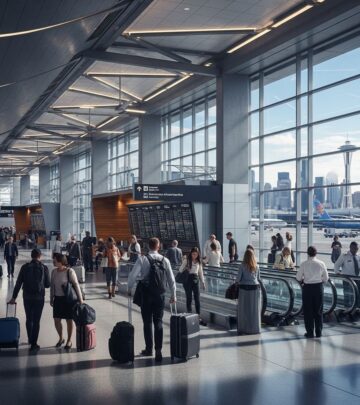
Peak times (mornings/evenings) see crowds; opt for off-peak for ease.
Frequently Asked Questions (FAQs)
What is the perimeter rule at Reagan National?
Federal limits restrict nonstop flights beyond 1,250 miles, preserving short-haul focus.
How do I get from DCA to downtown D.C.?
Metrorail Blue/Yellow lines offer the fastest, cheapest route via pedestrian bridges.
Does DCA have international flights?
Limited to precleared destinations like Canada/Caribbean; no customs on-site.
What are the terminal gate counts?
Terminal 1: 9 gates; Terminal 2: 49 gates.
Is there parking at DCA?
Yes, nearly 7,900 spaces in hourly, daily, economy options.
Recent upgrades at DCA?
2021 Project Journey added checkpoints, National Hall security integration, new concourse.
Future Developments and Sustainability
Ongoing plans focus on capacity, resilience, and green initiatives: biometric expansions, energy-efficient builds, and federal coordination for funding. These ensure DCA remains a top-tier hub amid rising demand.
References
- Ronald Reagan Washington National Airport – Wikipedia — Wikipedia. 2025-07. https://en.wikipedia.org/wiki/Ronald_Reagan_Washington_National_Airport
- Airport Overview – flyreagan.com — Metropolitan Washington Airports Authority. Accessed 2026. https://www.flyreagan.com/airport-overview
- Ronald Reagan Washington National Airport – UNIS — UNIS. 2024. https://www.unisco.com/united-states-airports/ronald-reagan-washington-national-airport
- Washington Reagan National, DC (DCA) – American Airlines — American Airlines. Accessed 2026. https://www.aa.com/i18n/travelInformation/destinationInformation/dca-airport.jsp
- DCA: Official Website — Metropolitan Washington Airports Authority. Accessed 2026. https://www.flyreagan.com
Similar Articles








Read full bio of Sneha Tete