RCV vs ACV: Home Insurance Explained
Discover how Replacement Cost Value and Actual Cash Value affect your home insurance payouts and choose the right coverage for full protection.
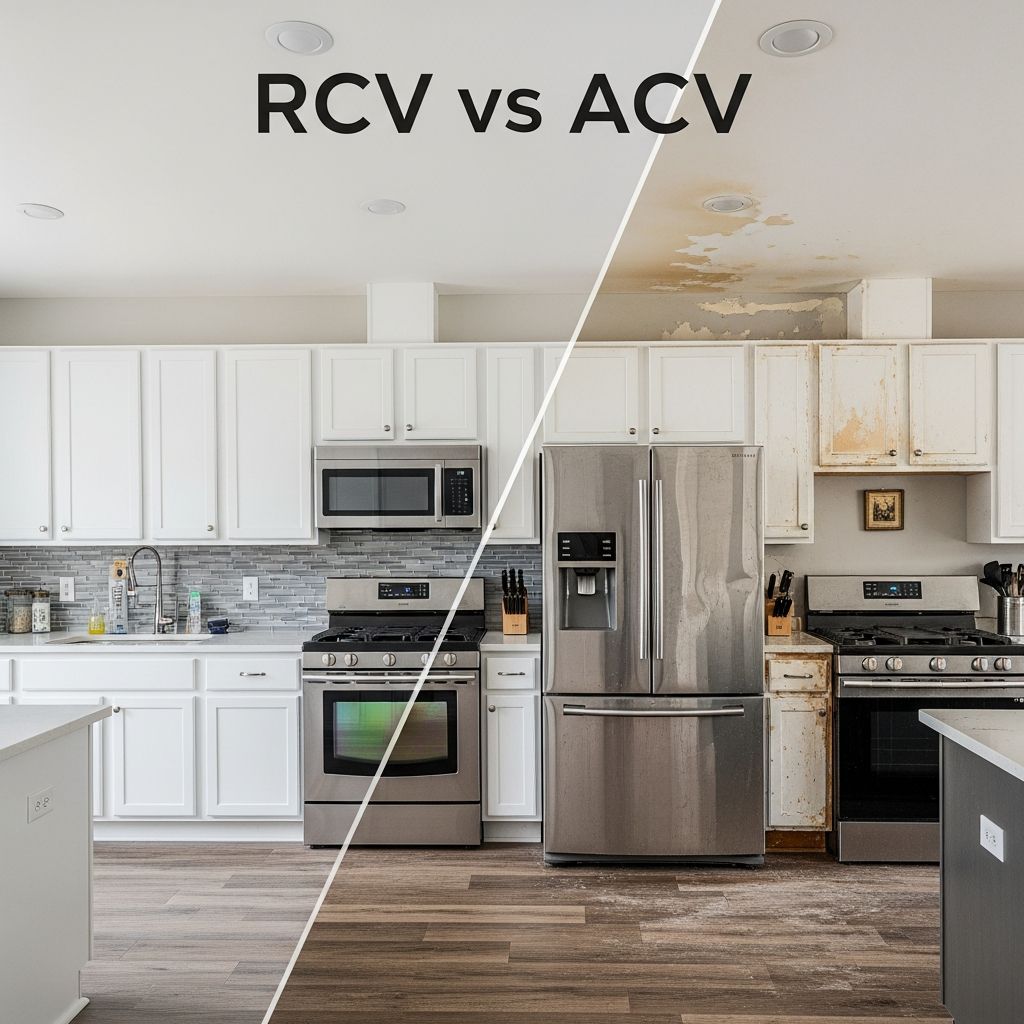
Understanding the valuation methods in your home insurance policy is crucial for ensuring adequate protection after a disaster. Replacement Cost Value (RCV) and Actual Cash Value (ACV) determine how much your insurer pays to repair or replace damaged property. RCV covers the full current cost of new items, while ACV deducts for age and wear, often leaving policyholders underinsured for full recovery.
Defining Core Valuation Methods in Property Insurance
Property insurance policies use specific formulas to calculate claim settlements. These methods directly influence your financial recovery following events like fires, storms, or theft.
Replacement Cost Value: Full Restoration Coverage
**RCV** pays the expense to replace or repair your home and belongings with materials of similar kind and quality at current market prices, ignoring prior depreciation. This approach ensures you can rebuild without out-of-pocket costs beyond your deductible.
For instance, if a storm damages your five-year-old roof costing $15,000 to replace today, RCV provides that full amount minus deductible, even if the original roof was cheaper when installed. Insurers often issue an initial ACV payment, followed by the depreciation recovery upon proof of replacement.
Actual Cash Value: Depreciation-Adjusted Payouts
**ACV**, conversely, equals replacement cost minus depreciation from age, condition, and usage. This reflects the item’s current market worth in its damaged state.
Using the roof example, a five-year-old roof might depreciate by 40%, yielding an ACV payout of $9,000. You’d cover the remaining $6,000 to install a new one. ACV is standard for personal property like electronics or clothing unless upgraded.
Practical Examples: RCV and ACV in Action
Real-world scenarios highlight the payout disparities between these methods.
| Item | Age/Condition | RCV Payout | ACV Payout (40% Depreciation) | Difference |
|---|---|---|---|---|
| Roof | 5 years | $15,000 | $9,000 | $6,000 |
| Laptop | 2 years | $1,200 | $720 | $480 |
| Recliner | 6 years | $2,500 | $1,500 | $1,000 |
This table illustrates how ACV reduces settlements significantly for older items, potentially forcing you to delay repairs or settle for used replacements.
Pros and Cons: Weighing Coverage Options
Each method suits different financial priorities and risk tolerances.
Advantages of Replacement Cost Value
- Enables full replacement with modern equivalents, preserving your lifestyle.
- No depreciation penalty, ideal for essential structures like dwellings.
- Typically covers the home structure; personal property often defaults to ACV but can be endorsed for RCV.
Drawbacks of Replacement Cost Value
- Higher premiums, often 10-25% more than ACV policies.
- Requires proof of replacement (receipts) for full recovery; otherwise, limited to ACV.
- Not always available for older homes exceeding local building codes.
Advantages of Actual Cash Value
- Lower premiums make it budget-friendly for cost-conscious homeowners.
- Simpler claims process without replacement mandates.
- Suitable for items with low replacement needs or high deductibles.
Drawbacks of Actual Cash Value
- Payouts rarely cover new items, leading to substantial out-of-pocket expenses.
- Encourages underinsurance over time as property values rise.
- Difficulty sourcing comparable used items in emergencies.
How Depreciation Shapes Your Insurance Outcomes
Depreciation is the cornerstone dividing RCV from ACV. Insurers apply straight-line methods, assuming uniform value loss over an item’s useful life. A 10-year-life appliance at 50% depreciation after five years loses half its value.
Factors influencing depreciation include:
- Age: Primary driver, based on manufacturer specs.
- Condition: Maintenance records can reduce estimated wear.
- Obsolescence: Technological advances lower values faster for gadgets.
To minimize depreciation hits under ACV, document upkeep with photos, receipts, and service logs.
Policy Applications: Dwellings, Contents, and More
Coverage types vary by property component.
- Dwelling: Most policies default to RCV for the structure, ensuring rebuild capability.
- Personal Property: Often ACV; add RCV endorsement for valuables.
- Other Structures: Garages, fences typically match dwelling coverage.
- Auto/Boat: Similar options exist, with RCV preferred for newer vehicles.
Review your declarations page to confirm terms; ‘Open Perils’ policies may blend methods.
Financial Impacts: Premiums, Deductibles, and Claims
RCV policies raise annual premiums due to broader insurer liability. A $300,000 home might cost $1,200 yearly for RCV vs. $900 for ACV. Deductibles apply equally, but RCV’s higher limits reduce effective outlays post-claim.
Claims under RCV often involve two checks: ACV first, then recoverable depreciation. Time limits (e.g., 180 days) apply for submissions. ACV claims settle faster but for less.
Selecting the Right Coverage for Your Situation
Assess these elements when deciding:
- Budget: Can you afford higher premiums for peace of mind?
- Property Age: Newer homes benefit more from RCV.
- Risk Exposure: High-risk areas (hurricanes, wildfires) favor RCV.
- Financial Reserves: Strong savings may suffice with ACV.
Consult an agent and use insurer calculators to estimate needs. Annual reviews account for renovations or inflation.
Enhancing Protection Beyond Basic Choices
Consider these add-ons:
- Guaranteed Replacement Cost: Covers exceeding policy limits.
- Extended Replacement Cost: 20-50% overage for code upgrades.
- Inflation Guard: Auto-adjusts limits yearly.
Avoid underinsurance by setting dwelling coverage at 100% RCV via home calculators.
Frequently Asked Questions
What happens if I don’t replace items under RCV?
You receive only ACV; no depreciation recovery without receipts.
Is ACV ever better than RCV?
Yes, for low-value, high-premium items or tight budgets where savings outweigh risks.
How do insurers calculate depreciation?
Using tables based on age, life expectancy, and condition evidence.
Can I switch from ACV to RCV mid-policy?
Yes, via endorsement; premiums adjust immediately.
Does RCV cover building code upgrades?
Often partially; ordinances coverage endorsement recommended.
Steps to Optimize Your Policy Today
- Inventory possessions with photos and values.
- Compare quotes for RCV vs. ACV from multiple carriers.
- Discuss with an independent agent for tailored advice.
- Bundle policies for discounts while securing RCV where vital.
- Reevaluate annually or after life changes.
By grasping RCV and ACV nuances, you position yourself for resilient recovery, balancing cost and comprehensive safeguard.
References
- Actual Cash Value vs. Replacement Cost Value — North Carolina Department of Insurance. 2023. https://www.ncdoi.gov/consumers/homeowners-insurance/actual-cash-value-vs-replacement-cost-value
- What’s the difference between replacement cost and actual cash value — Cooperators. 2024. https://www.cooperators.ca/en/personal/resource-centre/protect-what-matters/replacement-cost-vs-cash-value
- Actual Cash Value vs. Replacement Cost — NerdWallet. 2025-03-15. https://www.nerdwallet.com/insurance/homeowners/learn/actual-cash-value-vs-replacement-cost
- Replacement cost vs. actual cash value — Kin Insurance. 2024. https://www.kin.com/blog/replacement-cost-vs-acv/
- Actual Cash Value vs Replacement Cost — Allstate. 2024. https://www.allstate.com/resources/home-insurance/actual-cash-value-vs-replacement-cost
- What’s the Difference Between Actual Cash Value Coverage and Replacement Cost Coverage? — NAIC. 2023-06-01. https://content.naic.org/article/whats-difference-between-actual-cash-value-coverage-and-replacement-cost-coverage
- Replacement Cost vs. Actual Cash Value — Progressive. 2025. https://www.progressive.com/answers/replacement-cost-vs-actual-cash-value/
Similar Articles








Read full bio of Sneha Tete