Rate Shopping and Credit Scores
Discover how comparing loan rates impacts your credit score and strategies to minimize any negative effects while maximizing savings.
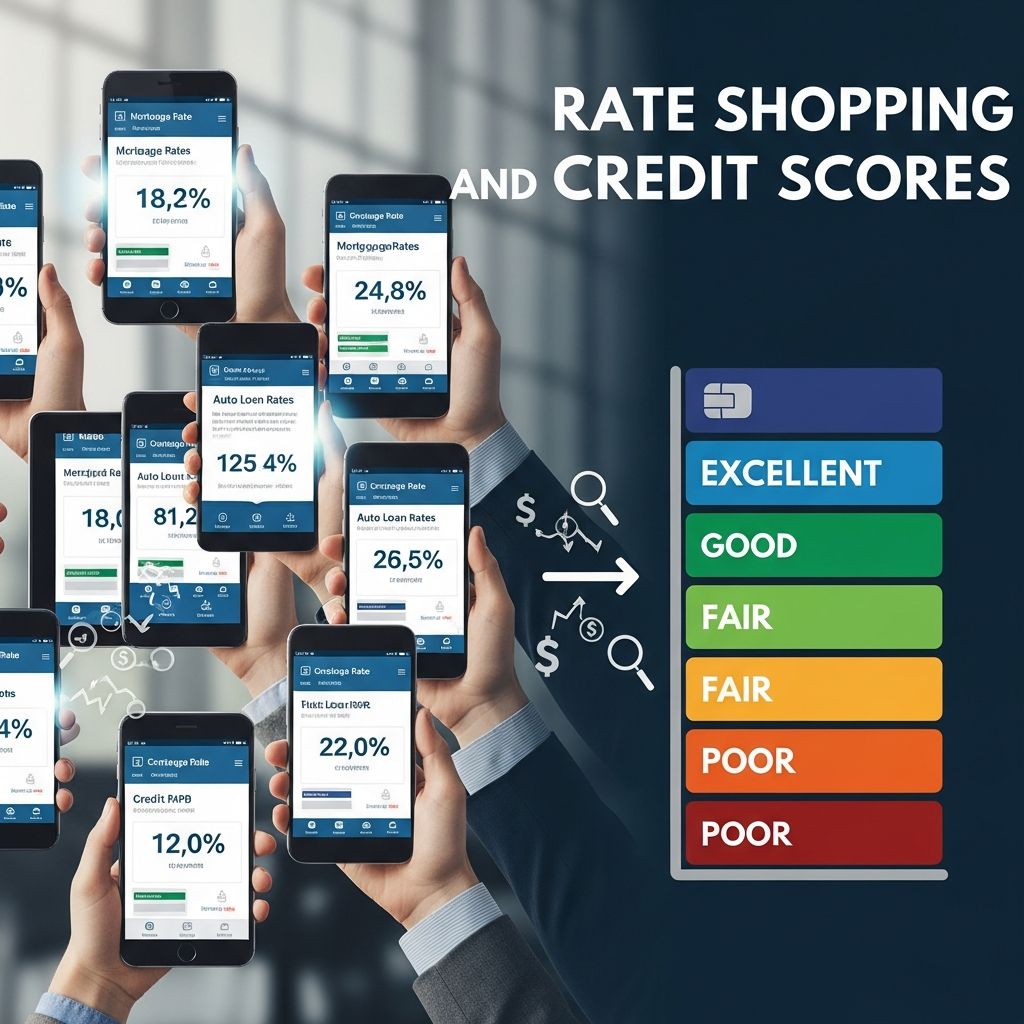
Comparing interest rates from various lenders before committing to a loan is a wise financial move that can lead to substantial savings over time. However, many consumers worry about the potential downside on their credit profiles. The good news is that major credit scoring models are designed to recognize this behavior and limit its adverse effects. This comprehensive guide explores how rate shopping influences credit scores, the rules for different loan types, and practical strategies to protect your credit while securing the best deals.
Understanding Credit Inquiries and Their Role in Scoring
Credit inquiries occur when a lender reviews your credit report to assess your creditworthiness during a loan application. There are two primary types: soft inquiries, which do not affect scores and happen during pre-approvals or account reviews, and hard inquiries, which can temporarily lower scores by a few points as they signal new credit-seeking behavior.
Hard inquiries are recorded on your credit report and visible to other lenders for up to two years, though their scoring impact typically fades after a few months with responsible credit management. Statistical models like FICO and VantageScore associate multiple new inquiries with higher risk, but they incorporate safeguards for legitimate rate comparisons.
Special Rules for Installment Loan Rate Shopping
Unlike credit card applications, inquiries for certain installment loans—such as mortgages, auto loans, and student loans—are grouped together if they occur within specific time frames. This prevents shoppers from being penalized for seeking competitive rates.
- Mortgage Inquiries: FICO Scores consolidate multiple inquiries within a 45-day window in newer models or 14 days in older versions still in use. This allows borrowers to compare offers without cumulative score drops.
- Auto Loans: The Consumer Financial Protection Bureau notes that shopping within 14 to 45 days generally counts inquiries as one, encouraging consumers to find the best terms.
- Student Loans: Similar treatment applies, recognizing that students often compare lenders for optimal rates.
These windows reflect the understanding that clustered inquiries indicate shopping, not desperation for credit. VantageScore uses a 14-day rolling period for inquiries of similar loan amounts.
Why Credit Models Treat Loan Types Differently
Credit scoring algorithms differentiate based on behavior patterns. Multiple mortgage inquiries in a short period suggest homebuying preparation, not credit hunger. In contrast, successive credit card applications may indicate seeking excessive revolving credit, which carries higher default risk.
FICO employs two mechanisms for rate shopping protection: ignoring inquiries under 30 days old and ‘deduping’—treating multiples as one within the window. Equifax confirms that while all inquiries appear on reports, only one typically impacts scores for qualifying loans.
Credit Cards: A Different Approach to Shopping
Rate shopping for credit cards does not benefit from inquiry grouping. Each application triggers a separate hard inquiry, potentially dinging scores multiple times. However, issuers offer prequalification tools that use soft inquiries to estimate eligibility and rates without score impact.
Prequalification provides indicative terms based on your profile, allowing targeted applications. Tools like card match features pair users with suitable options, streamlining the process. Once prequalified, apply for the best match to limit inquiries to one.
| Loan Type | Time Window | Inquiry Treatment | Scoring Model Notes |
|---|---|---|---|
| Mortgage | 14-45 days | Counted as one | FICO: 45 days new, 14 days old models |
| Auto Loan | 14-45 days | Counted as one | CFPB recommends 14-45 day limit |
| Student Loan | 14-45 days | Counted as one | FICO special treatment |
| Credit Card | No window | Separate each | Use prequalify to avoid multiples |
Strategies to Minimize Credit Score Impact
To shop effectively without harming your credit, follow these proven tactics:
- Complete all applications for installment loans within the shortest window possible, ideally 14 days, to cover all scoring models.
- Research lenders offering preapprovals or rate quotes without hard pulls first.
- For credit cards, exhaust prequalification options before applying; limit to 1-2 applications.
- Check your credit reports beforehand via AnnualCreditReport.com to ensure accuracy and dispute errors.
- Space out unrelated credit applications to avoid compounding effects.
Timing matters: shop when your score is strong, as inquiries affect thinner files more severely.
Long-Term Effects and Recovery
A single hard inquiry rarely drops scores by more than 5-10 points, with recovery in months via on-time payments. Multiple non-grouped inquiries can compound, but rate shopping done right avoids this. Over time, new positive accounts from secured loans can boost scores.
Monitor scores via free services from Experian, Equifax, or TransUnion. Consistent habits like low utilization and payment history outweigh inquiry effects, which comprise just 10% of FICO scores.
Common Myths About Rate Shopping Debunked
- Myth: All inquiries hurt equally. False—installment loan clusters are protected.
- Myth: Shopping tanks scores permanently. Impacts are temporary.
- Myth: Preapprovals always lead to hard pulls. Many are soft.
Frequently Asked Questions (FAQs)
Does mortgage shopping hurt my credit?
No, if done within 14-45 days, inquiries count as one.
How long do inquiries stay on my report?
Up to 2 years, but scoring impact fades quickly.
Can I rate shop for personal loans?
Not always grouped; check model specifics, but similar logic may apply.
What’s the best time window for auto loan shopping?
14-45 days to ensure single inquiry treatment.
Do soft inquiries affect scores?
No, they don’t.
Empowering Your Financial Decisions
Rate shopping empowers borrowers to secure lower rates, potentially saving thousands. By understanding inquiry rules and using prequalification, you balance savings with credit health. Always prioritize official bureau tools and lender transparency for informed choices.
References
- How Does Rate Shopping Affect Your Credit Scores? — Experian. 2023-10-01. https://www.experian.com/blogs/ask-experian/how-does-rate-shopping-affect-credit-score/
- How to Rate Shop and Minimize the Impact to Your FICO® Scores — myFICO. 2023-05-15. https://www.myfico.com/credit-education/blog/rate-shop
- Can I shop around for the best interest rate? — Equifax. 2024-02-20. https://www.equifax.com/personal/help/article-list/-/h/a/credit-scores-inquiries/
- How will shopping for an auto loan affect my credit? — Consumer Financial Protection Bureau. 2023-11-10. https://www.consumerfinance.gov/ask-cfpb/how-will-shopping-for-an-auto-loan-affect-my-credit-en-763/
- Does Shopping for a Mortgage Hurt Your Credit? — The Federal Savings Bank. 2024-01-05. https://www.thefederalsavingsbank.com/Blog/does-shopping-for-a-mortgage-hurt-your-credit/
- How a Mortgage Inquiry Affects Your Credit Score — Certified Credit. 2023-08-12. https://www.certifiedcredit.com/mortgage-inquiry/
- How Credit Inquiries Affect Your Credit Score — Bankrate. 2024-03-15. https://www.bankrate.com/credit-cards/advice/how-credit-inquiries-affect-credit-score/
Similar Articles








Read full bio of Sneha Tete