Put Options Explained: Long, Short, Buy, Sell & Examples
Master put options trading: Learn long vs short, buying vs selling strategies with real examples.
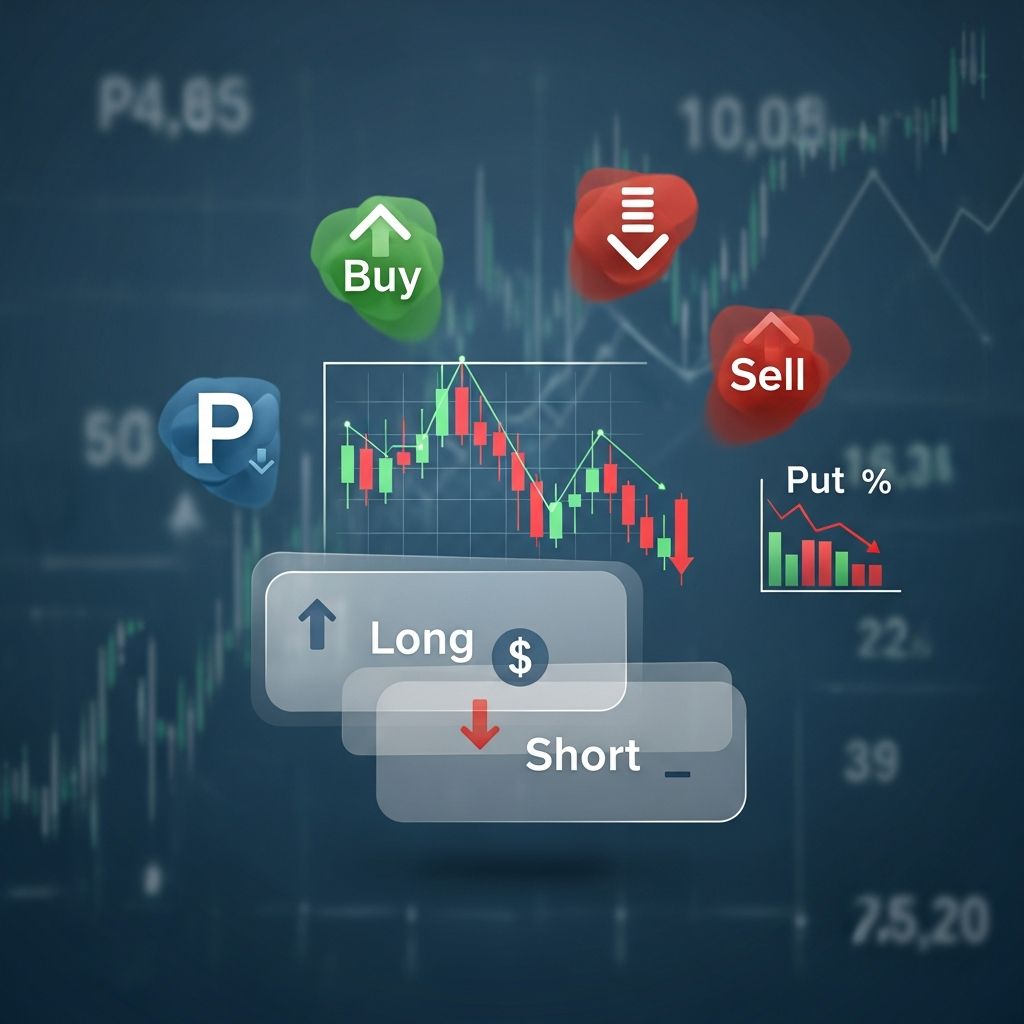
What Is a Put Option?
A put option is a financial derivative contract that gives the holder the right, but not the obligation, to sell an underlying asset at a specified price, known as the strike price, by or on a specific date called the expiration date. Put options represent one of the two main types of options available to traders and investors, the other being call options. When you purchase a put option, you are essentially purchasing insurance against a decline in the price of the underlying security.
The term “put” derives from the fact that the owner has the right to “put up for sale” the stock or other underlying asset. For this right, the put buyer pays the seller a fee called a premium. The seller of the put option, known as the writer, receives this premium in exchange for taking on the obligation to purchase the underlying asset at the strike price if the option is exercised.
Key Elements of a Put Option
Understanding the fundamental components of a put option is essential for anyone interested in options trading:
- Strike Price: The predetermined price at which the holder can sell the underlying stock. This price remains fixed throughout the life of the option.
- Premium: The price paid by the buyer to acquire the put option, or the price received by the seller for writing the option. This is typically quoted per share, but a standard contract represents 100 shares.
- Expiration Date: The deadline by which the option must be exercised or it expires worthless. After this date, the option ceases to exist and cannot be used.
- Underlying Asset: The security (usually a stock) that the put option gives you the right to sell.
Long Put vs. Short Put: Understanding Positions
In options trading, positions are classified based on whether you are buying or selling the option. Understanding the distinction between long and short put positions is crucial for developing effective trading strategies.
Long Put (Buying a Put Option)
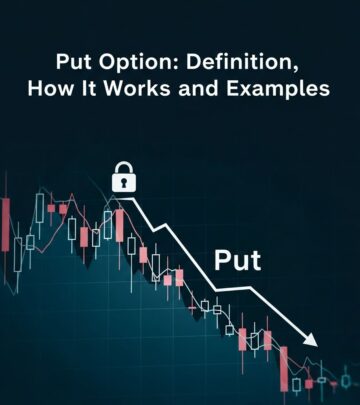
A long put is established when a trader purchases a put option, betting that the price of the underlying asset will decline. When you buy a put option, you are taking a bearish position, meaning you expect the stock price to fall below the strike price before the option expires.
The advantage of buying a put over short selling the asset directly is that your maximum risk is limited to the premium paid for the option. If the stock price rises instead of falling, you simply let the option expire worthless and lose only the premium you paid. This limited downside risk makes long puts an attractive strategy for many investors.
As a long put holder, you profit when the stock price declines below the strike price. The profit potential equals the strike price minus the current stock price minus the premium paid. Your maximum profit is achieved if the stock price drops to zero, though in practical terms, significant declines generate substantial profits.
Short Put (Selling a Put Option)
A short put is created when a trader sells a put option, often referred to as “writing” the put. When you sell a put option, you are taking a bullish or neutral stance, believing the underlying stock price will rise or stay above the strike price.
The seller of a put option profits by collecting the premium from the buyer. If the stock price remains above the strike price at expiration, the option expires worthless, and the seller keeps the entire premium as profit. However, the seller takes on a significant obligation: if the stock price falls below the strike price, the seller must purchase the underlying stock at the strike price, regardless of how low the market price has fallen.
The seller’s risk in a short put is substantial. If the stock price drops dramatically, the seller could be forced to purchase the stock at a much higher price than its current market value, resulting in significant losses. To protect against potential losses, put sellers are typically required to post margin with their brokers.
Buying Put Options: Strategy and Benefits
When to Buy Put Options
Buying put options serves several strategic purposes in an investment portfolio. Traders and investors typically purchase put options in the following scenarios:
- Downside Protection: You own a stock that has appreciated significantly and want to protect your gains against a potential decline without selling the stock outright.
- Speculation: You believe a stock price will decline and want to profit from that decline with limited capital at risk.
- Portfolio Hedging: You want to reduce the overall risk of a portfolio by insuring against market downturns.
- Income Generation: Some traders use put options as part of income strategies or to purchase stocks at effective below-market prices.
How Buying Puts Works
When you purchase a put option, your profit potential increases as the stock price falls below the strike price. The payoff structure is straightforward: if the stock price is below the strike price at expiration, you can exercise the option and sell the stock at the strike price, capturing the difference between the strike price and the market price.
Alternatively, before expiration, you can sell the put option to another buyer at fair market value if its premium has increased due to the stock price declining. This flexibility allows traders to exit positions before expiration and capture profits or cut losses early.
The holder of a put option faces minimal risk because you are under no obligation to exercise the option. Your maximum loss is limited to the premium paid to purchase the option. If the stock price rises above the strike price, the option expires worthless, but your loss is capped at the premium amount.
Selling Put Options: Strategy and Obligations
Why Sell Put Options
Selling put options attracts traders who have a bullish or neutral outlook on a stock. The primary motivation for selling puts is to generate income through premium collection. Sellers believe the stock price will stay above the strike price, allowing the option to expire worthless and the seller to keep the premium.
Additionally, some sophisticated traders use put selling as a way to acquire stocks at below-market prices. By selling put options at a strike price below the current stock price, sellers collect premium while positioning themselves to buy the stock at a discount if the option is exercised.
Risks and Obligations of Selling Puts
While selling puts generates immediate income through premium collection, it carries significant obligations and risks. If the stock price declines below the strike price, the put seller must purchase the underlying stock at the strike price, even if the market price is substantially lower. This obligation could result in substantial losses if the stock price collapses.
Put writers must post margin with their brokers to ensure they can fulfill their obligations if shares are put to them. The put writer’s total potential loss is limited to the strike price minus the premium already received, but in severe market declines, this loss can be considerable.
In-the-Money and Out-of-the-Money Put Options
In-the-Money (ITM) Puts
A put option is considered “in-the-money” when the stock price is below the strike price. For the put buyer, an ITM option has intrinsic value and can be exercised profitably. For example, if you own a put option with a $50 strike price and the stock is trading at $40, the put is $10 in-the-money.
Out-of-the-Money (OTM) Puts
A put option is “out-of-the-money” when the stock price is above the strike price. OTM puts have no intrinsic value at expiration and expire worthless, resulting in the maximum loss (the premium paid) for the buyer and a full profit for the seller.
Practical Examples of Put Option Strategies
Example 1: Long Put for Portfolio Protection
Imagine you own 100 shares of a technology stock trading at $80 per share. You paid $50 per share six months ago, so your investment has appreciated significantly. Concerned about potential short-term market volatility, you purchase a put option with a $75 strike price, expiring in three months, for a premium of $2 per share (total cost: $200).
If the stock price drops to $60, your put option is now worth at least $15 per share ($75 strike minus $60 stock price). You can exercise the option to sell your shares at $75 or sell the put option for a profit, effectively limiting your loss on the stock position. If the stock price rises to $90, the put expires worthless, but you only lose the $200 premium while your stock appreciates further.
Example 2: Short Put for Income Generation
A trader believes Company XYZ stock, currently trading at $60, will stay above $55 over the next month. The trader sells one put option contract with a $55 strike price, collecting a $1.50 per share premium ($150 total for 100 shares).
If the stock price stays above $55 at expiration, the option expires worthless, and the trader keeps the entire $150 premium as profit. However, if the stock drops to $50, the trader must buy 100 shares at $55 (costing $5,500), even though the market price is $50. The trader’s loss on this transaction is $500, reduced by the $150 premium collected, for a net loss of $350.
Put Options vs. Other Strategies
Put Options vs. Short Selling
Both put options and short selling allow traders to profit from declining prices, but they differ significantly. With short selling, your risk is theoretically unlimited because stock prices can rise indefinitely. With put options, your maximum loss is the premium paid, making puts a less risky way to profit from price declines.
Put Spread Strategies
Traders can combine put options to create more sophisticated strategies. A put spread involves buying and selling put options on the same stock simultaneously at different strike prices. Bullish put spreads, for instance, involve selling puts at a higher strike price and buying puts at a lower strike price, limiting both potential profit and risk.
Factors Affecting Put Option Value
The value of a put option fluctuates based on several factors. When the underlying stock price declines, the put option premium typically increases, making the option more valuable and more expensive to purchase or close out. The time remaining until expiration also affects value; options with more time decay more slowly.
Market volatility influences option prices significantly. Higher volatility increases option values as there is greater potential for significant price movements. Interest rates and dividend payments on the underlying stock also impact put option pricing.
Frequently Asked Questions
Q: What is the maximum loss when buying a put option?
A: The maximum loss when buying a put option is limited to the premium paid to purchase the option. This limited downside makes puts an attractive risk management tool compared to short selling.
Q: Can you exercise a put option before the expiration date?
A: Yes, American-style put options can be exercised at any time before expiration. European-style put options can only be exercised on the expiration date.
Q: What happens if I sell a put and the stock gets “put” to me?
A: If you sell a put and the option is exercised, you must purchase 100 shares per contract at the strike price. This means you take a long stock position, which may be at a price higher than the current market price.
Q: How are put option profits calculated?
A: For buyers, profit equals the strike price minus the stock price minus the premium paid. For sellers, profit equals the premium collected minus any losses from the stock being put to them.
Q: Why would someone buy a put option instead of short selling?
A: Put options offer limited downside risk (only the premium paid), lower capital requirements, and defined risk management compared to short selling, where potential losses are unlimited.
Q: What is put-call parity?
A: Put-call parity is a principle stating that holding a European put option is equivalent to holding the corresponding call option and selling an appropriate forward contract.
References
- Put option — Wikipedia. Accessed November 2025. https://en.wikipedia.org/wiki/Put_option
- Explaining Put Options (Short and Long) — CME Group Education. Accessed November 2025. https://www.cmegroup.com/education/courses/introduction-to-options/explaining-put-options-short-and-long.html
- Put Options: What They Are And How To Trade Them — Bankrate. Accessed November 2025. https://www.bankrate.com/investing/what-are-put-options-learn-basics-buying-selling/
- Put Option Explained — TD Bank. Accessed November 2025. https://www.td.com/ca/en/investing/direct-investing/articles/put-options
- What are call and put options? — Vanguard Investor Resources. Accessed November 2025. https://investor.vanguard.com/investor-resources-education/understanding-investment-types/what-are-call-put-options
Similar Articles








Read full bio of Sneha Tete