Put-Call Ratio: Understanding Market Sentiment
Master the put-call ratio to gauge investor sentiment and make informed trading decisions.
Understanding the Put-Call Ratio
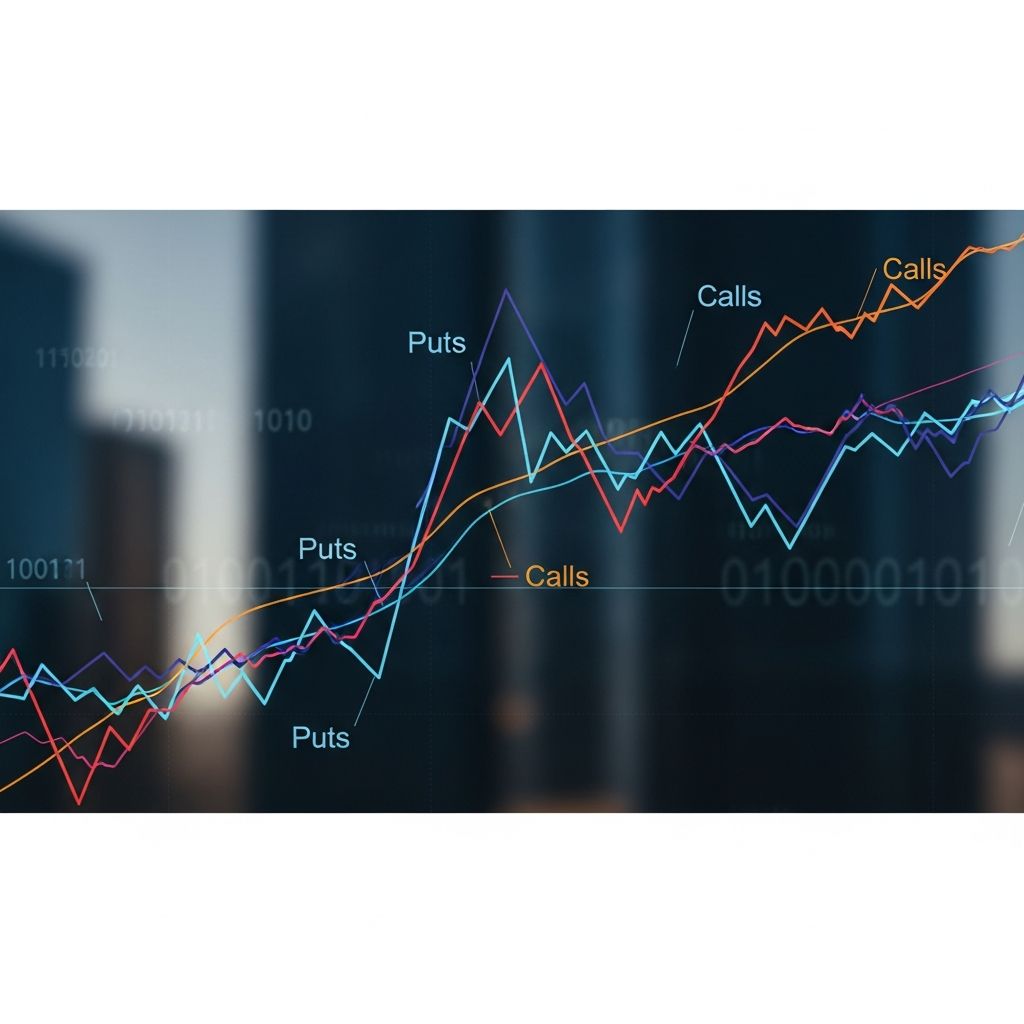
The put-call ratio, commonly abbreviated as PCR, represents one of the most straightforward yet powerful tools available to investors seeking to understand market sentiment and investor psychology. This indicator measures the relationship between the volume of put options and call options traded over a specific period, providing valuable insights into whether market participants are positioning themselves for upward or downward price movements. By examining the behavior of options traders, the put-call ratio offers a window into the collective expectations and fears driving market dynamics.
Market sentiment drives investment decisions, and the put-call ratio serves as a quantifiable measure of that sentiment. When investors purchase put options, they are essentially betting that prices will decline, while call option purchases represent bullish bets on rising prices. The ratio between these two activities reveals whether the market is tilting toward optimism or pessimism, making it an invaluable metric for both individual traders and institutional investors.
What is the Put-Call Ratio?
The put-call ratio is fundamentally a comparison metric that divides the total volume of put options by the total volume of call options traded within a defined timeframe. This calculation applies to either a broad market index, such as the S&P 500 or Nasdaq-100, or to individual securities depending on the investor’s focus. The result is a single numerical value that communicates market sentiment in a standardized, easily comparable format.
Investors and traders use the put-call ratio as a preliminary gauge of market direction and investor confidence. It answers a fundamental question: are more investors protecting themselves against downside risk through put purchases, or are they aggressively betting on gains through call purchases? The answer lies in the resulting ratio and its interpretation relative to established benchmarks and historical averages.
The Put-Call Ratio Formula
The calculation of the put-call ratio is elegantly simple, making it accessible to investors at all experience levels:
Put-Call Ratio = Volume of Put Options / Volume of Call Options
For practical illustration, consider a security where traders initiated 1,250 put options and 1,700 call options during a trading day. The calculation would be: 1,250 ÷ 1,700 = 0.7353. This resulting ratio becomes the foundation for sentiment analysis and trading decisions.
While this represents the standard formula, many investors employ variations that incorporate open interest instead of volume, or combine both metrics for a more comprehensive view. Open interest represents the total number of outstanding contracts, providing a longer-term perspective on positioning compared to daily volume figures.
Interpreting Put-Call Ratio Values
The interpretation of put-call ratio values follows a straightforward framework that divides market sentiment into three primary categories:
PCR Below 1.0 (Bullish Signal)
When the put-call ratio falls below 1.0, it indicates that investors are purchasing more call options than put options. This configuration signals bullish sentiment, as market participants are positioning for upward price movement and demonstrating confidence in the market’s direction. A ratio of 0.7353 represents this bullish scenario, where calls outnumber puts by a significant margin.
A particularly strong bullish signal emerges when the PCR drops below 0.7, indicating excessive optimism or greed in the market. At this level, investors have become so confident that they are overwhelmingly purchasing calls and largely ignoring protective puts. While this confidence may sometimes be justified, it can also signal an unsustainable extreme that might precede a market correction.
PCR Above 1.0 (Bearish Signal)
Conversely, when the put-call ratio exceeds 1.0, more put options are being purchased than call options. This configuration reflects bearish sentiment, as investors are betting on or hedging against downward price movements. A ratio of 1.15 or 1.32 exemplifies this bearish positioning, with investors expressing fear or seeking protection.
When the PCR climbs above 1.2, the market displays extreme bearish sentiment or fear. At this level, options traders have become so pessimistic that they overwhelmingly purchase puts for protection or profit from declines. Interestingly, such extreme readings often coincide with market bottoms, as excessive fear can represent a contrarian buying opportunity for opportunistic investors.
PCR Equal to 1.0 (Neutral Signal)
A put-call ratio precisely at 1.0 indicates that investors are purchasing an equal number of put and call options. This equilibrium suggests neutral sentiment, with neither bullish nor bearish conviction dominating the market. While truly neutral readings are relatively rare, they represent moments when market participants have balanced views about the market’s future direction.
Key Benchmark Levels and Ranges
Understanding the typical range for put-call ratios provides essential context for interpretation:
| PCR Range | Sentiment Classification | Interpretation |
|---|---|---|
| Below 0.6 | Excessively Bullish | Potential market top; investors overly optimistic |
| 0.6 – 0.7 | Moderately Bullish | Typical bullish activity; calls significantly outnumber puts |
| 0.7 – 1.0 | Neutral to Bullish | Balanced to slightly positive sentiment |
| 1.0 – 1.2 | Neutral to Bearish | Balanced to moderately negative sentiment |
| Above 1.2 | Excessively Bearish | Potential market bottom; investors overly fearful |
For equity markets, the put-call ratio typically fluctuates between 0.5 and 1.3, with a historical average hovering around 0.7. This 0.7 baseline serves as a useful reference point for traders gauging whether current sentiment has shifted toward meaningful extremes. Understanding these ranges helps contextualize any individual reading within the broader distribution of historical values.
Investment Style and Interpretation Variations
A critical nuance in put-call ratio analysis is that interpretation varies significantly based on an investor’s trading philosophy and strategy:
Momentum Investors
Momentum investors, who ride existing trends and follow the market’s current direction, interpret the put-call ratio in its traditional form. They view a high PCR as a bearish signal worth selling and a low PCR as a bullish signal worth buying. This approach assumes that current sentiment reflects reality and that following the crowd’s positioning will prove profitable.
Contrarian Investors
Contrarian investors operate from the opposite premise, believing that extreme sentiment often marks turning points rather than continuing trends. These traders interpret a high put-call ratio as a bullish signal, reasoning that excessive fear has created oversold conditions ripe for reversal. Similarly, they view a low PCR as a bearish signal, reasoning that excessive optimism has created overbought conditions vulnerable to correction.
The contrarian approach draws support from behavioral finance research demonstrating that retail options traders often lose money, particularly when sentiment reaches extremes. This relationship means that when options traders collectively express extreme bearish or bullish views, their eventual losses often fuel reversals, making extreme PCR readings valuable for contrarian-minded investors.
Practical Applications and Market Examples
The put-call ratio has demonstrated predictive value across various market environments. During October 2023, the CBOE put-call ratio spiked significantly above 1.23, reflecting extreme fear among options traders. This extreme reading came just before the market bottomed and began a substantial recovery, validating the contrarian interpretation of excessive bearish sentiment.
Between 2007 and 2022, the CBOE’s put-call ratio averaged approximately 0.97, establishing a useful long-term reference point. During this fifteen-year period, extreme readings—either above 1.23 or below 0.72—occurred on approximately 5% of trading days, or roughly 12-13 days per year. These infrequent extremes typically preceded or coincided with significant market moves, highlighting their importance for traders monitoring sentiment shifts.
Advanced Analysis Techniques
While the basic put-call ratio provides valuable information, investors can enhance their analysis through several advanced techniques:
Moving Average Analysis
Rather than examining individual daily readings, investors can calculate moving averages to smooth out noise and identify sustained sentiment shifts. A 10-day moving average captures short-term trends, a 20-day moving average identifies medium-term patterns, and a 52-week range provides historical context. When short-term moving averages exceed 1.23, extreme fear is present; when they fall below 0.72, extreme greed dominates.
Combination with Other Indicators
The put-call ratio works most effectively when combined with complementary technical and fundamental indicators. Pairing PCR analysis with tools like the Relative Strength Index (RSI), moving averages, or volatility measures provides more robust signals. This multi-indicator approach reduces false signals and increases the probability of successful trades.
Where to Track the Put-Call Ratio
Investors seeking to monitor put-call ratios can access this data through several established sources. The Chicago Board Options Exchange (CBOE) website, cboe.com, provides put-call ratio calculations for numerous indexes and exchange-traded funds updated regularly throughout trading hours. These institutional-quality data feeds ensure accuracy and timeliness essential for active trading and sentiment analysis.
Limitations and Considerations
Despite its utility, the put-call ratio has important limitations. It measures sentiment but not fundamental value, meaning extreme sentiment readings can persist longer than expected. The ratio also doesn’t account for differences in option strike prices or time horizons, which can influence interpretation. Additionally, the ratio works best with major indices and highly liquid stocks; applying it to thinly traded securities may produce misleading signals.
Options traders as a group tend to lose money approximately 90% of the time, meaning the opposite of their collective positioning often proves profitable. This statistical reality underpins the contrarian interpretation but also means contrarian traders are betting against the aggregate direction of options market participants, which introduces its own risks.
FAQ: Put-Call Ratio Questions and Answers
Q: What does a put-call ratio of 0.5 indicate?
A: A PCR of 0.5 signals excessively bullish sentiment, as investors are purchasing twice as many calls as puts. This extreme may warn of a potential market top and overextended optimism.
Q: How frequently should I check the put-call ratio?
A: Active traders might check daily or intraday readings, while longer-term investors may review weekly or monthly averages to filter out daily noise and focus on sustained sentiment trends.
Q: Can the put-call ratio predict market crashes?
A: While the PCR doesn’t predict crashes with certainty, extreme readings have often preceded major market moves. Very low readings (below 0.6) can indicate unsustainable optimism, and very high readings (above 1.2) can signal capitulation associated with market bottoms rather than tops.
Q: Does the put-call ratio work for individual stocks?
A: Yes, the PCR can be calculated for individual securities, though it works most reliably with heavily traded stocks having high options liquidity. Thinly traded securities may produce less reliable signals.
Q: What is the relationship between put-call ratio and volatility?
A: High put-call ratios often coincide with elevated volatility, as fearful investors purchase protective puts, driving up put volume and implied volatility. Low PCR readings often emerge during calm market periods with lower volatility.
References
- Put-Call Ratio (PCR) — Corporate Finance Institute. 2024. https://corporatefinanceinstitute.com/resources/derivatives/put-call-ratio-pcr/
- Put/Call Ratio: Key Options Sentiment — LuxAlgo. 2024. https://www.luxalgo.com/blog/putcall-ratio-key-options-sentiment/
- Options Industry Council – Understanding Put-Call Ratio — The Options Clearing Corporation. 2024. https://www.optionseducation.org/
- CBOE Index Data and Analytics — Chicago Board Options Exchange. 2025. https://www.cboe.com/
- Behavioral Finance and Options Trading Patterns — Journal of Finance, MIT Sloan. 2023. https://mitsloan.mit.edu/
Similar Articles








Read full bio of Sneha Tete