Understanding the Purpose of the World Bank
Explore the World Bank's mission to end poverty and boost shared prosperity globally.
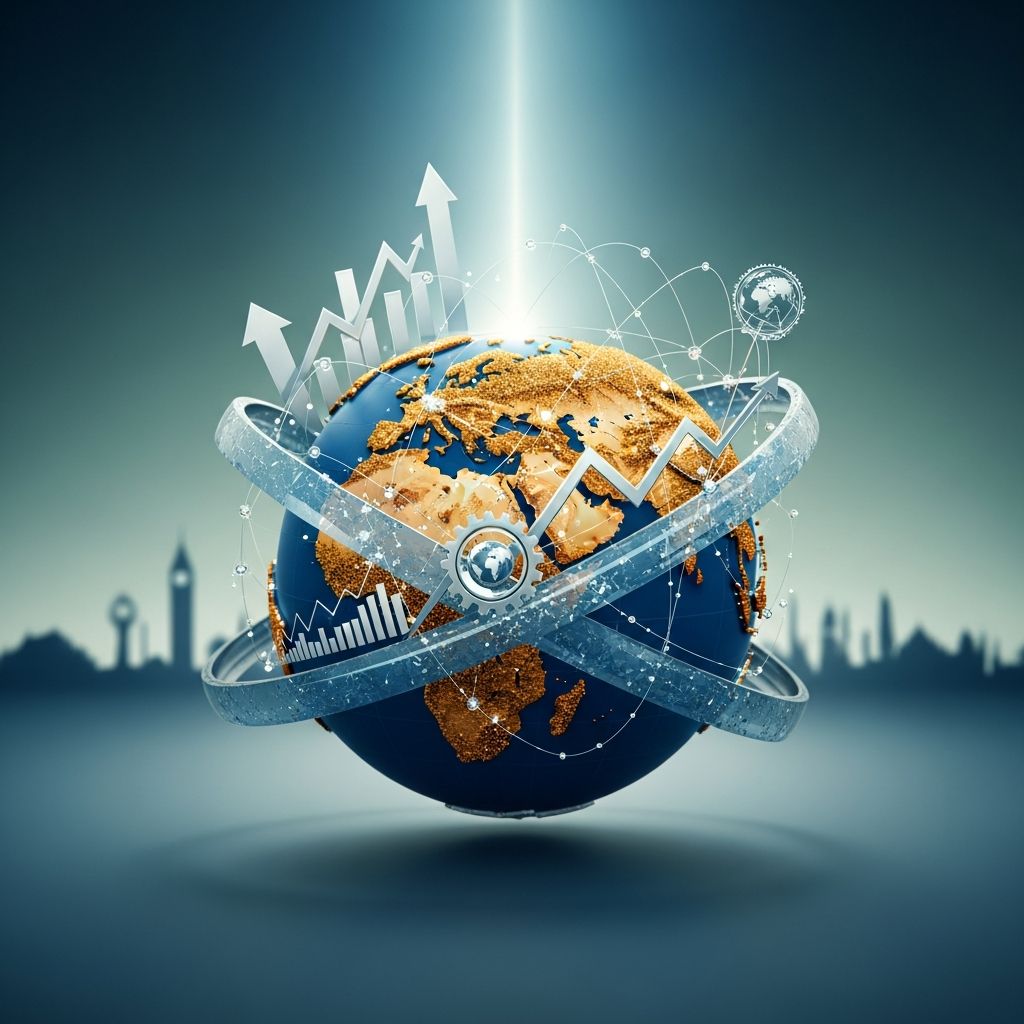
The World Bank stands as one of the most influential financial institutions in the global economy, serving as a critical mechanism for promoting economic development and alleviating poverty across the world’s developing nations. Established in 1944 at the Bretton Woods Conference, the World Bank has evolved from its initial mandate of rebuilding war-torn Europe to become the world’s largest source of financial assistance to developing countries. Today, the institution operates in nearly all developing nations, having funded more than twelve thousand projects that span various sectors including education, healthcare, infrastructure, and environmental protection.
The Twin Goals: Ending Extreme Poverty and Building Shared Prosperity
At its core, the World Bank operates under a clear and compelling mission: to end extreme poverty and build shared prosperity on a livable planet. This dual mandate reflects the institution’s commitment to not only reducing the number of people living in extreme poverty but also ensuring that the benefits of economic growth are distributed equitably across populations. The bank recognizes that poverty reduction cannot be achieved in isolation but must be accompanied by sustainable economic growth, job creation, and improved living standards for all citizens.
The pursuit of shared prosperity extends beyond mere income growth. It encompasses human development through investments in education and healthcare, environmental sustainability through pollution reduction and conservation efforts, and good governance through anti-corruption initiatives and the development of legal institutions. This comprehensive approach acknowledges that sustainable development requires addressing multiple dimensions of poverty simultaneously.
Historical Context and Evolution
The World Bank’s journey reflects the changing priorities of the global community. Originally established alongside the International Monetary Fund (IMF) at the 1944 Bretton Woods Conference, the World Bank initially focused on providing reconstruction loans to countries devastated by World War II. The institution was conceived as a complementary organization to the IMF, with the IMF managing immediate macroeconomic stabilization and the World Bank concentrating on longer-term development objectives.
Throughout the latter half of the twentieth century, the World Bank shifted its focus from postwar reconstruction to broader development assistance. By the 1980s and 1990s, the institution became deeply involved in shaping economic and social policies in indebted developing countries, often requiring borrowing nations to implement structural adjustment programs as conditions for receiving loans. More recently, the bank has renewed its emphasis on poverty reduction, particularly in the world’s poorest countries in Africa and in middle-income nations where the majority of the global poor reside.
Organizational Structure and Key Institutions
The World Bank is not a single organization but rather a group of five multilateral institutions working together toward the common goal of global poverty reduction. Each institution serves a specific function within the broader development agenda:
- International Bank for Reconstruction and Development (IBRD): Established in 1944 as the World Bank’s charter institution, the IBRD works with middle-income and creditworthy low-income countries through loans, guarantees, and other financial services. The IBRD is a global development cooperative owned by 189 member countries and serves as the world’s largest development bank.
- International Development Association (IDA): This institution provides concessional loans and grants to the poorest countries that cannot access commercial financing or IBRD loans on regular terms.
- International Finance Corporation (IFC): Focusing on private sector development, the IFC promotes investment and job creation in developing countries through financial products and advisory services.
- Multilateral Investment Guarantee Agency (MIGA): This agency provides political risk insurance to investors and lenders, encouraging foreign direct investment in developing nations.
- International Center for Settlement of Investment Disputes (ICSID): This institution resolves disputes between governments and foreign investors, providing a neutral forum for arbitration.
Each of these agencies operates as a cooperative owned and governed by its member countries, ensuring that developing nations have a voice in the institution’s decision-making processes.
Core Functions and Activities
Financial Support and Lending
Financial assistance remains central to the World Bank’s operations. The institution provides loans and grants to governments of low- and middle-income countries for pursuing economic development objectives. As of 2015, the World Bank’s total lending through Development Policy Financing over the previous decade amounted to approximately $117 billion, demonstrating the scale of its financial commitments. In 2020 alone, the World Bank’s total commitments reached USD 77.1 billion across operations in 145 countries.
These financial resources support diverse project types ranging from traditional infrastructure development such as roads, ports, and electricity systems to human development initiatives including school construction and disease prevention programs. The bank’s lending approach has evolved to emphasize long-term development outcomes, moving away from purely short-term macroeconomic stabilization toward projects that build sustainable economic foundations.
Technical Assistance and Policy Advice
Beyond financial support, the World Bank provides extensive technical assistance and policy guidance to member countries. Bank staff, often specialists in specific sectors such as climate change, education, or healthcare, work directly with government officials to design and implement development programs. This advisory role extends to helping countries implement economic reforms, strengthen institutions, and develop effective governance structures.
The World Bank also conducts comprehensive poverty reduction strategy assessments in the poorest developing countries. These analyses combine examination of local communities and organizations with financial and economic evaluations to develop tailored assistance plans that align with each country’s specific priorities and development targets.
Research and Knowledge Generation
The World Bank has established itself as one of the world’s largest centers of development research and knowledge. Through its Open Knowledge Repository and numerous publications, the institution shares research findings, best practices, and lessons learned from development projects worldwide. This knowledge-sharing function amplifies the impact of the bank’s work by making evidence-based development approaches available to policymakers, researchers, and practitioners globally.
Sectoral Coverage and Development Areas
The World Bank’s activities span all sectors of development, reflecting the multifaceted nature of sustainable economic growth and poverty reduction. Key areas include:
- Human Development: Education and healthcare initiatives that build human capital and improve quality of life
- Agriculture and Rural Development: Projects supporting irrigation systems, rural services, and agricultural productivity
- Infrastructure Development: Construction of roads, urban regeneration projects, and electrical systems that enable economic activity
- Environmental Protection: Programs addressing pollution reduction, climate action, and natural resource management
- Governance and Institutions: Initiatives combating corruption and strengthening legal and administrative systems
- Private Sector Development: Support for business creation and expansion that generates employment and economic growth
Environmental and Social Safeguards
Recognizing that development projects can have unintended negative consequences, the World Bank has implemented environmental and social safeguards to guide its operations. These safeguards aim to mitigate potential harm to people and the environment, ensuring that development projects contribute positively to sustainability goals. This approach reflects the bank’s understanding that true development must be environmentally sustainable and socially inclusive.
Current Priorities and Global Challenges
The World Bank’s agenda has expanded to address emerging global challenges that threaten development progress. Current priorities include climate action financing, addressing the impacts of the COVID-19 pandemic, managing the consequences of conflict and fragility, and responding to the humanitarian crises created by events such as the Russian invasion of Ukraine.
The institution’s new development playbook emphasizes inclusive growth that benefits women and young people, resilience to shocks including climate and biodiversity crises, and sustainable development through job creation, human development, fiscal management, and access to clean air, water, and affordable energy. These priorities reflect recognition that development challenges have become increasingly interconnected and complex.
The Relationship Between the World Bank and IMF
While the World Bank and International Monetary Fund share the common goal of raising living standards in member countries, their approaches are complementary and distinct. The IMF focuses on macroeconomic and financial stability, providing short- and medium-term loans to countries experiencing balance of payments difficulties. The World Bank, by contrast, concentrates on long-term economic development and poverty reduction through technical and financial support for implementing reforms and development projects.
This division of labor allows the two institutions to work together effectively, with the IMF addressing immediate financial crises while the World Bank builds the institutional and infrastructural foundations for sustained economic growth. The two organizations cooperate closely on debt sustainability assessments and support for heavily indebted poor countries.
Global Reach and Development Impact
Operating in nearly all developing countries, the World Bank maintains a vast network of operations and partnerships. The institution’s scale and resources position it as the largest source of financial assistance to developing countries, allowing it to shape development priorities and practices globally. Through its extensive project portfolio—spanning from digitizing health systems in Belarus to reducing air pollution in Colombia to generating solar power in Pakistan—the World Bank demonstrates the breadth of its development agenda.
However, the bank’s size and influence have also attracted scrutiny. As rival development institutions have emerged and grown in importance, some experts argue that the World Bank cannot effectively deliver on its poverty reduction goals without comprehensive institutional reform. Debates continue regarding the bank’s policy conditionality, its approach to debt relief, and its role in shaping economic policies in developing countries.
Frequently Asked Questions
Q: When was the World Bank established?
A: The World Bank was established in 1944 at the Bretton Woods Conference alongside the International Monetary Fund. It was originally created to provide reconstruction loans to countries devastated by World War II.
Q: What is the World Bank’s primary mission?
A: The World Bank’s primary mission is to end extreme poverty and build shared prosperity on a livable planet. This encompasses economic development, job creation, human development through education and healthcare, environmental protection, and good governance.
Q: How many institutions make up the World Bank Group?
A: The World Bank Group consists of five institutions: the IBRD, the International Development Association, the International Finance Corporation, the Multilateral Investment Guarantee Agency, and the International Center for Settlement of Investment Disputes.
Q: How much money has the World Bank lent for development projects?
A: As of 2015, the World Bank had provided approximately $117 billion in Development Policy Financing over the preceding decade. In 2020, the World Bank’s total commitments reached USD 77.1 billion.
Q: What is the difference between the World Bank and the IMF?
A: The IMF focuses on short- and medium-term macroeconomic and financial stability, while the World Bank concentrates on long-term economic development and poverty reduction through infrastructure, education, healthcare, and institutional development projects.
Q: How many countries does the World Bank operate in?
A: The World Bank operates in nearly all developing countries, with operations spanning 145 countries as of recent reports, making it a truly global development institution.
Q: What types of projects does the World Bank fund?
A: The World Bank funds diverse projects including infrastructure development (roads, electricity, ports), human development (schools, hospitals, healthcare), agriculture and rural services, environmental protection, private sector development, and institutional strengthening initiatives.
References
- World Bank Group — Wikipedia. https://en.wikipedia.org/wiki/World_Bank_Group
- The World Bank Group’s Role in Global Development — Council on Foreign Relations. 2024. https://www.cfr.org/backgrounder/world-bank-groups-role-global-development
- World Bank — Britannica. https://www.britannica.com/topic/World-Bank
- Who We Are — World Bank Official. 2025. https://www.worldbank.org/ext/en/who-we-are
- The IMF and the World Bank — International Monetary Fund. 2022. https://www.imf.org/en/about/factsheets/sheets/2022/imf-world-bank-new
- International Bank for Reconstruction and Development — World Bank Official. 2025. https://www.worldbank.org/en/who-we-are/ibrd
Similar Articles








Read full bio of medha deb