Purchasing Power Parity: Definition, Formula, and Examples
Understanding PPP: How to compare currency values and living standards globally.
What Is Purchasing Power Parity?
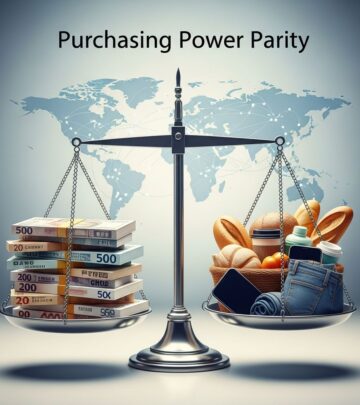
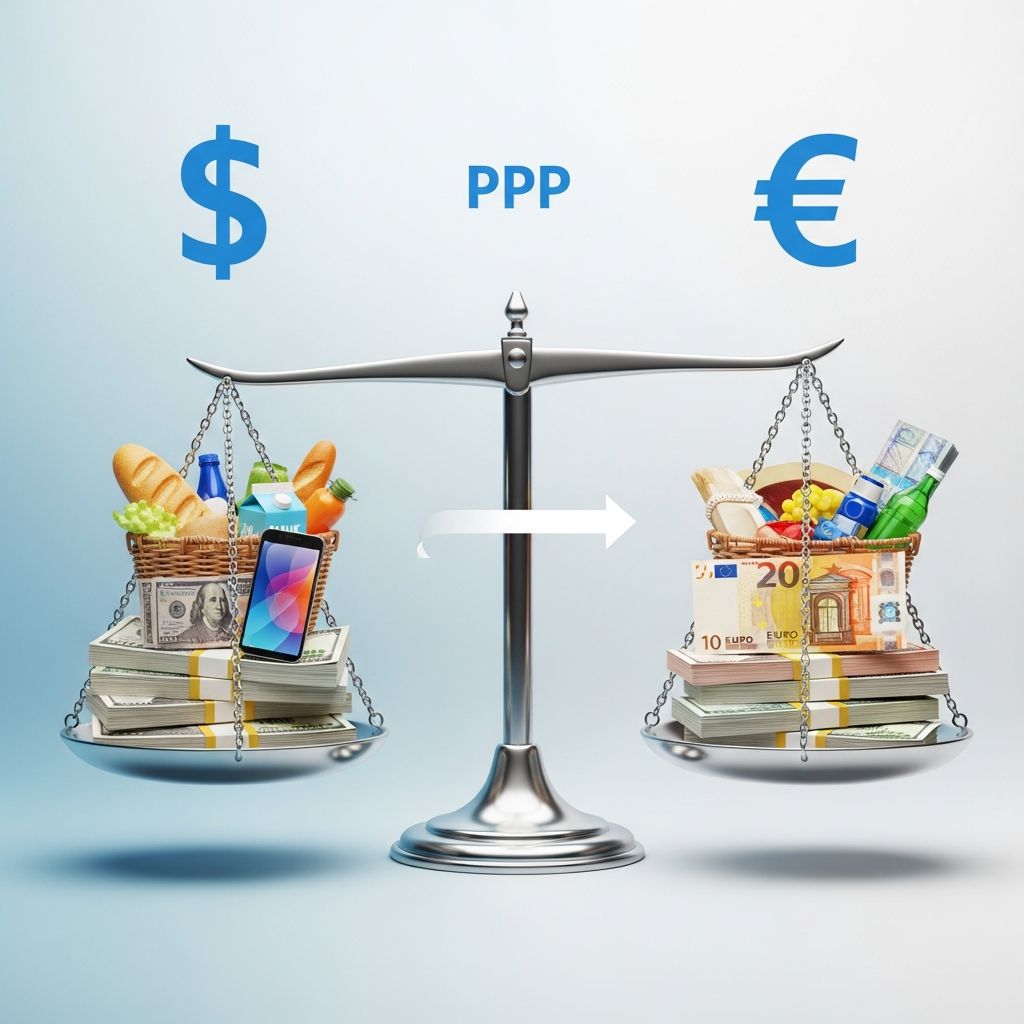
Purchasing power parity (PPP) is an economic theory that allows economists, investors, and policymakers to compare the relative values of currencies across different countries. Rather than relying solely on market exchange rates, PPP measures how much of one currency is needed to purchase the same basket of goods and services available in another country. In essence, PPP attempts to determine the “fair” exchange rate between two currencies by accounting for price level differences between nations.
The fundamental concept behind PPP rests on the law of one price, which posits that identical goods should cost the same amount in different locations when adjusted for currency exchange rates. For instance, if a computer costs 500 US dollars in New York and 2,000 Hong Kong dollars in Hong Kong, PPP theory suggests the exchange rate should be approximately 4 Hong Kong dollars to 1 US dollar. This principle ensures that consumers maintain equal purchasing power across different economic markets.
PPP differs from the consumer price index (CPI) in an important way. While the CPI measures price changes over time within a single country, PPP measures price level differences across different regions or countries at a specific point in time. This distinction makes PPP particularly valuable for international economic comparisons and policy analysis.
Understanding the Concept and Theory
The theory of purchasing power parity emerged from economic observations that price levels vary considerably across countries due to various frictions in international trade. Tariffs, transportation costs, trade barriers, and local regulations prevent goods from trading at uniform prices globally. PPP theory accounts for these real-world complexities by using a basket of goods—a collection of various products and services with specified quantities—rather than analyzing single items in isolation.
Organizations such as the OECD calculate PPP by evaluating comprehensive baskets that include approximately 3,000 consumer goods and services, 30 occupations in government, 200 types of equipment goods, and about 15 construction projects. This extensive approach minimizes measurement errors and provides a more accurate representation of true purchasing power across economies.
In neoclassical economic theory, PPP assumes that exchange rates observed in international financial markets will eventually align with rates that equalize purchasing power between currencies. Different schools of economic thought debate whether this equilibrium occurs in the short run or only in the long run, but most economists agree that PPP provides important insights into currency valuations.
How PPP Is Calculated
The calculation of PPP involves several methodological steps designed to ensure accuracy and comparability:
Step 1: Select a Basket of Goods
Economists choose goods and services that are commonly available in both countries and easily traded internationally. This selection process is crucial because the PPP value depends significantly on which items are included in the basket. Goods selected should closely adhere to the law of one price to minimize distortions.
Step 2: Determine Prices in Each Location
Researchers collect price data for each item in the basket across different countries, typically using local market prices and official price databases. This data collection must be comprehensive and current to ensure meaningful comparisons.
Step 3: Calculate Price Ratios
The PPP exchange rate is computed as the ratio of the price of the entire basket in one location divided by the price of the same basket in another location. The formula can be expressed as:
PPP Exchange Rate = Price of Basket in Country A ÷ Price of Basket in Country B
Step 4: Adjust for Currency Differences
The resulting ratio provides the theoretical exchange rate at which both currencies would have equal purchasing power. This PPP exchange rate may differ substantially from the market exchange rate, reflecting actual trading conditions, capital flows, and other financial market factors.
PPP Exchange Rates vs. Market Exchange Rates
A critical distinction exists between PPP exchange rates and market exchange rates, particularly when comparing advanced economies with developing nations. Market exchange rates are determined by supply and demand in foreign exchange markets, influenced by factors such as interest rates, inflation expectations, political risk, and capital flows.
PPP exchange rates, by contrast, are calculated based on price levels of goods and services. In advanced economies, the gap between market rates and PPP rates tends to be relatively small because prices are more similar across these nations. However, in emerging market and developing countries, significant divergences often occur. Studies show that for most developing nations, the ratio between market and PPP exchange rates falls between 2 and 4, meaning that developing countries’ GDP appears substantially larger when measured using PPP rates rather than market rates.
This difference has profound implications for global economic analysis. When using PPP exchange rates instead of market rates, countries like China and India receive significantly higher weightings in world economic aggregations. A country might appear less prosperous using market exchange rates but considerably more developed using PPP-adjusted figures, reflecting the actual purchasing power of residents and their living standards.
The Big Mac Index: A Practical Example
One of the most accessible illustrations of PPP in action is the Big Mac Index, a lighthearted but surprisingly effective economic indicator published regularly by The Economist. This index uses the price of a McDonald’s Big Mac hamburger as a standardized basket item for cross-country price comparisons.
For example, if a Big Mac costs £2 in London and $4 in New York, PPP theory suggests an exchange rate of 1 pound equals 2 US dollars. If the actual market exchange rate differs from this PPP rate, it suggests the pound is either overvalued or undervalued relative to its purchasing power parity level. The Big Mac Index has proven valuable because McDonald’s maintains relatively consistent product standards globally, making it an effective proxy for comparing price levels across nations.
While the Big Mac Index is somewhat tongue-in-cheek, it demonstrates an important economic principle: comparing identical products across countries reveals whether currencies are trading at rates that reflect actual purchasing power or whether market forces have pushed exchange rates away from PPP equilibrium.
Factors Affecting PPP Calculations
Several factors create deviations from absolute PPP, making real-world calculations more complex than the simple theory suggests:
Non-Traded Goods and Services
Many goods and services cannot be easily traded internationally, including haircuts, restaurant meals, construction services, and real estate. Prices for these “non-tradables” are determined by domestic supply and demand rather than international markets. When prices for non-tradables rise in a country, the purchasing power of that currency falls domestically, even if the currency’s value in foreign exchange markets remains stable. This factor particularly affects PPP comparisons between countries with significantly different labor costs and service economies.
Product Quality Differences
Identical products may have varying quality levels across countries. While PPP theory assumes goods are uniform, reality shows that a computer or automobile in one country might differ in specifications, durability, or features from the “same” product in another nation. These quality variations complicate price comparisons and can distort PPP calculations.
Trade Barriers and Transaction Costs
Tariffs, import quotas, shipping costs, and regulatory compliance expenses prevent prices from equalizing across borders. These transaction costs create wedges between PPP and market exchange rates, particularly for goods subject to significant trade restrictions.
Market Structure and Product Differentiation
When markets are segmented or products are differentiated, the law of one price breaks down. Companies may charge different prices in different countries based on local market conditions, elasticity of demand, and competitive landscapes, violating assumptions underlying absolute PPP.
Applications of PPP in Economics and Policy
Purchasing power parity serves numerous practical functions in modern economics:
GDP Comparisons Across Nations
PPP-adjusted GDP figures provide more accurate comparisons of economic size and living standards between countries than nominal GDP converted at market exchange rates. International organizations use PPP-based GDP measurements to rank economies and assess relative economic performance.
Poverty Measurement and International Aid
The World Bank and other international development organizations use PPP to define poverty thresholds and determine which countries qualify for international financial assistance. PPP-based poverty lines reflect actual purchasing power, providing more meaningful assessments of poverty than nominal income comparisons.
Monetary and Fiscal Policy Analysis
Central banks and government treasuries monitor PPP to inform decisions about interest rates, inflation targets, and exchange rate management. When actual exchange rates deviate significantly from PPP levels, policymakers may conclude that currencies are misaligned, potentially affecting trade competitiveness and economic stability.
Investment and Currency Trading Decisions
International investors use PPP analysis to identify potentially undervalued or overvalued currencies. When a currency trades at a significant discount to its PPP rate, investors may view it as undervalued and expect eventual appreciation, influencing investment allocation decisions.
Labor Productivity and Consumption Analysis
PPP enables meaningful comparisons of labor productivity and actual individual consumption across countries by accounting for price level differences. This allows policymakers to understand true improvements in living standards beyond nominal economic growth figures.
Limitations and Criticisms of PPP
Despite its usefulness, PPP has several important limitations that economists acknowledge:
The theory assumes that exchange rates will eventually adjust toward PPP equilibrium, but empirical evidence shows this adjustment occurs slowly, if at all, over reasonable policy timeframes. Additionally, the selection of goods in the basket significantly influences PPP calculations—different organizations using different baskets arrive at different PPP values for the same country pairs. The existence of non-tradables, quality differences, and market segmentation means that absolute PPP rarely holds exactly in practice, and relative PPP (where rates of change converge rather than absolute values) provides a more realistic framework.
Measuring PPP is also data-intensive and expensive, requiring comprehensive price surveys across many countries and products. Developing nations with limited statistical capacity face particular challenges in generating reliable PPP data.
Real-World PPP Examples
PPP analysis reveals striking differences between market exchange rates and purchasing power parity rates across different countries. Advanced economies like Germany, Japan, and Canada typically have PPP rates relatively close to market rates, reflecting similar price levels. Developing nations show much larger discrepancies—a given amount of currency purchases substantially more goods and services locally than the market exchange rate would suggest when exchanging into dollars or euros.
These differences explain why workers in developing countries can maintain respectable living standards despite earning salaries that appear modest when converted at market exchange rates. Their purchasing power reflects local prices rather than international market rates, making PPP-adjusted income figures essential for understanding actual welfare and living conditions.
Frequently Asked Questions
What is the main purpose of purchasing power parity?
PPP’s primary purpose is to provide accurate international comparisons of price levels and currency values. It helps economists and policymakers understand whether exchange rates reflect true purchasing power differences between countries and determine fair currency valuations for trade and investment purposes.
Why does PPP differ from market exchange rates?
Market exchange rates are determined by supply and demand in foreign exchange markets, reflecting expectations about future economic performance, interest rate differentials, and capital flows. PPP rates, based on actual goods prices, often diverge from market rates because financial markets price many factors beyond current price levels, and non-traded goods prevent price equalization.
How is the Big Mac Index calculated?
The Big Mac Index compares the price of a McDonald’s Big Mac hamburger across different countries. If a Big Mac costs $5 in the United States and £3 in the United Kingdom, the implied PPP exchange rate would be £3/$5 or approximately 1.67 dollars per pound, which can be compared to the actual market exchange rate to assess currency valuation.
Who calculates official PPP statistics?
Major international organizations calculate PPP statistics, including the OECD, World Bank, and International Monetary Fund. These organizations conduct comprehensive price surveys and coordinate with national statistical agencies to produce standardized, comparable PPP data across countries.
Can PPP be used to predict future exchange rates?
While PPP provides a theoretical framework suggesting currencies should eventually align with their purchasing power parity rates, it has limited predictive power for short-term exchange rate movements. Market exchange rates can deviate from PPP for extended periods due to capital flows, interest rate differentials, and other financial market factors.
Why do developing countries have larger PPP-market rate gaps?
Developing countries have larger gaps because many non-tradable goods and services cost substantially less than in developed nations, reflecting lower labor costs and different economic structures. Market exchange rates don’t fully reflect these price differences because they’re determined partly by capital flows and investment returns rather than goods prices alone.
References
- Purchasing power parities (PPP) — Organisation for Economic Co-operation and Development (OECD). 2025. https://www.oecd.org/en/data/indicators/purchasing-power-parities-ppp.html
- Purchasing Power Parity: Weights Matter — International Monetary Fund (IMF). 2025. https://www.imf.org/en/publications/fandd/issues/series/back-to-basics/purchasing-power-parity-ppp
- Purchasing power parity — EBSCO Research Starters, Business and Management. 2025. https://www.ebsco.com/research-starters/business-and-management/purchasing-power-parity
- Purchasing Power Parity (PPP) — Wikipedia. 2025. https://en.wikipedia.org/wiki/Purchasing_power_parity
Similar Articles








Read full bio of Sneha Tete