Purchases on Balance Transfer Cards: Smart or Risky?
Discover if adding new buys to your balance transfer card helps or hurts your debt payoff strategy.
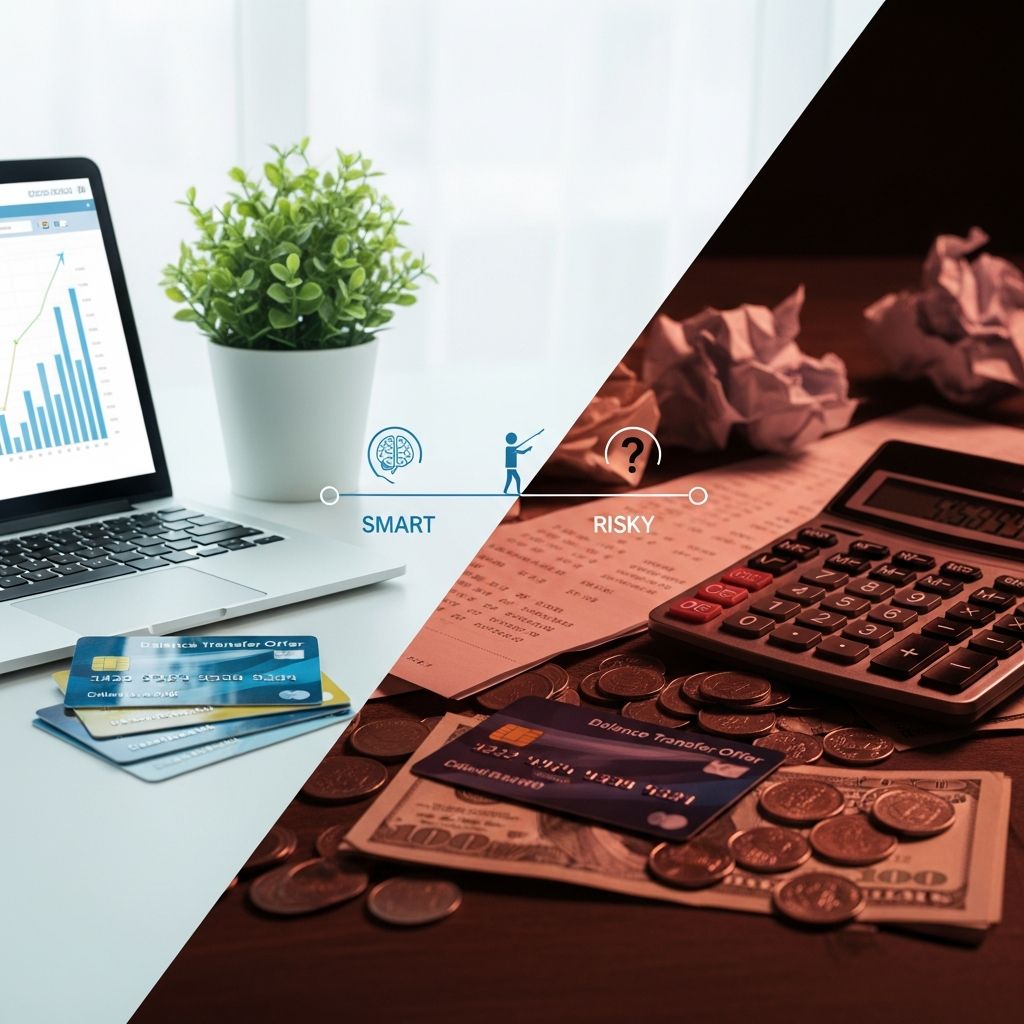
Balance transfer credit cards offer a powerful tool for tackling high-interest debt by moving balances to a card with a promotional 0% APR period. But what happens when you need to make everyday purchases on that same card? While technically allowed, this practice often introduces complications that can undermine your debt reduction goals.
Understanding Balance Transfer Credit Cards
These specialized cards let you consolidate debt from existing credit accounts onto a new card, typically enjoying a temporary 0% introductory annual percentage rate (APR) on the transferred amount. This period, often lasting 12 to 21 months, gives you breathing room to pay down principal without accruing interest. However, the fine print reveals key distinctions: the 0% APR usually applies only to transfers, not new purchases.
Credit limits on these cards determine how much debt you can shift. For instance, if approved for a $15,000 limit but carrying $20,000 in debt elsewhere, you’ll be left with high-interest remnants on old cards. Transfer fees, commonly 3% to 5% of the amount moved, add to the initial balance, making swift repayment essential.
Can You Technically Use It for New Purchases?
Yes, most balance transfer cards permit purchases alongside transfers. Your available credit—after accounting for the transferred balance and fee—remains usable for shopping, bills, or emergencies. However, issuers like Discover and Chase explicitly warn that this can forfeit promotional benefits.
The core issue stems from how cards handle multiple balance types. Transferred balances often sit at 0% APR, while purchases revert to the standard purchase APR, which could exceed 20%. This dual-rate structure complicates payoff efforts.
The Hidden Dangers of Mixing Purchases and Transfers
Adding new charges to a balance transfer card triggers several pitfalls that can extend your debt timeline and inflate costs.
- Immediate Interest Accrual on Purchases: Unlike standalone purchases with a grace period (typically 21-25 days interest-free if paid in full), any carryover balance from prior months eliminates this buffer. New buys accrue interest from the transaction date. The Consumer Financial Protection Bureau (CFPB) confirms: carrying a balance means purchases draw interest immediately, even on 0% transfer cards.
- Payment Allocation Challenges: Federal rules require minimum payments to cover interest, fees, and a portion of principal. Excess payments go first to the highest-APR balance—usually purchases—leaving the low-rate transfer balance largely untouched. This slows overall progress.
- Extended Payoff Periods: With purchases at high APR and transfers at 0%, minimum payments prioritize the costly buys, potentially leaving thousands on the transfer for months post-promo.
| Scenario | Transfer Balance | Purchase Balance | Monthly Payment Effect |
|---|---|---|---|
| No Purchases | 0% APR, full payment applied | N/A | Fastest payoff |
| With Purchases | 0% APR, minimal reduction | High APR, prioritized | Slower, costlier |
Impact on Your Credit Profile
Using the card for purchases raises your credit utilization ratio—the percentage of available credit in use. Post-transfer, utilization spikes as the new balance consumes much of your limit. Adding purchases pushes it higher, potentially dropping your FICO score, which weighs utilization at 30%.
Multiple hard inquiries from applying for transfers, plus increased debt levels, compound risks. Good to excellent credit (690+ FICO) is needed for approval, but ongoing high utilization signals risk to lenders. Aim to keep utilization under 30% across all cards for optimal scores.
Strategic Ways to Handle Purchases During Transfer
If unavoidable, adopt these tactics to minimize damage:
- Pay Full Balance Monthly: Cover the entire statement—including transfers and purchases—by the due date to preserve grace periods and halt interest.
- Choose Dual-Promo Cards: Seek cards offering 0% APR on both transfers and purchases, like certain offers from Citi or Chase, though periods may differ.
- Calculate Repayment Needs: Divide total balance (plus fee) by promo months for your target payment. For a $10,000 transfer at 3% fee over 18 months: ($10,300 / 18) ≈ $572/month.
- Use Alternative Cards: Reserve the transfer card solely for debt payoff; charge essentials to a card with purchase rewards or 0% intro on buys.
Real-World Examples and Calculations
Suppose you transfer $5,000 at 0% for 15 months (3% fee = $5,150 total). Minimum payment: ~$50. Adding $500 monthly purchases at 22% APR means ~$70/month interest on buys alone. Excess payments hit purchases first, so after 6 months, transfers might drop only $300 while purchases balloon with interest.
Contrast: Dedicating $600/month solely to the transfer clears it in ~9 months, saving hundreds versus mixing uses.
Best Practices for Maximizing Balance Transfer Success
- Review Terms Thoroughly: Confirm promo durations, fees, and APRs for purchases vs. transfers.
- Transfer Promptly: Process within promo windows; delays may void offers.
- Automate Ample Payments: Set autopay above minimums, targeting full promo payoff.
- Monitor Statements: Track balance splits and interest accrual monthly.
- Avoid New Debt: Cut spending; redirect savings to principal.
Frequently Asked Questions
Will purchases cancel my 0% transfer promo?
No, the promo continues for transfers, but purchases won’t qualify and may accrue interest immediately.
How do issuers split payments?
Minimums cover all; extras target highest APR first per CARD Act rules.
Can I transfer from multiple cards?
Yes, up to your limit minus fees.
What’s a good post-promo strategy?
Payoff before end or refinance to another low-rate option.
Does this affect credit scores long-term?
Temporarily yes via utilization; paying down boosts scores.
Final Guidance for Debt Freedom
Treat balance transfer cards as dedicated debt erasers, not everyday spenders. By isolating purchases, you harness the full power of 0% periods, slashing interest and accelerating freedom from cycles of debt. Compare offers from reputable issuers, crunch numbers, and commit to a payoff plan for transformative results.
References
- Can You Make Purchases on a Balance Transfer Credit Card? — Experian. 2023-10-01. https://www.experian.com/blogs/ask-experian/can-you-make-new-purchases-on-balance-transfer-card/
- 6 Balance Transfer Rules You May Not Know About — CardRatings.com. 2024-05-15. https://www.cardratings.com/balance-transfer/6-balance-transfer-rules-you-may-not-know-about.html
- How Do Balance Transfers Work? — Citi. 2025-01-20. https://www.citi.com/credit-cards/balance-transfer/how-do-credit-card-balance-transfers-work
- Do I Pay Interest on New Purchases After a Zero or Low Rate Balance Transfer? — Consumer Financial Protection Bureau (CFPB). 2024-11-10. https://www.consumerfinance.gov/ask-cfpb/do-i-pay-interest-on-new-purchases-after-i-get-a-zero-or-low-rate-balance-transfer-en-49/
- 6 Things To Do After Completing A Balance Transfer — Bankrate. 2025-02-28. https://www.bankrate.com/credit-cards/balance-transfer/what-to-do-after-balance-transfer/
- What Is a Balance Transfer? Should I Do One? — NerdWallet. 2025-03-15. https://www.nerdwallet.com/credit-cards/learn/what-is-a-balance-transfer
Similar Articles








Read full bio of medha deb