Publicly Traded Partnerships: Guide to PTP Investments
Understand publicly traded partnerships, their tax implications, and investment considerations for income-focused investors.

What Are Publicly Traded Partnerships?
A publicly traded partnership (PTP) is a business structure that combines the tax advantages of partnerships with the liquidity and accessibility of publicly traded securities. PTPs are limited partnerships or limited liability companies whose interests are traded on a securities exchange or in the over-the-counter market, making them accessible to individual and institutional investors. Unlike traditional partnerships that are typically private, PTPs allow investors to buy and sell units on secondary markets like stocks.
The defining characteristic of a PTP is that its units trade publicly, enabling investors to liquidate their positions relatively easily. This structure gained prominence since their introduction in 1981, particularly in industries that generate specific types of income qualifying for favorable tax treatment. PTPs have become especially popular in the energy, real estate, and infrastructure sectors where they can take advantage of “qualifying income” rules.
How Publicly Traded Partnerships Operate
PTPs function as pass-through entities, meaning the partnership itself does not pay income taxes. Instead, income, deductions, and losses flow through to the individual partners’ tax returns. This structure provides significant tax efficiency compared to traditional corporations, which face double taxation—once at the corporate level and again at the shareholder level.
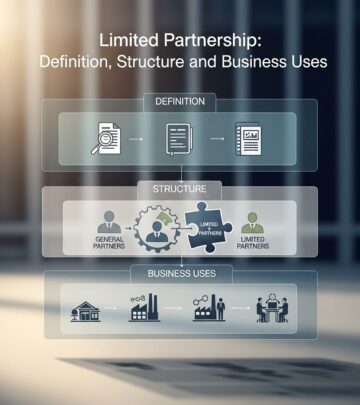
The management of a PTP is typically handled by a general partner or managing partner, while limited partners—the majority of investors—have passive ownership stakes. Limited partners contribute capital and receive distributions but generally do not participate in day-to-day management decisions. This structure allows investors to participate in potentially lucrative business ventures without taking on active management responsibilities.
Taxation of Publicly Traded Partnerships
The Tax Compliance Framework
In 1987, the Tax Reform Act introduced Section 7704, which fundamentally changed how PTPs are taxed. Under this section, a PTP is generally taxed as a corporation unless 90% or more of its gross income consists of “qualifying income.” Qualifying income typically includes passive income sources such as dividends, interest, capital gains, rental income, and income from certain natural resource activities like oil and gas operations.
The “90% test” is crucial for PTP taxation. If a partnership can demonstrate that at least 90% of its income is qualifying income, it maintains partnership tax treatment and avoids corporate taxation. This favorable treatment is why PTPs are predominantly found in real estate, natural resources, and infrastructure industries—sectors that naturally generate qualifying passive income.
Schedule K-1 Reporting
Unlike stock investors who receive 1099 forms reporting dividends, PTP investors receive Schedule K-1 forms (Form 1065) from the partnership. This form details each investor’s share of partnership income, deductions, losses, and credits. A critical distinction is that PTP investors are taxed on their allocated share of partnership income regardless of whether they receive cash distributions. An investor might be required to pay taxes on phantom income—income allocated to them but not distributed in cash.
This tax treatment can create cash flow complications for investors, especially in early years when distributions might be minimal but income allocations are substantial. Investors must plan for potential tax liabilities that may exceed the cash they actually receive from the partnership.
Income Distributions and Cash Flow
One of the primary attractions of PTP investments is regular cash distributions, often paid quarterly. These distributions typically come from the partnership’s operating cash flow and can be substantial, particularly in mature energy or infrastructure partnerships. However, investors should understand that distributions are not guaranteed and fluctuate based on the partnership’s performance and market conditions.
Distributions are often characterized by their sustainability. Many PTPs, particularly master limited partnerships (MLPs) in the energy sector, prioritize stable distributions and have maintained or grown distributions over extended periods. Some distributions may include a return of capital component, which reduces the investor’s tax basis in the partnership rather than creating taxable income.
Tax Advantages and Considerations
Depreciation and Loss Deductions
A significant tax benefit of PTP investments comes from depreciation deductions. For infrastructure and real estate PTPs, substantial depreciation allowances flow through to investors, reducing their taxable income. These paper losses—created by non-cash depreciation charges—can shelter income from other sources.
However, investors must be aware of depreciation recapture provisions. When a PTP interest is sold, any gains attributable to depreciation deductions claimed in prior years are recaptured and taxed as ordinary income rather than capital gains. This recapture can significantly increase the tax liability upon disposition of the investment.
Basis Limitations and Passive Activity Loss Rules
Investors in PTPs face multiple limitations on deductions. First, losses from the partnership cannot exceed the investor’s tax basis in the partnership interest. Tax basis begins with the investor’s initial investment and is increased by additional contributions and allocated income, then decreased by distributions and allocated losses.
Additionally, PTP investments are subject to passive activity loss (PAL) limitations. Losses from passive investments can only offset passive income and cannot offset active income or portfolio income such as wages or dividends. For investors with substantial tax losses from PTPs but limited passive income, these losses may be suspended indefinitely, providing no current tax benefit until the partnership generates offsetting income or the investor disposes of the investment.
Special Considerations for PTP Investors
Qualified Business Income Deduction
Under Section 199A, individual investors may qualify for a deduction of up to 20% of qualified PTP income. This deduction applies to eligible taxpayers with pass-through business income, including certain PTP distributions. However, the deduction is subject to limitations based on the taxpayer’s taxable income level and the type of business the PTP conducts.
At-Risk Limitations
Investors are also subject to at-risk limitations, which restrict losses to the amount the investor has genuinely placed at risk in the partnership. If an investor’s at-risk amount becomes negative due to distributions exceeding basis, the investor may face at-risk recapture, requiring the recognition of ordinary income.
Sale and Disposition Issues
When selling a PTP interest, investors must be aware of Section 751 “hot assets” rules. If the partnership holds unrealized receivables or inventory items, gains attributable to these assets are characterized as ordinary income rather than capital gains, forfeiting preferential long-term capital gains rates. This can substantially increase the tax liability from what investors anticipated as a capital gain.
Types of Publicly Traded Partnerships
Master Limited Partnerships (MLPs)
Master Limited Partnerships, primarily found in the energy sector, are the most common type of PTP. MLPs typically operate midstream energy infrastructure—pipelines, storage facilities, and terminals—that generate steady, predictable cash flows. Energy MLPs have been popular with income-focused investors seeking distribution yields.
Real Estate Partnerships
PTPs structured around real estate holdings generate qualifying income through rental payments and lease agreements. These partnerships invest in commercial and industrial properties, providing investors with real estate exposure without direct property management responsibilities.
Infrastructure and Resource Partnerships
Beyond energy and real estate, PTPs operate in infrastructure (toll roads, ports), timber operations, and natural resource extraction. These partnerships leverage the pass-through taxation structure to optimize cash returns to investors.
Advantages of PTP Investments
- Tax Efficiency: Pass-through taxation avoids corporate-level taxes, with income taxed only at the investor level
- Regular Income: Quarterly distributions provide consistent cash flow, often higher yields than dividends
- Depreciation Benefits: Significant depreciation deductions shelter income and reduce taxable distributions
- Liquidity: Publicly traded units can be bought and sold on exchanges, unlike private partnerships
- Diversification: Access to diversified asset classes like infrastructure and energy without direct ownership
- Professional Management: General partners manage operations while limited partners remain passive investors
Disadvantages and Risks
- Tax Complexity: Schedule K-1 reporting and multiple tax limitation rules create significant compliance burdens
- Phantom Income: Investors may owe taxes on allocated income not received as distributions
- Suspended Losses: Passive activity loss limitations prevent immediate deduction of losses
- Limited Liquidity in Downsturns: While theoretically liquid, unit prices can decline sharply during market stress
- Distribution Risk: Distributions are not guaranteed and depend on partnership performance
- Depreciation Recapture: Significant tax liabilities upon sale due to recapture of depreciation benefits
- Complexity in Gifting or Donating: Transferring PTP interests involves complicated tax and valuation issues
Investment Strategies and Considerations
Investors considering PTP allocations should evaluate their overall tax situation, particularly whether they have sufficient passive income to utilize losses and deductions generated by the partnership. For high-income investors in active businesses, PTP losses may provide valuable tax shelter. Conversely, investors with limited passive income may find suspended losses frustrating.
The holding period also matters significantly. Investors planning long-term holds may better tolerate the tax complexity and suspended losses, potentially capturing multiple years of distributions. Those planning shorter holding periods should carefully calculate the tax impact of depreciation recapture and holding period taxation.
Geographic and sector diversification within PTPs can reduce concentration risk. Rather than placing excessive capital in a single energy MLP or real estate partnership, investors may benefit from holding several PTPs across different industries and regions.
Recent Trends and Legislative Considerations
The PTP landscape continues evolving through legislative and regulatory developments. Treasury has periodically proposed changes affecting PTP taxation and treatment, particularly regarding Section 199A deductions and depreciation recapture rules. Investors should stay informed about potential legislative changes that could impact the tax efficiency of PTP investments.
Additionally, energy transition trends have influenced certain energy-focused PTPs, particularly those with significant exposure to traditional fossil fuel infrastructure. Some investors have shifted toward PTPs involved in renewable energy infrastructure and transition-aligned projects.
PTP vs. Other Investment Structures
| Structure | Tax Treatment | Distributions | Complexity | Liquidity |
|---|---|---|---|---|
| PTPs | Pass-through (if qualifying) | Quarterly, often high yield | High (Schedule K-1) | High (traded on exchanges) |
| REITs | Corporate (company level) + ordinary income tax (investor) | Annual dividends | Moderate | High (publicly traded) |
| Stocks | Capital gains + dividend tax | Variable dividends | Low | High (liquid markets) |
| Private Partnerships | Pass-through | Variable | High (K-1) | Very low (illiquid) |
Frequently Asked Questions
Q: What is the minimum investment required for publicly traded partnerships?
A: Unlike private partnerships, publicly traded partnerships have no minimum investment requirement beyond the cost of a single unit, which varies by partnership but can be accessed through brokerage accounts starting with amounts as low as hundreds of dollars.
Q: Are PTP distributions guaranteed?
A: No, distributions are not guaranteed and depend on the partnership’s operating performance and available cash flow. While many established PTPs maintain stable distributions, they can be reduced or suspended during economic downturns or operational challenges.
Q: How do I report PTP income on my tax return?
A: PTP income is reported using the Schedule K-1 (Form 1065) provided by the partnership. You transfer the income, deductions, and losses to your Form 1040, subject to passive activity loss limitations and other applicable restrictions.
Q: Can I deduct losses from PTP investments immediately?
A: Not necessarily. Passive activity loss limitations restrict deduction of losses to the extent of passive income from the same PTP. Excess losses are suspended and carried forward, only becoming deductible when the partnership generates sufficient passive income or when you dispose of the investment.
Q: What happens to my tax basis when I receive distributions?
A: Distributions reduce your tax basis in the PTP interest. If distributions exceed your basis, you must recognize a capital gain. It’s crucial to track basis carefully, as basis limitations prevent deduction of losses exceeding your adjusted basis.
Q: Should I hold PTPs in retirement accounts?
A: PTPs can generate Unrelated Business Income Tax (UBTI) within retirement accounts, potentially creating unexpected tax obligations. Consult with a tax professional before holding PTPs in IRAs or other tax-advantaged accounts.
Q: What are “hot assets” in the context of PTP sales?
A: Hot assets are partnership assets like inventory or unrealized receivables. Under Section 751, gains from these assets are taxed as ordinary income rather than capital gains, potentially resulting in significantly higher tax rates when you sell your PTP interest.
References
- Publicly Traded Partnerships: Investors’ Tax Considerations — The Tax Adviser, Journal of the American Institute of CPAs. 2022-10. https://www.thetaxadviser.com/issues/2022/oct/publicly-traded-partnerships-investors-tax-considerations/
- Qualified Business Income Deduction — Internal Revenue Service (IRS). 2024. https://www.irs.gov/newsroom/qualified-business-income-deduction
Similar Articles








Read full bio of medha deb