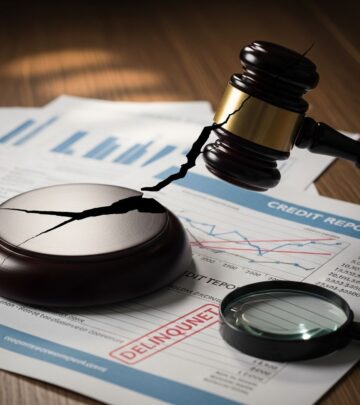
Public Records on Credit Reports
Discover which public records still affect your credit score and why major changes removed others from reports.

Public records represent government-maintained information accessible to anyone, including financial institutions evaluating creditworthiness. These records once heavily influenced credit scores through items like bankruptcies, civil judgments, and tax liens. However, policy shifts by major credit bureaus—Equifax, Experian, and TransUnion—have dramatically altered what appears on consumer credit reports. Today, bankruptcy stands as the primary public record impacting credit profiles, while others have been largely excluded to enhance accuracy and consumer protection.
Defining Public Records in Financial Contexts
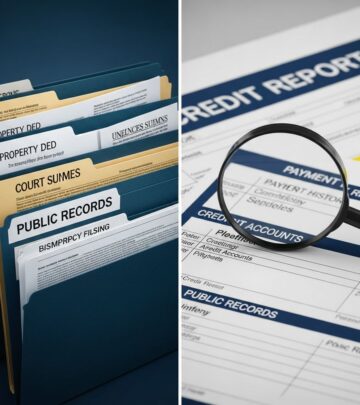
Public records encompass court filings, government liens, and similar documents filed at local, state, or federal levels. In credit reporting, they signal potential financial distress. Common examples include:
- Bankruptcies: Legal declarations of inability to repay debts.
- Civil judgments: Court rulings against debtors for unpaid obligations.
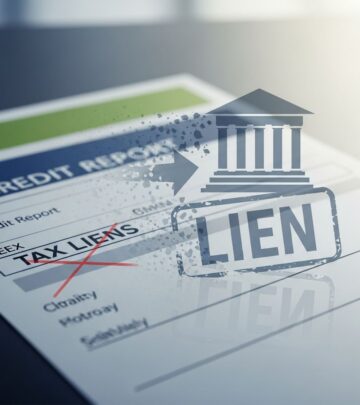
- Tax liens: Government claims on property for unpaid taxes.
- Other items: Foreclosures, wage garnishments, or suits, though less commonly reported.
These records originate from public databases, such as court systems, and credit bureaus historically gathered them via services like PACER (Public Access to Court Electronic Records). Their presence on reports could lower scores significantly, complicating loan approvals or credit access.
Evolution of Public Record Reporting
Until 2017, civil judgments and tax liens routinely appeared on credit reports, often lingering for seven years or more. A pivotal change occurred through the National Consumer Assistance Plan (NCAP), a 2015 settlement between credit bureaus and over 30 state attorneys general. NCAP mandated stricter standards: public records required a name, address, Social Security number or date of birth, and quarterly updates for inclusion.
Implemented July 1, 2017, these rules led to sweeping removals. Approximately 80% of affected consumers saw judgments and half of tax liens vanish from reports. By late 2017, civil judgments were entirely absent, and tax liens dropped to 1.4% prevalence.
| Record Type | Pre-2017 Status | Post-2017 Status | Reason for Change |
|---|---|---|---|
| Bankruptcies | Reported (7-10 years) | Still reported | High relevance to credit risk |
| Civil Judgments | Reported (7 years) | Removed | Accuracy issues, insufficient identifiers |
| Tax Liens | Reported (indefinitely) | Mostly removed | Matching errors, policy shift |
This table summarizes the transformation, highlighting how bureaus prioritized verifiable data to curb errors like misattributed records.
Bankruptcy: The Remaining Public Record
Chapter 7 and Chapter 13 bankruptcies persist on reports due to their strong predictive value for lenders. Chapter 7 (liquidation) stays for 10 years from filing; Chapter 13 (repayment plan) for 7 years. These timelines stem from the Fair Credit Reporting Act (FCRA), unchanged by NCAP.
- Chapter 7: Wipes out unsecured debts; impacts scores for a decade.
- Chapter 13: Involves partial repayment; shorter 7-year mark.
Bankruptcies signal severe financial hardship, often dropping scores by 100-200 points initially. Recovery involves rebuilding payment history and credit utilization.
Why Tax Liens and Judgments Vanished
Pre-NCAP, tax liens—filed for unpaid federal or state taxes—could haunt reports indefinitely. Civil judgments, from creditor lawsuits, lasted 7 years. Both suffered accuracy woes: incomplete personal data led to wrongful inclusions, affecting millions.
NCAP addressed this by demanding precise matching criteria. Results were profound: 6% of consumers had these items in June 2017; post-implementation, nearly all were gone. The Consumer Financial Protection Bureau (CFPB) noted minimal score impacts—only 4% of affected individuals saw band shifts (e.g., subprime to near-prime), typically under 20 points, as delinquencies often overshadowed them.
Impact of Removals on Credit Scores
Counterintuitively, excluding judgments and liens had limited effects. CFPB analysis revealed most consumers (75%) gained fewer than 20 points, with broader profiles dominated by payment histories and delinquencies. This underscores that public records were secondary factors in scoring models like FICO.
For the minority benefiting substantially, score boosts facilitated better loan terms. However, FCRA permits bureaus to reinstate these items if policies shift, as NCAP is voluntary.
Other Public Records and Their Relevance
Beyond the big three, items like foreclosures (reported via mortgage accounts, not public records) or garnishments may indirectly appear. Arrests or divorces rarely impact credit reports, confined to background checks.
Public records persist in non-credit contexts: employment screenings, tenant reports, or specialty databases. Thus, resolving them remains crucial despite credit report exclusions.
Navigating and Disputing Public Records
Monitor reports annually via AnnualCreditReport.com. Disputes follow FCRA: bureaus must investigate within 30 days. Errors in bankruptcies—e.g., wrong chapters or dates—can be corrected.
To mitigate impacts:
- Pay liens/judgments promptly; request withdrawals.
- Build positive history: secured cards, on-time payments.
- Consider credit-builder loans.
Bankruptcy filers should reaffirm debts strategically and track post-discharge accuracy.
Future Outlook for Public Record Reporting
While NCAP endures, bureaus could reverse course, as FCRA doesn’t prohibit it. Ongoing CFPB oversight and consumer advocacy may prevent backsliding. Enhanced data standards continue improving report integrity.
Frequently Asked Questions
Do tax liens still affect my credit score?
No, tax liens are no longer reported by major bureaus due to 2017 policy changes, though resolving them prevents other issues.
How long does bankruptcy stay on my report?
Chapter 7 for 10 years, Chapter 13 for 7 years from filing date.
Can public records be removed early?
Only via disputes for inaccuracies or voluntary withdrawals; accurate bankruptcies follow statutory timelines.
Why were changes made to public records?
To boost accuracy amid matching errors, per NCAP settlement with state AGs.
Will judgments return to credit reports?
Not currently, but bureaus could reinstate as it’s voluntary policy.
Strategies for Credit Recovery Post-Public Records
Even with reduced reporting, past issues linger via delinquencies. Focus on:
- Timely payments (35% of FICO score).
- Low utilization (<30%).
- Diverse credit mix.
Tools like Experian Boost add positive utility payments. Patience yields results: scores often rebound within 1-2 years.
References
- How Do Public Records Impact My Credit? Bankruptcy, Tax Lien … — MoneyTips. 2023. https://moneytips.com/credit/credit-scores-reports/how-do-public-records-impact-my-credit-bankruptcy-judgments-and-tax-liens/
- Removal of public records has little effect on consumers’ credit scores — Consumer Financial Protection Bureau. 2018-02-01. https://www.consumerfinance.gov/about-us/blog/removal-public-records-has-little-effect-consumers-credit-scores/
- Public Records, Your Credit Score, and Credit Cards for Bad Credit — OneUnited Bank. 2023. https://www.oneunited.com/blog/public-records-your-credit-score-and-credit-cards-for-bad-credit/
- What happens to credit scores when public records are removed? — Credit Security Group. 2018. https://creditsecuritygroup.com/blog/public-record-credit-score/
- Big Changes for Credit Reports, Improving Accuracy for Millions of … — National Consumer Law Center. 2017. https://library.nclc.org/article/big-changes-credit-reports-improving-accuracy-millions-consumers
- Do Credit Bureaus Report Public Records? What You Should Know. — Wells Law Chicago. 2023. https://www.wellslawchicago.com/post/do-credit-bureaus-report-public-records-what-consumers-should-know
Similar Articles








Read full bio of medha deb