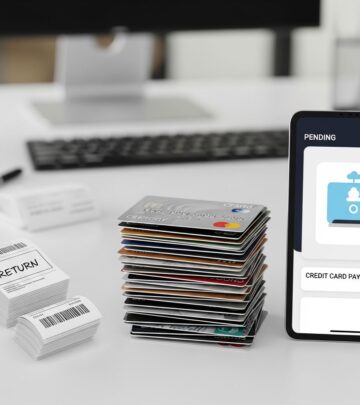
Provisional Credit: 5 Steps To Protect Your Funds
Discover how provisional credit protects your finances during disputes, with timelines, regulations, and practical tips for consumers.

Provisional credit serves as a temporary financial safeguard provided by banks or card issuers to account holders during investigations of disputed transactions. This mechanism ensures consumers retain access to their funds while resolution occurs, preventing immediate financial hardship from potential errors or fraud.
Defining Provisional Credit in Modern Banking
In the realm of electronic payments and card usage, provisional credit acts as a bridge between dispute initiation and final determination. It is a placeholder refund equivalent to the contested amount, applied promptly to restore balance availability. Primarily associated with debit cards, ATM withdrawals, and ACH transfers, it underscores consumer protections embedded in federal regulations.
This credit distinguishes itself by its conditional nature: it supports cash flow continuity but hinges on investigation outcomes. Financial institutions must adhere to strict protocols to issue it, balancing customer rights with operational integrity. For credit card users, while not always mandatory, many issuers extend similar courtesies voluntarily.
Common Triggers for Provisional Credit Issuance
Institutions activate provisional credit in response to specific dispute categories. These include unauthorized charges where a cardholder denies making a purchase, billing discrepancies such as incorrect amounts or duplicate postings, and merchant errors like processing canceled subscriptions.
- Unauthorized transactions: Charges appearing without cardholder consent, often signaling fraud.
- Billing errors: Overcharges, wrong totals, or items not received as described.
- Non-delivery of goods: Payments for services or products never provided.
- Recurring charges post-cancellation: Merchants failing to stop automatic debits after termination requests.
These scenarios prompt immediate reporting, triggering the provisional process to mitigate consumer losses.
The Step-by-Step Provisional Credit Process
Navigating a dispute begins with prompt notification to your financial provider. Here’s a detailed walkthrough of the typical workflow:
- Report the Dispute: Contact your bank via phone, app, or online portal within the required window—often 60 days for debit disputes under Regulation E.
- Initial Assessment: The institution performs a preliminary review to validate the claim’s plausibility, gathering transaction details like merchant info and timestamps.
- Credit Application: If eligible and unresolved within 10 business days, provisional credit posts to your account, matching the disputed sum.
- Ongoing Investigation: Banks delve deeper, contacting merchants, reviewing signatures, IP logs, or surveillance footage—extending up to 45 days or more for complex cases.
- Resolution: Favorable outcomes permanentize the credit; denials lead to reversal, potentially creating a negative balance if funds were spent.
This structured approach minimizes downtime, with credits often appearing within days.
Legal Framework: Regulation E and Consumer Safeguards
Regulation E, enforced by the Consumer Financial Protection Bureau (CFPB), mandates provisional credit for electronic fund transfers. For reported errors, banks must investigate promptly and provide credit by day 10 if unresolved, completing probes within 45 days (or 90 for new accounts).
| Aspect | Regulation E Requirement | Timeline |
|---|---|---|
| Dispute Reporting | Notify bank of error | Within 60 days of statement |
| Provisional Credit | Issue if unresolved | Within 10 business days |
| Full Investigation | Complete review | 45 days (90 for new accounts) |
| Resolution Notice | Inform customer | Within 3 days of conclusion |
Credit cards fall under the Fair Credit Billing Act (FCBA), offering similar but non-mandatory provisional protections. These laws shield against liability, capping debit fraud losses at $50 if reported timely.
Provisional Credit vs. Chargebacks: Key Distinctions
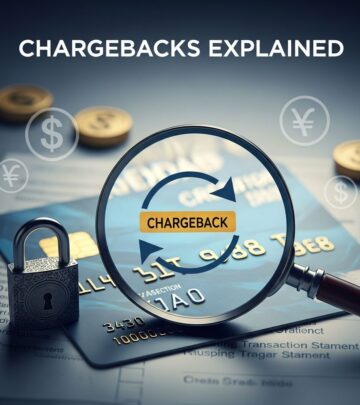
While related, provisional credit precedes chargebacks. The former is an interim bank-issued refund during inquiry; the latter is a permanent merchant fund reversal post-resolution in the consumer’s favor.
- Temporary Nature: Provisional credit can be clawed back; chargebacks are final.
- Merchant Impact: Chargebacks incur fees and dispute counts for sellers; provisional steps don’t directly penalize until confirmed.
- Scope: Applies to debit/ACH primarily; chargebacks span cards broadly.
Understanding this prevents confusion during disputes.
Risks and Responsibilities for Account Holders
Provisional credit isn’t risk-free. Spending credited funds prematurely risks reversal, leading to overdraft fees or debt if denied. Banks notify of potential reversals, but vigilance is key—monitor statements and avoid relying on it as guaranteed.
Best practices include:
- Documenting disputes with receipts, emails, and timelines.
- Reporting fraud immediately to limit liability.
- Reviewing accounts weekly for anomalies.
- Using virtual card numbers for online buys.
Business Perspectives: Operational Challenges
Merchants and finance teams face provisional credit’s ripple effects. Frequent issuances signal dispute trends, prompting process audits. Compliance demands robust tracking to contest invalid claims, as unresolved chargebacks from provisionals elevate costs.
Prevention strategies for businesses:
- Clear refund policies and confirmation emails.
- Accurate billing to curb errors.
- Swift dispute responses with evidence.
Real-World Scenarios and Outcomes
Consider a $500 unauthorized ATM withdrawal: Report it, receive provisional credit by day 10, and if fraud confirmed via CCTV, it sticks; otherwise, reversal applies. For a double-charged subscription, credit restores funds pending merchant verification.
In 2023, CFPB data showed millions in disputed EFTs resolved favorably, highlighting provisional credit’s role in 70% of quick refunds. Complex international fraud may extend timelines, underscoring documentation’s value.
Frequently Asked Questions (FAQs)
What happens if I spend the provisional credit and the dispute is denied?
The bank reverses it, potentially causing a negative balance plus fees. Treat it cautiously.
Does provisional credit apply to credit cards?
Not federally required like debit, but many issuers provide it voluntarily.
How long can a bank take to investigate?
Up to 45 days for most; 90 for new accounts under Reg E.
Can merchants dispute provisional credits?
Yes, during investigation, submitting evidence to support transaction validity.
Is provisional credit taxable?
No, as it’s a temporary adjustment, not income.
Empowering Your Financial Security
Provisional credit exemplifies banking’s commitment to consumer protection amid rising digital fraud. By understanding triggers, processes, and regulations, users can navigate disputes confidently, minimizing disruptions. Stay proactive: regular monitoring and swift reporting fortify your defenses.
References
- How Provisional Credit Works, Merchant Risks, & Prevention — Payblox. 2023. https://payblox.com/blog/how-provisional-credit-works/
- What is Provisional Credit? — Paylocity. 2024. https://www.paylocity.com/resources/glossary/provisional-credit/
- Understanding Provisional Credit (and How it Impacts your Cash Flow) — Brinks US. 2023. https://us.brinks.com/-/understanding-provisional-credit-and-how-it-impacts-your-cash-flow-
- What Is Provisional Credit and How Does It Work? — Citi. 2024. https://www.citi.com/credit-cards/understanding-credit-cards/what-is-provisional-credit
- Provisional Credit FAQs — Texas People Federal Credit Union. 2023-08-01. https://fwtpfcu.org/wp-content/uploads/2023/08/Provisional-Credit-FAQs.pdf
- Provisional Credit — Centennial Bank. 2024. https://www.mycentennial.bank/about/financial-education-resources/detail.html?title=provisional-credit
Similar Articles








Read full bio of medha deb