How to Help Protect Yourself Against Inflation
Master inflation management with proven strategies to protect your budget and savings.

Inflation can cause financial discomfort and uncertainty, but understanding how it works and implementing the right strategies can help you weather economic challenges and protect your wallet. Rising costs affect everything from groceries to housing, putting pressure on household budgets across the nation. The good news is that inflation is typically temporary, and with proper planning and knowledge, you can minimize its impact on your financial well-being. This comprehensive guide explores what inflation is, how it affects your finances, and provides actionable strategies to help you maintain financial stability during inflationary periods.
Understanding Inflation: The Basics
Inflation is the gradual increase in the cost of goods and services over time. As prices rise, the purchasing power of your money decreases, meaning each dollar buys less than it did before. This economic phenomenon affects everything you purchase, from basic necessities like food and utilities to major expenses like housing and transportation.
To measure inflation accurately, economists use price indexes, which track how prices change across different products and services. The most widely used measurement is the Consumer Price Index (CPI), which monitors price changes for approximately 80,000 goods and services that American consumers regularly purchase. The CPI provides a comprehensive snapshot of inflation trends across the economy.
It’s important to distinguish between inflation and individual price increases. If the cost of a dozen eggs rises by 10 cents over a month, that’s not necessarily inflation—it could be due to supply chain disruptions, seasonal factors, or market-specific issues. However, when you notice that the cost of eggs, cars, houses, and other goods are all rising simultaneously, that indicates broader inflationary pressure affecting the entire economy.
How Inflation Affects Interest Rates
Inflation and interest rates are closely interconnected. During periods of high inflation, interest rates tend to increase. The Federal Reserve, which controls monetary policy in the United States, uses interest rates as a crucial tool to manage economic activity and combat inflation.
When inflation is high, the Federal Reserve typically raises interest rates to slow down spending and economic activity. Higher interest rates make borrowing more expensive and difficult for both consumers and businesses. This increased cost of borrowing helps reduce spending in the economy, which can eventually lead to lower demand for goods and services. As demand decreases, supply chains have the opportunity to catch up with production, ultimately leading to a drop in prices.
Conversely, when economic activity slows or during periods of lower inflation, the Federal Reserve may lower interest rates. This makes borrowing cheaper and easier for people and businesses, encouraging spending and stimulating economic growth. However, interest rate changes don’t happen immediately—they often occur with a delay as the effects ripple through the economy. Understanding this relationship helps you anticipate changes to mortgage rates, credit card interest rates, and savings account yields.
Strategies to Beat Inflation
While inflation may sound daunting, you have numerous tools at your disposal to protect your finances and maintain your standard of living. Here are proven strategies to help you weather inflationary periods:
Review Your Budget
During inflationary periods, reviewing your budget becomes critical. Take time to examine your spending patterns and identify areas where you can reduce unnecessary expenses. Update your budget to prioritize essential expenses like food, shelter, utilities, and insurance. Look for discretionary spending that can be cut or reduced, such as entertainment, dining out, and subscription services. By reallocating money from non-essentials to essentials, you can stretch your budget further and maintain your financial security.
Change How You Spend Your Money
Flexibility becomes essential during periods of high inflation. Consider these practical spending adjustments:
- Switch to store brands instead of name brands for groceries and household items—quality is often comparable while prices are significantly lower
- Implement comparison shopping to find the best deals across different retailers
- Delay major expenses such as purchasing a new car, planning an expensive wedding, or undertaking home renovations
- Use coupons, cashback programs, and loyalty rewards to maximize savings on everyday purchases
- Buy generic or bulk items when possible to reduce per-unit costs
By being intentional about your spending and seeking alternatives, you can maintain your purchasing power without drastically reducing your quality of life.
Be Smart With How You Save
Your savings act as a crucial buffer against rising costs, making smart savings practices essential during inflation. Here are key approaches:
- Emergency Fund: Make sure you’re consistently setting money aside for emergencies. Financial experts recommend maintaining an emergency fund that covers three to six months of essential living expenses
- High-Yield Savings Accounts: Take advantage of rising interest rates by opening a high-yield savings account, which offers better rates of return than traditional savings accounts. During inflationary periods when the Federal Reserve raises interest rates, high-yield accounts become even more attractive
- Regular Review: Periodically review your savings goals and adjust them based on changing inflation rates and economic conditions
By actively managing your savings and taking advantage of favorable interest rate environments, you can grow your financial cushion while protecting against inflation’s erosive effects on your money’s value.
Invest Where It Makes Sense
If you’re already investing, you can generally continue with your current strategy, particularly regarding retirement accounts. However, inflation may warrant some adjustments to your investment approach:
- Diversification: Spread your risk across your financial portfolio by investing in a mix of asset classes including stocks, bonds, real estate, and commodities
- Risk Management: When diversified, if the value of a high-risk stock takes a significant plunge, your more stable investments can absorb some of the impact
- Long-Term Perspective: Maintain your long-term investment strategy rather than making reactive changes based on short-term market fluctuations
- Inflation-Protected Securities: Consider Treasury Inflation-Protected Securities (TIPS), which are specifically designed to protect against inflation
Strategic investing helps ensure that your wealth grows at a pace that keeps ahead of inflation, protecting your purchasing power over time.
Key Inflation Management Strategies Comparison
| Strategy | Primary Benefit | Best For | Time Frame |
|---|---|---|---|
| Budget Review | Identifies savings opportunities | Immediate cost reduction | Monthly |
| Flexible Spending | Stretches purchasing power | Day-to-day expenses | Ongoing |
| High-Yield Savings | Earn better interest returns | Emergency funds | Short to medium term |
| Diversified Investing | Reduces investment risk | Long-term wealth building | Long term |
Why Inflation Is Temporary
One of the most reassuring facts about inflation is that in most cases, it is temporary. Prices are likely to decrease over time as the economy adjusts and supply chains normalize. Understanding this temporary nature helps you maintain perspective and confidence in your financial planning. Rather than making drastic permanent changes to your lifestyle, view inflationary periods as temporary challenges requiring strategic adjustments.
Governments and central banks implement various tools and policies to manage inflation and bring it back to target levels. These efforts, combined with natural market adjustments, typically result in price stabilization and eventual decreases. This cyclical nature of inflation means that your long-term financial strategy remains valid even during inflationary periods.
Building Financial Confidence During Uncertain Times
Beyond the specific strategies mentioned, building overall financial confidence helps you navigate inflationary periods more effectively. This includes:
- Regularly monitoring your credit report to ensure accuracy and track your financial health
- Understanding your credit score and how inflation and interest rate changes affect your borrowing costs
- Maintaining organized financial records for budgeting and planning purposes
- Staying informed about economic trends and how they may impact your personal finances
- Seeking professional financial advice when needed for major decisions
By taking a comprehensive approach to financial management and staying educated about economic factors affecting your money, you can approach inflationary periods with confidence rather than anxiety.
Frequently Asked Questions
Q: What exactly is inflation and why does it happen?
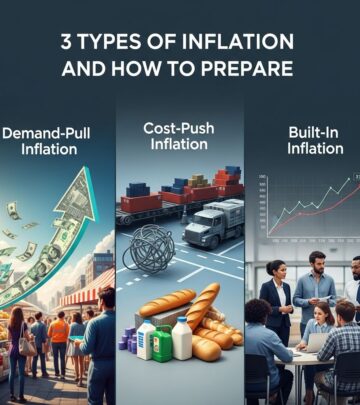
A: Inflation is the gradual increase in the cost of goods and services over time. It happens due to various factors including increased demand, rising production costs, supply chain disruptions, and monetary policy decisions. Moderate inflation is a normal part of a healthy economy, but high inflation can erode purchasing power and create financial challenges.
Q: How can I tell if inflation is rising in my area?
A: You can monitor inflation by tracking the Consumer Price Index (CPI) through government sources. More practically, you’ll notice inflation when prices for multiple categories of goods and services—groceries, utilities, housing, transportation—all increase simultaneously over a period of weeks or months.
Q: Is a high-yield savings account safe during inflation?
A: Yes, high-yield savings accounts are safe and FDIC-insured (up to $250,000 per account). They’re actually advantageous during inflation because higher interest rates mean better returns on your money, helping you keep pace with rising costs.
Q: Should I pay off debt faster during inflation?
A: Inflation can actually work in your favor with fixed-rate debt like mortgages, as you repay with money that’s worth less than when you borrowed it. However, for variable-rate debt like credit cards, higher interest rates during inflation make accelerated repayment more beneficial.
Q: How long does inflation typically last?
A: Inflation duration varies, but it’s usually temporary. Federal Reserve interventions and natural market adjustments typically bring inflation back to normal levels within months to a few years. Historical data shows that most inflationary periods eventually resolve as the economy stabilizes.
Q: Can I protect my investments from inflation?
A: Yes, diversifying your investment portfolio across different asset classes helps protect against inflation. Treasury Inflation-Protected Securities (TIPS), real estate, commodities, and stocks have historically provided inflation protection when properly diversified.
Q: What’s the relationship between inflation and job security?
A: While inflation itself doesn’t directly cause job loss, periods of high inflation often lead to Federal Reserve interest rate increases, which can slow economic growth and potentially impact employment. Building an emergency fund and maintaining marketable skills helps protect against this risk.
References
- How to Help Protect Yourself Against Inflation — Equifax. 2024. https://www.equifax.com/personal/education/personal-finance/articles/-/learn/how-to-prepare-for-inflation/
- Consumer Price Index (CPI) — U.S. Bureau of Labor Statistics. 2025. https://www.bls.gov/cpi/
- Federal Reserve Monetary Policy Tools — Board of Governors of the Federal Reserve System. 2025. https://www.federalreserve.gov/
- Treasury Inflation-Protected Securities (TIPS) — U.S. Department of the Treasury. 2025. https://www.treasurydirect.gov/indiv/products/prod_tips_glance.htm
- Emergency Fund Guidelines — Federal Deposit Insurance Corporation (FDIC). 2024. https://www.fdic.gov/
Similar Articles








Read full bio of medha deb