Pros and Cons of Moving to a Cashless Society
Explore the advantages and disadvantages of transitioning to a completely cashless economy.
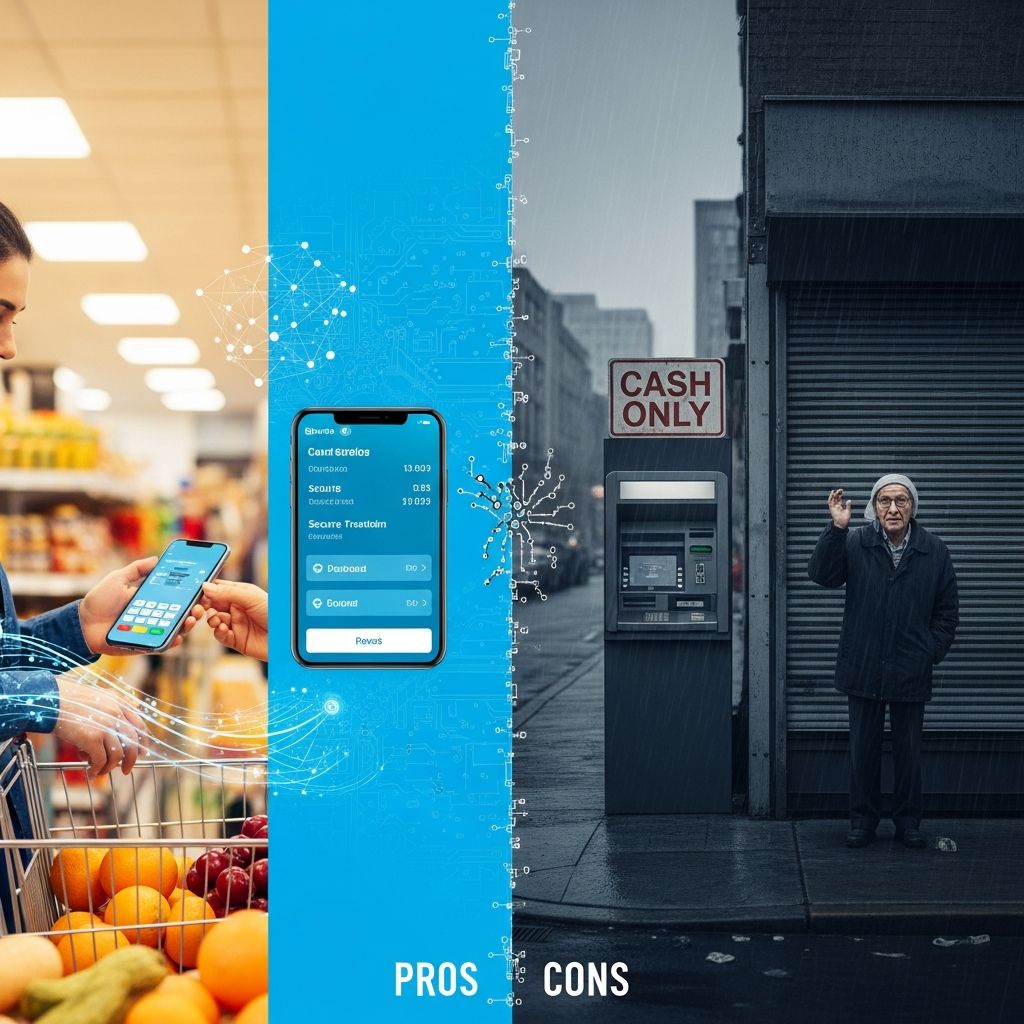
The shift toward a cashless society represents one of the most significant transformations in how we conduct financial transactions. As digital payment technologies continue to advance, more consumers and businesses are embracing cashless payment methods, from credit cards and mobile wallets to cryptocurrency and contactless transactions. Understanding both the advantages and disadvantages of this transition is essential for individuals, businesses, and policymakers as they navigate the evolving financial landscape.
What is a Cashless Society?
A cashless society is an economic system where payment transactions occur primarily through digital payment methods rather than physical currency. In such a system, individuals and businesses conduct transactions using credit cards, debit cards, mobile payment applications, online banking, and other electronic payment systems. While a completely cashless society doesn’t currently exist anywhere in the world, several countries like Sweden and China have made significant progress toward minimizing cash usage.
The Advantages of a Cashless Society
Moving toward a cashless economy offers numerous compelling benefits that can improve efficiency, security, and convenience for consumers and businesses alike.
Faster and More Convenient Transactions
One of the most immediate advantages of a cashless society is the significant improvement in transaction speed and convenience. Traditional cash transactions require time-consuming activities such as counting bills, making change, and processing payments through cash registers. Digital payment methods eliminate these steps entirely. Whether customers tap a contactless card, scan a QR code, or use a mobile wallet application, payments complete almost instantaneously. In fact, contactless payments are approximately 10 times faster than other forms of in-person payment, including cash transactions. This speed benefit is particularly valuable in high-traffic retail environments, public transportation systems, and busy service establishments where efficiently managing customer queues directly impacts customer satisfaction and operational efficiency.
Enhanced Financial Security
A cashless society significantly reduces vulnerability to theft and crime. Without physical cash in circulation, businesses and individuals face substantially lower risks of robbery, burglary, and other cash-related crimes. Employees handling transactions are no longer exposed to the security threats associated with managing large quantities of physical currency. Additionally, cash that individuals carry in wallets and purses cannot be stolen if it doesn’t exist. Countries that have transitioned toward cashless economies, such as China, have documented noticeable declines in cash-related crimes as fewer people carry physical money.
Improved Financial Tracking and Budgeting
Digital transactions create automatic financial records that benefit both individuals and organizations. Every digital payment generates a documented transaction history, enabling individuals to easily track expenses, analyze spending patterns, and create more effective budgets. Unlike cash, which can be spent without documentation and is easily lost, digital payments provide clear statements and comprehensive transaction histories. Many budgeting applications and banking platforms leverage these digital records to provide real-time spending insights and personalized financial recommendations. This transparency helps consumers make more informed financial decisions and identify areas where they can reduce unnecessary spending.
Reduced Operational Costs for Businesses
Transitioning to a cashless payment system delivers substantial cost savings for businesses across multiple operational areas. Traditional cash management involves significant expenses including secure storage, armored transportation, security personnel, bank deposits, cash counting equipment, and cash drawer maintenance. The U.S. business sector spends billions of dollars annually on these labor-intensive and security-intensive cash management processes. By eliminating manual cash handling, businesses can redirect resources toward more productive activities that enhance customer experience and generate revenue. Retailers, restaurants, banks, and service providers increasingly recognize these efficiency gains and the long-term financial benefits of adopting digital payment systems.
Easier International Travel and Commerce
In a traditional economy, international travel requires currency exchange, which involves fees, unfavorable exchange rates, and logistical complexity. A cashless society eliminates these barriers by enabling travelers to make purchases anywhere in the world using mobile phones or cards without needing to physically exchange currency. This convenience extends to international e-commerce, making it simpler for consumers to purchase products from foreign retailers and for businesses to expand into international markets.
Crime Prevention and Financial Transparency
Digital payment systems create permanent electronic records of all transactions, making money laundering, tax evasion, and other financial crimes significantly more difficult to conceal. Cash, by contrast, is notoriously difficult to track and trace, making it the currency of choice for illegal activities. Countries that have successfully implemented cashless systems report substantial reductions in money laundering incidents, burglary, and corruption. The automatic paper trail generated by digital transactions enables governments to identify suspicious financial activities more effectively and helps law enforcement combat financial crimes.
Health and Safety Benefits
The COVID-19 pandemic highlighted another significant advantage of cashless transactions: reduced physical contact. Digital payments eliminate the need to handle physical currency that may carry pathogens or bacteria. This reduced contact in everyday economic transactions can help minimize the potential spread of infectious diseases during future health emergencies, making cashless systems a more hygienic payment method for both consumers and merchants.
The Disadvantages of a Cashless Society
Despite the numerous advantages, transitioning to a completely cashless society presents significant challenges and drawbacks that must be carefully considered.
Financial Exclusion and Accessibility Issues
One of the most serious concerns regarding a cashless society is the risk of financial exclusion for vulnerable populations. Elderly individuals, people with disabilities, low-income communities, and those without access to reliable technology or banking infrastructure may struggle to participate in a completely cashless economy. These populations often lack digital literacy, access to smartphones, internet connectivity, or bank accounts. Additionally, certain communities in rural areas may not have adequate infrastructure to support digital payment systems. A rapid transition to cashless payments could deepen existing social inequalities and exclude millions of people from essential financial services and economic participation.
Cybersecurity and Data Privacy Concerns
Relying entirely on digital payment systems creates significant cybersecurity vulnerabilities. Hackers, cybercriminals, and malicious actors continuously develop sophisticated methods to breach digital payment systems, steal financial information, and commit fraud. Large-scale data breaches can expose millions of individuals’ financial and personal information. Furthermore, a cashless society raises serious privacy concerns, as digital transactions create comprehensive records of personal spending habits, locations, and financial behaviors. Governments and corporations could potentially access and monitor these detailed financial records, raising legitimate concerns about surveillance and personal privacy.
Loss of Spending Control and Increased Debt
Physical cash provides a tangible, visual representation of available funds that helps individuals maintain better control over spending. When you hold cash in your wallet, you can physically see how much money you have remaining and make spending decisions accordingly. Digital payments, by contrast, can create a disconnect between spending and available funds, making it easier for consumers to lose track of expenditures and overspend. This psychological distance from actual money can contribute to increased debt accumulation and financial difficulties, particularly among younger consumers or those with limited financial discipline.
System Reliability and Technical Failures
A cashless society depends entirely on functioning digital infrastructure, electronic systems, and internet connectivity. Technical failures, system outages, software glitches, or natural disasters that damage infrastructure could paralyze an entire economy with no physical cash available as a backup payment method. Unlike cash, which remains usable during power outages and technological failures, digital payment systems become completely unavailable when infrastructure fails. This vulnerability creates significant risks for both consumers and businesses.
Credit Card Processing Fees
While cashless systems reduce some business costs, they introduce other expenses that can be substantial. Credit card processing fees typically range from 1.5% to 3.5% per card-based transaction, which can accumulate into significant costs for businesses processing thousands of transactions daily. These fees reduce profit margins and may ultimately be passed on to consumers through higher prices.
Loss of Financial Autonomy
A completely cashless society grants unprecedented control to financial institutions and governments over individual transactions. Banks and payment processors could theoretically freeze accounts, restrict transactions, or deny access to funds based on political, social, or other considerations. This concentration of financial control raises concerns about personal autonomy and freedom, particularly in societies with authoritarian governments or unstable political environments.
Comparison of Key Considerations
| Aspect | Cashless Advantages | Cashless Disadvantages |
|---|---|---|
| Transaction Speed | 10x faster than cash payments | Depends on system functionality |
| Security | Reduced physical theft and robbery | Cybersecurity risks and data breaches |
| Financial Tracking | Automatic records and transparency | Privacy and surveillance concerns |
| Accessibility | Convenient for tech-savvy users | Excludes elderly, disabled, rural populations |
| Business Costs | Reduced cash management expenses | Credit card processing fees (1.5-3.5%) |
| System Reliability | Generally efficient operations | Vulnerable to outages and failures |
Who Benefits Most from a Cashless Society?
Tech-Savvy and Urban Consumers
Young consumers, particularly those in urban areas, represent the primary beneficiaries of cashless systems. These demographics possess strong digital literacy, regular access to technology, reliable internet connectivity, and comfort with digital payment platforms. For this population, cashless transactions offer convenience, speed, security, and seamless integration with subscription services and e-commerce platforms.
Retail and Service Businesses
Merchants, retailers, restaurants, and service providers benefit substantially from digital payment adoption. These businesses experience lower cash-handling costs, reduced theft and security risks, faster checkout processes, simplified accounting procedures, and streamlined tax filing. Digital payment systems also enable businesses to implement loyalty programs, targeted marketing, and data-driven customer insights.
Governments and Financial Institutions
Governments benefit from improved tax collection, more efficient economic policy implementation, and reduced money laundering. Financial institutions gain from increased transaction volume and improved fraud detection capabilities.
Current Progress Toward Cashless Economies
Several countries have made significant progress toward cashless societies. Sweden, often cited as the leading example, has dramatically reduced cash usage through widespread adoption of digital payment systems. China has similarly transitioned toward a predominantly digital payment economy, with mobile payment platforms dominating consumer transactions. In the United States, seven out of ten consumers report they can manage without cash, while approximately half of all merchants expect to discontinue accepting cash by 2025, indicating rapid progress toward cashless commerce.
Frequently Asked Questions
Q: Will a completely cashless society ever be fully implemented?
A: While some countries have significantly reduced cash usage, a completely cashless society remains unlikely in the foreseeable future. Most economists and policymakers advocate for hybrid payment models that offer both digital and cash payment options to ensure financial inclusion and system resilience.
Q: How can vulnerable populations adapt to a cashless society?
A: Governments and financial institutions must implement inclusive policies including financial literacy programs, accessible digital payment infrastructure for rural areas, alternative payment methods for those without technology access, and protections for vulnerable populations during the transition period.
Q: What cybersecurity measures protect digital payments?
A: Modern digital payment systems employ encryption, tokenization, two-factor authentication, fraud detection algorithms, and security protocols to protect financial information. However, no system is completely immune to sophisticated cyber attacks.
Q: Could a digital payment system failure paralyze the economy?
A: Yes, widespread system failures could create significant economic disruption if no cash backup exists. This risk underscores the importance of maintaining redundant systems, backup infrastructure, and adequate physical cash reserves during any transition to cashless economies.
Q: What’s the difference between cashless and digital payments?
A: A cashless society refers to an economy where physical currency is eliminated entirely, while digital payments represent any electronic transaction method used within an economy that may still retain physical cash as an option.
Conclusion
The transition to a cashless society presents compelling advantages including faster transactions, enhanced security, improved financial tracking, reduced business costs, and increased transparency. However, significant drawbacks including financial exclusion, cybersecurity vulnerabilities, privacy concerns, and system reliability risks cannot be ignored. Rather than pursuing a completely cashless economy, most experts recommend hybrid payment models that offer both digital and physical cash options. This balanced approach preserves the efficiency and security benefits of digital payments while maintaining financial inclusion, system resilience, and personal autonomy. As technology continues to evolve and societies adapt to digital financial systems, careful policy development and inclusive implementation strategies remain essential to ensure that the transition benefits all populations while minimizing negative consequences.
References
- The Pros and Cons of a Cashless Society — Wavetec. 2024. https://www.wavetec.com/blog/pros-cons-of-cashless-society/
- A Cashless Society: The Pros and Cons — Flex Cutech. 2024. https://blog.flexcutech.com/blog/a-cashless-society-the-pros-and-cons
- What is a Cashless Society? What Are the Pros and Cons? — Chime. 2024. https://www.chime.com/blog/top-benefits-of-going-cashless/
- A Cashless Society: What Are the Pros and Cons? — Unbiased. 2024. https://www.unbiased.co.uk/discover/personal-finance/budgeting/a-cashless-society-what-are-the-pros-and-cons
- Cashless Society: What Are the Pros and Cons? — Ready Credit Corp. 2024. https://www.readycreditcorp.com/resources/blog/cashless-society-pros-cons/
- The Pros and Cons of a Cashless Society in the US: A Comprehensive Look — Indeed Flex. 2024. https://indeedflex.com/blog/for-flexers/the-pros-and-cons-of-a-cashless-society-in-the-us-a-comprehensive-look/
- How Close Are We to a Cashless Society? 2025 Guide — Tech.co. 2025. https://tech.co/pos-system/cashless-society-stats-pros-cons
Similar Articles








Read full bio of medha deb