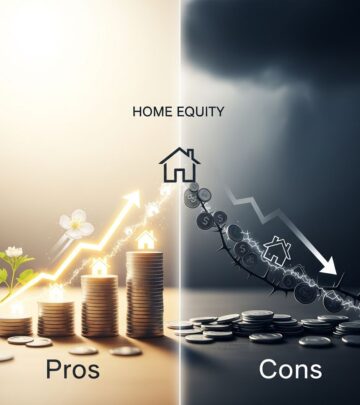
Pros and Cons of Home Equity Line of Credit (HELOC)
Understand the advantages and disadvantages of HELOCs to make informed borrowing decisions.

Understanding Home Equity Lines of Credit (HELOCs)
A home equity line of credit (HELOC) is a flexible borrowing option that allows homeowners to tap into the equity they’ve built in their properties. Unlike traditional home equity loans that provide a lump sum upfront, a HELOC functions more like a credit card—you’re approved for a maximum amount but can borrow only what you need, when you need it. This financial tool has gained popularity among homeowners seeking flexible access to capital for various purposes, from home improvements to debt consolidation. However, like any financial product, HELOCs come with both significant advantages and notable drawbacks that require careful consideration before borrowing.
The Advantages of a Home Equity Line of Credit
Lower Interest Rates
One of the most compelling reasons homeowners choose HELOCs is the favorable interest rates they offer. Because a HELOC is secured by your home—meaning your property serves as collateral—lenders can charge considerably less interest than they would for unsecured debt like credit cards or personal loans. At current market conditions, HELOCs typically feature interest rates around 7.94%, significantly lower than the double-digit rates common on credit cards. This cost advantage can result in substantial savings, especially when borrowing large amounts or maintaining the debt over extended periods.
Flexibility in Borrowing and Repayment
HELOCs provide exceptional flexibility that appeals to homeowners with varying financial needs. Rather than receiving a large lump sum that you may not immediately need, you access funds as required during the draw period—typically five to ten years. This means you only pay interest on the money you’ve actually withdrawn, not on your entire credit limit. For homeowners planning ongoing expenses or uncertain about their total funding needs, this flexibility is invaluable. Additionally, the repayment structure offers advantages; if you prefer to spend gradually and pay only for what you’ve borrowed when you’ve borrowed it, a HELOC provides better terms than a fixed home equity loan, allowing you to manage cash flow more effectively.
Possible Tax Deduction on Interest
Under certain circumstances, homeowners may be able to deduct the interest paid on a HELOC from their federal income taxes. If you use HELOC funds for home improvements or to purchase adjacent property, the interest may qualify as tax-deductible mortgage interest. This tax advantage can meaningfully reduce your borrowing costs over time, though it’s important to consult with a tax professional to determine your specific eligibility, as tax laws contain limitations and specific requirements.
Potential Boost to Credit Score
Opening a HELOC can positively impact your credit score in several ways. Adding a new line of credit demonstrates creditworthiness to lenders, and maintaining a low balance relative to your credit limit improves your credit utilization ratio. As long as you manage the account responsibly, this new credit line can enhance your overall credit profile. While opening any new account typically causes a small, temporary dip in your score, this decline is usually short-lived, and your score should recover relatively quickly as you establish a positive payment history.
The Disadvantages of a Home Equity Line of Credit
Variable Interest Rates Create Payment Uncertainty
Unlike home equity loans, which come with fixed interest rates, HELOCs feature variable rates that fluctuate based on economic conditions, Federal Reserve monetary policy, and other market factors. This means your interest rate—and consequently your monthly payment—can increase substantially over time. What begins as a manageable monthly payment can quickly become unaffordable if rates rise significantly. This unpredictability can turn your payments into what financial experts describe as a “financial roller coaster,” transforming a bill you can handle into unmanageable debt that puts your home at serious risk. Borrowers must carefully budget for the possibility of substantially higher payments in the future.
Your House Serves as Collateral
While the collateral requirement is precisely why HELOCs offer lower interest rates, it also represents a significant risk. A HELOC is a secured loan, meaning your home backs the debt. If you fail to make your monthly payments, the lender has the legal right to foreclose on your property and seize it to recover the unpaid balance. This transforms your home—typically your most valuable asset and place of residence—into security for the loan. The foreclosure risk is particularly concerning if you experience job loss, medical emergencies, or other financial hardships that make repayment difficult.
Diminished Equity Cushion
When you borrow through a HELOC, you’re depleting the equity cushion in your home. If property values decline after you’ve borrowed against your equity, you could find yourself “underwater”—owing more than your home is worth. This situation severely limits your financial flexibility and can make it difficult or impossible to sell your property without bringing cash to the closing table. Additionally, if your home represents your largest asset, tying up substantial equity in a HELOC may limit your ability to borrow additional funds in the future, since lenders consider your net worth when evaluating creditworthiness.
Easy to Run Up Balances Quickly
The draw period structure of many HELOCs—which often allows interest-only payments—can create a dangerous psychological trap. Because you’re only paying interest on borrowed funds rather than principal, it’s deceptively easy to access cash without fully considering the financial ramifications. Borrowers may develop a false sense of having bottomless funds available, leading to excessive borrowing. When the repayment period begins, this accumulated debt suddenly becomes fully amortized, causing monthly payments to spike dramatically. Many borrowers experience unwelcome surprises when they transition from the draw period to the repayment period, having failed to budget for the substantial increase in their monthly obligations.
Additional Costs and Fees Associated with HELOCs
Beyond interest payments, HELOCs often come with various fees that increase the total cost of borrowing. Many lenders charge annual maintenance fees simply to keep the account open. Some HELOCs include prepayment penalties if you pay off the line early, effectively penalizing you for becoming debt-free quickly. Additionally, if you wish to convert your variable-rate HELOC to a fixed rate—a strategy many borrowers pursue to protect against rising rates—lenders frequently charge conversion fees. These various costs can add up substantially and should be carefully evaluated when comparing HELOC options.
When a HELOC Makes Financial Sense
HELOCs work best for homeowners with specific characteristics and financial situations. They’re ideal if you require an indefinite amount of funds or need access to capital over an extended period. Homeowners planning major renovations, ongoing medical expenses, or other long-term funding needs often benefit from HELOC flexibility. The funds should ideally go toward improving your home or your financial profile—such as home improvements that increase property value or debt consolidation that reduces overall interest expenses.
A HELOC is particularly advantageous for disciplined borrowers who can resist the temptation to over-borrow and who carefully budget for potential rate increases. Homeowners with stable incomes and strong financial habits are better positioned to manage the risks associated with variable rates and the temptation to accumulate excessive debt.
HELOC vs. Home Equity Loan: Key Differences
| Feature | HELOC | Home Equity Loan |
|---|---|---|
| Interest Rate | Variable | Fixed |
| Payment Structure | Borrow as needed; interest-only during draw period | Lump sum; principal and interest payments |
| Predictability | Unpredictable payments | Predictable, consistent payments |
| Best For | Ongoing or uncertain funding needs | Known, one-time expenses |
| Fees | Annual fees, prepayment penalties, conversion fees | Closing costs, fixed fees |
Critical Considerations Before Borrowing
Before pursuing a HELOC, homeowners should honestly assess their financial habits and circumstances. Consider whether you have the discipline to avoid over-borrowing despite having access to substantial funds. Evaluate your job security and income stability—can you afford higher payments if rates increase? Analyze your current debt load; adding a HELOC will increase your total debt, potentially stretching your budget too thin when combined with existing mortgage payments.
Also consider the nature of your funding needs. If you require a specific, known amount for a defined purpose, a traditional home equity loan with fixed payments and interest rates might better suit your situation. However, if you need flexible access to capital over time, a HELOC’s advantages may outweigh its risks—provided you’re a responsible borrower capable of managing variable payments.
Frequently Asked Questions About HELOCs
Q: What is the difference between the draw period and the repayment period on a HELOC?
A: The draw period (typically 5-10 years) is when you can access funds and often make interest-only payments. The repayment period begins after the draw period ends, at which point you can no longer borrow new funds and must begin paying both principal and interest on your outstanding balance. Payments often increase significantly during this phase.
Q: Can I deduct HELOC interest on my taxes?
A: Possibly. If you use HELOC funds for home improvements or to purchase adjacent property, the interest may qualify as tax-deductible mortgage interest. However, if you use the funds for personal expenses like vacations or education, the interest is not deductible. Consult a tax professional to determine your specific eligibility.
Q: What happens if I can’t make my HELOC payments?
A: If you default on HELOC payments, the lender can foreclose on your home to recover the unpaid balance. This means you could lose your house entirely. It’s crucial to ensure you can afford payments, especially accounting for potential rate increases.
Q: How much can I borrow with a HELOC?
A: The amount depends on your home’s equity and the lender’s requirements. Generally, if you own a sizable portion of your home outright, you may access five- or even six-figure amounts. Most lenders require you to maintain at least 15-20% equity in your home.
Q: Are HELOCs better than credit cards?
A: HELOCs typically offer significantly lower interest rates than credit cards (around 7.94% vs. double-digit rates), making them cheaper for borrowing large amounts. However, they put your home at risk, while credit cards don’t. The choice depends on your specific needs and risk tolerance.
Q: Can I convert a HELOC’s variable rate to a fixed rate?
A: Many lenders offer fixed-rate conversion options on HELOCs, which can protect you from rising rates. However, lenders typically charge fees for this conversion, so carefully weigh the costs against the benefits.
References
- Pros and Cons of Home Equity Line of Credit (HELOC) — Bankrate. 2025. https://www.bankrate.com/home-equity/pros-cons-of-home-equity-lines/
- HELOC vs. Home Equity Loan: What’s The Difference? — Bankrate. 2025. https://www.bankrate.com/home-equity/home-equity-loan-vs-line-of-credit/
- What Is A HELOC (Home Equity Line Of Credit)? — Bankrate. 2025. https://www.bankrate.com/home-equity/what-is-heloc/
- Are Home Equity Loans Or HELOCs A Good Idea Now? — Bankrate. 2025. https://www.bankrate.com/home-equity/home-equity-loans-are-a-good-deal/
- Reasons You Shouldn’t Tap Your Home Equity — Bankrate. 2025. https://www.bankrate.com/home-equity/things-to-consider-before-using-home-equity/
- HELOC pros and cons to know this May — CBS News. 2025. https://www.cbsnews.com/news/heloc-pros-and-cons-to-know-may-2025/
Similar Articles








Read full bio of medha deb