Pros and Cons of Holiday Shopping Layaway Plans
Discover the advantages and pitfalls of layaway plans for holiday shopping to make smarter financial decisions this season.
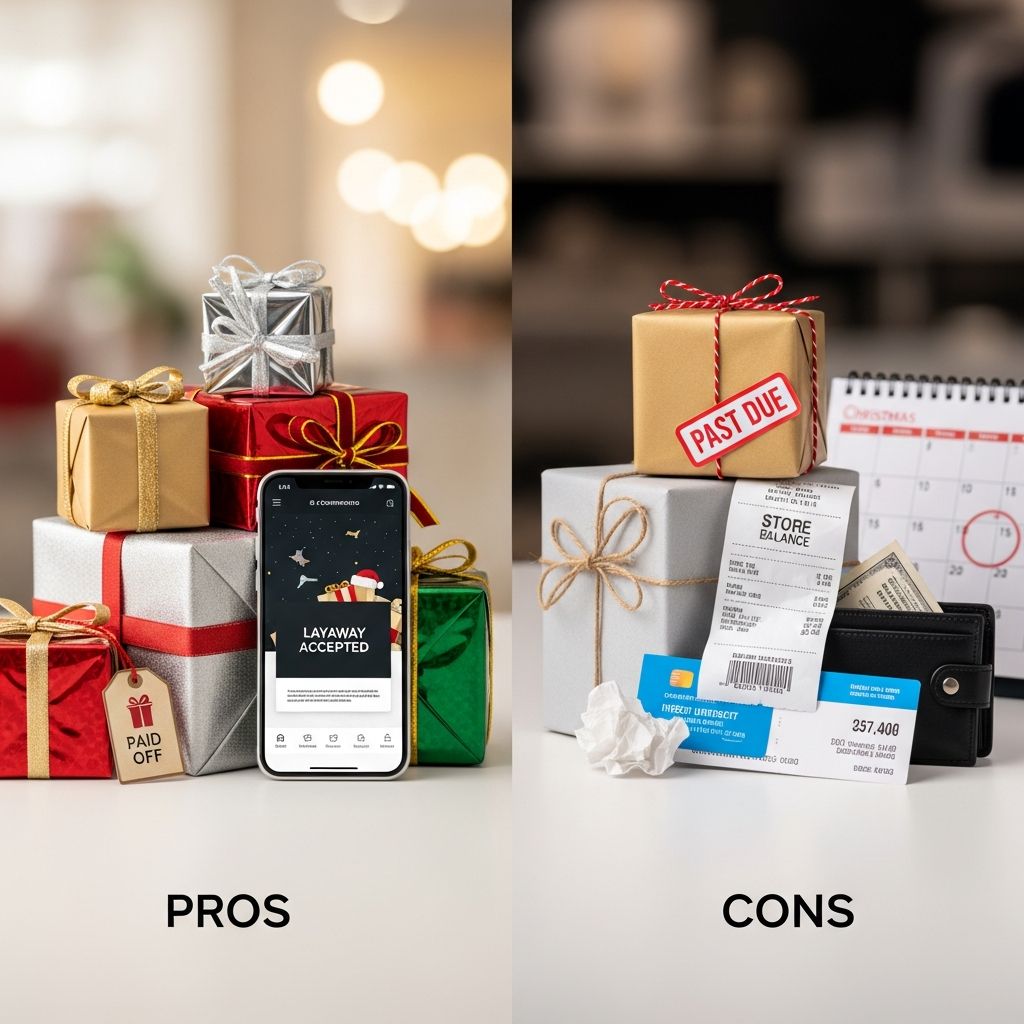
Layaway plans allow shoppers to reserve holiday gifts with a down payment and pay in installments without interest, providing a debt-free alternative to credit cards for those on tight budgets.
What Is a Layaway Plan?
A layaway plan is a payment arrangement where you select an item at a store, make an initial deposit (typically 10% or more), and the retailer holds the merchandise until you pay the full amount through scheduled installments. Once paid off, you take the item home. Unlike credit, there’s no loan involved—you don’t get the item until fully paid, avoiding debt accumulation.
Originating decades ago, layaway was popular for big-ticket holiday items but declined with credit card rise. Today, it’s offered by select retailers like Walmart (seasonally), Kmart, Sears, GameStop, T.J. Maxx, and Burlington Coat Factory, mainly in-store.
Key features include no credit checks, making it accessible for those with poor credit or maxed cards, especially amid rising holiday spending—averaging $650 per consumer per National Retail Federation surveys.
Pros of Layaway Plans for Holiday Shopping
Layaway shines for budget-conscious shoppers during holidays, offering structure without high costs of borrowing.
- No Interest Charges: Unlike credit cards (average 20%+ APR), layaway is interest-free, saving money on financed purchases.
- Manageable Payments: Spread costs over weeks (e.g., biweekly at Sears/Kmart), easing holiday budget strain without lump-sum outlay.
- No Credit Check or Debt: Ideal for unbanked or credit-challenged individuals; payments build savings discipline, not debt.
- Item Secured: Locks in availability and current price, preventing stockouts during peak holiday demand.
- Prevents Overspending: Since you can’t take items home early, it enforces budgeting for affordable purchases only.
Cons of Layaway Plans
Despite benefits, layaway has drawbacks that can inflate costs or limit flexibility.
- Fees Accumulate: Non-refundable setup fees ($5-$10), cancellation ($5-$25), restocking, or late fees add up, potentially exceeding credit card interest for short terms.
- Locked Prices Miss Sales: Committed to original price; no adjustments for post-layaway discounts, frustrating during Black Friday or clearance events.
- Cancellation Penalties: Lose deposit/fees if unable to complete; some stores offer store credit only.
- Strict Schedules and Delays: Fixed terms (e.g., Walmart’s Dec. 14 pickup), in-store only at many retailers, no immediate possession.
- Limited Availability: Not all stores offer it; declining popularity as buy now pay later (BNPL) rises.
How Layaway Plans Work
Process varies by retailer but follows standard steps:
- Select Item: Choose qualifying merchandise (often $50+ minimum, excludes some categories like electronics at Walmart).
- Down Payment: 10%+ deposit to reserve.
- Sign Agreement: Agree to payment plan (e.g., 30 days at Marshalls, biweekly elsewhere).
- Make Payments: In-store or online where available; track balance.
- Pickup: Full payment required before possession; extensions rare.
Examples: Walmart charges $10 activation (non-refundable if canceled); Marshalls $5 fee, 30-day term.
Layaway vs. Buy Now, Pay Later (BNPL)
BNPL services like Affirm, Afterpay, Klarna let you take items immediately, paying in 4+ installments, often interest-free short-term but with fees.
| Feature | Layaway | BNPL |
|---|---|---|
| Possession | After full payment | Immediate |
| Interest | None | Usually none short-term; possible late fees |
| Credit Check | No | Sometimes soft check |
| Fees | Setup/cancellation ($5-25) | Late fees ($7+), service fees |
| Flexibility | Store-specific, in-store | Online/widespread, multi-retailer |
| Risk | Forfeit fees if cancel | Debt if miss payments, impacts credit |
BNPL grows as ‘new layaway’—Walmart shifted to it for 2021 holidays, prioritizing instant gratification despite risks. Layaway suits strict budgets; BNPL tempts overspending with easy access.
Layaway vs. Credit Cards
Credit cards offer immediate purchase but accrue interest if not paid off (average $1,000+ holiday debt per household).
- Layaway Advantages: No debt/interest, builds savings habit.
- Credit Advantages: Rewards, protections, price matching; 0% intro APR cards beat layaway fees.
- Tip: Calculate total costs—layaway fees may exceed low-APR card interest.
Stores Offering Layaway Programs
- Walmart: Seasonal, $50+ items, $10 fee, ends mid-Dec.
- Sears/Kmart: Biweekly payments.
- T.J. Maxx, Marshalls: 30 days, $5 fee.
- GameStop, Burlington Coat Factory: In-store only.
- Others: Big Lots, pawn shops with flexible terms.
Tips for Using Layaway Successfully
- Read terms: Confirm fees, timelines, refunds.
- Budget strictly: Limit to 1-2 plans to avoid overload.
- Shop sales first: Layaway post-discount to lock savings.
- Track payments: Use apps/reminders for due dates.
- Compare alternatives: BNPL or cards if fees high.
- Start early: Secure items before holiday rushes.
Frequently Asked Questions (FAQs)
What is the minimum purchase for layaway?
Typically $50+, varies by store (e.g., Walmart).
Are layaway fees refundable?
Setup fees often non-refundable; cancellation may forfeit deposit.
Can I do layaway online?
Limited; mostly in-store at chains like Marshalls.
How long do I have to pay off layaway?
30 days (Marshalls) to seasonal deadlines (Walmart Dec. 14).
Is layaway better than BNPL for holidays?
Layaway avoids debt but delays possession; BNPL faster but riskier.
What happens if I cancel layaway?
Pay cancellation fee ($5-25), lose deposit; some give store credit.
Layaway empowers disciplined holiday shopping but demands careful planning to sidestep hidden costs.
References
- Are Holiday Layaway Programs Right for You? — A+ Federal Credit Union. 2023. https://aplusfcu.org/blog/holiday-layaway-programs-right
- The Best Layaway Plans: Benefits, Drawbacks, and How to Use Them — Idaho Pawn & Gold. 2024. https://idahopawn.com/blogs/blog/the-best-layaway-plans-benefits-drawbacks-and-how-to-use-them
- Holiday Shopping: The Pros & Cons of Traditional Layaway and New Buy Now Pay Later Services — Checkbook.org. 2023-10-15. https://www.checkbook.org/national/consumers-notebook/articles/Holiday-Shopping-The-Pros-and-Cons-of-Traditional-Layaway-and-New-Buy-Now-Pay-Later-Services-7412
- Buy now, pay later is the new layaway: What are the pros and cons? — Fox Business. 2021-10-20. https://www.foxbusiness.com/lifestyle/buy-now-pay-later-layaway-holiday-season
- Buy Now Pay Later vs. Layaway vs. Credit Card — F&M Bank. 2024. https://www.fmbankva.com/buy-now-pay-later-layaway-credit-card/
- Layaway Plans Can Have Added Costs — Consumer Reports. 2023. https://www.consumerreports.org/retail-stores/buyer-beware-layaway-plans-can-have-added-costs/
Similar Articles








Read full bio of medha deb