Certificate Of Deposit Investing: Expert Guide For 2025
Discover the advantages and disadvantages of certificate of deposit investing for your financial goals.
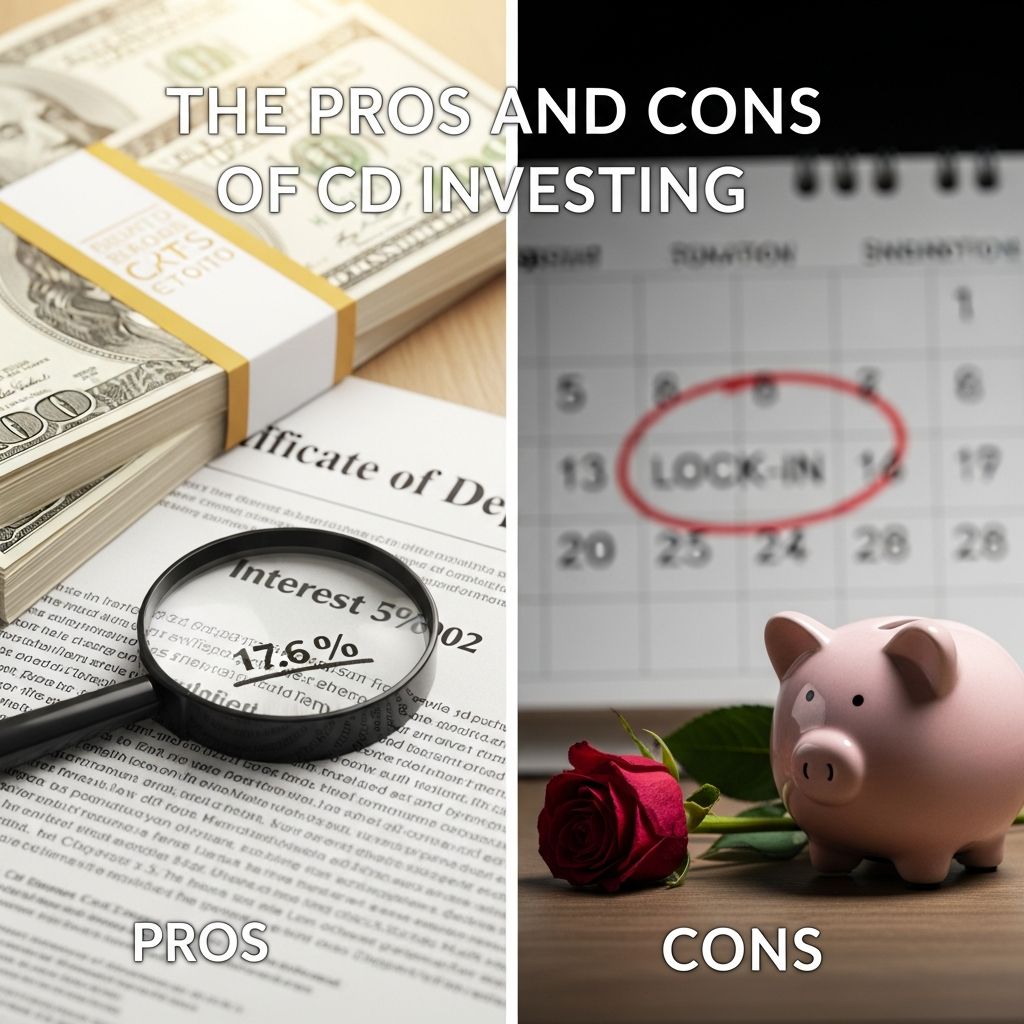
Understanding Certificate of Deposit Investing
Certificates of deposit (CDs) are financial instruments that allow you to deposit money with a bank or credit union for a fixed period, earning a guaranteed interest rate in return. Unlike regular savings accounts where you can withdraw funds anytime, CDs lock your money away for a predetermined term, typically ranging from three months to five years. In exchange for this commitment, financial institutions reward you with higher interest rates than traditional savings accounts. Understanding the advantages and disadvantages of CD investing is essential for making informed financial decisions that align with your goals and circumstances.
The Advantages of CD Investing
1. Fixed, Predictable Returns
One of the most compelling advantages of CD investing is the certainty of returns. Unlike other types of deposit accounts or market-based investments, fixed-rate CDs provide a specific annual percentage yield (APY) for the entire term of your investment. This predictability allows you to calculate precisely how much interest you will earn before your CD matures. Even if interest rates in the broader economy decline significantly, your CD will continue earning the same high APY you locked in when you opened the account. This guaranteed rate of return makes it remarkably easy to plan for future financial needs and determine exactly how much money you’ll have available when the CD reaches maturity.
2. Enhanced Safety and FDIC Protection
CD investing offers substantial safety benefits that appeal to conservative investors and those seeking to preserve capital. Most CDs are insured by the Federal Deposit Insurance Corporation (FDIC) up to $250,000 per institution, per depositor, and per ownership category. This federal insurance means your principal investment is protected against bank failure, providing peace of mind that your money is secure. For investors who prioritize capital preservation over aggressive growth, CDs represent one of the safest investment vehicles available. The combination of FDIC protection and guaranteed returns eliminates market risk, making CDs ideal for retirees, conservative investors, and anyone who cannot afford stock market volatility.
3. Competitive Yields Compared to Savings Accounts
CDs offer substantially higher interest rates than traditional savings accounts, making them more attractive for savers seeking better returns on their money. Banks are willing to pay CD investors higher yields in exchange for committing their funds for a set term. Because CD account holders cannot withdraw their money at a moment’s notice like savings account holders can without penalties, CDs are more valuable to banks than savings deposits. As of early August 2025, while the national average savings rate stands at 0.57 percent, the national average rate for a one-year CD is 2.03 percent, demonstrating the significant yield advantage. Top one-year CDs currently pay over 4.00% APY compared to the national average of 1.93% APY—nearly double the interest on your money.
4. Diverse CD Options and Flexibility
The CD market offers various products to meet different investor needs and preferences. Beyond traditional fixed-rate CDs, banks now offer step-up CDs and bump-up CDs, which allow for rate increases during their terms. These options provide flexibility if you’re concerned about rising interest rates. Additionally, add-on CDs allow you to make further deposits after opening the account, enabling you to increase your investment strategically over time. This variety of CD types ensures that investors can find products tailored to their specific financial situations and rate expectations.
Advantages Over Savings Accounts
CDs provide several distinct advantages when compared directly to savings accounts:
- Higher interest rates: CDs typically offer significantly higher interest rates than regular savings accounts, compensating you for limited access to your funds.
- Fixed returns: Since CD rates are locked in for a specific period, you avoid rate fluctuations and can calculate exactly how much you’ll earn.
- Low risk and stability: With FDIC insurance protection up to $250,000, CDs provide secure, stable returns for your investments.
The Disadvantages of CD Investing
1. Early Withdrawal Penalties
One of the most significant drawbacks of CD investing is the penalty for early withdrawal. CDs lock your money away for a specific term, and you cannot easily access your funds if an unanticipated financial need arises. If you need to withdraw your money before the CD matures, you’ll typically face a substantial penalty that can significantly reduce or even eliminate your interest earnings. This illiquidity can be problematic if your financial circumstances change unexpectedly, such as a medical emergency or job loss. Before committing to a CD, ensure you have adequate emergency reserves in more liquid accounts so you won’t be tempted to withdraw from your CD prematurely.
2. Interest Rate Risk
The “gamble” with fixed-rate CDs involves timing the market correctly. When you open a CD, you’re betting on whether you’re investing at a favorable time. If interest rates fall after you open a CD, you’ll benefit from maintaining your higher APY for years to come. However, if rates rise, you’ll be locked into a lower rate and miss out on earning higher returns available through new CDs. This creates opportunity cost, particularly in rising rate environments. For this reason, it’s important to consider forecasts of where rates are headed before committing substantial amounts to long-term CDs. Investors concerned about rising rates might consider shorter-term CDs or CD laddering strategies to maintain flexibility.
3. Comparatively Low Returns
Although CD yields are often more favorable than other liquid bank accounts, returns are typically lower than those available from higher-risk asset classes such as stocks and exchange-traded funds (ETFs). While a CD earning 4% APY might seem attractive compared to savings accounts, the stock market historically averages approximately 10% annually. This presents an opportunity cost for long-term investors seeking to build substantial wealth. For those with a long investment horizon (10+ years) and the ability to weather market volatility, stocks may provide significantly better returns than CDs. However, this higher potential return comes with the risk of market losses, which CDs eliminate.
4. Inflation Risk
Locking your money in fixed-rate CDs carries the risk that your funds could lose purchasing power over time if inflation exceeds your CD’s interest rate. For example, if your CD earns 2% APY but inflation rises to 3%, your real return becomes negative in terms of purchasing power. While current market conditions often allow investors to find fixed-rate CDs with APYs above the rate of inflation, this may not always be the case. Money locked in a CD earning a rate lower than inflation effectively loses value as the cost of goods and services increases faster than your investment grows. This is particularly concerning during periods of high inflation or in long-term CDs if inflation rates rise unexpectedly during your investment period.
When CDs Make Financial Sense
A federally insured, fixed-rate CD can be a good investment under the right circumstances:
- When you’re seeking a low-risk option for earning a guaranteed rate of return
- When you can afford to part with the funds for the duration of the term, including already having an adequate emergency fund
- When a CD’s APY is outpacing the rate of inflation
- When rates on deposit accounts and new CDs are likely to drop during the CD’s term
CDs work particularly well for short-term savings goals, such as saving for a down payment, vacation, or vehicle purchase within one to five years. They’re also excellent for conservative investors, retirees seeking steady income, and anyone saving for near-term goals where they cannot afford stock market volatility.
When CDs Don’t Make Sense
CD investing may not be the best choice in these scenarios:
- Long-term growth (10+ years): Stocks historically outperform CDs significantly, making them better for wealth building over extended periods.
- Need for frequent access to money: Early withdrawal penalties will wipe out interest gains and access your principal.
- Chasing maximum returns: If you’re seeking the highest possible returns and can tolerate market risk, stock market investments typically provide better opportunities.
- Building retirement wealth: While CDs provide guaranteed returns, they’re unlikely to generate sufficient returns to build substantial retirement funds over time.
CD Investment Strategy Considerations
The Impact of Federal Reserve Decisions
CD yields indirectly follow the federal funds rate set by the Federal Reserve. When the Federal Reserve raises rates, new CD offerings typically become more attractive. Conversely, when the Fed cuts rates, CD yields decline. As of late 2024 and early 2025, the Federal Reserve has implemented rate cuts, causing the best CD yields to decrease from their previous highs. This means that if you’re considering CD investments, locking in current rates before further rate cuts occur could preserve higher returns over your investment term.
CD Laddering Strategy
One sophisticated approach to CD investing is CD laddering, which spreads investments across multiple terms with different maturity dates. This strategy gives you regular access to maturing funds while capturing current high rates. For example, you might invest equal amounts in one-year, two-year, three-year, four-year, and five-year CDs. As each CD matures, you can reinvest the proceeds at the current rate or use the funds for other purposes. This approach balances the higher yields of longer-term CDs with the liquidity and flexibility of shorter-term CDs.
Comparing CD Returns: A Practical Example
| Initial Investment | Term Length | Interest Earned (at 4% APY) | Total Value at Maturity |
|---|---|---|---|
| $20,000 | 1 year | $800 | $20,800 |
| $20,000 | 5 years | $4,333.06 | $24,333.06 |
| $50,000 | 5 years | $10,832.65 | $60,832.65 |
This table demonstrates how CD investments grow over time at a competitive 4% APY rate. Even after accounting for inflation at 2.7%, a CD earning 4.00% APY provides a real return of 1.3% annually.
Frequently Asked Questions
Q: What is the difference between a CD and a savings account?
A: CDs offer higher interest rates and fixed returns, but require you to commit your money for a specific term without easy access. Savings accounts offer lower rates but provide flexibility and immediate access to your funds.
Q: Are CDs FDIC insured?
A: Yes, most CDs are FDIC insured up to $250,000 per institution, per depositor, and per ownership category, providing protection against bank failure.
Q: What happens if I need to withdraw my CD before maturity?
A: You’ll typically face an early withdrawal penalty that can significantly reduce or eliminate your interest earnings. It’s important to keep emergency funds in more liquid accounts.
Q: Should I invest in CDs right now?
A: CDs can be attractive when rates are competitive and you don’t need immediate access to your funds. However, if you expect rates to rise or need flexibility, consider CD laddering or shorter-term CDs.
Q: How does inflation affect CD returns?
A: If inflation exceeds your CD’s interest rate, your purchasing power decreases over time. It’s important to compare CD rates to current and expected inflation rates.
Q: What is CD laddering?
A: CD laddering involves investing in multiple CDs with different maturity dates, providing regular access to funds while capturing current rates and maintaining some flexibility.
Conclusion
CD investing provides guaranteed, risk-free returns that appeal to conservative investors, retirees, and savers with specific short-term goals. The combination of fixed returns, FDIC protection, and competitive yields makes CDs an attractive option for those prioritizing safety over maximum growth. However, the drawbacks—including early withdrawal penalties, interest rate risk, comparatively low returns, and inflation risk—mean CDs aren’t suitable for everyone or every financial situation.
The key to successful CD investing is aligning your investment strategy with your financial goals, time horizon, and risk tolerance. If you have an emergency fund in place, can afford to lock away funds for the CD term, and want guaranteed returns that outpace inflation, CDs deserve serious consideration. Conversely, if you need long-term wealth building or frequent access to your money, a diversified portfolio including stocks and other investments may be more appropriate.
Whether CDs make sense for your portfolio depends on your individual circumstances. Many investors benefit from using CDs as part of a balanced financial strategy, combining them with stocks, bonds, and other investments to achieve their long-term financial objectives. By understanding both the advantages and disadvantages of CD investing, you can make informed decisions that support your financial well-being.
References
- Pros And Cons Of Jumbo CDs — Bankrate. 2025. https://www.bankrate.com/banking/cds/pros-and-cons-jumbo-cds/
- The pros and cons of CD investing — Bankrate. 2025. https://www.bankrate.com/banking/cds/the-pros-and-cons-of-cd-investing/
- How To Invest With CDs — Bankrate. 2025. https://www.bankrate.com/banking/cds/how-to-invest-in-cds/
- Money Market Accounts vs. Savings Accounts vs. CDs — Bankrate. 2025. https://www.bankrate.com/banking/savings/money-market-vs-savings-accounts-vs-cds/
- Are CDs Worth It Right Now? Here’s What Experts Say — Bankrate. 2025. https://www.bankrate.com/banking/cds/are-cds-worth-it-right-now/
- Short-Term CD Vs. Long-Term CD: Which Is Best For You? — Bankrate. 2025. https://www.bankrate.com/banking/cds/short-term-cd-vs-long-term-cd/
Similar Articles








Read full bio of medha deb