Property Management Fees: A Complete Breakdown
Understanding property management costs: fees, structures, and budgeting strategies.
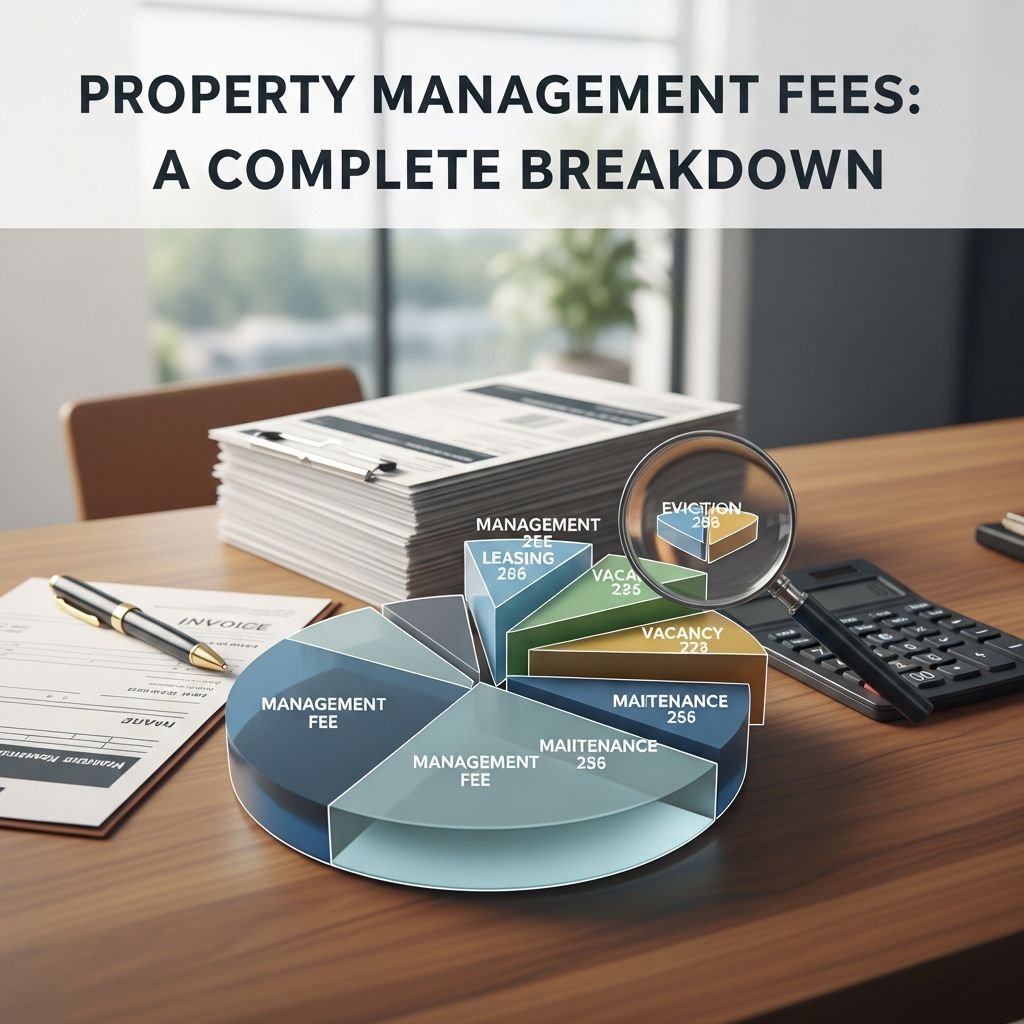
A Breakdown of Property Management Fees
Property management fees represent one of the most significant ongoing expenses for landlords and property investors. Whether you own a single-family home or manage multiple rental properties, understanding how property management fees work is essential for making informed financial decisions. Property managers handle crucial responsibilities including rent collection, tenant screening, maintenance coordination, and financial reporting. However, these services come at a cost, and fees can vary significantly based on property type, location, management company experience, and the scope of services provided. By comprehending the different fee structures and what they cover, landlords can better budget for their rental properties and negotiate favorable terms with management companies.
Understanding Property Management Fee Structures
Property management fees are not one-size-fits-all. Management companies employ different pricing models to accommodate various property types and landlord preferences. The most common approach involves calculating fees as a percentage of monthly rental income, though some companies offer flat-rate structures or hybrid models. Understanding these different approaches helps you compare quotes from multiple management companies and determine which option aligns best with your financial goals and property characteristics.
Percentage-Based Fee Model
The percentage-based fee structure remains the most popular option among property management companies. With this model, your monthly management fee is calculated as a percentage of the gross rental income collected from your property. For residential properties, percentage-based fees typically range from 8% to 12% of monthly collected rent, though rates can vary. Commercial properties often see a broader range of 4% to 12%, with larger properties potentially qualifying for lower percentages due to economies of scale.
For example, if your rental property generates $2,000 in monthly rent and your management company charges 10%, your monthly management fee would be $200. This structure directly ties management costs to your property’s performance. When rental income increases, management fees increase proportionally. Conversely, if you experience vacancy periods or rent decreases, your management fees decrease accordingly. Many property managers prefer this model because it aligns their financial incentives with maximizing your rental income.
The percentage-based model offers flexibility for property managers to adjust their services based on property needs. Larger multifamily properties with numerous units often negotiate lower percentage rates, sometimes as low as 3% to 5%, due to operational efficiencies. Smaller properties may face higher percentages, occasionally reaching 15%, reflecting the proportionally greater administrative burden.
Flat-Rate Fee Structure
Flat-rate fee structures provide predictability and budget certainty for landlords. Instead of calculating fees as a percentage of rental income, property management companies charge a fixed monthly amount regardless of how much rent is collected. For single-family homes, flat fees typically range from $100 to $300 per month, though this varies significantly by market, property value, and service scope.
This structure appeals to landlords who prefer knowing exactly what they’ll pay each month without worrying about fee fluctuations. Flat-rate fees work particularly well for properties with stable, consistent rental income. However, this model may disadvantage landlords during vacancy periods, as you’ll continue paying the full management fee even if the property generates no rental income. Additionally, property managers charging flat fees may lack financial incentives to maximize your rental income, potentially resulting in less aggressive rent optimization strategies.
Hybrid and Tiered Pricing Models
Some property management companies employ hybrid approaches, combining elements of percentage-based and flat-rate structures. These models might include a base flat fee plus a smaller percentage of rental income, or tiered pricing where the percentage decreases as the number of units under management increases. Tiered structures reward landlords who consolidate multiple properties with a single management company, offering cost savings through economies of scale.
Core Property Management Fees Explained
Beyond the basic monthly management fee, landlords typically encounter several additional charges. Understanding each category helps you anticipate total costs and avoid surprises.
Monthly Management Fees
The monthly management fee serves as the backbone of property management compensation. This ongoing charge covers day-to-day operational responsibilities including rent collection, tenant communication, routine inspections, lease enforcement, and general property oversight. The monthly management fee is typically where the percentage-based or flat-rate structures discussed previously apply. This fee compensates property managers for handling the administrative and operational tasks that keep your property functioning effectively.
Setup and Onboarding Fees
When establishing a new property management relationship, companies typically charge a one-time setup or onboarding fee. These fees generally range from $250 to $500 and cover initial account establishment, property inspection and assessment, management plan creation, system setup for rent collection and financial reporting, and preliminary tenant communication. Setup fees represent an investment in properly initiating the management relationship and ensuring all systems are correctly configured.
Tenant Placement and Leasing Fees
Tenant placement fees apply when property managers actively recruit and screen tenants for your property. These fees typically range from 50% to 100% of the first month’s rent, representing compensation for advertising, tenant screening, background checks, lease preparation, and move-in coordination. Some property management companies include basic tenant placement services in their monthly management fee but charge additional fees for more extensive marketing campaigns or specialized tenant recruitment.
Maintenance and Repair Fees
Property managers typically coordinate maintenance and repairs but don’t cover the actual repair costs. Instead, management companies usually charge a markup on contractor invoices, generally ranging from 10% to 20%. This markup compensates the property manager for vendor coordination, quality oversight, and administrative handling. For example, if a plumbing repair costs $500, you might pay $550 to $600 including the management company’s markup.
Lease Renewal Fees
When an existing tenant’s lease approaches expiration, property managers charge lease renewal fees to handle the renewal process. These fees typically range from $150 to $300 per renewal and cover lease document preparation, tenant communication, negotiation of updated terms, and administrative processing. Some management companies include one lease renewal annually in their standard fees but charge additional fees for subsequent renewals.
Property Inspection Fees
Regular property inspections ensure tenant compliance with lease terms and identify maintenance issues early. Property managers often charge $50 to $200 per inspection visit, depending on property size and location. Some management companies include periodic inspections in their monthly management fee but charge additional fees for extra inspections or specialized inspections beyond routine walkthroughs.
Factors Affecting Property Management Fee Rates
Property management fees aren’t arbitrary; they’re influenced by multiple factors that management companies consider when determining their rates.
Property Type and Size
Single-family homes typically incur higher percentage-based fees compared to multifamily properties, reflecting the proportionally greater administrative burden per unit. Large multifamily complexes benefit from operational efficiencies and economies of scale, allowing property managers to offer lower percentage fees. Commercial properties often have different pricing structures than residential properties, with rates varying based on asset class.
Property Location and Market
Geographic location significantly impacts property management fees. Properties in expensive metropolitan markets often attract higher fees due to increased operational costs and demand for experienced property managers. Markets with strong landlord-friendly regulations or lower competition among property managers may see higher fee rates. Conversely, markets with abundant property management options may feature more competitive pricing.
Management Company Experience and Specialization
Established property management companies with strong track records and specialized expertise typically charge higher fees than newer or less specialized firms. Companies specializing in specific property types, luxury properties, or particular geographic markets may command premium rates reflecting their niche expertise. Companies managing commercial properties or specialized assets often charge higher fees than residential-focused firms.
Scope of Services
The breadth and depth of services provided significantly impacts fees. Basic property management including rent collection and tenant communication costs less than full-service management encompassing comprehensive maintenance, financial reporting, legal compliance, and advanced tenant relations. Customized services such as sustainability initiatives, advanced security systems, or specialized tenant placement also increase fees.
Calculating Your Total Property Management Costs
To accurately budget for property management, you should calculate total costs including all fee components, not just the monthly management fee.
Step-by-Step Cost Estimation
Step 1: Determine Gross Rental Income — Calculate your total expected annual rental income from the property. This forms the basis for percentage-based fee calculations. If you own multiple units, calculate the combined rental income.
Step 2: Identify Required Services — List the specific services you need from a management company. Does the property need active tenant recruitment, or will it have long-term tenants? Do you need maintenance coordination, financial reporting, or specialized compliance services?
Step 3: Calculate Monthly Management Fee — If using percentage-based pricing, multiply your gross monthly rental income by the quoted percentage (typically 8-12% for residential). If using flat-rate pricing, note the fixed monthly amount.
Step 4: Add Additional Fees — Factor in additional charges including tenant placement fees (if needed), lease renewal fees, inspection fees, maintenance markups, and any specialized service fees.
Step 5: Project Annual Costs — Multiply monthly fees by 12 and add anticipated one-time fees to calculate total annual property management costs.
Example Cost Breakdown
Consider a residential property generating $2,400 monthly rental income:
- Monthly management fee at 10%: $240
- Annual monthly fees: $2,880
- Setup fee (one-time): $300
- Average annual maintenance markups (estimated): $500
- Annual lease renewal (estimated): $200
- Total first-year cost: $3,880
- Subsequent years (without setup fee): $3,580
Comparing Fee Structures and Negotiating Rates
Property management fees are frequently negotiable, especially for portfolios with multiple properties or properties with high rental income. Experienced landlords leverage competitive quotes to negotiate lower rates.
Comparison Table: Fee Structure Models
| Fee Structure | Typical Rate | Advantages | Disadvantages |
|---|---|---|---|
| Percentage-Based | 8-12% of rent | Aligns incentives with income; scales with property performance; common industry standard | Increases during high-income periods; decreases during vacancies; can be unpredictable |
| Flat Rate | $100-$300/month | Predictable budgeting; consistent regardless of income; simplifies accounting | No cost reduction during vacancies; may lack management motivation for income optimization |
| Tiered/Hybrid | Varies | Offers flexibility; rewards portfolio growth; combines benefits of both models | More complex calculations; varies significantly by company; requires careful review |
Negotiation Strategies
Obtain multiple quotes from different property management companies to establish market rates in your area. Request itemized fee breakdowns showing all charges, including setup, monthly, and additional service fees. Emphasize any portfolio advantages if managing multiple properties, as companies often provide discounts for increased business. Negotiate specific service inclusions rather than accepting standard packages, potentially reducing unnecessary costs. Ask about tiered pricing discounts where percentage fees decrease as the number of units increases.
What Services Are Typically Included in Management Fees
Understanding what services your management fees cover helps prevent unexpected additional charges. Standard services typically included in monthly management fees include rent collection and financial accounting, tenant screening and background checks, lease agreement preparation and enforcement, maintenance and repair coordination (excluding repair costs), routine property inspections, tenant communication and problem resolution, and compliance with local landlord-tenant regulations.
Services often excluded or charged separately include major capital improvements, specialized legal services, advanced marketing campaigns beyond basic advertising, and property-specific customizations. Clarify these distinctions before signing a management agreement to avoid misunderstandings.
Frequently Asked Questions About Property Management Fees
Q: How are property management fees calculated?
Property management fees are typically calculated as a percentage of monthly collected rent, usually ranging from 8% to 12% for residential properties. Some companies offer flat monthly fees based on property type and services. The calculation method varies by management company and property type, so confirm the specific structure before signing.
Q: What is the average property management fee?
The average property management fee for residential properties ranges from 8% to 12% of monthly rental income. Commercial properties may range from 4% to 12%. However, averages vary by location, property type, and company specialization. Fees can be higher for smaller properties and lower for large multifamily complexes.
Q: Are property management fees negotiable?
Yes, property management fees are frequently negotiable, particularly for properties with high rental income or for landlords managing multiple properties. Obtaining competitive quotes and demonstrating business volume can strengthen your negotiating position.
Q: Do property management fees include maintenance costs?
No, property management fees do not cover actual repair and maintenance costs. Management fees cover coordination and oversight, while you pay separately for repairs. Property managers typically charge 10-20% markups on contractor invoices for coordination services.
Q: What is a typical tenant placement fee?
Tenant placement fees typically range from 50% to 100% of the first month’s rent. This fee covers advertising, tenant screening, background checks, lease preparation, and move-in coordination. Some management companies include basic placement services in their monthly fees but charge extra for extensive recruitment campaigns.
Q: Can I reduce property management fees?
Yes, you can reduce fees through several strategies: managing multiple properties with one company (negotiate tiered discounts), requesting itemized fee breakdowns and negotiating specific charges, comparing quotes from multiple companies, offering longer-term agreements in exchange for reduced rates, and clearly defining service requirements to avoid unnecessary charges.
Q: What should I look for in a property management company?
Consider the company’s experience and track record, their specialization in your property type, references from current clients, the services included in their fees, communication responsiveness, technology platforms for financial reporting and tenant communication, and their reputation for maximizing rental income and maintaining properties.
Q: How do property management fees impact my return on investment?
Property management fees directly reduce your net rental income and return on investment. An 8-12% management fee on a $2,000 monthly rent ($160-$240) significantly impacts annual returns. When evaluating property investments, factor property management costs into your financial projections to ensure adequate profit margins.
References
- Multifamily Property Management Fees & How to Budget — MRI Software. 2025. https://www.mrisoftware.com/blog/multifamily-property-management-fees-what-to-expect-how-to-budget/
- How Are Commercial Property Management Fees Calculated? — Balanced Asset Solutions. 2024. https://www.balancedassetsolutions.com/how-are-commercial-property-management-fees-calculated/
- What Is Included In Property Management Fees — HomeRiver Group. 2025. https://www.homeriver.com/blog/what-is-included-in-property-management-fees
- Property Management Fees: A Comprehensive Breakdown — Swiftlane. 2024. https://swiftlane.com/blog/property-management-fees/
- How Much Do Property Managers Charge? Here’s a Breakdown — Stessa. 2024. https://www.stessa.com/blog/how-much-do-property-managers-charge/
Similar Articles








Read full bio of medha deb