Profit Margin Formula: Calculate Business Profitability
Master profit margin calculations to measure your business's financial health and profitability.

Profit margin is one of the most fundamental metrics in business finance, representing the percentage of revenue that translates into actual profit. Whether you’re a seasoned entrepreneur, a financial analyst, or an investor evaluating business performance, understanding how to calculate profit margins is essential. This comprehensive guide will walk you through the various profit margin formulas, their significance, and how to apply them in real-world scenarios.
What is Profit Margin?
Profit margin is a financial metric that measures how much profit a company makes for every dollar of revenue generated. Expressed as a percentage, profit margin indicates the efficiency of a business in converting sales into actual earnings. A higher profit margin suggests that a company is more profitable and has better control over its costs relative to its revenue.
Profit margins vary significantly across industries. Technology companies, for instance, often maintain higher profit margins compared to retail businesses, which typically operate on thinner margins due to competitive pressures and lower pricing power. Understanding your industry’s average profit margin helps you benchmark your company’s performance and identify areas for improvement.
The Three Types of Profit Margins
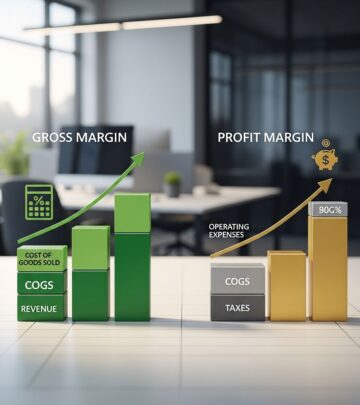
There are three primary profit margin calculations that financial professionals use to evaluate different aspects of a company’s profitability:
- Gross Profit Margin: Measures profitability after accounting for direct production costs
- Operating Profit Margin: Reflects profitability after operating expenses are deducted
- Net Profit Margin: Represents the bottom-line profitability after all expenses, taxes, and interest are paid
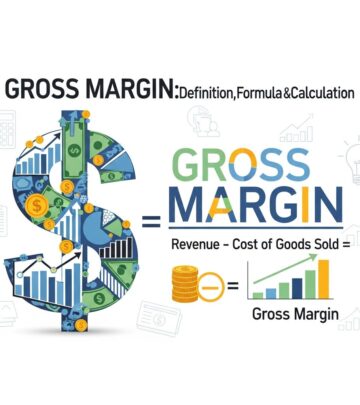
Gross Profit Margin Formula
The gross profit margin is the simplest profitability metric and focuses on the relationship between revenue and cost of goods sold (COGS). This metric reveals how efficiently a company manages its production and manufacturing costs.
Formula:
Gross Profit Margin = (Revenue – Cost of Goods Sold) / Revenue × 100
Alternatively:
Gross Profit Margin = Gross Profit / Revenue × 100
Example Calculation:
If a company generates $500,000 in revenue and has $300,000 in cost of goods sold, the gross profit margin would be calculated as follows:
- Gross Profit = $500,000 – $300,000 = $200,000
- Gross Profit Margin = ($200,000 / $500,000) × 100 = 40%
This means that for every dollar of sales, the company retains 40 cents after paying for the direct costs of producing its products or services. A 40% gross profit margin is considered healthy in many industries, though this varies based on the sector.
Operating Profit Margin Formula
The operating profit margin goes a step further than gross profit margin by accounting for operating expenses. These expenses include administrative costs, sales and marketing expenses, rent, utilities, and depreciation. Operating profit margin provides insight into a company’s operational efficiency and management effectiveness.
Formula:
Operating Profit Margin = (Operating Income / Revenue) × 100
Where Operating Income = Revenue – Cost of Goods Sold – Operating Expenses
Example Calculation:
Using the previous example with additional operating expenses of $75,000:
- Operating Income = $500,000 – $300,000 – $75,000 = $125,000
- Operating Profit Margin = ($125,000 / $500,000) × 100 = 25%
This indicates that the company retains 25 cents from every dollar of revenue after covering both production costs and operating expenses. Operating profit margin is crucial for understanding how well management is running the core business operations.
Net Profit Margin Formula
Net profit margin is the most comprehensive profitability measure, as it accounts for all expenses including cost of goods sold, operating expenses, interest, taxes, and other costs. This is the true bottom-line measure of profitability that investors and stakeholders focus on most carefully.
Formula:
Net Profit Margin = (Net Income / Revenue) × 100
Where Net Income = Revenue – All Expenses (COGS, Operating Expenses, Interest, Taxes)
Example Calculation:
Continuing with our example, if the company has $15,000 in interest expenses and $20,000 in taxes:
- Net Income = $125,000 – $15,000 – $20,000 = $90,000
- Net Profit Margin = ($90,000 / $500,000) × 100 = 18%
A net profit margin of 18% means that the company keeps 18 cents of profit for every dollar of revenue after all expenses are paid. This is the profit available to shareholders and for reinvestment in the business.
Why Profit Margins Matter
Profit margins serve multiple critical functions in business analysis and decision-making:
- Performance Benchmarking: Comparing profit margins against competitors and industry averages helps identify competitive positioning and operational efficiency
- Trend Analysis: Tracking profit margin changes over time reveals whether a company’s financial health is improving or deteriorating
- Pricing Strategy: Profit margins inform pricing decisions and help determine optimal pricing for products and services
- Investment Assessment: Investors use profit margins to evaluate the quality of earnings and the sustainability of returns
- Operational Insights: Declining profit margins often signal rising costs or competitive pressures that need management attention
- Stakeholder Communication: Profit margins demonstrate management effectiveness to shareholders, creditors, and other stakeholders
Practical Applications and Considerations
When calculating and interpreting profit margins, several practical considerations should guide your analysis:
Industry Variations: Profit margins vary dramatically across industries. Software companies might maintain 20-40% net profit margins, while grocery retailers typically operate at 1-3% net profit margins. Always compare margins within the same industry for meaningful analysis.
Seasonality Effects: Many businesses experience seasonal fluctuations in revenue and costs. Comparing profit margins across different seasons can be misleading unless adjusted for seasonal factors. Analyzing full-year trends provides more reliable insights.
One-Time Items: Unusual or non-recurring expenses such as restructuring charges, asset sales, or litigation settlements can distort profit margin calculations. Analysts often adjust for these items to understand operational performance.
Quality of Earnings: A high profit margin doesn’t automatically indicate financial health. A company might achieve high margins through unsustainable practices or accounting methods. Evaluating the quality and sustainability of profits is equally important.
Improving Profit Margins
Businesses can improve profit margins through several strategic approaches:
- Increase Revenue: Growing sales without proportional cost increases directly improves profit margins
- Reduce Cost of Goods Sold: Negotiating better supplier terms, improving manufacturing efficiency, or optimizing supply chains reduces COGS
- Control Operating Expenses: Implementing lean operations, automating processes, and eliminating waste reduces operating costs
- Optimize Pricing: Strategic price increases, where market conditions permit, directly boost profit margins
- Improve Product Mix: Focusing on higher-margin products or services enhances overall profitability
- Enhance Operational Efficiency: Reducing waste and improving productivity lowers per-unit costs
Common Profit Margin Mistakes to Avoid
When working with profit margins, be aware of these common pitfalls:
- Ignoring Industry Context: Comparing profit margins across different industries without understanding industry norms leads to incorrect conclusions
- Focusing on Single Metrics: Relying solely on one type of profit margin without considering others provides incomplete information
- Neglecting Trend Analysis: Looking at a single period’s profit margin without historical context misses important trends
- Overlooking Cash Flow: High profit margins don’t guarantee positive cash flow; analyzing both metrics is essential
- Misinterpreting External Factors: Not accounting for economic conditions, market competition, or regulatory changes when analyzing margins
Frequently Asked Questions
Q: What is a good profit margin?
A: A good profit margin depends on the industry. Generally, net profit margins above 10% are considered healthy for most industries, while margins of 5-10% are acceptable for capital-intensive or highly competitive sectors. Technology and software companies often achieve 15-40%, while retail typically operates at 1-5%.
Q: How do I calculate profit margin from a balance sheet?
A: You cannot calculate profit margin from a balance sheet alone, as it requires income statement data. You need net income (from the income statement) and revenue (from the income statement) to calculate net profit margin. The balance sheet shows financial position at a specific date, not performance over a period.
Q: Why is gross profit margin different from net profit margin?
A: Gross profit margin only accounts for the cost of goods sold, while net profit margin includes all expenses. The difference highlights the impact of operating expenses, interest, taxes, and other costs on overall profitability. Net profit margin provides a more complete picture of profitability.
Q: Can profit margins be negative?
A: Yes, profit margins can be negative when a company’s expenses exceed its revenue, resulting in a net loss. Negative profit margins indicate the company is losing money and require immediate management attention to identify cost reduction opportunities or revenue growth strategies.
Q: How often should I calculate profit margins?
A: Profit margins should be calculated at least quarterly to monitor trends and identify emerging issues. Monthly calculations provide more granular insights, especially for businesses with significant seasonal variations or rapid growth. Regular monitoring helps catch problems before they become critical.
Q: How do profit margins relate to return on investment (ROI)?
A: While related, profit margin and ROI measure different aspects of performance. Profit margin measures profitability relative to revenue, while ROI measures profitability relative to invested capital. Both metrics are valuable for different analytical purposes and should be considered together.
References
- Financial Reporting Standards and Generally Accepted Accounting Principles (GAAP) — Financial Accounting Standards Board (FASB). 2024. https://www.fasb.org
- Understanding Financial Statements — U.S. Securities and Exchange Commission (SEC). 2023. https://www.sec.gov/investor/pubs/underfinstate.htm
- Industry Financial Ratios and Benchmarking Data — BizStats.com, Industry Analysis by the Bureau of Labor Statistics. 2024. https://www.bls.gov
- Financial Analysis and Management — Harvard Business School Publishing. 2023. https://www.hbs.edu
- Cost Accounting and Profitability Analysis Standards — Chartered Institute of Management Accountants (CIMA). 2024. https://www.cimaglobal.com
Similar Articles








Read full bio of medha deb