Profit and Loss Statement: Complete Guide
Master P&L statements: Understand revenues, expenses, and net income analysis.
What Is a Profit and Loss Statement?
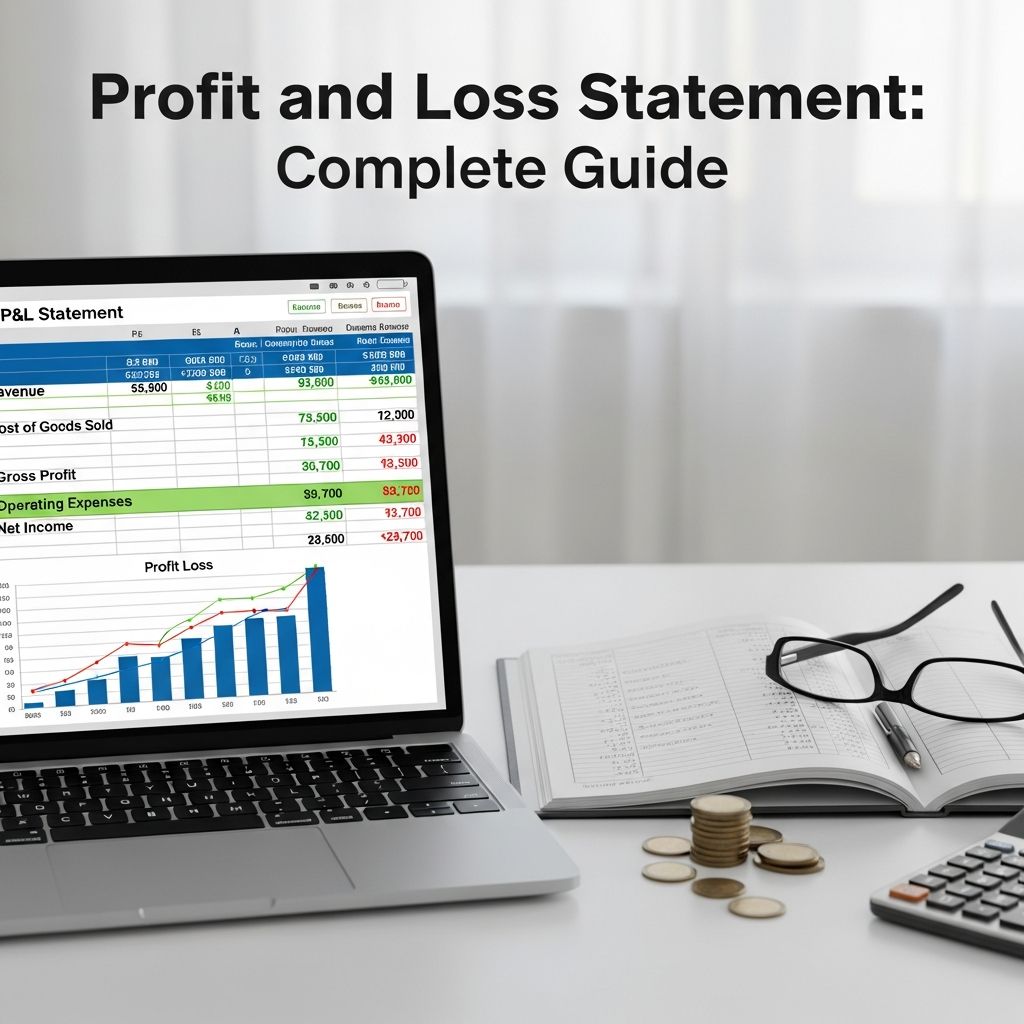
A profit and loss (P&L) statement, also known as an income statement, is a fundamental financial document that summarizes a company’s revenues, costs, and expenses over a specified period of time. This period is typically a fiscal quarter or fiscal year, though businesses may generate P&L statements for any duration needed for financial analysis. The P&L statement is one of the three core financial statements that every public company issues quarterly and annually, alongside the balance sheet and the cash flow statement.
The P&L statement serves as a critical tool for understanding whether a business is operating profitably or at a loss during a given period. By presenting a clear breakdown of income and expenses, it allows business owners, investors, and analysts to assess the financial health and operational efficiency of an organization. The statement is called the “top line” when referencing revenues and the “bottom line” when referencing net income or profit.
Understanding the Three Core Financial Statements
While the P&L statement is essential, it functions most effectively when reviewed alongside the other two primary financial statements. The balance sheet provides a snapshot of what a company owns and owes at a single moment in time, showing assets, liabilities, and equity. The cash flow statement tracks the movement of actual cash in and out of the business over a period of time.
When used together, these three statements provide an in-depth and comprehensive view of a company’s financial performance and position. This is particularly important because the P&L statement and cash flow statement show changes in accounts over a set period, while the balance sheet captures only a moment in time. Additionally, under the accrual method of accounting, a company can log revenues and expenses before cash actually changes hands, making the cash flow statement essential for understanding true liquidity.
Structure and Components of a P&L Statement
The profit and loss statement follows a standardized format that begins with revenue, proceeds through various expense categories, and concludes with net income. Understanding each component is crucial for proper financial analysis.
Revenue (Top Line)
Revenue represents the total income generated by the business from selling products or services before any expenses are deducted. This is known as the “top line” because it appears at the top of the P&L statement. Revenue is the starting point for all P&L calculations and represents the gross amount of money coming into the business.
Cost of Goods Sold (COGS)
The cost of goods sold includes all direct costs associated with producing the goods or services that a company sells. This typically includes raw materials, labor directly involved in production, and manufacturing overhead directly tied to production. COGS is subtracted from revenue to calculate gross profit, which indicates how efficiently a company produces its products.
Operating Expenses
Operating expenses are costs incurred in running the business that are not directly tied to production. These include salaries for administrative staff, rent, utilities, marketing expenses, research and development (R&D) spending, and general corporate expenses. Operating expenses are subtracted after gross profit is calculated to determine operating income.
Interest and Tax Expenses
Interest expenses represent the cost of borrowing money, while tax expenses reflect the income taxes owed on the company’s profits. These items are subtracted from operating income to arrive at the final net income figure.
Net Income (Bottom Line)
Net income, also referred to as profit or earnings, is the bottom line of the P&L statement. It represents what remains after all revenues, costs, and expenses have been accounted for. Net income can be positive (indicating profitability) or negative (indicating a loss). This figure is critical because it directly impacts shareholder value and the company’s ability to reinvest in operations or distribute dividends.
Accounting Methods: Cash vs. Accrual
How a company records its transactions significantly impacts the P&L statement. There are two primary accounting methods used to prepare financial statements, and understanding the differences is essential for accurate financial analysis.
Cash Method of Accounting
The cash method, also called cash accounting, records transactions only when cash actually moves in or out of the business. Under this approach, revenue is recognized when payment is received, and expenses are recorded when they are paid. This method is straightforward and commonly used by smaller companies and individuals managing personal finances because it provides a clear picture of actual cash position.
For example, if a company completes a project in December but doesn’t receive payment until January, the revenue would not appear on the December P&L statement under the cash method. Similarly, if a vendor bill is received in December but not paid until January, the expense would not be recorded until January under this method.
Accrual Method of Accounting
The accrual accounting method records revenue when it is earned, regardless of when payment is received, and records expenses when they are incurred, regardless of when they are paid. This method provides a more accurate picture of a company’s true financial performance during a period, as it matches revenues with the expenses that generated them.
For instance, if a company delivers a product or service to a customer in December but receives payment in January, the revenue is recorded in December under the accrual method because that’s when the earning activity occurred. Similarly, expenses are recorded when incurred, even if payment hasn’t been made yet. Most larger companies and all public companies use the accrual method because it complies with Generally Accepted Accounting Principles (GAAP) and provides a clearer picture of financial performance.
P&L Statement Analysis and Key Metrics
The P&L statement is not merely a historical record but a powerful analytical tool. Business owners and analysts can extract valuable insights by examining various metrics and trends.
Gross Profit Margin
Gross profit margin is calculated by dividing gross profit by revenue and multiplying by 100 to get a percentage. This metric shows what percentage of revenue remains after accounting for the direct costs of producing goods or services. A higher gross profit margin indicates more efficient production and better cost control in the manufacturing process.
Operating Profit Margin
Operating profit margin is calculated by dividing operating income by revenue. This metric reveals what percentage of revenue remains after covering both direct production costs and operating expenses. It demonstrates the efficiency of the company’s core operations independent of financing and tax decisions.
Net Profit Margin
Net profit margin is one of the most important metrics and is calculated by dividing net income by revenue and multiplying by 100. This shows what percentage of each revenue dollar becomes actual profit. Net profit margin provides the clearest picture of overall profitability and is crucial for comparing companies of different sizes or across different time periods.
Operating Ratio
The operating ratio measures the percentage of revenue consumed by operating expenses. A lower operating ratio indicates better operational efficiency, while a higher ratio suggests the company is spending heavily on operations relative to revenue generated.
Comparative Analysis and Trends
One of the most important analytical principles is comparing P&L statements from different accounting periods. While absolute numbers are important, changes over time often reveal more meaningful insights about a company’s business trajectory.
For example, a company’s revenues might grow steadily, but if expenses are growing at a much faster rate, this suggests operational inefficiency or unsustainable growth. Conversely, if revenues grow while expenses remain relatively flat or decline, this indicates improving operational efficiency and margin expansion.
Seasonality Considerations
Many businesses experience seasonality in their revenues and expenses. A lemonade business, for instance, typically sees higher sales during summer months when temperatures rise and demand increases. Expenses might also fluctuate seasonally—for example, if the cost of lemons increases during peak demand periods. Understanding these patterns helps managers plan inventory purchases, anticipate cash needs, and set realistic profit targets for different periods.
Strategic Investments
Sometimes a company may report a net loss in one period due to strategic investments intended to reduce costs or increase sales in future periods. For example, a business might purchase inventory in bulk during one month at a discounted rate, creating an expense that results in a loss that period, but generating savings and higher margins throughout the rest of the year. These situations require understanding the strategic context rather than viewing the loss in isolation.
P&L Statements for Different Organization Types
Public Companies
Public companies are required to prepare and publicly disclose their P&L statements according to GAAP standards. These statements must be audited by independent accountants and are released quarterly and annually to investors and regulatory authorities.
Private Companies
Private companies are not necessarily required to comply with GAAP standards. Some smaller private companies may not even prepare formal financial statements at all, though most maintain P&L statements for internal management purposes and for lender requirements.
Non-Profit Organizations
Non-profit organizations typically track revenues and expenses in a financial report called the statement of activities, also known as a statement of financial activities or statement of support. While the format differs from for-profit P&L statements, the fundamental purpose of tracking income and expenses remains the same.
P&L Management Strategies
P&L management refers to how a company handles its P&L statement through effective revenue and cost management. This involves strategies to maximize revenues while controlling expenses, ultimately improving the bottom line and overall profitability.
Effective P&L management requires continuously analyzing revenue sources, identifying cost reduction opportunities, managing seasonal variations, and making strategic investments that will pay off over time. Regular monitoring and comparison of P&L statements across periods allows management to make data-driven decisions about pricing, product mix, expense allocation, and resource deployment.
Using P&L Statements for Performance Comparison
Once you have calculated your profit margin and other key metrics, you can compare your company’s performance against competitors in your industry. Many public companies publish their financial statements, allowing you to calculate their profit margins and other metrics for comparison. This benchmarking process helps identify areas where your company is performing well or where improvements are needed relative to industry standards and competitors.
Frequently Asked Questions (FAQs)
Q: What is the difference between a P&L statement and a balance sheet?
A: A P&L statement summarizes revenues, costs, and expenses over a specific period and shows whether the company is profitable. A balance sheet is a snapshot at a single moment showing what the company owns (assets), owes (liabilities), and the shareholders’ equity. The P&L statement measures performance over time, while the balance sheet shows financial position at a point in time.
Q: Why is comparing P&L statements from different periods important?
A: Comparing P&L statements across multiple periods helps identify trends, seasonality, and changes in business performance. While absolute numbers matter, the changes and trends over time often provide more meaningful insights into whether a business is improving or declining.
Q: Which accounting method is better: cash or accrual?
A: Neither method is inherently “better”—they serve different purposes. The cash method is simpler and works well for small businesses and personal finances. The accrual method provides a more accurate picture of financial performance and is required for public companies and generally recommended for larger businesses. The choice depends on the company’s size, complexity, and reporting requirements.
Q: How frequently should a company prepare P&L statements?
A: Public companies must prepare P&L statements quarterly and annually. However, many businesses prepare them monthly or even weekly for internal management purposes to monitor performance and make timely decisions about operations and spending.
Q: Can a company have a negative net income and still be healthy?
A: Yes, in some cases. A company might operate at a loss during one period due to strategic investments, market expansion, or one-time expenses. However, sustained losses indicate problems. It’s important to understand the reasons behind losses and whether they are temporary or indicative of fundamental business challenges.
Q: What is the difference between “top line” and “bottom line”?
A: “Top line” refers to total revenues, which appear at the top of the P&L statement. “Bottom line” refers to net income (profit or loss), which appears at the bottom after all expenses are deducted. Investors often focus on bottom-line growth as the true measure of a company’s financial success.
References
- What Is a Profit and Loss (P&L) Statement? — Investopedia. Accessed November 2025. https://www.investopedia.com/terms/p/plstatement.asp
- How to Analyze a Profit & Loss (P&L) Statement — PaySimple. Accessed November 2025. https://paysimple.com/blog/how-to-analyze-a-profit-and-loss-pl-statement/
Similar Articles








Read full bio of Sneha Tete