Professional Investment Management: Comparing Modern Approaches
Discover how traditional and automated investment strategies differ in cost, service, and outcomes.

Accessing financial markets and building a diversified investment portfolio requires working with intermediaries who facilitate transactions and provide strategic guidance. Today’s investors face a fundamental choice between two distinct models of investment management: engaging with licensed professionals who offer personalized guidance or utilizing sophisticated algorithmic platforms that automate portfolio construction and maintenance. Understanding the distinctions between these approaches is essential for making an informed decision about how to manage your wealth.
Understanding Investment Intermediaries
To participate in stock market transactions, investors need access through established platforms and professionals. These intermediaries serve as critical gatekeepers, enabling individuals to buy, sell, and manage securities. The investment industry has evolved to offer multiple pathways for achieving financial objectives, each with distinct operational mechanics and underlying philosophies.
The proliferation of investment options reflects broader technological advancement and democratization of financial markets. What once required substantial capital and personal connections now remains accessible to individuals with minimal starting amounts. This transformation has reshaped how people approach wealth building and portfolio diversification.
Licensed Investment Professionals: The Traditional Model
Licensed investment professionals represent the established approach to investment management. These individuals hold appropriate regulatory credentials and work within brokerage environments to provide direct client services. They function as knowledgeable intermediaries who leverage their expertise, market knowledge, and professional judgment to guide investment decisions.
Operational Structure and Compensation
Licensed professionals typically operate through established brokerage firms that provide infrastructure, compliance oversight, and client access. Their compensation structures vary based on the specific arrangement:
- Commission-based models where advisors earn fees on individual transactions
- Asset-based compensation calculated as a percentage of client portfolio value
- Fee-only arrangements charging annual percentages regardless of trading activity
These compensation models create different incentive structures that can influence advisory recommendations. Understanding how your advisor receives compensation helps clarify potential conflicts of interest and ensures alignment between advisor interests and client objectives.
Services and Personalization
Licensed advisors provide comprehensive services extending beyond simple portfolio management. These professionals often address complex financial situations including estate planning, tax optimization, retirement planning, and risk management strategies. Their value proposition centers on personalized attention and nuanced advice tailored to individual circumstances.
Advisors leverage professional experience to evaluate client situations through multiple dimensions. They consider tax implications, existing holdings, upcoming life changes, and long-term objectives when making recommendations. This holistic approach appeals to investors managing complicated financial scenarios or seeking guidance through significant transitions.
Algorithmic Investment Platforms: The Automated Alternative
Algorithmic investment platforms represent a modern alternative that applies computational sophistication to portfolio management. These digital-first services eliminate traditional advisor involvement while maintaining systematic investment strategies. The approach relies on automated processes, quantitative analysis, and technology-driven portfolio oversight.
Operational Mechanics
Algorithmic platforms initiate relationships through digital questionnaires gathering essential information about investor circumstances. Users provide details regarding investment timeline, financial objectives, risk tolerance, current income, and existing assets. This information feeds into mathematical algorithms that generate diversified portfolio recommendations.
Once established, these platforms handle ongoing portfolio maintenance with minimal user interaction. Automated systems continuously monitor portfolio performance and rebalance holdings when allocations drift from target percentages. This systematic rebalancing maintains consistency with investor preferences without requiring manual intervention.
Investment Approach and Holdings
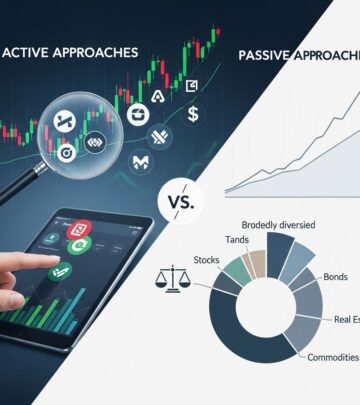
Algorithmic platforms typically construct portfolios using exchange-traded funds and similar low-cost instruments. This investment approach emphasizes broad diversification through index-tracking vehicles rather than individual security selection. The strategy aligns with evidence suggesting that most active management fails to consistently outperform passive approaches.
These platforms also automate additional investment activities that traditional advisors handle manually. Tax-loss harvesting, dividend reinvestment, and periodic rebalancing occur systematically without requiring client requests. This automation reduces administrative burden while potentially improving investment outcomes through consistent implementation.
Cost Structure Comparison
Fee arrangements represent a significant distinction between investment management approaches. Understanding cost implications helps investors evaluate the economic value proposition of each option.
| Cost Factor | Licensed Advisors | Algorithmic Platforms |
|---|---|---|
| Annual Management Fees | 1.0% to 2.0% of assets under management | 0.25% to 0.50% of assets under management |
| Minimum Investment | Frequently $100,000 or higher | Often $100 or less |
| Transaction Costs | Commissions and trading fees may apply | Typically waived or minimal |
| Additional Services | Estate planning, tax services included | Limited to investment management |
The fee differential becomes substantial over extended periods. For a $100,000 portfolio over twenty years, the difference between 0.50% and 1.50% annual fees compounds to meaningful divergence in accumulated wealth. However, licensed advisors justify higher fees through comprehensive services and potential investment outperformance, though market evidence remains mixed on whether active management consistently adds value.
Regulatory Oversight and Credibility
Both investment approaches operate under regulatory frameworks designed to protect consumers. Licensed professionals hold securities licenses issued by regulatory bodies, requiring demonstrated competency and adherence to professional standards. These credentials establish accountability and provide recourse mechanisms for clients.
Algorithmic platforms similarly register with relevant regulatory authorities and maintain compliance programs. They operate under identical fiduciary standards requiring investment decisions prioritize client interests. This regulatory parity means both approaches meet baseline requirements for client protection, though enforcement mechanisms and oversight intensity may vary.
Suitability Analysis: Matching Investor Profiles with Approaches
When Algorithmic Platforms Excel
Algorithmic investment platforms serve investors prioritizing simplicity, low costs, and passive portfolio approaches. Beginning investors with limited capital benefit from minimal account minimums and straightforward setup processes. Individuals comfortable with technology-driven solutions and minimal personal interaction find these platforms intuitive and efficient.
These platforms work effectively for investors pursuing buy-and-hold strategies with extended time horizons. Since algorithmic platforms excel at systematic rebalancing and passive management, they align naturally with patient investors seeking diversified portfolios without frequent adjustments. The low-cost structure particularly benefits individuals with moderate asset levels where management fees represent significant expense ratios.
When Licensed Advisors Provide Greater Value
Licensed professionals demonstrate superior value for investors managing complex financial situations. Individuals approaching retirement, navigating inheritance considerations, or managing tax-complicated circumstances benefit from personalized expertise. Advisors provide guidance addressing questions extending beyond basic portfolio construction.
Active traders and individuals seeking frequent portfolio adjustments may prefer working with professionals who facilitate rapid execution and tactical positioning. Similarly, investors managing substantial asset bases where percentage-based fees represent reasonable compensation for sophisticated advice find advisor relationships economically justified. Those requiring integrated financial planning addressing multiple life domains benefit from comprehensive advisory services.
Key Advantages and Limitations
Algorithmic Platform Advantages
- Substantially lower cost structure making investment accessible to emerging investors
- Minimal account minimums eliminating capital barriers
- Consistent, disciplined implementation without emotional decision-making
- Automated rebalancing maintaining portfolio alignment
- Transparency in fee structures and investment holdings
- 24/7 accessibility through digital platforms
Algorithmic Platform Limitations
- Limited personalization beyond basic questionnaire responses
- Minimal human judgment in complex or unusual situations
- Restricted service scope focused exclusively on investment management
- Technology dependence and potential system outages
- Inability to address nuanced tax or estate considerations
Licensed Advisor Advantages
- Comprehensive financial planning extending beyond portfolio management
- Personalized guidance informed by professional experience
- Human judgment in complex or rapidly changing circumstances
- Direct relationship and accountability
- Integration of multiple financial objectives and life planning
- Potential for investment outperformance through active management
Licensed Advisor Limitations
- Significantly higher fee structures reducing net returns
- Substantial account minimums limiting accessibility
- Potential conflicts of interest based on compensation models
- Variable quality and consistency depending on individual advisor
- Less disciplined implementation prone to behavioral biases
- Limited scalability affecting service availability
Platform Availability and Market Presence
Major financial institutions have recognized the algorithmic platform opportunity, integrating these services within established brand environments. Prominent investment firms including Charles Schwab, TD Ameritrade, and Vanguard offer algorithmic portfolio management alongside traditional advisory services. This integration provides consumers choice within single platforms, reducing switching costs and complicating comparative analysis.
The competitive landscape continues evolving as traditional firms defend market position against specialized algorithmic providers. This competition benefits consumers through improved features, reduced fees, and enhanced user experiences across both categories.
Decision Framework: Selecting Your Investment Approach
Choosing between investment management approaches requires honest self-assessment across multiple dimensions:
- Financial Complexity: Assess whether your situation requires expertise beyond basic portfolio management
- Capital Availability: Consider minimum investment requirements and fee impacts on your specific portfolio size
- Time Commitment: Evaluate whether you prefer active engagement or delegated management
- Technology Comfort: Determine your confidence with digital-first platforms and interfaces
- Service Expectations: Define what advisory functions beyond investment management matter for your circumstances
- Investment Timeline: Consider whether your horizon aligns with passive or active management approaches
Frequently Asked Questions
Can I switch between approaches if my circumstances change?
Yes, transitioning between investment management approaches remains straightforward. Most platforms facilitate account transfers without penalty. Life changes warranting reassessment include inheritance, employment changes, nearing retirement, or marriage. Periodic evaluation ensures your chosen approach continues aligning with evolving circumstances.
Do algorithmic platforms guarantee investment returns?
No investment approach guarantees specific returns. Algorithmic platforms apply systematic strategies that have historically performed reasonably well, but market conditions, economic cycles, and unforeseen events affect all investments. Returns depend on underlying market performance rather than the management approach selected.
What qualifications should I verify for licensed advisors?
Request verification of active securities licenses, regulatory history, and relevant credentials. CFP (Certified Financial Planner) designation indicates advanced training and ethical standards. Review Form ADV documentation disclosing compensation structure and any regulatory findings. Personal references from existing clients provide valuable perspective.
How frequently should I reassess my investment approach?
Annual reviews of your investment strategy remain prudent, though this need not coincide with portfolio rebalancing. Material life changes warrant immediate reassessment. Significant market movements sometimes prompt consideration, though frequent tactical changes typically undermine long-term outcomes.
Are there hybrid approaches combining both models?
Yes, many providers offer hybrid services combining algorithmic portfolio management with periodic advisor consultations. These arrangements attempt balancing cost efficiency with personalized guidance. Evaluate whether hybrid pricing represents fair value relative to pure alternatives.
The Path Forward
The investment management landscape offers legitimate approaches serving different investor profiles and preferences. Neither option represents universally superior choice; rather, optimal selection depends on individual circumstances, preferences, and financial complexity. Beginning investors with straightforward situations typically benefit from algorithmic platforms’ cost efficiency and simplicity. Investors managing complicated finances often justify licensed advisor relationships despite higher fees.
Many successful investors progress through approaches as circumstances evolve. Starting with algorithmic platforms while accumulating capital, then transitioning to licensed advisors once complexity or asset levels warrant additional services, represents a common path. Regardless of initial choice, periodic reassessment ensures your investment management approach continues serving your financial objectives effectively.
References
- Robo-Advisors: What They Are and How They Work — Vanguard Investor Resources. 2024. https://investor.vanguard.com/investor-resources-education/article/what-is-a-robo-advisor
- Stockbroker vs. Robo-Advisor: What’s the Difference? — Experian Ask Experian Blog. 2024. https://www.experian.com/blogs/ask-experian/stockbroker-vs-robo-advisor/
- Full-Service Brokerages vs Robo-advisors: Understanding the Key Differences — Qtrade Financial Group. 2024. https://www.qtrade.ca/en/investor/education/investing-articles/new-to-investing/full-service-brokeragesvs-robo-advisors.html
- Robo Advisor vs. Financial Advisor: How to Choose — Ally Bank. 2024. https://www.ally.com/stories/invest/robo-advisor-vs-financial-advisor/
- Securities and Exchange Commission: Investment Advisers — U.S. Securities and Exchange Commission Official Website. 2024. https://www.sec.gov/investor/pubs/invadvis.htm
Similar Articles








Read full bio of Sneha Tete