Production Efficiency: Maximizing Output With Minimal Resources
Understanding how businesses optimize resources to maximize output and profitability.
What is Production Efficiency?
Production efficiency represents a fundamental economic principle wherein a firm or economy achieves the maximum possible output using the minimum amount of inputs. In essence, it reflects the optimal allocation of resources to generate goods and services with minimal waste. When a producer operates at peak efficiency, every dollar spent on labor, materials, capital, and management contributes meaningfully to output creation without squandering resources or incurring unnecessary expenses.
This concept is critical for businesses operating in competitive markets where profit margins are often tight. Vendors who achieve higher production efficiency can reduce their per-unit costs, allowing them to price their products more competitively while maintaining profitability. Conversely, producers with lower efficiency face higher costs, which may force them to either raise prices—risking lost sales—or accept reduced profit margins.
Understanding the Fundamentals of Production Efficiency
Production efficiency operates on the principle that resources are inherently scarce. Every economy and business must decide how to allocate finite resources—land, labor, capital, and materials—to produce the greatest value. Production efficiency asks: How can we produce more with less?
The process begins with understanding what inputs are required to create a specific output. Tangible inputs include raw materials, semi-finished goods, and subassemblies, while intangible inputs encompass ideas, information, and knowledge. Both types combine during production to create goods and services that possess exchange value—that is, worth determined by comparison to other goods and services in the marketplace.
Cost of production includes all expenditures necessary to generate output: rent for facilities, wages for labor, interest on capital, machinery purchases and installation, equipment maintenance, advertising, insurance, taxes, and entrepreneur compensation. Efficient producers minimize these costs by eliminating waste, streamlining processes, and optimizing resource allocation.
Why Production Efficiency Matters
In market-based economies, competition drives producers to pursue production efficiency relentlessly. When multiple vendors offer similar products, consumers gravitate toward lower prices, creating intense pressure to reduce costs. Vendors who achieve superior production efficiency gain a competitive advantage: they can undercut competitors’ prices while maintaining acceptable profit margins.
The incentive structure in market production is straightforward. Competitors strive to use resources as efficiently as possible so they can sell goods and services at prices lower than their rivals. However, this race to the bottom creates a paradox: while vendors want to keep prices low to attract customers, they also need sufficient profit to sustain their operations. The solution is production efficiency—maximizing output per unit of input investment, thereby enabling lower prices without sacrificing viability.
For firms operating in industries with thin profit margins, production efficiency can mean the difference between profitability and bankruptcy. In manufacturing, retail, food service, and logistics, marginal improvements in efficiency compound into significant competitive advantages over time.
Production Efficiency vs. Allocative Efficiency
While production efficiency focuses on generating maximum output from given inputs, allocative efficiency concerns whether an economy produces the right mix of goods and services to satisfy consumer demand. A producer can be productively efficient—minimizing waste in the manufacturing process—but allocatively inefficient if producing goods that consumers don’t value.
For example, a factory might minimize material waste and labor costs while producing cars at peak efficiency, yet if consumer demand shifts toward electric vehicles and the factory continues producing gas-powered models, the overall outcome represents allocative inefficiency. True economic success requires both dimensions: producing efficiently and producing what consumers actually want.
Production Functions and Efficiency Analysis
Economics employs production functions as tools to analyze relationships between inputs and outputs. A production function establishes the maximum output achievable from any given combination of inputs. By mapping different input combinations against resulting outputs, economists and business analysts can identify the most efficient input mix for producing a target quantity.
The Cobb-Douglas production function exemplifies this analytical approach. Used extensively in both macroeconomics and microeconomics, it considers labor, capital, materials and supplies, and product quality, comparing inputs systematically against outputs. This mathematical model helps firms determine optimal resource allocation strategies and economists understand aggregate productive capacity.
Achieving Production Efficiency in Business Operations
Organizations pursue production efficiency through multiple strategies:
Process Optimization
Streamlining manufacturing or service delivery processes reduces inefficiencies, bottlenecks, and redundancies. Lean manufacturing principles, Six Sigma methodologies, and continuous improvement frameworks help identify waste and enhance workflow efficiency.
Technological Investment
Automation, advanced machinery, and information systems can dramatically reduce per-unit production costs. While capital investment is required upfront, technological improvements often generate savings across labor, materials, and energy consumption that justify initial expenditures.
Labor Productivity
Training employees, improving working conditions, and implementing performance incentives enhance labor productivity. When workers produce more output per hour worked, overall production efficiency improves, directly reducing labor costs per unit produced.
Supply Chain Management
Optimizing supplier relationships, reducing inventory carrying costs, and streamlining logistics minimize waste and delays. Efficient supply chains ensure that materials arrive when needed, preventing both excess inventory and production delays.
Quality Control
Reducing defect rates and rework requirements improves efficiency by eliminating wasted effort. Products manufactured correctly the first time consume fewer resources than products requiring repair or redesign.
Production Efficiency in Market Contexts
Market production involves providers competing to supply goods and services efficiently. In competitive markets, producers face constant pressure to improve efficiency. The most efficient producers gain market share, while inefficient ones lose competitiveness. This competitive dynamic drives continuous innovation and improvement across industries.
Vendors recognize that maintaining low prices requires superior efficiency. They cannot sustain operations if prices fall below their production costs, yet consumer expectations and competitor actions often force prices downward. The solution involves relentless pursuit of production efficiency to maintain profitability even at lower price points.
Household Production and Efficiency
Production efficiency extends beyond commercial enterprises to household economics. Household production involves the relationship among a family’s production, consumption, and time allocation. Households, like businesses, operate under constraints and seek to maximize efficiency and happiness given their resources.
Families produce and consume goods and services, making decisions about time allocation that reflect opportunity costs. Time spent on one activity cannot be spent on another—a fundamental resource constraint. Efficient households allocate their time and income strategically, producing and consuming goods and services that maximize their overall welfare subject to budget and time constraints.
For instance, a family might decide whether to prepare meals at home (requiring time and ingredients) or purchase prepared food (requiring money but saving time). This decision reflects production efficiency considerations at the household level, where families assess whether producing goods themselves or purchasing them from others represents optimal resource allocation.
Measuring Production Efficiency
Quantifying production efficiency typically involves calculating output per unit of input. Common metrics include:
Labor Productivity
Output per worker or per hour of labor represents a fundamental productivity measure. Industries tracking labor productivity can identify whether workers produce more or less output over time, signaling whether efficiency improvements have occurred.
Capital Productivity
Output per dollar of capital invested indicates how effectively a firm deploys its assets. Higher capital productivity means equipment and facilities generate more output, improving overall efficiency.
Total Factor Productivity
This comprehensive measure accounts for all inputs simultaneously, calculating output relative to combined input quantities. It captures efficiency improvements from better management, technological advancement, or organizational redesign that enhance productivity across multiple dimensions.
Cost per Unit
Tracking production costs relative to output quantity directly measures efficiency. Declining per-unit costs suggest improving efficiency, while rising per-unit costs indicate efficiency deterioration.
Challenges in Achieving Production Efficiency
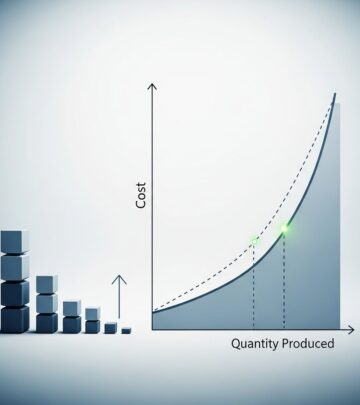
Despite its importance, achieving production efficiency presents numerous challenges. Fixed costs—rent, administrative salaries, equipment depreciation—remain constant regardless of output levels. Spreading fixed costs across larger output volumes improves per-unit economics, but requires finding additional customers willing to purchase increased production.
Quality-efficiency trade-offs also emerge. Maximizing speed and minimizing costs sometimes compromises product quality or safety. Producers must balance efficiency with maintaining acceptable quality standards to protect their reputation and comply with regulations.
Technological obsolescence poses another challenge. Machinery and processes become outdated, requiring periodic reinvestment to maintain competitive efficiency levels. Organizations that fail to modernize gradually become less efficient relative to technologically advanced competitors.
Real-World Applications of Production Efficiency
Manufacturers worldwide emphasize production efficiency through lean principles and continuous improvement programs. Automotive companies, consumer goods producers, and technology manufacturers invest heavily in process optimization to reduce costs and remain competitive in global markets.
Service industries similarly pursue efficiency. Banks optimize transaction processing, hospitals improve patient throughput, and restaurants streamline operations to serve more customers with existing resources. Retail businesses reduce inventory carrying costs and expedite checkout processes to improve customer experiences while managing labor expenses.
Frequently Asked Questions
Q: What is the difference between production efficiency and productive efficiency?
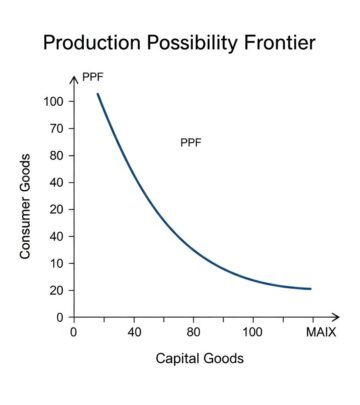
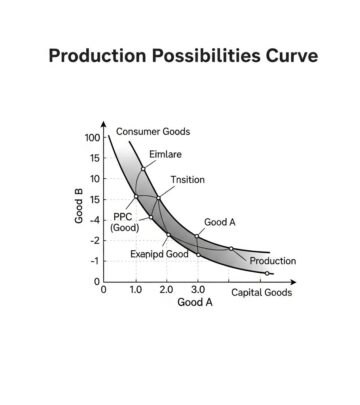
A: These terms are often used interchangeably. Both refer to producing maximum output from minimum inputs. Productive efficiency means operating on the production frontier—the boundary representing the best possible outcome from available resources.
Q: Can a business be productively efficient but allocatively inefficient?
A: Yes. A business might minimize waste and costs in production (productive efficiency) while manufacturing products consumers don’t value (allocative inefficiency). True success requires both dimensions working together.
Q: How does automation impact production efficiency?
A: Automation typically increases production efficiency by reducing labor costs, minimizing errors, and accelerating production processes. However, automation requires significant capital investment and is most cost-effective for large-scale operations.
Q: What role does innovation play in production efficiency?
A: Innovation drives efficiency improvements through new technologies, processes, and organizational methods. Companies that invest in research and development often achieve competitive advantages by improving efficiency faster than competitors.
Q: How can small businesses improve production efficiency?
A: Small businesses can improve efficiency through process optimization, employee training, strategic outsourcing, and gradual technology adoption. Many efficiency gains require rethinking operations rather than major capital expenditures.
References
- Production (economics) — EBSCO Research Starters. 2024. https://www.ebsco.com/research-starters/business-and-management/production-economics
- Factors of Production Explained with Examples — Investopedia, Jason Fernando. 26 July 2024. https://www.investopedia.com/terms/f/factors-production.asp
- Production Costs: What They Are and How to Calculate Them — Investopedia, Adam Hayes. https://www.investopedia.com/terms/p/productioncost.asp
Similar Articles








Read full bio of medha deb