Product Life Cycle: Definition, Stages, and Examples
Understanding the four stages of product life cycle and strategic business implications.
Understanding the Product Life Cycle
The product life cycle (PLC) is a fundamental concept in business and marketing that describes the journey a product takes from its initial launch into the market through its eventual discontinuation. This framework helps business professionals, marketing managers, and executives make critical decisions regarding product positioning, pricing strategies, promotional investments, and resource allocation. By understanding where a product stands in its lifecycle, companies can better anticipate market trends, respond to competitive pressures, and optimize their profit margins.
The term product life cycle refers specifically to the time period that elapses from when a product is first introduced to consumers until it is ultimately removed from the market. This journey is not uniform for all products—some may remain in a prolonged maturity phase, generating steady revenue for years, while others may experience rapid progression through the stages. Regardless of the timeline, all products eventually face decline due to various factors including market saturation, increased competition, shifting consumer preferences, technological advancement, and diminishing demand.
The Four Stages of Product Life Cycle
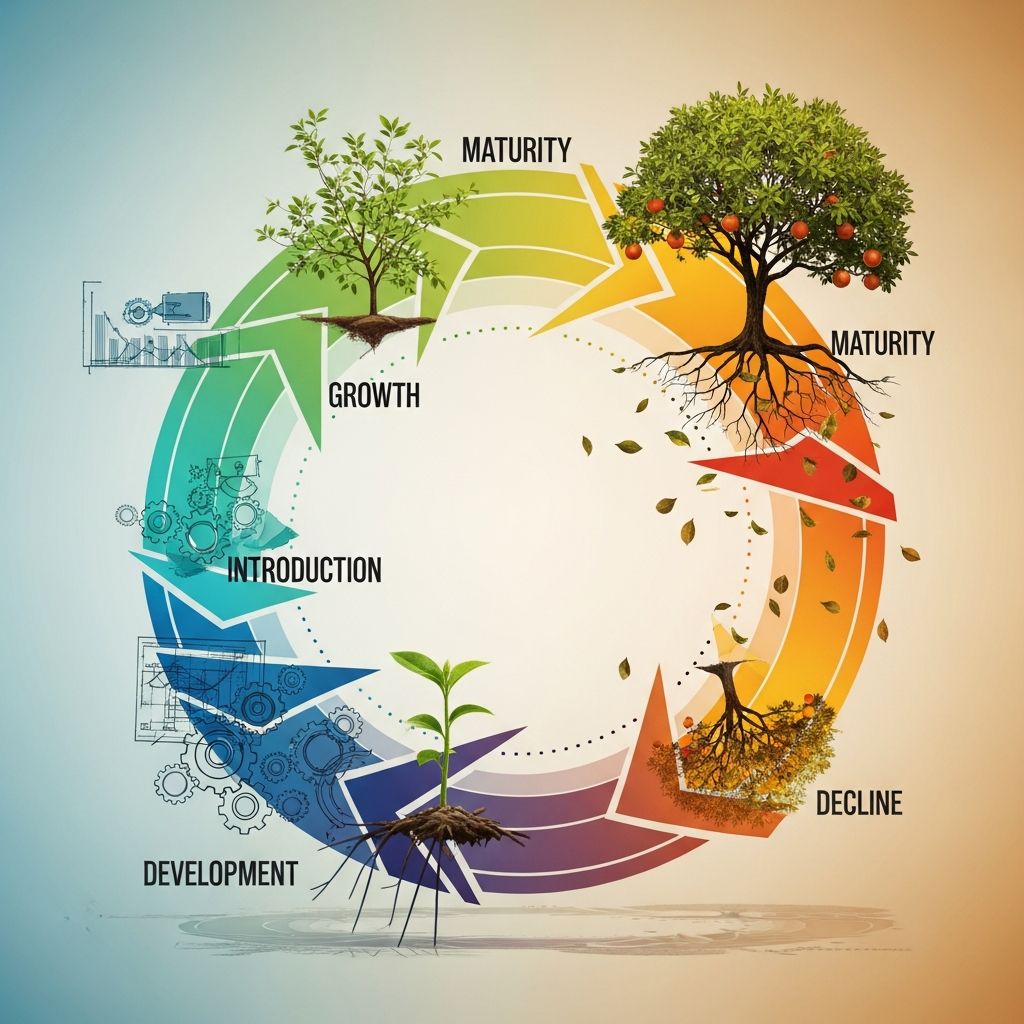
The product life cycle is generally divided into four distinct stages, each characterized by different sales volumes, profitability levels, and strategic considerations. Understanding these stages is essential for developing effective business strategies and maintaining competitive advantage in the marketplace.
Stage 1: Introduction
The introduction stage marks the beginning of a product’s journey in the market. During this phase, a company has successfully developed a new product and is now launching it to consumers. This stage typically involves substantial financial investment in advertising, marketing, and promotional activities designed to build brand awareness and educate consumers about the product’s features, benefits, and unique value propositions.
In the introduction stage, sales volumes tend to be relatively low as demand needs to be created from scratch. The company is essentially educating the market about a new offering and attempting to convince consumers to try the product for the first time. This phase provides valuable feedback about how consumers respond to the product, whether they perceive value in its features, and what their initial purchasing patterns might indicate about future success.
The duration of the introduction stage varies considerably depending on several factors: the complexity of the product, how innovative or novel it is, how well it addresses customer needs, and whether there is existing competition in the market. Importantly, not all products successfully navigate the introduction stage—in fact, the majority of new product launches fail to reach the growth stage, resulting in early market withdrawal and financial losses for the company.
Stage 2: Growth
If a product successfully survives the introduction stage and gains market acceptance, it enters the growth stage of the product life cycle. This phase is characterized by rapidly expanding consumer demand, increasing sales volumes, and expanding market reach. What was gradual sales growth in the introduction stage transforms into a sharp upward trajectory as the product gains traction and more consumers become aware of and purchase the offering.
During the growth stage, production volumes increase significantly, and the product becomes more widely available through expanded distribution channels. Consumers who were satisfied with their initial purchase begin buying again, establishing brand loyalty and repeat purchasing patterns. As word-of-mouth recommendations spread and the product gains credibility in the market, new customer acquisition accelerates substantially.
However, the growth stage also attracts competitive attention. As the market demonstrates demand for the product category, competitors recognize the opportunity and enter the market with their own versions—either direct copies or products with incremental improvements and innovations. To maintain market position and competitive advantage during this period, companies must focus on brand building, establish clear brand differentiation, implement strategic pricing to remain competitive, and ensure product availability through effective distribution management.
Stage 3: Maturity
The maturity stage represents the longest phase of the product life cycle for many products and is typically the most profitable stage in terms of volume and overall profitability. At this point, sales growth begins to slow as the market becomes increasingly saturated with the product and consumer demand stabilizes. The rapid upward trajectory of the growth stage plateaus as the number of potential new customers diminishes and the market becomes dominated by established competitors.
One of the key characteristics of the maturity stage is that unit production volumes have increased substantially, leading to significant economies of scale. The per-unit cost of production declines due to operational efficiencies, streamlined manufacturing processes, and optimized supply chains. Marketing and promotional costs as a percentage of sales also typically decline, as the product has achieved strong brand recognition and established market presence requiring less aggressive promotional spending.
During maturity, companies often implement strategies to maintain or extend their market share in an increasingly competitive environment. Some companies reduce prices to compete on value, while others may enhance product features or introduce product line extensions to appeal to different market segments. Brand loyalty becomes crucial as retailers may reduce active promotion of the product, transitioning from active promotion to simple order fulfillment. Many successful brands, such as Coca-Cola, have managed to maintain extended maturity phases lasting decades, through continuous innovation and strategic marketing investments.
Stage 4: Decline
The decline stage represents the inevitable final phase of the product life cycle. Despite companies’ best efforts to maintain products during the maturity stage, decline is ultimately unavoidable as market conditions shift and consumer preferences evolve. During this stage, product sales decline rapidly, market share erodes, and consumer demand decreases significantly.
Various factors contribute to the decline stage, including the emergence of superior alternative products, technological disruption, changing consumer preferences, or market saturation combined with increased competition. Companies face critical decisions about whether to continue supporting the declining product, gradually phase it out, or maintain a minimal offering for loyal customers who may still demand it.
During decline, some companies attempt to extend the product’s life through repositioning, repackaging, or finding new market segments. However, most eventually discontinue the product entirely to redirect resources toward newer offerings with greater growth potential and profitability prospects.
Real-World Examples of Product Life Cycle
Understanding the product life cycle becomes clearer when examining real-world examples of products and their market trajectories.
The Typewriter
The typewriter provides a classic example of a product traversing the complete product life cycle. When introduced in the late nineteenth century, typewriters represented innovative technology that significantly improved writing speed and accuracy compared to manual handwriting. The product experienced strong growth throughout the twentieth century as it became the standard writing instrument in offices, newsrooms, and educational institutions worldwide.
The typewriter remained in a lengthy maturity stage throughout much of the twentieth century, with various manufacturers competing through design improvements, portability enhancements, and feature additions. However, the introduction of electronic word processors in the 1970s and 1980s, followed by personal computers, laptops, and eventually smartphones and tablets, initiated the typewriter’s decline. As these superior alternatives offered greater functionality, convenience, and cost-effectiveness, typewriter sales declined sharply. Today, typewriters are largely obsolete, though a niche market still exists for specialized applications and nostalgia-driven consumers.
Personal Computers
Personal computers demonstrate the product life cycle from a different perspective. Desktop computers, introduced in the 1980s, experienced explosive growth through the 1990s and 2000s as they became essential business and home tools. The category remained in a mature phase for many years, with competition focusing on processing power, storage capacity, and software compatibility. However, the emergence of smartphones and tablets initiated a shift in consumer computing preferences, pushing traditional personal computers toward decline in consumer markets, though they remain significant in business and professional environments.
Autonomous Vehicles
Autonomous vehicles represent products currently in the introduction stage. Though still under development and testing, autonomous vehicles represent a significant innovation that is gradually being adopted. Most consumers have not yet purchased autonomous vehicles, and significant regulatory, technological, and consumer acceptance challenges remain. Companies investing in autonomous vehicle technology are making substantial marketing and development investments while awaiting broader market acceptance and adoption.
Strategic Applications of Product Life Cycle Analysis
Understanding the product life cycle framework enables businesses to make strategic decisions aligned with each stage:
Pricing Strategy
During the introduction stage, companies often employ premium pricing to recoup development costs and create perceptions of exclusivity. As the product moves through growth, prices typically remain stable or slightly decrease to maintain competitiveness. In maturity, price competition intensifies, often forcing price reductions. In decline, selective price cuts may be used to maintain inventory turnover.
Promotional Investment
Introduction and growth stages require significant promotional budgets to build awareness and drive trial. In maturity, promotional spending becomes more targeted and efficient, focusing on brand maintenance and competitive differentiation. In decline, promotional spending typically diminishes as resources are redirected to new products.
Distribution Expansion
Introduction stages often feature limited distribution channels as the company carefully manages product availability and brand positioning. Growth stages see rapid expansion of distribution channels as the company seeks to maximize market penetration. Maturity maintains broad distribution, while decline may involve selective reduction in distribution to focus on the most profitable channels.
Extending the Maturity Stage
Many successful companies recognize the importance of prolonging the maturity stage, which often represents peak profitability. Strategies for extending maturity include:
Product Innovation and Enhancement: Introducing new features, improved performance, or enhanced designs keeps mature products fresh and relevant to evolving consumer preferences.
Market Expansion: Identifying and entering new geographic markets or customer segments can renew growth in mature products.
Repositioning: Rebranding or repositioning mature products to appeal to new consumer segments or use occasions extends market relevance.
Industry Evolution Awareness: Understanding how broader industry trends and technological changes affect product categories allows companies to anticipate and adapt to market shifts.
Frequently Asked Questions
What is the product life cycle?
The product life cycle refers to the time period from when a product is introduced to consumers until it is removed from the market. It encompasses the journey of a product through distinct phases of market demand and profitability.
How many stages are in the product life cycle?
There are four generally accepted stages: introduction, growth, maturity, and decline. Each stage has distinct characteristics regarding sales volumes, profitability, competition, and strategic considerations.
Why is the maturity stage typically the most profitable?
The maturity stage is typically most profitable because production volumes are high, manufacturing costs per unit are minimized through economies of scale, brand recognition is established requiring less promotional spending, and the product has achieved market acceptance and stable revenue streams.
Can companies extend the maturity stage indefinitely?
While companies cannot indefinitely prevent decline, they can significantly extend the maturity phase through product innovation, market expansion, strategic repositioning, and continuous brand investment. Examples like Coca-Cola demonstrate that well-managed mature products can generate profits for decades.
What factors determine how quickly a product progresses through the life cycle?
Factors include product complexity, innovation level, market competition, consumer acceptance, technological disruption, changing preferences, and economic conditions. Some products progress rapidly through stages while others remain in single stages for extended periods.
How should companies approach the decline stage?
In the decline stage, companies should evaluate whether to maintain minimal product support for loyal customers, attempt repositioning for new segments, or discontinue the product entirely to redirect resources toward newer growth opportunities.
Conclusion
The product life cycle represents a critical framework for understanding how products move through market phases, from innovative introduction through eventual decline. By recognizing where their products stand in this cycle, business professionals can make informed decisions about pricing, promotion, distribution, and resource allocation. Understanding the PLC concept enables companies to maximize profitability during different stages, anticipate competitive challenges, and strategically time investments in new product development. Whether managing products in growth, maturity, or decline phases, the product life cycle framework provides valuable guidance for successful business strategy and long-term competitive success.
References
- Product Life Cycle Overview — American Marketing Association. Accessed 2025. https://www.ama.org/
- Introduction to Product Life Cycle Management — International Organization for Standardization (ISO). 2023. https://www.iso.org/
- Business Strategy and Product Management — U.S. Small Business Administration. 2024. https://www.sba.gov/business-guide/manage-your-business/
- Strategic Marketing Planning — American Psychological Association. 2024. https://www.apa.org/science/about/psa/marketing
Similar Articles








Read full bio of medha deb