Producer Surplus: Definition, Formula, and Economic Impact
Understand producer surplus and how it measures seller profit in competitive markets.
Understanding Producer Surplus
Producer surplus represents the economic benefit that sellers receive when participating in a market economy. It is fundamentally defined as the difference between the price at which a producer is willing to sell a good or service and the actual price received in the market. This concept is central to understanding how markets function and how sellers benefit from their participation in competitive markets.
In economic terms, producer surplus measures the profit or economic advantage that sellers gain from engaging in market transactions. When a producer can sell a product at a price higher than their marginal cost—the cost of producing one additional unit—they retain this difference as producer surplus. This surplus represents the extra gain beyond what was necessary to incentivize production.
The Relationship Between Price and Production Costs
Producer surplus emerges from the gap between market prices and production costs. Consider a wheat farmer willing to sell bushels at $5 per unit. If the market price rises to $8 per bushel, the farmer experiences a producer surplus of $3 per unit. The farmer gains this extra benefit simply because market conditions allow them to receive more than their minimum acceptable price.
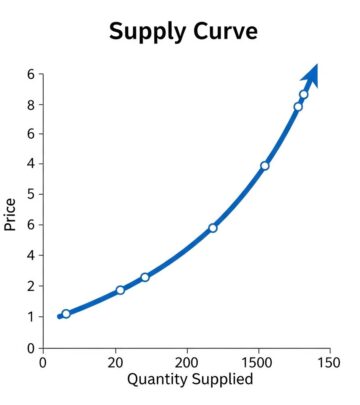
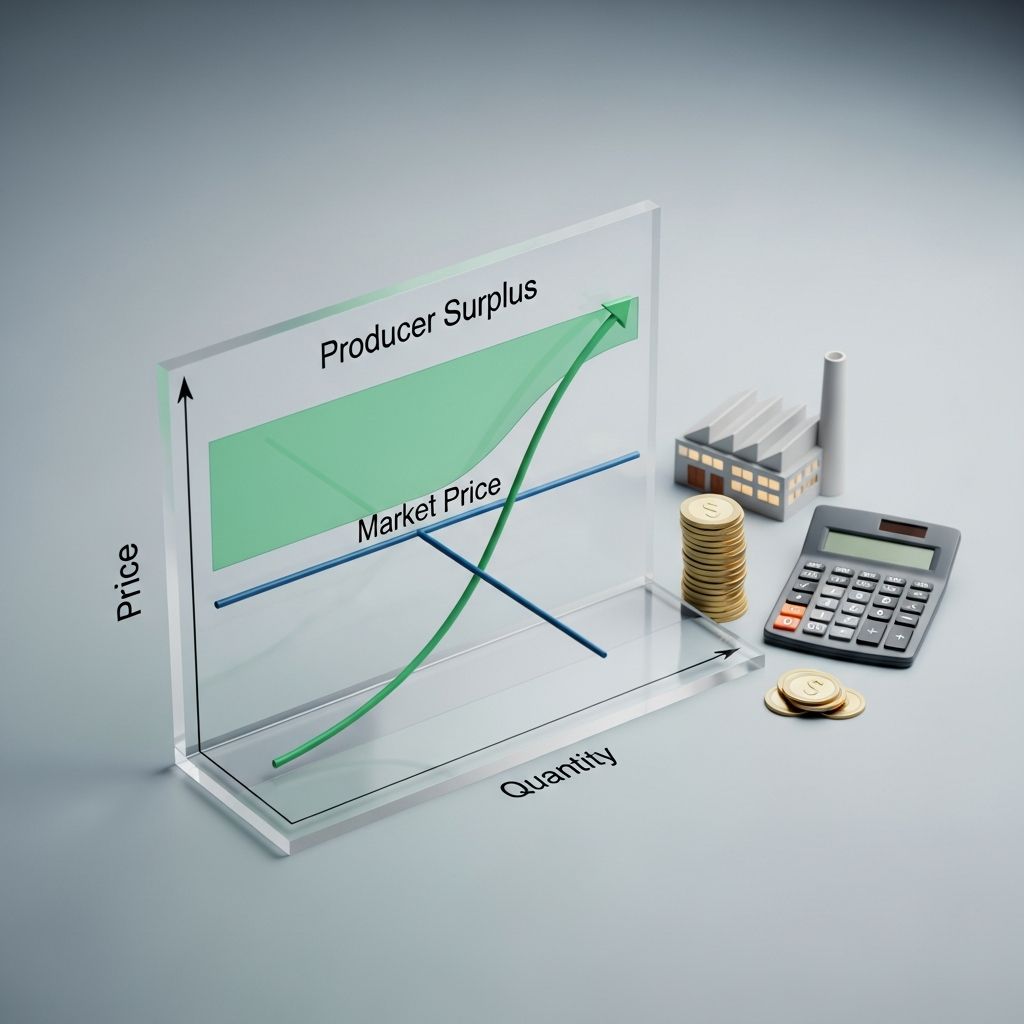
The supply curve in economics directly reflects the minimum prices at which producers are willing to supply different quantities of goods. Points below the supply curve represent producer surplus—the area between the actual market price and the supply curve itself. This visual representation helps economists and market analysts understand the total benefit sellers receive from market participation.
How to Calculate Producer Surplus
Calculating producer surplus involves understanding the relationship between supply curves, market prices, and production quantities. There are several methods to determine this important economic metric:
The Basic Formula Approach
The simplest method uses the triangular area formula when dealing with linear supply curves. The basic producer surplus formula is:
Producer Surplus = (1/2) × Base × Height
Where the base represents the quantity supplied and the height represents the difference between market price and the minimum price at which producers would supply. This formula works when the supply curve forms a linear relationship.
The Integration Method
For more complex supply curves, economists use calculus-based integration. This method involves integrating the area between the market price line and the supply curve across the entire quantity range:
Producer Surplus = ∫(P_market – P_supply(Q)) dQ
This approach accommodates nonlinear supply relationships and provides precise calculations for sophisticated market models.
Step-by-Step Calculation Process
To calculate producer surplus effectively, follow these steps:
First, identify the equilibrium price where supply meets demand in the market. Second, determine the quantity supplied at this equilibrium point. Third, examine the supply curve to find the minimum price at which producers would supply each unit. Fourth, calculate the area between the market price and the supply curve. Finally, sum this area to determine total producer surplus.
Real-World Applications and Examples
Producer surplus appears throughout various industries and market conditions. In agricultural markets, when crop prices increase due to supply shortages, farmers experience significant producer surplus increases. A corn producer might incur $3 per bushel in production costs but receive $6 per bushel during a supply shortage, generating $3 per unit in surplus.
Technology companies also benefit substantially from producer surplus. When a software company develops an application with relatively low marginal costs but sells millions of copies at premium prices, the difference between production cost and selling price creates enormous producer surplus.
Real estate markets demonstrate producer surplus through property sales. A homebuilder constructing houses for $200,000 each might sell them for $350,000 in a tight market, creating $150,000 in producer surplus per home sold.
Producer Surplus in Market Equilibrium
At market equilibrium, where supply equals demand, producer surplus reaches a specific level determined by the intersection point of these curves. The equilibrium price establishes the baseline for calculating surplus—producers selling at this price receive all units above the supply curve as surplus.
When price controls or price floors are implemented by governments, producer surplus changes accordingly. Price floors set above equilibrium increase producer surplus but often create unsold inventory. Conversely, price ceilings below equilibrium reduce producer surplus and may create shortages.
Factors Affecting Producer Surplus
Supply Shifts
Changes in production technology, input costs, or producer expectations shift the supply curve. A technological advancement that reduces production costs shifts supply rightward, potentially decreasing producer surplus if prices remain constant.
Demand Changes
Increased demand pushes market prices upward, expanding producer surplus. Decreased demand has the opposite effect, compressing the surplus as prices fall.
Market Conditions
Competition levels, market concentration, and barriers to entry all influence producer surplus. Monopolistic markets typically generate larger producer surplus than perfectly competitive markets.
External Factors
Natural disasters, policy changes, international trade dynamics, and economic cycles all impact producer surplus significantly.
Producer Surplus Versus Consumer Surplus
| Aspect | Producer Surplus | Consumer Surplus |
|---|---|---|
| Definition | Benefit sellers receive above their willingness to sell | Benefit buyers receive below their willingness to pay |
| Calculation | Price received minus marginal cost | Willingness to pay minus price paid |
| Supply/Demand | Based on supply curve | Based on demand curve |
| Market Impact | Incentivizes production increase | Encourages consumption increase |
| Graphical Position | Above supply curve, below price | Below demand curve, above price |
Economic Importance and Implications
Producer surplus serves as a crucial indicator of economic efficiency and market health. High producer surplus can signal attractive profit opportunities that attract new market entrants. This expanded supply eventually normalizes prices and reduces surplus, creating market equilibration.
Policymakers use producer surplus analysis to evaluate market interventions. Agricultural subsidies, for example, artificially increase producer surplus, affecting global commodity markets. Understanding these effects helps governments craft more effective policies.
Investors analyze producer surplus trends to identify profitable opportunities and industry shifts. Rising surplus in a sector suggests favorable conditions, while declining surplus may indicate market saturation or increased competition.
Total Economic Welfare
Producer surplus, combined with consumer surplus, determines total economic welfare in a market. At competitive equilibrium, the sum of producer and consumer surplus is maximized, indicating efficient resource allocation. Any deviation from this equilibrium reduces total welfare, creating what economists call deadweight loss.
Understanding this relationship helps explain why perfect competition is theoretically optimal—it maximizes the combined benefits available to all market participants.
Frequently Asked Questions (FAQs)
Q: What is the difference between producer surplus and profit?
A: Producer surplus represents the benefit above marginal cost, while profit includes all revenues minus all costs, including fixed costs and overhead. Producer surplus focuses specifically on the price-cost margin for each unit sold.
Q: How does producer surplus relate to market efficiency?
A: Producer surplus helps determine market efficiency. At competitive equilibrium, combined producer and consumer surplus is maximized, indicating optimal resource allocation. Deviations from this point create inefficiency and deadweight loss.
Q: Can producer surplus be negative?
A: No, producer surplus cannot be negative in a functioning market. Producers simply choose not to sell if market prices fall below their willingness to sell. A negative surplus would mean selling at a loss, which rational producers avoid.
Q: How do government price controls affect producer surplus?
A: Price floors above equilibrium increase producer surplus but create excess supply. Price ceilings below equilibrium decrease producer surplus and create shortages. Both interventions move markets away from efficient equilibrium.
Q: Why is producer surplus important for market analysis?
A: Producer surplus indicates market profitability, attracts new competitors, signals resource allocation efficiency, and helps evaluate policy impacts. It provides essential insights into how markets function and evolve.
Q: How does technological innovation affect producer surplus?
A: Technology reducing production costs shifts the supply curve rightward. This initially increases producer surplus for early adopters, but eventually increases competition and may reduce surplus as new entrants enter the market.
References
- A Guide to Consumer and Producer Surplus — Aron Groups. Accessed November 2025. https://arongroups.co/forex-articles/consumer-and-producer-surplus-explained/
- How to Calculate Producer Surplus: A Step-by-Step Guide for Better Market Insights — DHGate. Accessed November 2025. https://smart.dhgate.com/how-to-calculate-producer-surplus-a-step-by-step-guide-for-better-market-insights/
- Producer Surplus — Khan Academy. Accessed November 2025. https://www.khanacademy.org/economics-finance-domain/microeconomics/consumer-producer-surplus/consumer-producer-surplus-tut/v/producer-surplus
Similar Articles








Read full bio of Sneha Tete