Procurement: Definition, Process, and Business Importance
Master procurement: Learn how businesses source, acquire, and manage goods and services strategically.
What Is Procurement?
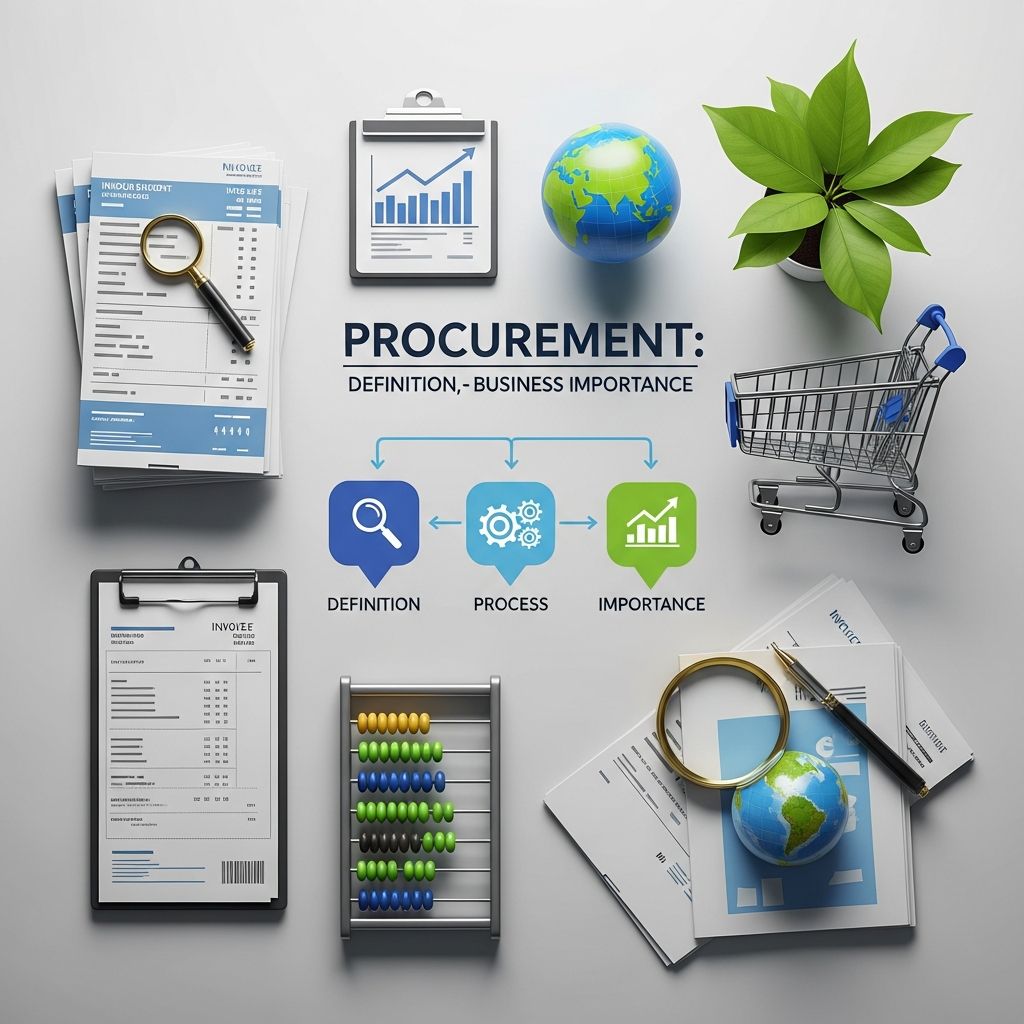
Procurement is the structured process of finding, acquiring, and paying for goods or services to meet a company’s operational needs. It encompasses everything from identifying a business need, researching and selecting suppliers, negotiating contract terms, issuing purchase orders, receiving goods or services, and processing payments. Far more than a simple transaction, procurement represents a strategic function that directly impacts a company’s operational efficiency, cost management, and overall financial performance.
The term “procurement” derives from the concept of obtaining or securing necessary resources from external sources. In modern business environments, effective procurement involves careful planning, vendor evaluation, and relationship management to ensure organizations acquire the right products and services at optimal prices while maintaining quality standards and regulatory compliance. Whether a company is purchasing raw materials for manufacturing, office supplies for daily operations, or specialized services, procurement plays a crucial role in supporting business objectives.
Understanding the Core Components of Procurement
Every successful procurement operation relies on three fundamental elements that work together to create an effective acquisition system:
People represent the first critical component. Decision-makers, procurement professionals, supply chain managers, and vendor relationship specialists form the backbone of any procurement function. These individuals are responsible for selecting appropriate suppliers, negotiating favorable contract terms, managing vendor relationships, and ensuring all procurement activities align with organizational goals and compliance requirements.
Paperwork constitutes the second essential element. Comprehensive documentation including purchase requisitions, requests for quotation (RFQs), contracts, purchase orders, invoices, and payment records create an audit trail that ensures transparency and accountability. This documentation provides clear evidence of each transaction, supporting financial controls and regulatory compliance while enabling performance tracking and historical analysis.
Process forms the third component, establishing the standardized procedures and workflows that guide how procurement activities are executed, monitored, and tracked. A well-defined procurement process ensures consistency across the organization, reduces errors, minimizes delays, and enables continuous improvement through performance metrics and analysis.
How Procurement Functions in Business Operations
While procurement processes vary across organizations based on industry, size, and specific needs, most businesses follow a similar foundational path. Understanding this workflow helps procurement professionals and stakeholders navigate the acquisition journey effectively.
The Standard Procurement Workflow
The typical procurement process includes the following sequential steps:
- Identify the need: Department heads or stakeholders determine what goods or services are required to address shortages, support new projects, or meet ongoing operational demands.
- Create a purchase request: A formal purchase requisition is submitted for internal review and approval to ensure alignment with business goals and available budgets.
- Collect supplier information: Procurement teams research and collect quotes or proposals from potential vendors based on specific requirements.
- Evaluate vendors: Suppliers are assessed based on price, quality, reliability, delivery capability, and overall value proposition.
- Negotiate and select: Terms are negotiated with chosen suppliers to secure favorable pricing and contract conditions.
- Issue purchase order: A formal purchase order is issued to the selected supplier confirming the agreement and delivery expectations.
- Receive and inspect: Upon delivery, goods or services are received and inspected to verify they meet specified quality standards and contractual requirements.
- Process payment: Invoices are verified and approved for payment through three-way matching (comparing purchase order, receipt, and invoice).
- Maintain records: All documentation is properly filed and retained for auditing, reporting, and future reference.
Well-managed procurement extends beyond simply ordering items—it requires strategic thinking, relationship management, and continuous alignment with broader financial and operational goals.
Types of Procurement
Procurement can take multiple forms depending on what is being acquired and how it contributes to business operations. Understanding these categories helps organizations tailor their procurement strategies appropriately.
Direct Procurement
Direct procurement involves acquiring items or materials that directly contribute to creating the final product or service. For manufacturing companies, this includes raw materials, components, and parts essential to production. For service-based organizations, this might include specialized resources or equipment directly used in service delivery. Direct procurement is often considered more strategic because these purchases directly impact product quality, cost competitiveness, and customer satisfaction.
Indirect Procurement
Indirect procurement encompasses goods and services necessary for business operations but not directly incorporated into the final product. Examples include office supplies, janitorial services, marketing materials, IT support, facility maintenance, and administrative services. While indirect procurement doesn’t directly affect the product or service delivered to customers, it significantly impacts operational efficiency and employee productivity.
Goods Procurement
This category covers all physical products a company requires to operate effectively and serve customers, ranging from raw materials and components to finished goods and equipment. Goods procurement requires attention to quality specifications, inventory management, delivery schedules, and cost optimization.
Services Procurement
Services procurement involves acquiring paid labor or specialized expertise, including consulting services, cleaning services, IT support, professional development, and temporary staffing. Service procurement often requires different evaluation criteria than goods procurement, focusing on expertise, reliability, and performance capabilities.
Key Procurement Stages
Breaking the procurement process into distinct stages clarifies responsibilities, workflows, and timelines, enabling better organization and management.
The Sourcing Stage
During the sourcing stage, procurement teams identify organizational needs, conduct market research to identify potential suppliers, and evaluate available options. This stage involves developing detailed specifications, researching vendor capabilities, assessing supplier track records, and comparing initial proposals. Thorough sourcing lays the foundation for successful procurement outcomes.
The Purchasing Stage
The purchasing stage involves negotiating terms with selected suppliers, finalizing contracts, issuing purchase orders, and confirming delivery schedules. This stage transforms the sourcing decision into actionable commitments and establishes clear expectations with suppliers regarding specifications, pricing, delivery dates, and service levels.
The Payment Stage
The payment stage includes verifying that goods or services have been received according to specifications, approving invoices, and processing payments. This stage ensures proper three-way matching between purchase orders, receipt documentation, and vendor invoices before payment authorization, maintaining financial accuracy and preventing duplicate or fraudulent payments.
Procurement Versus Purchasing: Understanding the Distinction
While often used interchangeably, procurement and purchasing represent different scopes of responsibility. Understanding this distinction is important for organizational clarity and role definition.
Procurement represents the comprehensive, strategic process encompassing the entire acquisition lifecycle from identifying needs through vendor selection, negotiation, contract management, and supplier relationship management. Procurement teams think strategically about long-term supplier relationships, total cost of ownership, and organizational impact.
Purchasing refers specifically to the transactional activities of ordering, receiving, and paying for goods or services. Purchasing is essentially a single step—albeit an important one—within the broader procurement process. Purchasing teams focus on processing purchase orders, managing receipts, and facilitating payments.
In essence, all purchasing is part of procurement, but not all procurement activities are purchasing. This distinction is important because procurement requires strategic thinking and relationship management, while purchasing emphasizes efficiency and accuracy in transactions.
The Purchase Requisition: A Critical Tool
The purchase requisition serves as the formal internal document initiating the procurement workflow. Typically submitted by employees or departments needing to acquire specific goods or services, purchase requisitions document the identified need and justify the expenditure. These documents are essential because they:
- Clearly state identified needs with specific details and technical specifications
- Provide documented justification for why the expenditure is necessary for business operations
- Enable structured internal review and formal approval processes before external supplier commitments
- Create accountability by requiring authorization from appropriate management levels
- Establish a baseline for tracking and comparing actual purchases against approved requests
By requiring purchase requisitions before procurement activities commence, organizations ensure that spending aligns with strategic goals, budgets remain controlled, and unnecessary or duplicate purchases are prevented.
Benefits of Effective Procurement Management
Organizations that implement robust procurement systems realize numerous benefits including cost reduction through competitive bidding and volume discounts, improved supplier quality and reliability, enhanced compliance with regulatory requirements, reduced procurement cycle times, better inventory management, and strengthened vendor relationships that support long-term business objectives.
Strategic procurement also provides better financial visibility and control, enabling organizations to track spending patterns, identify cost-saving opportunities, and make data-driven purchasing decisions. Additionally, professional procurement practices reduce supply chain risks by diversifying supplier bases and establishing contingency plans.
Frequently Asked Questions About Procurement
What is procurement in business context?
Procurement in business represents the process of sourcing, acquiring, and paying for the goods and services a company needs to operate effectively. It includes comprehensive activities such as supplier selection, price negotiation, contract management, and vendor relationship development. Procurement is strategic in nature and directly supports organizational objectives and financial performance.
Can you provide an example of procurement in practice?
A practical example would be a food manufacturer needing packaging materials for product shipment. The procurement team identifies specific packaging requirements, solicits proposals from multiple suppliers, evaluates options based on cost, quality, and delivery capability, negotiates pricing and delivery schedules that align with production timelines, and ultimately selects a supplier to ensure consistent supply of materials supporting manufacturing operations.
How does procurement differ from purchasing?
Procurement encompasses the entire strategic process of acquiring goods or services, including identifying needs, researching suppliers, negotiating terms, managing contracts, and maintaining vendor relationships. Purchasing, by contrast, focuses specifically on the transactional elements: creating purchase orders, receiving goods, and processing payments. Procurement is broader and more strategic, while purchasing is more tactical and transaction-focused.
What makes procurement essential for business success?
Effective procurement is essential because it directly impacts operational efficiency, cost management, product quality, supply chain reliability, and regulatory compliance. Strategic procurement ensures organizations acquire necessary resources at optimal prices while maintaining quality standards and building reliable supplier relationships that support long-term business growth and competitiveness.
How can organizations improve their procurement processes?
Organizations can enhance procurement effectiveness by establishing clear policies and procedures, implementing procurement software for better tracking and analysis, developing strong supplier relationships, conducting regular competitive bidding, training procurement teams on best practices, monitoring performance metrics, and continuously seeking cost optimization opportunities while maintaining quality standards.
References
- What is Procurement? Definition, Types & Processes — Orderful. 2025. https://www.orderful.com/blog/what-is-the-meaning-of-procurement
- Procurement — Institute for Supply Management (ISM). Accessed 2025. https://www.ismworld.org
- Federal Acquisition Regulation (FAR) — U.S. General Services Administration. 2025. https://www.acquisition.gov/far
Similar Articles








Read full bio of medha deb