Priority vs. Non-Priority Debt in Bankruptcy
Discover how bankruptcy courts classify debts and why priority claims get paid first, impacting your financial fresh start.
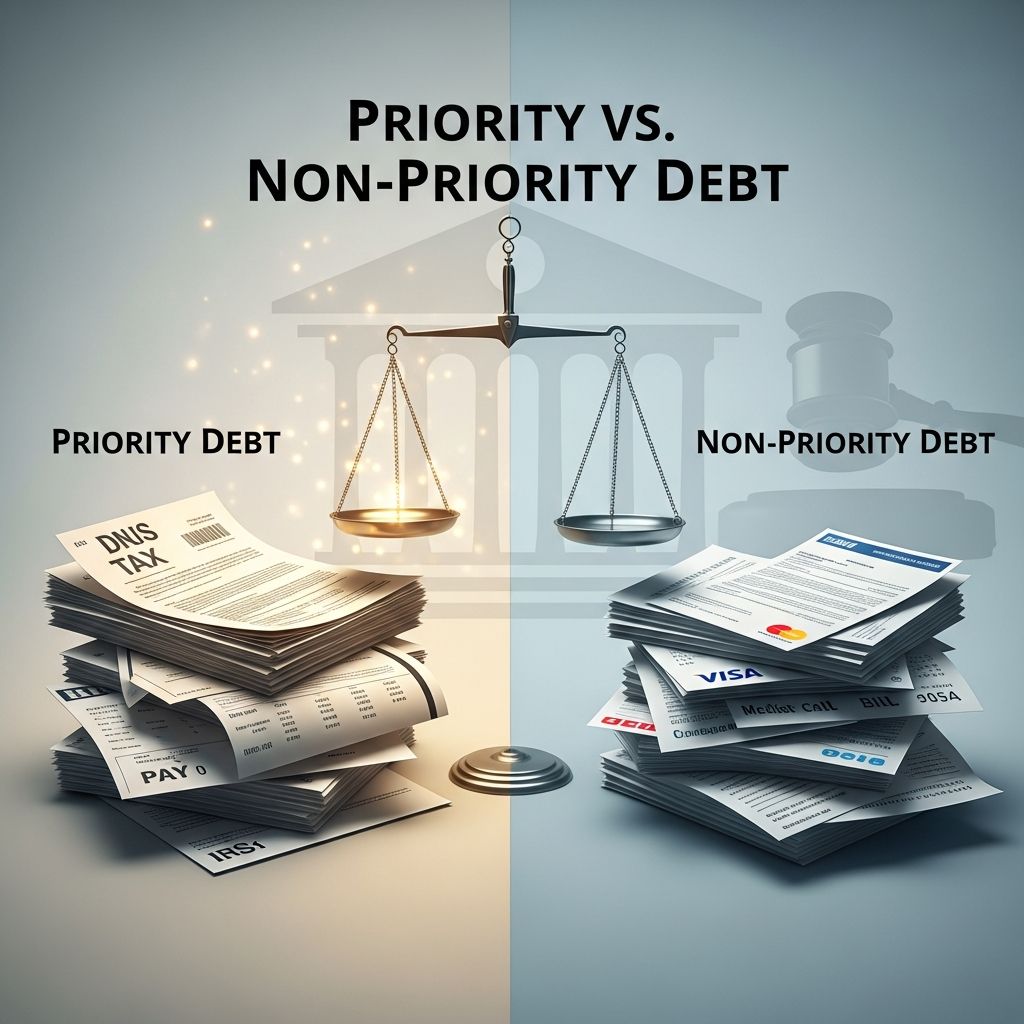
Bankruptcy offers a structured way to manage overwhelming debt, but not all obligations are treated equally. Courts divide unsecured debts into
priority
andnon-priority
categories based on federal law, determining payment order and discharge eligibility. This classification ensures essential public interests are protected first.Defining Debt Categories in Bankruptcy Proceedings
In U.S. bankruptcy, debts fall into secured (backed by collateral like a home or car) and unsecured (no collateral). Unsecured debts split further into priority and non-priority. Priority debts receive top repayment status due to their societal importance, such as government taxes or family support obligations. Non-priority debts, like everyday consumer bills, rank lower.
Under 11 U.S. Code § 507, priority is explicitly listed, covering recent taxes, employee wages, and domestic support. These must be addressed before others, reflecting Congress’s view on critical payments.
Common Examples of Priority Debts
Priority unsecured debts demand immediate attention in repayment plans. Key types include:
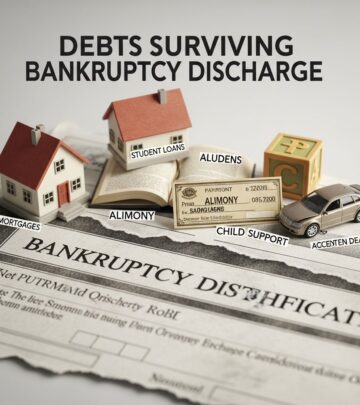
- Domestic support obligations: Child support or alimony arrears, which remain non-dischargeable to protect dependents.
- Recent tax debts: Income taxes from the last three years, plus certain payroll or trust fund taxes, if returns were filed timely.
- Employee wages: Up to $15,150 per employee for services within 180 days before filing (adjusted periodically).
- Administrative costs: Fees for bankruptcy estate management, like trustee expenses.
- Personal injury claims: Debts from DUI-related damages, prioritizing victim compensation.
Federally backed student loans often act as priority-like, requiring an adversary proceeding for potential discharge if undue hardship is proven.
Characteristics of Non-Priority Unsecured Debts
Non-priority debts lack special status and are typically dischargeable, offering bankruptcy’s main relief. Common examples:
- Credit card balances
- Medical expenses
- Unsecured personal loans
- Utility arrears (non-essential)
- Gym memberships or store accounts
These creditors may receive partial or no payment, with remaining balances erased upon completion.
Treatment in Chapter 7: Liquidation Bankruptcy
Chapter 7 sells non-exempt assets to pay creditors, prioritizing highest claims. Priority debts get full available funds first; if insufficient, they persist post-discharge. Non-priority debts are discharged if unpaid, but secured debts may lead to asset repossession.
| Debt Type | Chapter 7 Treatment |
|---|---|
| Priority Unsecured | Paid first from asset sales; rarely discharged |
| Non-Priority Unsecured | Discharged if not paid; no further liability |
| Secured | Debt discharged but collateral may be taken |
This process suits those with low assets and mostly non-priority debts.
Handling Debts Under Chapter 13: Reorganization
Chapter 13 creates a 3-5 year repayment plan without asset liquidation. Priority debts must be paid in full, often with interest deferred. Non-priority creditors get whatever remains, potentially pennies on the dollar, with balances discharged at plan end.
Your plan payment covers priority in full, then non-priority pro-rata. If priority totals exceed affordability, Chapter 13 may fail, pushing toward Chapter 7.
Secured Debts: A Separate Consideration
Secured debts aren’t classified as priority or non-priority unsecured but handled via reaffirmation, redemption, or surrender. Bankruptcy discharges personal liability, but liens survive, allowing repossession if payments lapse.
For homes or cars, catch-up payments in Chapter 13 can retain property; Chapter 7 risks foreclosure or repossession post-discharge.
Impact on Your Bankruptcy Strategy
Assess debt types before filing. High priority loads favor Chapter 13 for catch-up options; low priority suits Chapter 7 discharge. List all debts accurately on schedules to avoid issues.
Student loans need separate litigation; older taxes may qualify as non-priority if over three years old and returns filed two years prior.
Steps to Classify Your Own Debts
- Review statements: Identify creditors and amounts.
- Check §507: Match against priority list.
- Consult attorney: Confirm nuances like tax recency.
- Calculate priority total: Determines Chapter 13 feasibility.
Frequently Asked Questions (FAQs)
Can priority debts ever be discharged?
Rarely; most survive, but exceptions like certain old taxes exist if criteria met.
How does priority affect Chapter 13 payments?
They must be paid 100% over the plan term, influencing monthly amounts.
Are medical bills priority or non-priority?
Typically non-priority and dischargeable.
What about student loans in bankruptcy?
Presumed non-dischargeable; prove hardship via adversary proceeding.
Do I lose everything in Chapter 7?
No, exemptions protect essentials; priority uses non-exempt assets first.
Long-Term Financial Recovery Tips
Post-bankruptcy, rebuild credit by securing housing/utilities, using secured cards, and budgeting. Priority resolution stabilizes life, enabling focus on dischargeable relief.
Bankruptcy isn’t failure—it’s a tool. Over 500,000 Chapter 7 and 250,000 Chapter 13 filings annually aid fresh starts (recent U.S. Courts data).
References
- Understanding Priority and Non-Priority Debt in Bankruptcy — Experian. 2023. https://www.experian.com/blogs/ask-experian/understanding-priority-and-non-priority-debt-in-bankruptcy/
- How do I know if a debt is secured, unsecured, priority or administrative — U.S. Bankruptcy Court (orb.uscourts.gov). Accessed 2026. https://www.orb.uscourts.gov/faq/how-do-i-know-if-debt-secured-unsecured-priority-or-administrative
- Priority vs. Nonpriority Debts in Bankruptcy — Dethlefs Pykosh & Murphy. 2024. https://dpmlawyers.com/priority-vs-nonpriority-debts-in-bankruptcy/
- Unsecured Debt: Priority vs. Non-Priority — TheBankruptcySite.org. 2023. https://www.thebankruptcysite.org/resources/bankruptcy/filing-bankruptcy/unsecured-debt-priority-vs-non-priority
- 11 U.S. Code § 507 – Priorities — U.S. Code (law.cornell.edu). Current as of 2026. https://www.law.cornell.edu/uscode/text/11/507
Similar Articles








Read full bio of medha deb