Principal Payments: 4 Expert Strategies To Cut Interest
Master principal payments to slash debt faster, cut interest costs, and gain financial freedom with proven strategies.

Principal payments form the core of any loan repayment plan, directly targeting the borrowed amount to reduce overall debt. Understanding this concept empowers borrowers to accelerate payoff timelines and minimize interest expenses across various loan types.
Defining the Core of Loan Repayments
At its essence, a principal payment targets the original sum borrowed from a lender, distinct from interest which compensates for the use of funds. This payment directly lowers the outstanding balance, influencing future interest calculations since charges typically apply to the remaining principal. For instance, in installment loans like mortgages or auto financing, regular payments split between interest and principal, with the latter growing over time as interest diminishes.
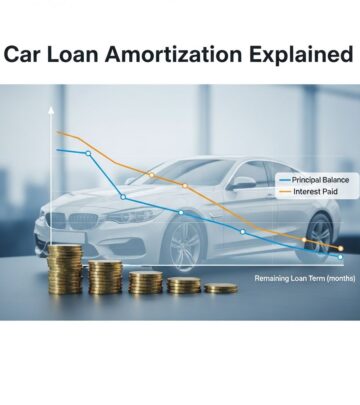
Loans begin with high interest portions in early payments due to the large initial balance. As principal decreases through consistent payments, more of each installment shifts toward debt reduction, creating an amortization effect. This dynamic underscores why grasping principal’s role is vital for effective financial management.
Principal Versus Interest: Key Distinctions
While principal represents the actual debt, interest acts as the lender’s fee, often expressed as an annual percentage rate (APR). Monthly payments cover accrued interest first, with leftovers applied to principal. For example, on a $300,000 loan at 6% interest, early payments might allocate 80% to interest and 20% to principal, flipping ratios later.
| Component | Description | Impact on Loan |
|---|---|---|
| Principal | Original borrowed amount | Reduces balance directly |
| Interest | Fee for borrowing | Decreases as principal shrinks |
| Total Payment | Sum of both plus fees | Fixed in amortizing loans |
This table highlights how focusing extra funds on principal amplifies savings by curbing interest growth.
Types of Principal Payments in Practice
Borrowers encounter various principal payment structures depending on loan terms. Even principal payments maintain a fixed principal reduction per period, with declining interest as the balance drops. Conversely, even total payments keep the full monthly amount constant, gradually increasing the principal share.
- Scheduled Principal: Built into standard amortization, portion grows over time.
- Extra Principal: Voluntary additions beyond minimums to hasten payoff.
- Anticipated Principal: Lump sums applied early, often reducing total interest.
Businesses like vehicle rental firms may issue large principal payments using new capital to shrink debt and boost profitability, as seen when a company reduced a $230,000 balance by $150,000.
Calculating Principal Portions Accurately
Determining the principal component requires reviewing amortization schedules or using formulas. For even principal loans, divide total principal by periods; a $20,000 loan over 10 years yields $2,000 annual principal. More complex amortizing loans use the formula for periodic principal: p = a * (r / (1 – (1 + r)^(-n))), where a is loan amount, r periodic rate, n periods.
Online calculators simplify this, inputting loan details to reveal breakdowns. For a $350,000 mortgage with 20% down, principal starts at $280,000, with monthly portions calculable via balance minus interest. Tracking via statements ensures payments apply correctly, avoiding escrow misallocations.
Advantages of Targeting Principal Aggressively
Direct principal attacks yield compounding benefits. Reducing balance lowers future interest, shortens loan terms, and frees cash sooner. A $400,000 mortgage at 6% with $200 extra monthly principal-only payments over three years saves over $10,000 in balance reduction.
Consider a $10,000 loan at 5% over five years: standard payments total $1,322 interest, but principal-only additions slash this significantly. Financially, this strategy enhances equity buildup in assets like homes and improves credit by lowering utilization.
Strategies for Effective Principal-Only Payments
To maximize impact, designate extras explicitly as principal-only, contacting servicers to confirm application. Avoid general overpayments that may sit in escrow. Ideal timing includes post-interest accrual periods.
- Review loan terms for prepayment penalties.
- Automate extra fixed amounts monthly.
- Round up payments to nearest hundred for simplicity.
- Prioritize high-interest debts first.
Combining with refinancing at lower rates amplifies gains, though eligibility varies.
Principal Payments Across Loan Categories
Mortgage Applications
Home loans feature long amortization, making principal focus transformative. Initial principal sets interest base; reductions via extras build equity rapidly.
Auto and Personal Loans
Shorter terms see quicker principal shifts, but extras still cut interest substantially.
Student Debt Dynamics
Federal options allow principal targeting post-minimums, aiding forgiveness paths.
Business Loan Contexts
Companies record principal reductions on balance sheets, not income statements, improving liquidity. Debit cash, credit loans payable for repayments.
Potential Pitfalls and Precautions
Not all loans permit penalty-free extras; review contracts. Misapplied funds waste opportunities. Budget sustainability prevents defaults. Tax implications, like mortgage interest deductions, may shift with faster payoffs. Consult advisors for personalized plans.
Real-World Impact Illustrations
Scenario: $280,000 mortgage principal, 6% rate, 30 years. Standard: ~$1,679 monthly, heavy early interest. Add $200 principal-only: After 36 months, balance drops extra $10,820 vs. baseline, with interest portions falling faster (e.g., from $1,400 to $1,200).
| Month | Standard Principal | Standard Interest | Extra Principal Total |
|---|---|---|---|
| 1 | $399 | $2,000 | $599 |
| 12 | $421 | $1,978 | $621 |
| 36 | $474 | $1,924 | $674 |
This demonstrates tangible savings acceleration.
Tools and Resources for Monitoring
Amortization calculators from reputable sites, servicer portals, and spreadsheets track progress. Apps visualize payoff paths, motivating consistency.
Frequently Asked Questions
What exactly counts as a principal payment?
Any amount reducing the borrowed balance post-interest coverage.
Can I make principal-only payments anytime?
Yes, if terms allow; specify to lender.
Does principal reduction improve my credit score?
Yes, by lowering debt levels.
Are there penalties for extra principal?
Some loans impose them early; check agreements.
How do I calculate my next principal portion?
Subtract interest from payment or use schedules.
Building Long-Term Financial Discipline
Integrating principal strategies fosters habits like budgeting and prioritizing high-impact debts. Over time, this builds wealth, reduces stress, and opens opportunities like investments. Start small, scale up, and watch debt vanish faster than expected.
References
- What is a Principal Payment? – Definition | Meaning | Example — My Accounting Course. 2023. https://www.myaccountingcourse.com/accounting-dictionary/principal-payment
- Loan principal definition and basics | Rocket Mortgage — Rocket Mortgage. 2024-10-15. https://www.rocketmortgage.com/learn/principal-and-interest
- How to Calculate Principal Payment — GoCardless. 2024. https://gocardless.com/en-us/guides/posts/how-to-calculate-principal-payment/
- What Is a Principal Payment? – Experian — Experian. 2025-01-20. https://www.experian.com/blogs/ask-experian/what-is-principal-payment/
- Is a loan’s principal payment included on the income statement? — Accounting Coach. 2023. https://www.accountingcoach.com/blog/principal-payment-financial-statement
- Supercharge Your Debt Payoff Strategy with Principal-Only Payments — Virginia Credit Union. 2024. https://www.vacu.org/learn/debt/supercharge-your-debt-payoff-strategy-with-principal-only-payments
- On a mortgage, what’s the difference between my principal and interest payment and my total monthly payment? — Consumer Financial Protection Bureau. 2024-05-10. https://www.consumerfinance.gov/ask-cfpb/on-a-mortgage-whats-the-difference-between-my-principal-and-interest-payment-and-my-total-monthly-payment-en-1941/
Similar Articles








Read full bio of medha deb