Prime Rate: Definition, Impact, and Economic Role
Understanding the prime rate and its influence on loans, credit cards, and the broader economy.
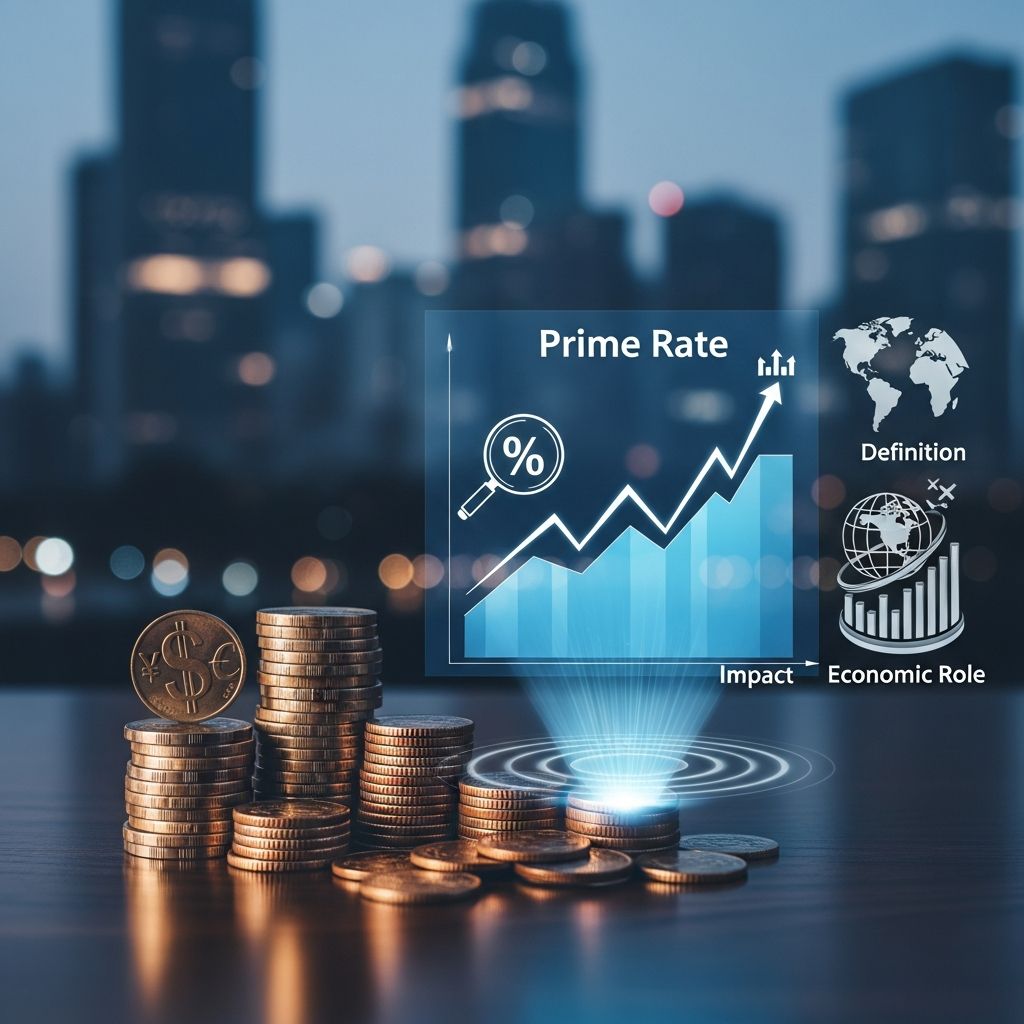
The prime rate is one of the most important benchmark interest rates in the financial system, yet many consumers don’t fully understand what it is or how it affects their financial lives. As the interest rate that commercial banks charge their most creditworthy customers—typically large corporations and established businesses—the prime rate serves as a foundation for countless other interest rates in the economy. While individual consumers rarely receive the prime rate directly, understanding this rate is crucial because it influences the interest rates on the loans and credit products you use every day.
What Is the Prime Rate?
The prime rate is the base interest rate that commercial banks offer to their most creditworthy customers. These are typically large corporations with excellent credit histories and strong financial positions. However, the significance of the prime rate extends far beyond these large borrowers. It serves as a reference rate, or base rate, for a wide variety of consumer and commercial lending products.
Most individual consumers don’t have access to the prime rate when borrowing money. Instead, banks add a margin or spread to the prime rate when calculating interest rates for other types of loans and credit products. This margin reflects the additional risk associated with lending to less creditworthy borrowers. The prime rate itself represents the lowest risk tier of lending, so everything else is priced relative to it.
Financial Products Tied to the Prime Rate
The prime rate serves as a benchmark for numerous financial products that affect everyday consumers:
- Personal loans
- Credit cards
- Adjustable-rate mortgages
- Home equity lines of credit
- Small business loans
- Variable-rate student loans
When the prime rate changes, the rates on these products often adjust as well, particularly if they carry variable interest rates. This is why tracking the prime rate is important for anyone with variable-rate debt.
How Is the Prime Rate Determined?
The prime rate doesn’t exist in isolation—it’s closely tied to Federal Reserve policy. While the Federal Reserve doesn’t directly set the prime rate, banks typically base their prime rate calculations on the federal funds target rate established by the Federal Open Market Committee (FOMC). The federal funds rate is the interest rate that banks charge each other for overnight loans, and it’s the primary tool the Federal Reserve uses to influence monetary policy and economic conditions.
The Relationship Between Federal Funds Rate and Prime Rate
Most banks set their prime rate approximately 3 percentage points higher than the federal funds rate. This 3% spread has become industry standard because it reflects the difference in risk between lending to other banks (federal funds rate) and lending to the most creditworthy customers (prime rate). However, it’s important to note that individual banks may set slightly different prime rates depending on their specific market conditions, competitive landscape, and internal policies.
When the Federal Reserve adjusts its target federal funds rate, banks typically follow suit and adjust their prime rates within a few days. This rapid adjustment ensures that the prime rate remains closely aligned with Federal Reserve policy changes. For example, if the Federal Reserve raises the upper limit of the federal funds target rate from 4.00% to 4.25%, banks would likely increase the prime rate from 7.00% to 7.25%.
How the Prime Rate Is Measured
One of the most widely cited prime rates is the one published in the Wall Street Journal. This rate is updated whenever the prime rates posted by 70% of the ten largest U.S. banks change. This published rate serves as the official benchmark that many lenders use when setting rates on variable-rate products for consumers.
Historical Prime Rate Trends
Understanding the history of the prime rate provides valuable context for how economic conditions and Federal Reserve policy influence interest rates throughout the financial system. The prime rate has fluctuated dramatically over the past several decades in response to inflation, recessions, and other economic factors.
The Early 1980s: Record Highs
The prime rate reached its all-time high of 21.50% in December 1980. This extraordinary rate reflected the Federal Reserve’s aggressive response to the severe inflation plaguing the economy during that period. The Federal Reserve, under Chairman Paul Volcker, implemented a deliberate policy of raising interest rates sharply to break the back of inflation. While this strategy successfully brought inflation under control and ultimately stabilized prices, it also triggered a severe recession and caused significant economic pain for many borrowers.
The 1990s: Recovery and Growth
The 1990s began with economic challenges. The decade started with a mild recession, and the prime rate was cut to 6.00% in July 1992 to stimulate economic growth. As the economy strengthened and the decade progressed, the Federal Reserve gradually raised rates. By the end of the 1990s, fueled by the dot-com boom and robust economic growth, the prime rate had climbed to 8.50% by the end of 1999. This period of rising rates reflected the Federal Reserve’s attempts to prevent the economy from overheating and inflation from accelerating.
Early to Mid-2000s: The Housing Boom and Bust
Following the dot-com bubble burst in 2000, the prime rate fell slowly to 4.00% by June 2003 as the Federal Reserve cut rates to combat the resulting recession. As the economy recovered during the mid-2000s, the Federal Reserve raised rates again, and the prime rate climbed to 8.25% just before the housing market crashed in 2007. This period illustrated how rapidly economic conditions can reverse and how the Federal Reserve adjusts policy in response.
The Financial Crisis and Great Recession: Historic Lows
The 2008 global financial crisis and subsequent Great Recession forced the Federal Reserve to take dramatic action. In response to the crisis, the Fed cut the federal funds rate to near zero, which caused the prime rate to fall to 3.25% in December 2008—the lowest it had ever been. This rate remained at 3.25% for an unprecedented seven years, until December 2015. The extended period of ultra-low rates was designed to stimulate borrowing and economic activity during the recovery. While low rates made borrowing cheaper for consumers and businesses, savings account annual percentage yields (APYs) were typically well under 1% at most banks during this period, making it difficult for savers to earn meaningful returns on their deposits.
The COVID-19 Pandemic Response
When the COVID-19 pandemic struck in 2020, the Federal Reserve once again cut rates dramatically, and the prime rate fell to 3.25% in March 2020. This rate remained at that level until mid-2022, when the Federal Reserve began raising rates aggressively to combat inflation that had accelerated during the pandemic recovery.
Impact of Prime Rate Changes on Consumers
Credit Cards and Variable Interest Rates
Credit card rates are particularly sensitive to changes in the prime rate. Most credit cards carry variable interest rates that are tied directly to the prime rate. Your annual percentage rate (APR) is typically calculated as the prime rate plus a margin determined by your card issuer based on your creditworthiness. For example, if your card’s terms specify the prime rate plus 15%, and the prime rate is 7.50%, your APR would be 22.50%.
When the prime rate changes, your credit card APR usually adjusts within one to two billing cycles. This means that when interest rates rise, the cost of carrying a credit card balance increases relatively quickly. Conversely, when rates fall, your APR may decrease, reducing interest charges on any balance you carry. This direct connection between the prime rate and credit card rates makes understanding rate changes particularly important for those who maintain credit card balances.
Adjustable-Rate Mortgages and Home Equity Lines of Credit
Adjustable-rate mortgages (ARMs) and home equity lines of credit (HELOCs) are also directly affected by prime rate changes. These products typically have variable rates that adjust periodically based on changes to the prime rate. When shopping for these products, it’s important to understand the margin that will be added to the prime rate and when adjustments will occur. In a rising rate environment, adjustable-rate borrowers will see their monthly payments increase, which can significantly impact their household budget.
Personal Loans and Small Business Loans
Personal loans and small business loans often include prime rate components as well. While some of these loans have fixed rates, many variable-rate options are available. Understanding how these rates will adjust with prime rate changes is crucial for borrowers planning their finances.
Economic Implications of Prime Rate Changes
Changes to the prime rate are not random occurrences—they reflect important shifts in economic conditions and Federal Reserve policy. These changes have far-reaching implications for the entire economy.
When the prime rate falls, borrowing costs tend to decrease, making it less expensive to take out loans or carry a credit card balance. Lower borrowing costs encourage consumer spending and business investment, which can stimulate economic growth. This is particularly important during recessions or periods of slow growth, when the Federal Reserve deliberately lowers rates to encourage activity.
Conversely, when the prime rate rises, borrowing becomes more costly. Higher rates discourage excessive borrowing and spending, which can help control inflation. By making it more expensive to borrow and spend, rising rates reduce the amount of money circulating in the economy, which can help bring down prices. However, higher rates also slow economic growth and can lead to job losses, so the Federal Reserve must carefully balance the benefits of controlling inflation against the costs of slower growth.
Frequently Asked Questions
What was the highest prime rate ever recorded?
The highest prime rate in history was 21.50%, which occurred in December 1980. This extraordinary rate reflected the Federal Reserve’s aggressive efforts to combat the severe inflation that was plaguing the economy during that period. While the high rates successfully brought inflation under control and eventually stabilized prices, they also triggered a severe recession that caused significant economic hardship.
What was the lowest prime rate ever recorded?
The lowest prime rate ever recorded was 3.25%, which was reached in December 2008 during the global financial crisis. The Federal Reserve slashed interest rates to this level to stimulate the economy and encourage borrowing and spending during the Great Recession. This historic low rate remained in place until December 2015 and was implemented again in March 2020 during the COVID-19 pandemic.
Does the Federal Reserve directly set the prime rate?
No, the Federal Reserve does not directly set the prime rate. Instead, individual banks determine their own prime rates. However, banks typically base their prime rate calculations on the federal funds target rate established by the Federal Open Market Committee. Because banks use the federal funds rate as the foundation for the prime rate, the Federal Reserve’s policy decisions indirectly influence the prime rate.
How quickly does the prime rate change when the Federal Reserve adjusts rates?
Banks typically adjust their prime rates within a few days of a Federal Reserve decision. The Wall Street Journal’s published prime rate is updated whenever 70% of the ten largest U.S. banks change their prime rates. This rapid response ensures that the prime rate stays closely aligned with Federal Reserve policy.
How does the prime rate affect my credit card interest rate?
Your credit card APR is typically calculated as the prime rate plus a margin set by your card issuer. When the prime rate increases, your credit card APR usually increases within one to two billing cycles. This means you’ll pay more interest on any balance you carry. When the prime rate decreases, your APR typically decreases as well, reducing the interest charges on your balance.
Why is there a 3% spread between the federal funds rate and the prime rate?
The 3% spread represents the difference in risk between lending to other banks overnight (federal funds rate) versus lending to the most creditworthy customers (prime rate). Lending to other banks is considered lower risk, while lending to even the most creditworthy customers carries more risk, which justifies the higher prime rate. Individual banks may set slightly different spreads based on their competitive position and market conditions.
References
- What Is the Prime Rate? — Experian. 2025-05-08. https://www.experian.com/blogs/ask-experian/what-is-prime-rate/
- What is the prime rate, and does the Federal Reserve set the prime rate? — Board of Governors of the Federal Reserve System. https://www.federalreserve.gov/faqs/credit_12846.htm
Similar Articles








Read full bio of Sneha Tete