Prime Rate: Definition, Impact & Current Rates
Understanding the prime rate: how it affects your loans, credit cards, and financial decisions today.
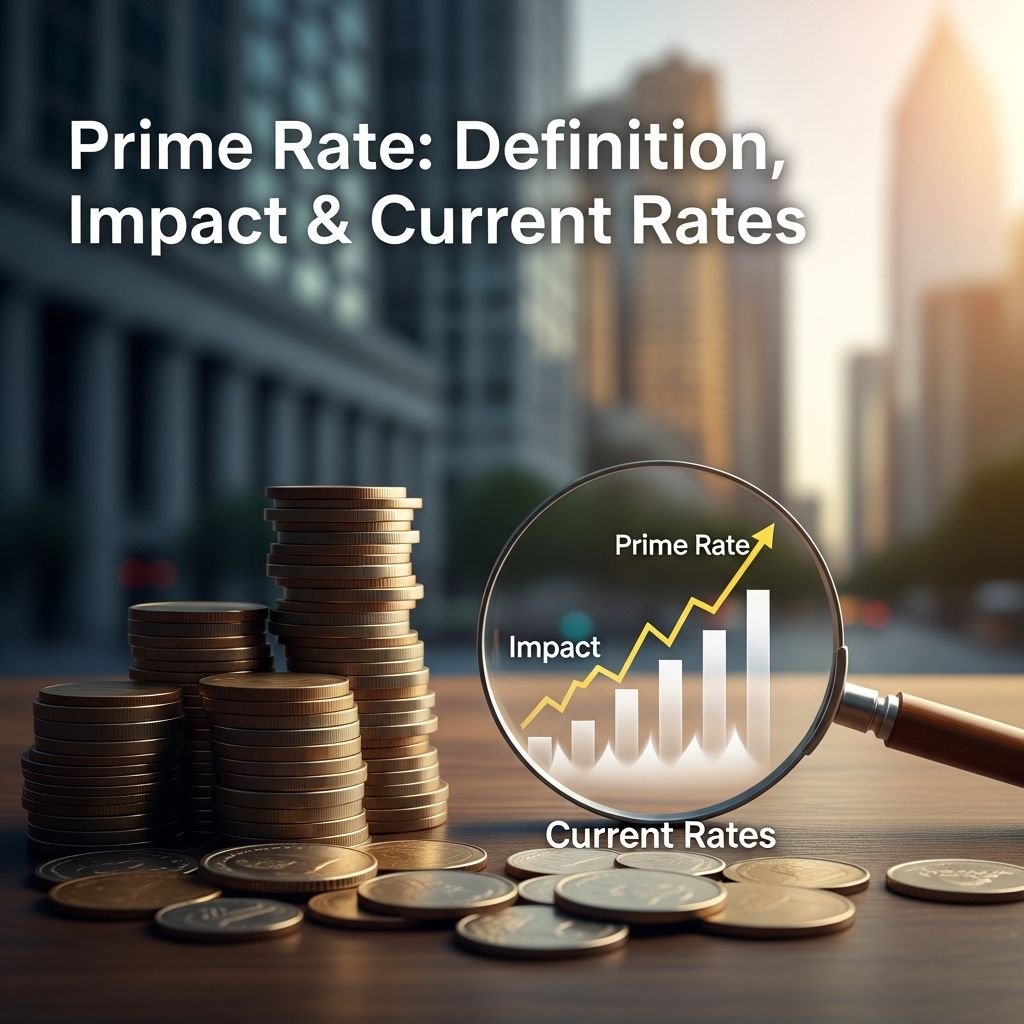
Understanding the Prime Rate
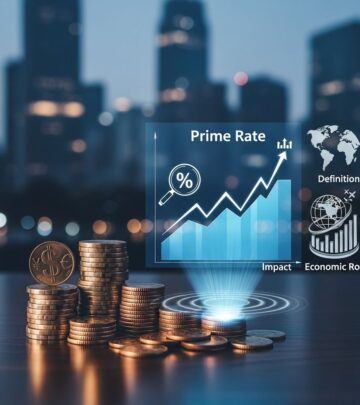
The prime rate is one of the most important benchmarks in the financial world, serving as the foundation for determining interest rates across a wide range of consumer and business lending products. Whether you’re applying for a credit card, taking out a personal loan, or securing a mortgage, the prime rate plays a crucial role in determining what interest rate you’ll ultimately pay. Understanding this fundamental concept can help you make more informed financial decisions and better anticipate how economic changes might affect your borrowing costs.
What Is the Prime Rate?
The prime rate is the interest rate that banks and financial institutions use as a baseline when setting rates for various types of loans and credit products offered to their customers. It represents the lowest variable interest rate that a bank will offer to its most creditworthy borrowers—typically large corporations and well-qualified individuals. However, in practice, even borrowers with excellent credit rarely receive financing at the exact prime rate; instead, lenders add a margin to this baseline rate to determine the final rate charged to customers.
The prime rate serves as an index for financial institutions when calculating interest rates for credit cards, home equity lines of credit, personal loans, auto loans, and other variable-rate credit products. It is often referred to as The Wall Street Journal Prime Rate, as The Wall Street Journal publishes the most widely recognized measure of the prime rate by surveying the 30 largest banks in the United States.
How Is the Prime Rate Determined?
The prime rate is not set by a single authority; rather, it is derived from the federal funds rate, which is the target interest rate set by the Federal Reserve Board. The relationship between these two rates is direct and predictable: the prime rate is typically approximately 3 percentage points higher than the federal funds rate. This means that whenever the Federal Reserve makes changes to the federal funds rate, the prime rate generally adjusts accordingly, usually within a short period of time.
The federal funds rate itself is the interest rate at which commercial banks charge each other for overnight lending to maintain their required reserve balances. While the Federal Reserve sets a target range for the federal funds rate, it does not directly dictate what individual banks charge their customers. Instead, market forces and competition drive the relationship between the federal funds rate and the prime rate.
It’s important to note that while the prime rate typically moves in lock step with Federal Reserve decisions, banks are not legally required to change their prime rate immediately when the Fed acts. In practice, however, most major banks do adjust their prime rates on the same day that The Wall Street Journal publishes changes to its prime rate survey.
The Wall Street Journal Prime Rate Survey
The Wall Street Journal publishes what is considered the most authoritative measure of the prime rate in the United States. The Journal surveys 30 of the largest banks in the country and tracks when they change their prime rates. The published prime rate changes when at least 23 of these banks (or three-quarters of the surveyed institutions) adjust their rates. When this threshold is reached, The Wall Street Journal updates its published prime rate, effective on the day of publication.
This survey-based approach provides a practical, real-world measure of the prime rate that reflects actual lending practices across the major U.S. banking system, making it the most widely quoted and trusted benchmark for the prime rate.
Current Prime Rate and Historical Context
As of October 30, 2025, the prime rate stands at 7.00%. This represents a significant decline from recent highs. Throughout 2024 and early 2025, the prime rate had been higher, reaching 7.50% as of December 19, 2024, and 7.75% as of November 8, 2024. The rate has been on a downward trend in recent months, reflecting Federal Reserve policy decisions to lower interest rates in response to economic conditions.
To understand the current environment, it’s helpful to look at the historical progression of prime rates. In 2023, the rate climbed significantly, reaching 8.50% on July 27, 2023, representing the highest level in decades. This peak reflected the Federal Reserve’s aggressive interest rate hiking campaign that began in 2022. Prior to that, the prime rate had fallen dramatically during the COVID-19 pandemic, reaching as low as 3.25% on March 17, 2020.
Prime Rate vs. Fixed Interest Rates
A critical distinction exists between variable-rate loans tied to the prime rate and fixed-rate loans. The prime rate directly influences variable interest rate products, meaning that when the prime rate changes, your borrowing costs change accordingly. However, the prime rate has no direct influence on fixed interest rates.
Fixed interest rates are instead determined by bond yields, which are influenced by market factors such as employment rates, inflation expectations, consumer confidence, and market sentiment about future interest rate movements. This means that even if the prime rate remains stable, fixed interest rates can still fluctuate based on broader market conditions. Understanding whether you have a variable or fixed rate product is essential for anticipating how Federal Reserve policy changes might affect your financial obligations.
How the Prime Rate Affects Your Monthly Bills
The prime rate has a direct impact on variable-rate borrowing products, which make up a significant portion of consumer debt. When the prime rate increases, the interest rates on variable-rate credit cards, home equity lines of credit, and personal loans typically increase as well. Conversely, when the prime rate decreases, you may benefit from lower interest charges on these products.
For credit card borrowers, this relationship is particularly important. The prime rate serves as the baseline that credit card issuers use to determine the interest rate charged to cardholders. A higher prime rate translates to a higher annual percentage rate (APR) on your credit card balance if you carry one from month to month. Even borrowers with excellent credit scores pay significantly more than the prime rate on credit cards—current average credit card interest rates hover around 20.09%, even though the prime rate is 7.00%.
The difference between the prime rate and the rate you actually pay is known as the bank margin or spread. This margin covers the bank’s costs, default risk, and profit margin. For borrowers with poor credit, this spread is larger, resulting in substantially higher interest rates compared to what customers with good or excellent credit pay.
How Prime Rate Affects Your Finances
Understanding how the prime rate affects various aspects of your financial life is crucial for making informed borrowing decisions:
Credit Cards
Credit card issuers use the prime rate as the baseline for calculating your card’s APR. While card issuers add their own margin to this rate based on your creditworthiness, a higher prime rate generally means higher credit card rates across the industry. This is particularly important for those carrying balances, as interest charges accumulate quickly.
Home Equity Lines of Credit
HELOCs are typically variable-rate products that are directly tied to the prime rate. When the prime rate increases, your monthly payments on a HELOC increase accordingly. This makes budgeting more challenging during periods of rising rates.
Adjustable-Rate Mortgages
ARM holders face direct exposure to prime rate changes. After the initial fixed-rate period expires, your mortgage payment adjusts periodically based on the prime rate plus the lender’s margin. Rising prime rates can significantly increase monthly mortgage payments.
Personal Loans
Many personal loans, especially unsecured lines of credit, have variable rates tied to the prime rate. If you have a variable-rate personal loan, rate increases directly affect your monthly payment.
Auto Loans
While many auto loans are fixed-rate, some variable-rate auto loans exist and are affected by changes in the prime rate, though this is less common than with other loan types.
Prime Rate Vs. Other Financial Benchmarks
Several other financial benchmarks exist alongside the prime rate, and understanding the differences is important:
| Benchmark | Definition | Typical Use |
|---|---|---|
| Prime Rate | Rate banks charge best customers; 3% above federal funds rate | Credit cards, HELOCs, personal loans |
| Federal Funds Rate | Rate banks charge each other for overnight borrowing | Set by Federal Reserve; influences prime rate |
| COFI (11th District Cost of Funds Index) | Average interest rate paid by savings institutions | Adjustable-rate mortgages |
| Bond Yields | Return on bonds determined by market forces | Fixed-rate loans and mortgages |
Factors That Influence Loan Pricing
While the prime rate serves as the foundation for loan pricing, lenders consider multiple factors when determining the actual interest rate offered to a customer:
- Credit score and credit history
- Income level and employment stability
- Debt-to-income ratio
- Collateral (for secured loans)
- Loan amount and term
- Current economic conditions
- Lender’s cost of funds and profit margin
- Type of loan product
Your personal creditworthiness has a significant impact on the margin that lenders add to the prime rate. Borrowers with excellent credit receive rates closer to the prime rate, while those with fair or poor credit face substantially higher margins and final rates.
Historical Prime Rate Trends
Understanding historical trends in the prime rate can provide context for current economic conditions. The prime rate reached historic lows of 3.25% on March 17, 2020, during the COVID-19 pandemic when the Federal Reserve implemented emergency rate cuts. The rate gradually increased through 2021 and 2022, then accelerated sharply in 2023 as the Federal Reserve aggressively raised rates to combat inflation. The peak of 8.50% on July 27, 2023, represented the highest level since the mid-1990s. Since that peak, the rate has been declining, reflecting Fed rate cuts implemented in 2024 and 2025.
Frequently Asked Questions
Q: Is the prime rate the same at all banks?
A: All major banks follow the Wall Street Journal prime rate survey, so the published prime rate is the same across institutions. However, the margins that banks add to the prime rate may vary slightly between lenders based on their business models and risk assessments.
Q: Can the prime rate change multiple times per day?
A: No. The prime rate typically changes only when The Wall Street Journal publishes a new survey showing that at least 23 of the 30 surveyed banks have changed their rates. This usually happens following Federal Reserve decisions, but it can also occur at other times based on market conditions.
Q: How often does the Federal Reserve meet to discuss interest rates?
A: The Federal Reserve’s policy committee meets eight times per year on a regular schedule to discuss and make decisions about the federal funds rate and other monetary policy matters.
Q: Will my variable-rate loan always increase when the prime rate increases?
A: Most variable-rate loans will increase when the prime rate increases, though the timing may vary. Some loans have rate adjustment caps or adjustment periods that delay when changes take effect. Review your loan documents to understand when and how your rate adjusts.
Q: What’s the difference between the prime rate and my credit card APR?
A: The prime rate is the baseline, while your credit card APR includes the prime rate plus your card issuer’s margin. The margin reflects their costs, default risk, and profit requirements. Your creditworthiness determines how large this margin is.
References
- What is the prime interest rate? — Business Development Bank of Canada. 2024. https://www.bdc.ca/en/articles-tools/entrepreneur-toolkit/templates-business-guides/glossary/prime-interest-rate
- How Does the Prime Interest Rate Affect You? — Bankrate. 2025. https://www.bankrate.com/credit-cards/zero-interest/how-prime-interest-rate-may-affect-your-monthly-bills/
- What is the Prime Rate and How Does it Impact You — Citizens Bank. 2025. https://www.citizensbank.com/learning/what-is-the-prime-rate.aspx
- Wall Street Journal prime rate — Bankrate. 2025. https://www.bankrate.com/rates/interest-rates/wall-street-prime-rate/
- Current Prime Rate — Commerce Bank. 2025. https://www.commercebank.com/about-us/prime-rate-update
- A Primer on the Prime Rate — ESL Federal Credit Union. 2025. https://www.esl.org/resources-tools/educational-resources/understanding-the-prime-rate
- Prime rate, federal funds rate, COFI — Bankrate. 2025. https://www.bankrate.com/rates/interest-rates/prime-rate/
Similar Articles








Read full bio of Sneha Tete